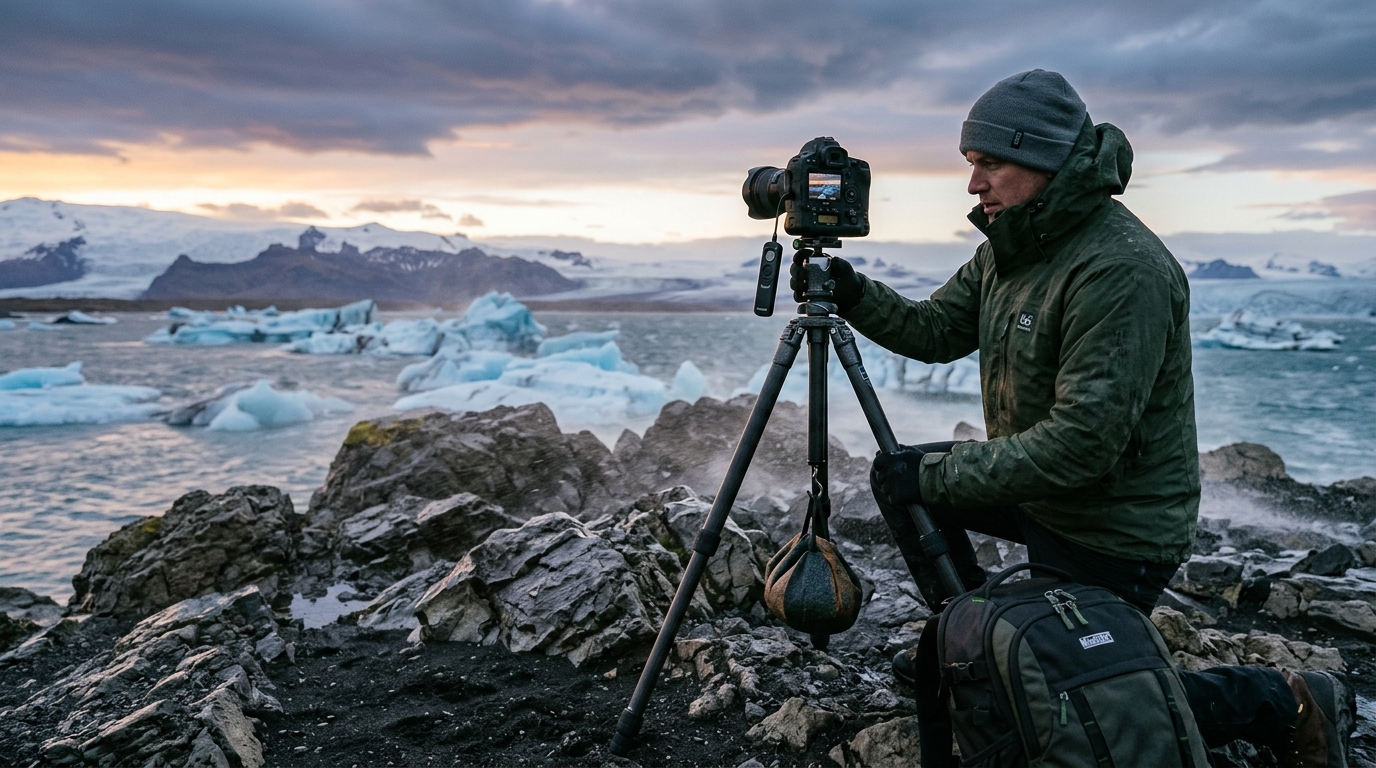
Iceland, the land of fire and ice, is a photographer's paradise. From towering waterfalls like Dettifoss to the ethereal glow of the Northern Lights, every corner offers a breathtaking scene. However, capturing these majestic landscapes demands more than just a keen eye and a good camera; it requires the right gear to conquer Iceland's notoriously challenging environment. Among the most critical pieces of equipment for any serious photographer venturing to this island nation is a robust, reliable tripod. Without it, you'll struggle to achieve the sharp, stable shots that Iceland's dramatic scenery deserves.
This guide is meticulously crafted for discerning photographers seeking the best tripods for Iceland photography. We'll delve deep into the essential features, provide top recommendations, and share practical tips to ensure your gear stands firm against the island's relentless winds, corrosive salt spray, and rugged terrain. By 2026, with photographic technology advancing, the principles of stability and durability remain paramount, and we're here to help you make an informed investment that will safeguard your photographic journey.
Why a Robust Tripod is Non-Negotiable for Iceland Photography
Iceland's allure lies in its raw, untamed beauty, but this very wildness presents unique environmental challenges for photographers. Imagine standing at the base of a roaring waterfall, battling gusts of wind that threaten to topple your setup, or attempting a long-exposure shot of the aurora borealis under a sky whipped by icy breezes. These are not hypothetical scenarios; they are the everyday realities of photographing in Iceland.
A stable base only pays off when it is paired with the right glass — see our guide to the best lenses for Iceland photography for how to build out the rest of the kit.
The island is famous for its powerful, unpredictable winds that can emerge without warning, often reaching speeds that make standing upright a challenge, let alone holding a camera steady. According to the Icelandic Met Office, the country experiences frequent strong gusts and rapid weather changes. Volatile weather patterns mean you can experience sunshine, rain, hail, and even snow within hours, sometimes minutes. The terrain itself is a photographer's test: uneven volcanic rock, slippery moss, icy patches, and sandy beaches constantly exposed to salt spray. Add to this the abundant water features – countless waterfalls, glacial lagoons, and coastal waves – and you have an environment that actively works against camera stability.
This is precisely why a stable tripod is not just a useful accessory, but a critical tool. It's the foundation for achieving tack-sharp long exposures of Iceland's cascading waterfalls or milky seascapes, where even the slightest camera movement can ruin an image. For capturing the elusive Northern Lights or twilight landscapes, a tripod enables the long shutter speeds necessary to gather enough light without introducing distracting noise from high ISO settings. Furthermore, a sturdy tripod allows for precise compositions, giving you the freedom to fine-tune your frame, experiment with angles, and utilize techniques like focus stacking or panoramas, all without worrying about your camera shifting. This guide will cover everything you need to know, from essential features and top recommendations to practical tips for using your tripod effectively in Iceland's challenging conditions.
Essential Tripod Features for Iceland's Harsh Environment
Choosing the right tripod for Iceland requires a deep understanding of how its features will perform under stress. It's not just about what looks good on paper; it's about real-world resilience.
Stability and Load Capacity
In Iceland, stability is king. Strong winds are a constant threat, and your tripod must be able to withstand them. Look beyond just the stated maximum load capacity, which primarily indicates how much weight the tripod can safely hold without collapsing. More importantly, consider the tripod's inherent stability against lateral forces like wind. This is influenced by several factors:
- Tripod Weight: While a lightweight tripod Iceland is desirable for portability, a certain amount of mass helps resist wind. There's a balance to strike.
- Leg Diameter: Thicker leg sections inherently offer greater rigidity. Look for tripods with larger top leg sections (32mm or more for serious landscape work) and minimal taper between sections.
- Number of Leg Sections: Fewer sections generally mean greater stability, as each joint is a potential point of flex. Three-section tripods are often more stable than four or five-section models, though less compact.
- Center Column Design: A robust, non-extending or minimally extending center column is ideal. Extending the center column significantly reduces stability, especially in windy conditions. Some tripods offer the option to remove the center column entirely, allowing the camera to be mounted directly to the spider for maximum low-angle stability.
- Leg Angle Adjustments: Tripods that allow legs to splay out to wide angles provide a much more stable base, crucial on uneven terrain or in high winds.
Material Matters: Carbon Fiber vs. Aluminum
The material of your tripod legs is a critical decision, directly impacting weight, vibration dampening, and cost.
- Carbon Fiber Tripod Iceland Benefits: Carbon fiber is the go-to choice for serious travel photographers. It's significantly lighter than aluminum, making it a dream for hiking to remote locations or navigating airports. Crucially, carbon fiber excels at vibration dampening, absorbing shakes from wind or accidental bumps much more effectively than aluminum. This translates to sharper images, particularly for long exposures. While more expensive upfront, its durability and performance often justify the investment for those frequently shooting in challenging environments.
- Aluminum Tripod: Aluminum tripods are more cost-effective and generally very robust. They can withstand impacts well. However, they are heavier, which can be a drawback for extensive hiking. Aluminum also transmits vibrations more readily and can feel significantly colder to the touch in freezing conditions, making handling less comfortable without gloves.
Weather Resistance
Iceland's weather is relentless, and your tripod will be exposed to rain, snow, salt spray, and volcanic dust. Weather resistance is paramount:
- Sealed Leg Locks: Twist locks are generally easier to seal against water and grit than flip locks. Look for designs that actively prevent ingress of sand, dust, and moisture into the leg mechanisms, as these can cause seizing or corrosion.
- Corrosion-Resistant Materials: All metal components, especially screws, hinges, and internal mechanisms, should be made from stainless steel or anodized aluminum to resist rust and corrosion from salt water and humidity.
- Easy to Clean Design: Tripods that can be easily disassembled for cleaning and drying are invaluable after a day of shooting near the ocean or under a waterfall.
Leg Lock Mechanisms: Twist Locks vs. Flip Locks
Both mechanisms have their adherents, but their performance in Iceland's conditions varies:
- Twist Locks: Many photographers prefer twist locks for their compactness and ability to be operated with one hand (though often requiring two hands for full extension/retraction). They are generally easier to seal against the elements, making them more reliable in sandy, dusty, or wet conditions. However, in extreme cold with thick gloves, they can sometimes be harder to grip and twist securely.
- Flip Locks (Lever Locks): Flip locks are often faster to deploy and retract, which can be an advantage when setting up quickly. They are also easier to operate with thick gloves. The main drawback is that they can sometimes pinch fingers, and their exposed design can make them more susceptible to dirt and moisture ingress if not properly sealed. Over time, they can also loosen and require adjustment.
Height and Packability
Balancing these two factors is key for a travel tripod Iceland:
- Maximum Height: Ensure the tripod can extend to a comfortable eye-level height without extending the center column, allowing for diverse compositions, especially when shooting over obstacles or for aurora photography where you might want to avoid bending down in the cold.
- Minimum Height: A tripod that can get very low to the ground is crucial for unique perspectives and macro photography, or for maximum stability in high winds.
- Folded Length: For air travel and hiking, a compact folded length is essential. Many modern travel tripods feature reverse-folding legs to achieve a remarkably small footprint, making them easy to strap to a backpack or fit into luggage.
Top Tripod Recommendations for Iceland Photographers
Investing in the best tripods for Iceland photography means prioritizing stability, durability, and weather resistance. Here are some categories and brands that consistently deliver, keeping in mind that specific model numbers change, but brand philosophies remain consistent.
Premium Picks: Uncompromising Performance
These brands represent the pinnacle of tripod engineering, offering exceptional stability, durability, and advanced features. They are designed for professional photographers who demand the absolute best and are willing to invest accordingly. The primary material for these will almost always be high-grade carbon fiber.
- Gitzo: Renowned for their uncompromising build quality, advanced carbon fiber composites (like Carbon eXact), and meticulous design. Gitzo tripods offer superior vibration dampening and stability, even in extreme conditions. Their leg locks are often highly weather-sealed. While heavy on the wallet, a Gitzo tripod is a lifetime investment. Pros: Unmatched stability, superior vibration dampening, excellent weather sealing, exceptional durability. Cons: Very high price point, can be heavier than some other travel options. Ideal Use: Professional landscape and aurora photographers, those who prioritize ultimate stability above all else, often chosen by professionals for Iceland photography.
- Really Right Stuff (RRS): Known for their incredibly precise machining, robust construction, and modular design. RRS tripods (and their accompanying ball heads) are often considered the gold standard for stability and user experience. They offer a no-frills, highly functional design that stands up to abuse. Pros: Outstanding rigidity and stability, superb build quality, modular system allows customization. Cons: Extremely high price, often sold as leg-sets separate from heads. Ideal Use: Photographers who demand precision and absolute reliability, especially for heavy camera setups or critical long exposures. Source: Petapixel source.
Mid-Range Performers: Excellent Value and Features
For serious enthusiasts and semi-professionals, these brands offer an outstanding balance of features, performance, and price. They often incorporate many premium features but at a more accessible cost, making them ideal for a dedicated Iceland trip.
- Peak Design Travel Tripod: A revolutionary design focusing on packability without sacrificing stability. The Peak Design Travel Tripod (available in carbon fiber and aluminum) boasts an incredibly compact folded size thanks to its innovative leg design. It's a fantastic travel tripod Iceland option for those who hike extensively.
- Pros: Incredibly compact folded size, intuitive design, integrated phone mount, good stability for its size.
- Cons: Integrated ball head might not suit all users, can be less stable than larger tripods in extreme winds.
- Ideal Use: Backpackers, hikers, and photographers who prioritize a compact, lightweight tripod Iceland without compromising too much on stability.
- Manfrotto: A long-standing name in photography support, Manfrotto offers a wide range of tripods, from robust professional models to lighter travel versions. Their 055 and 190 series are popular for their solid construction and versatility, often available in both aluminum and carbon fiber.
- Pros: Wide range of options, reliable build quality, good value, often feature versatile center columns.
- Cons: Some models can be heavier, not all are fully weather-sealed.
- Ideal Use: General landscape and travel photography, good for those seeking a balance of price and performance.
- Leofoto: Gaining significant popularity, Leofoto offers high-quality carbon fiber tripods that rival premium brands in stability and finish, often at a more competitive price point. They are known for their robust twist locks and excellent build.
- Pros: Excellent stability for the price, high-quality carbon fiber, good weather resistance, often come with robust ball heads.
- Cons: Brand recognition still growing compared to older established names.
- Ideal Use: Photographers seeking premium performance without the top-tier price tag, an excellent carbon fiber tripod Iceland option.
Budget-Friendly Travel Tripods: Reliable for the Conscious Spender
For those on a tighter budget, these brands offer reliable options that provide essential stability for most conditions without breaking the bank. While they might not have the extreme robustness or advanced features of premium models, they can certainly get the job done for many Iceland trips, especially if you're mindful of strong winds.
- K&F Concept: Offers a variety of affordable carbon fiber and aluminum tripods that are surprisingly stable for their price point. Many models feature reverse-folding legs and convertible monopod functions, making them versatile lightweight tripod Iceland options.
- Pros: Very affordable, good feature set for the price, decent stability for lighter setups.
- Cons: Build quality might not match premium brands, less effective vibration dampening.
- Ideal Use: Casual travelers, beginners, or those with lighter mirrorless setups who need a functional travel tripod Iceland.
- Neewer: Similar to K&F Concept, Neewer provides budget-friendly tripods that are widely available. They often focus on portability and basic functionality, making them suitable for entry-level use.
- Pros: Very low price, highly portable, good for occasional use.
- Cons: Limited stability in strong winds, less durable materials, minimal weather resistance.
- Ideal Use: Very occasional use, as a backup, or for those on a strict budget with lighter camera gear.
When considering any of these options, often check the specific model's load capacity, maximum/minimum height, folded length, and review its weather resistance. For Iceland, a tripod with a hook at the bottom of the center column to add weight is a highly valuable feature, regardless of budget.
Carbon Fiber vs. Aluminum: Making the Right Choice for Your Iceland Trip
The material choice for your tripod legs is one of the most significant decisions you'll make, impacting everything from your hiking comfort to image sharpness. For an Iceland trip, the differences between carbon fiber and aluminum are particularly pronounced.
Weight and Portability
This is where carbon fiber truly shines. A carbon fiber tripod Iceland can be significantly lighter than its aluminum counterpart of similar size and stability, often resulting in a noticeable weight reduction. For photographers planning extensive hikes to remote waterfalls, black sand beaches, or volcanic vistas, this weight saving is invaluable. Every ounce counts when you're carrying a camera bag, multiple lenses, and other gear over uneven terrain. A lightweight tripod Iceland is not just about comfort; it's about enabling you to reach more incredible locations without exhaustion, ensuring you have the energy to capture the magic.
Vibration Dampening
Iceland's winds are legendary, and this is where carbon fiber demonstrates a critical advantage. Photography gear experts widely recognize that carbon fiber has superior vibration-dampening properties compared to aluminum. Sources often highlight that carbon fiber's composite structure helps absorb and dissipate vibrations more effectively than the metallic structure of aluminum. When strong gusts hit your camera and tripod, carbon fiber absorbs these vibrations more effectively, preventing them from transferring to your camera. This is absolutely crucial for maintaining sharpness in long exposures, especially when photographing waterfalls, seascapes, or the Northern Lights. Aluminum, being a metal, tends to transmit vibrations, which can lead to subtle blurring in your images under windy conditions.
Durability and Cold Weather Performance
Both materials are durable, but in different ways. Aluminum is more resistant to dings and scratches, and a heavy impact might bend an aluminum leg rather than shatter it. Carbon fiber, while incredibly strong, can be susceptible to shattering if hit directly and sharply in a specific weak spot, though modern carbon fiber tripods are remarkably resilient. In cold weather, carbon fiber remains relatively neutral in temperature, making it much more comfortable to handle with bare hands or thin gloves. Aluminum, on the other hand, becomes extremely cold, making adjustments uncomfortable and potentially leading to frostnip if handled without adequate protection.
Cost Considerations
There's no denying it: carbon fiber tripods are significantly more expensive than aluminum ones. This is due to the complex manufacturing process and the cost of the raw material. However, for a dedicated photographer planning a trip to Iceland, viewing a carbon fiber tripod Iceland as an investment is often worthwhile. The enhanced portability and superior vibration dampening directly contribute to better images and a more enjoyable shooting experience. The longevity of a high-quality carbon fiber tripod also means it can serve you for many years, making the initial cost easier to justify over time.
Recommendations Based on Your Needs
- For the Avid Hiker/Professional: If you plan to trek extensively, prioritize image sharpness in all conditions, and your budget allows, a high-quality carbon fiber tripod is the unequivocal choice. The benefits in weight and vibration dampening will significantly enhance your Iceland photography experience.
- For the Budget-Conscious/Less Intensive Traveler: If your photography involves less strenuous hikes or you primarily shoot from easily accessible locations, a robust aluminum tripod can still perform well. Just be extra diligent about securing it in windy conditions and be prepared for its added weight.
- For the Hybrid Approach: Some photographers opt for a smaller, lighter carbon fiber travel tripod for day hikes and a more substantial, possibly aluminum, tripod for basecamp photography or when shooting from the car.
Ultimately, the best choice depends on your specific travel style, photographic aspirations, and budget. For the unique challenges of Iceland, a carbon fiber tripod offers a distinct advantage that can truly elevate your photography.
Tripod Heads: Ball Heads, Gimbal, and Pan-Tilt for Iceland's Diverse Scenes
The tripod head is the interface between your camera and the tripod legs, and its choice is just as critical for stability and functionality. Iceland's diverse photographic opportunities call for different types of heads, each with its own strengths.
Ball Heads
Ball heads are the most popular and versatile choice for general landscape and travel photography, which will make up the majority of your Iceland shots. They offer rapid adjustment and allow you to position your camera at virtually any angle with a single locking knob. For Iceland, look for:
- Strong Locking Mechanisms: A large, ergonomic main locking knob that securely holds your camera in place, even with heavy lenses. Friction control is a bonus, allowing you to adjust the tension of the ball for smoother, more controlled movements.
- Arca-Swiss Compatibility: Most quality ball heads use the Arca-Swiss quick release plate system. This widely adopted standard ensures compatibility across different brands of plates, L-brackets, and clamps, making it easy to swap cameras or attach accessories.
- Panoramic Base: A separate panning base below the ball allows for smooth horizontal rotation, essential for creating panoramic stitched images without re-leveling the tripod.
Gimbal Heads
While less common for pure landscape work, a gimbal head is indispensable if your Iceland itinerary includes significant wildlife photography, such as capturing the iconic puffins along the coastal cliffs of Dyrhólaey or birds in flight. Gimbal heads are designed to perfectly balance a heavy camera and telephoto lens, allowing for incredibly smooth, fluid movement in all directions with minimal effort. They effectively make your heavy gear feel weightless, enabling you to track fast-moving subjects with ease.
- Pros: Excellent for heavy telephoto lenses, smooth tracking of moving subjects, reduces fatigue.
- Cons: Bulky, heavier than ball heads, specialized for wildlife/sports, not ideal for general landscape work.
Pan-Tilt Heads
Three-way pan-tilt heads offer independent control over pan (horizontal), tilt (vertical), and portrait/landscape orientation. This provides extreme precision, making them ideal for architectural photography, studio work, or very precise panoramic stitching. However, they are generally heavier, bulkier, and slower to adjust than ball heads, which can be a significant drawback in Iceland's fast-changing weather and spontaneous photographic moments.
- Pros: Ultimate precision for composition, independent axis control.
- Cons: Slower to operate, heavier, bulkier, less agile for quick adjustments.
Quick Release Plate Systems
Regardless of the head type, a reliable quick release plate system is vital. As mentioned, the Arca-Swiss standard is highly recommended due to its widespread adoption and secure dovetail design. Ensure your camera body has a compatible plate or, even better, an L-bracket. An L-bracket allows you to mount your camera horizontally or vertically without re-positioning the ball head, maintaining your composition's center of gravity and making vertical shots much faster and more stable, especially useful in cold weather when fumbling with gear is undesirable.
Practical Tips for Using Your Tripod in Iceland's Extreme Conditions
Having the best tripod is only half the battle; knowing how to use and maintain it effectively in Iceland's challenging environment is equally important. These practical tips will help you maximize stability and protect your gear.
Securing Your Setup in Strong Winds
Icelandic winds can be brutal. Here’s how to fight back:
- Lower the Center Column: This is the golden rule for stability. The higher your center column, the less stable your setup becomes. Extend the legs fully, but keep the center column retracted unless absolutely necessary.
- Spread the Legs Wide: Utilize your tripod's leg angle adjustments to splay the legs out as wide as possible. This lowers the center of gravity and creates a broader, more stable base.
- Orient Against the Wind: Point one of your tripod legs directly into the oncoming wind. This creates a triangular base that is more resistant to tipping.
- Add Weight: Most quality tripods have a hook at the bottom of the center column. Hang your camera bag, a sandbag, or even a rock-filled mesh bag from this hook. This added downward pressure significantly increases stability.
- Use a Remote Shutter Release: Even pressing the shutter button can introduce camera shake. A wired or wireless remote shutter release eliminates this risk, especially for long exposures.
- Engage Live View / Mirror Lock-up: For DSLRs, use mirror lock-up or Live View to prevent mirror slap vibrations. Mirrorless cameras inherently avoid this issue.
Protecting from the Elements
Water, sand, and volcanic dust are omnipresent in Iceland. Proactive protection is key:
- Waterfall Spray: When shooting near powerful waterfalls (like Seljalandsfoss or Skógafoss), expect significant spray. Use a rain cover for your camera, and wipe down your tripod legs frequently with a dry cloth. Consider a waterproof bag for your tripod when moving between locations.
- Rain and Snow: Keep a microfiber cloth handy for wiping down your tripod and camera. Ensure your leg locks are clean and dry before collapsing the tripod to prevent grit from entering the mechanisms.
- Volcanic Dust and Sand: The black sand beaches, particularly around Vík, can be windy, kicking up fine volcanic dust. This grit can get into leg locks and head mechanisms, causing wear and seizing. Avoid extending legs directly into sand whenever possible. After shooting, wipe down all surfaces thoroughly before collapsing.
Navigating Uneven Terrain
Iceland's landscapes are rarely flat. Here’s how to set up securely:
- Independent Leg Angles: Utilize your tripod's independent leg angle adjustments to adapt to slopes, rocks, or uneven ground. This allows you to keep your camera level even if the tripod legs are at different heights and angles.
- Spiked Feet: Many tripods come with rubber feet that can be replaced with metal spikes. Spikes provide superior grip on ice, soft ground, or loose gravel, offering much greater stability than rubber feet in these conditions.
- Mind the Gap: When setting up on rocky terrain, ensure all three legs are firmly planted and stable. Avoid placing legs on loose rocks that could shift.
Cold Weather Handling
Freezing temperatures present their own challenges:
- often wear appropriate gloves. While some operations might be trickier with thick gloves, preventing frostbite is paramount. Practice adjusting your tripod and head with your gloves on before your trip.
- Prevent Freezing: If your tripod gets wet and temperatures drop below freezing, water can freeze within the leg locks, making them impossible to adjust. Try to keep your tripod as dry as possible. If it does get wet, extend the legs fully and dry them thoroughly before collapsing, especially before packing it away for the night.
- Battery Life: Cold drains batteries faster. Keep spare camera batteries warm in an inside pocket.
Post-Shoot Maintenance
Proper cleaning is vital for extending the life of your tripod after exposure to Iceland's elements:
- Rinse off Salt Water: If your tripod has been exposed to salt spray, rinse it thoroughly with fresh water as soon as possible, paying close attention to leg locks and joints. Salt is highly corrosive.
- Disassemble and Dry: Whenever possible, disassemble the leg sections (if your tripod allows) and thoroughly clean and dry them. Allow all components to air dry completely before reassembling and storing.
- Lubrication: Periodically check if any moving parts or leg locks require lubrication based on the manufacturer's instructions. Use only recommended lubricants to avoid damaging materials.
Frequently Asked Questions
Is a carbon fiber tripod really worth the extra cost for Iceland photography?
Yes, for serious photographers, a carbon fiber tripod is absolutely worth the investment for Iceland. Its significantly lighter weight reduces fatigue during hikes to remote locations, and its superior vibration-dampening properties are crucial for achieving sharp images in Iceland's notorious strong winds. While more expensive upfront, the benefits in portability, stability, and comfort in cold weather contribute directly to better photographic results and a more enjoyable experience, making it a valuable long-term investment.
What's the most important feature to look for in a travel tripod for Iceland?
The single most important feature to look for in a travel tripod for Iceland is stability in windy conditions. This means prioritizing robust leg sections with large diameters, a minimal or removable center column, and the ability for legs to splay out to wide angles. While packability and weight are important for a travel tripod, they should not compromise the fundamental stability needed to withstand Iceland's unpredictable gusts and ensure sharp images.
How do I protect my tripod from salt spray and sand in Iceland?
To protect your tripod from salt spray and sand, be proactive. When near coastal areas or waterfalls, wipe down your tripod frequently with a dry cloth. After exposure to salt spray, rinse your tripod thoroughly with fresh water as soon as possible, paying close attention to leg locks and joints. For sand and volcanic dust, avoid extending legs directly into sandy areas if possible, and meticulously wipe down all surfaces before collapsing the tripod to prevent grit from entering the mechanisms. Regular cleaning and drying are essential for longevity.