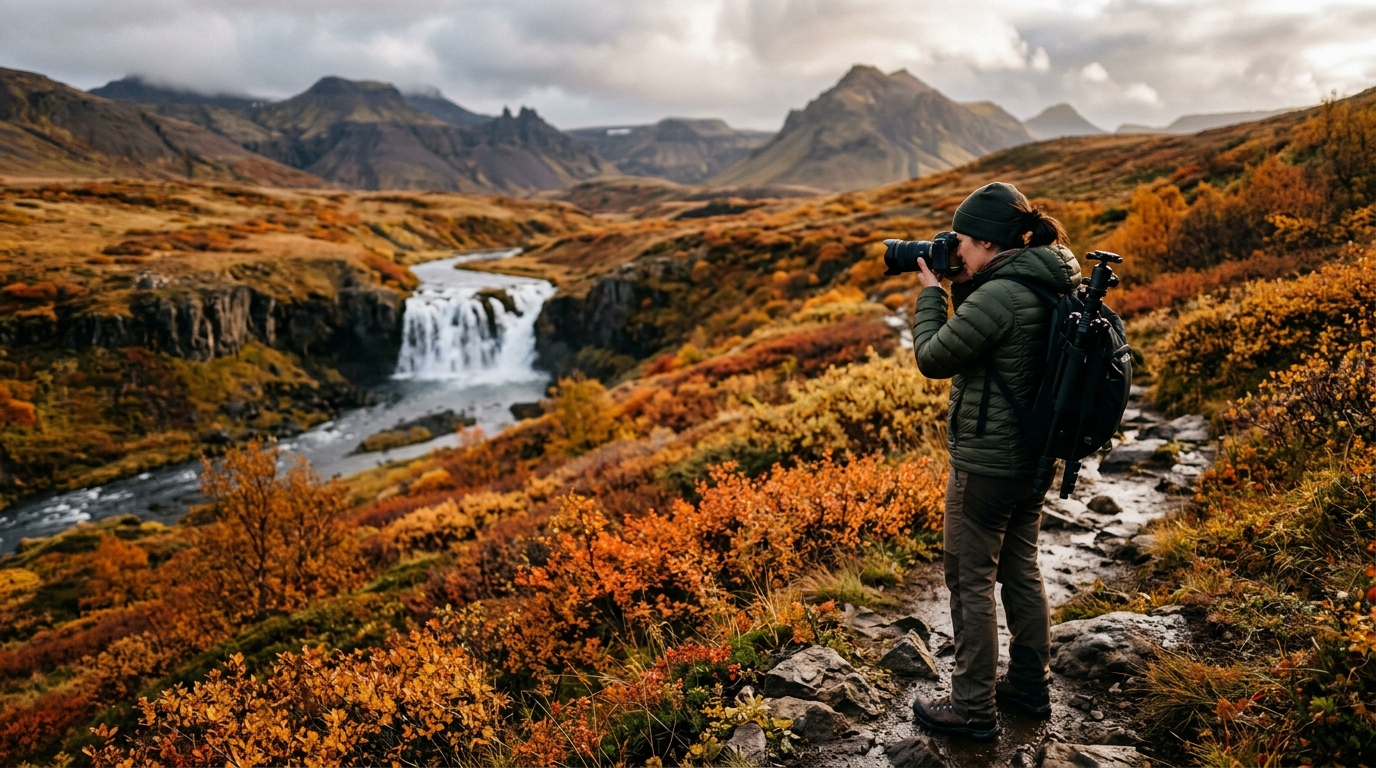
Introduction: Embracing the Golden Hues of Iceland's Autumn
Iceland, a land often associated with dramatic glaciers, powerful waterfalls, and volcanic landscapes, transforms into a painter's palette of vibrant reds, oranges, and yellows as autumn descends. For photographers, this seasonal shift offers a unique and breathtaking opportunity to capture a different side of the island's raw beauty. The stark contrasts between the fiery foliage, deep blue waters, and often snow-dusted peaks create a visual feast that is both challenging and incredibly rewarding.
Unlike the dense forests found in many parts of the world, Iceland's unique flora, primarily defined by the widespread birch, willow, and dwarf birch (fjalldrapi) shrubs, as well as the vibrant mosses and grasses that carpet its lava fields and valleys, transforms into a painter's palette. These low-growing plants ignite the landscape with an intensity that is distinctly Icelandic, making it a prime destination for dedicated Iceland autumn colors photography. This guide is crafted for the expert photographer, delving into the nuances of planning, executing, and perfecting your fall landscape shots in Iceland. We'll cover everything from optimal timing and the best locations to essential gear, advanced techniques, and responsible travel practices, ensuring your photography trip in 2026 is nothing short of spectacular.
When to Experience Iceland's Autumn Colors Photography
Timing is paramount when planning your trip for fall photography Iceland. While autumn technically spans several months, pinpointing the peak of color requires a keen understanding of Iceland's climate and geography.
Optimal Timing: Late August to Early October
Generally, the most vibrant display of Iceland autumn colors photography occurs from late August through early October. This two-month window offers the best chance to witness the landscape ablaze. In late August, you'll often see the first hints of yellow and orange creeping into the foliage, particularly in the northern and inland regions. By mid-September, the colors typically reach their zenith across much of the country, lasting well into early October before the leaves begin to fall and winter's chill takes hold.
Understanding Regional Variations in Peak Color
Iceland's diverse geography means that peak autumn colors can vary significantly from one region to another:
- North and Interior: Due to cooler temperatures, areas like North Iceland and the Highlands often see colors develop earlier, sometimes starting in late August and peaking in the first half of September.
- South and West: The milder coastal climates in the South and West, including the Snæfellsnes Peninsula and the Golden Circle, tend to reach their peak a bit later, usually mid-September to early October.
- Eastfjords: The Eastfjords, with their more extensive tree cover, particularly around Hallormsstaðaskógur, can offer stunning displays that might last slightly longer into October, depending on the year.
Monitoring local forecasts and online forums in the weeks leading up to your trip in 2026 is highly recommended, as the exact timing can shift based on yearly weather patterns.
Impact of Weather Patterns on Color Intensity and Duration
Weather plays a critical role in the intensity and duration of autumn colors. A warm, dry summer followed by cool, sunny days and chilly (but not freezing) nights often results in the most brilliant displays. Heavy rains and strong winds, common in Iceland, can prematurely strip leaves from branches, shortening the peak window. Conversely, a mild and relatively calm autumn can extend the season, offering more opportunities for incredible fall photography Iceland.
Best Times of Day for Capturing Autumn Light
For any landscape photographer, understanding light is crucial, and autumn in Iceland presents unique opportunities:
- Golden Hour: The periods just after sunrise and before sunset, known as golden hour, are ideal. The low angle of the sun casts a warm, soft glow that enhances the reds, oranges, and yellows of the autumn foliage. It adds depth and dimension to the landscape, creating long, dramatic shadows.
- Blue Hour: The time just before sunrise and after sunset, when the sun is below the horizon but its light is still diffused in the atmosphere, offers a cool, ethereal blue light. This can be stunning for capturing reflections in water or for moody, atmospheric shots of the landscape, especially when combined with vibrant autumn colors.
- Overcast Conditions: Don't dismiss overcast days. Diffused light from a cloudy sky can act like a giant softbox, reducing harsh shadows and revealing the subtle nuances and saturation of autumn colors. It's particularly excellent for forest interiors or close-up shots of foliage and moss.
Given the shorter daylight hours during autumn, especially by October, planning your shooting schedule around these prime light windows becomes even more critical for successful Iceland autumn colors photography.
Best Places for Autumn Colors Photography in Iceland
Iceland's diverse topography offers a multitude of locations where the autumn colors truly shine. While nearly any corner of the island can surprise you with a burst of color, some regions and specific spots are particularly renowned for their fall displays.
Þingvellir National Park: Birch Forests and Historical Significance
As a UNESCO World Heritage site and a key stop on the Golden Circle route, Þingvellir National Park is not only historically significant but also a fantastic spot for autumn photography in Iceland. The park is home to some of Iceland's most extensive birch forests, which turn a brilliant golden-yellow in the fall. The contrast of these vibrant trees against the dark volcanic rock, the clear waters of Þingvallavatn lake, and the dramatic Almannagjá gorge offers endless compositional opportunities. Look for reflections of the autumn leaves in the calm waters of the Öxarárfoss river or along the lake's edge. The pathways through the gorge itself, framed by colorful vegetation, can also provide stunning leading lines.
Snæfellsnes Peninsula: Coastal Contrasts with Fall Foliage
Often called "Miniature Iceland" due to its diverse landscapes, the Snæfellsnes Peninsula provides a unique backdrop for autumn colors. While not as heavily forested as other areas, the peninsula's lower-growing shrubs, grasses, and mosses transform into rich reds and oranges. Imagine the fiery hues contrasting with the dramatic black sand beaches, the basalt columns of Gerðuberg, or the iconic Kirkjufell mountain. The coastal light here, often dramatic and moody, enhances the saturation of the fall foliage. Explore areas around Arnarstapi and Hellnar for coastal cliffs adorned with autumnal tones, or seek out small valleys where birch and willow thrive.
Eastfjords: Hallormsstaðaskógur Forest and Remote Beauty
For those seeking a more traditional forest experience, the Eastfjords are a must-visit. Hallormsstaðaskógur, Iceland's largest national forest, is a true gem for autumn colors. According to the Icelandic Forest Service, it is the country's most extensive forest. Here, you'll find a wider variety of tree species, including birch, larch, and spruce, all contributing to a spectacular display of yellows, oranges, and deep reds. The forest trails offer intimate opportunities for macro photography of fallen leaves, mushrooms, and moss, while viewpoints provide sweeping vistas of the colorful landscape against the backdrop of the fjord. The remote beauty and fewer crowds in the Eastfjords region make it an exceptionally peaceful and rewarding destination for capturing autumn's splendor.
South Coast: Moss-Covered Lava Fields and River Valleys
The South Coast, famous for its waterfalls and black sand beaches, also presents incredible opportunities for autumn photography. While large forests are sparse, the vast moss-covered lava fields, particularly around Kirkjubæjarklaustur and Eldhraun, undergo a subtle but profound transformation. The deep green moss takes on warmer, golden-brown and reddish hues, especially in certain light conditions. River valleys, such as those leading to Skógafoss or Seljalandsfoss, are often lined with vibrant grasses and dwarf birch, creating colorful foregrounds for these iconic waterfalls. Look for compositions where the golden riverbanks lead the eye towards a powerful waterfall, framed by the dramatic autumn sky. The area around Vík and Dyrhólaey also offers striking contrasts between the dark volcanic sands, the white surf, and splashes of autumn color on the hillsides.
Lesser-Known Gems and Hidden Valleys for Unique Shots
Beyond the popular tourist routes, Iceland holds countless hidden valleys and lesser-known spots that burst with autumn colors. The Westfjords, though remote, can offer incredibly vibrant patches of red and orange along its dramatic fjords and mountain slopes. Inland areas, away from the ring road, often have untouched valleys where small rivers wind through dense patches of birch and willow, creating intimate and unique photographic opportunities. Exploring these areas requires more planning and often a 4x4 vehicle, but the reward is often unparalleled solitude and pristine landscapes. For discovering these unique vantage points, our Iceland Photo Map locations guide can be an invaluable resource, helping you uncover spots off the beaten path that truly define fall photography Iceland.
Essential Photography Gear for Capturing Fall Landscapes
To truly excel at Iceland autumn colors photography, having the right gear is as important as knowing how to use it. Iceland's unpredictable weather and varied terrain demand robust and versatile equipment.
Camera Bodies and Versatile Lenses (Wide-Angle, Telephoto)
- Camera Bodies: A full-frame or APS-C DSLR/mirrorless camera with good dynamic range and low-light performance is ideal. Redundancy is wise; consider bringing a backup body if your budget allows, especially given Iceland's remote nature.
- Wide-Angle Lens (14-35mm equivalent): Essential for sweeping landscapes, capturing the vastness of the Icelandic terrain, and incorporating expansive autumn colors into your frame. Look for lenses with a wide aperture for flexibility in various light conditions.
- Mid-Range Zoom Lens (24-70mm equivalent): Your workhorse lens, versatile enough for general landscape shots, environmental portraits, and capturing broader scenes with a natural perspective.
- Telephoto Lens (70-200mm or 100-400mm equivalent): Crucial for isolating specific patches of color, compressing distant mountain ranges, or capturing intimate details of the autumn foliage that might be inaccessible. A longer telephoto can also be invaluable for wildlife photography if you encounter birds or reindeer.
Tripods for Stability and Long Exposures
A sturdy tripod is non-negotiable. Iceland is notoriously windy, and blurred images from camera shake are a common frustration. A carbon fiber tripod offers a good balance of stability and portability. Ensure it has a strong ball head that can securely hold your camera and heavy lenses. A tripod is essential for:
- Sharp images in low light (golden hour, blue hour).
- Long exposure photography of waterfalls and flowing rivers.
- Focus stacking or bracketing for extended dynamic range.
- Self-portraits within the landscape.
Filters: CPL for Reflections and Color Saturation, ND for Motion Blur
- Circular Polarizer (CPL) Filter: This is arguably the most important filter for autumn photography. It helps reduce glare and reflections from water and wet leaves, enhancing the saturation of autumn colors and making the sky a deeper blue. It's particularly effective after rain, making the wet foliage pop. Source: Google source.
- Neutral Density (ND) Filters: Essential for long exposure photography, allowing you to slow down your shutter speed in bright conditions. Graduated ND filters can help balance exposure between a bright sky and a darker foreground.
- Graduated ND Filters (GND): If your camera's dynamic range isn't enough to capture both bright skies and dark foregrounds, a soft-edge GND can help balance the exposure.
Weather Protection: Rain Covers for Gear, Waterproof Clothing for Yourself
Icelandic weather is famously unpredictable. You can experience all four seasons in a single day, especially in autumn. Protecting your gear is paramount:
- Camera Rain Covers: Simple, affordable, and highly effective. Keep one readily accessible.
- Waterproof Backpack: A robust, weather-sealed camera backpack will protect your gear from rain, spray, and dust.
- Microfiber Cloths: Bring several to wipe off moisture from lenses and camera bodies.
- Waterproof and Windproof Clothing: Invest in a high-quality waterproof and windproof jacket and trousers. Layers are key for warmth.
Extra Batteries, Cleaning Supplies, and Sturdy Footwear
- Extra Batteries: Cold weather drains batteries faster. Bring at least 3-4 fully charged spare batteries.
- Cleaning Supplies: Lens pen, blower, and plenty of microfiber cloths are essential for keeping your lenses free of spray, dust, and fingerprints.
- Sturdy, Waterproof Hiking Boots: You'll be walking on uneven, often wet, and sometimes muddy terrain. Good ankle support and waterproofing are crucial.
- Headlamp: For early morning or late evening shoots, especially if hiking in the dark.
- GPS Device or Offline Maps: For navigation, especially in remote areas.
Techniques for Mastering Autumn Landscape Photography
Beyond having the right gear, applying specific photographic techniques will elevate your autumn landscape images, allowing you to truly capture the magic of Iceland's fall colors.
Utilizing Natural Light: Golden Hour, Blue Hour, and Overcast Conditions
- Golden Hour: As discussed, the warm, directional light of golden hour (sunrise/sunset) is perfect for enhancing the saturation and depth of autumn colors. Position yourself so the light rakes across the landscape, creating long shadows and revealing texture. Backlighting can also create stunning rim light around leaves, making them glow.
- Blue Hour: For a moodier, ethereal feel, shoot during blue hour. The soft, cool light can beautifully complement the warm tones of the foliage, especially when capturing reflections or wide scenes with a hint of artificial light from distant towns.
- Overcast Conditions: Don't pack up when the sun disappears. Overcast days provide soft, diffused light that is excellent for capturing vibrant, saturated colors without harsh shadows or blown-out highlights. This is ideal for forest interiors, close-ups of leaves, and intimate landscapes. The sky can act as a giant softbox, evenly illuminating your scene.
Composition: Leading Lines, Rule of Thirds, Framing with Autumn Elements
- Leading Lines: Utilize natural elements like rivers, paths, fences, or rows of colorful trees to draw the viewer's eye into the frame and towards your main subject. A winding river lined with golden foliage, for instance, makes a powerful leading line.
- Rule of Thirds: Place your main subjects (e.g., a prominent colorful tree, a waterfall, a mountain peak) along the intersecting points or lines of the rule of thirds grid for a more balanced and dynamic composition.
- Framing: Use natural elements like tree branches (even bare ones), rock formations, or archways of colorful foliage to frame your main subject. This adds depth and context to your image.
- Foreground Interest: Incorporate interesting foreground elements, such as colorful moss, fallen leaves, or unique rocks, to add depth and lead the eye into the scene.
- Symmetry and Reflections: Look for opportunities to capture reflections of colorful landscapes in calm lakes or puddles, creating striking symmetrical compositions.
Capturing Reflections in Water (Lakes, Rivers, Puddles)
Autumn's rich colors are often doubled by reflections in Iceland's abundant water bodies. Calm lakes, slow-moving rivers, and even puddles after a rain shower can provide perfect mirroring surfaces. For the best reflections:
- Shoot on calm days with minimal wind to avoid ripples.
- Use a circular polarizer filter to reduce glare on the water's surface, allowing the colors to show through more clearly.
- Experiment with different angles and heights to find the most impactful reflection.
Long Exposure Photography for Waterfalls and Flowing Water
Iceland is synonymous with waterfalls, and autumn provides a stunning backdrop for them. Long exposure photography can transform turbulent water into silky smooth cascades, adding a sense of serenity and motion to your images.
- Use a Tripod: Absolutely essential for sharp long exposures.
- ND Filters: Depending on the light, you'll need an ND filter (e.g., 3-stop to 10-stop) to achieve shutter speeds of several seconds or more.
- Settings: Start with a low ISO (e.g., 100), an aperture that gives you sufficient depth of field (e.g., f/8 to f/16), and then adjust your shutter speed using your ND filter until you achieve the desired effect.
- Composition: Frame the waterfall with colorful autumn foliage in the foreground or background. Consider using leading lines from the river to guide the eye to the fall. For more detailed guidance on capturing these powerful natural features, explore our waterfalls photography category.
Focusing on Details: Moss, Berries, Unique Textures of Fall
While grand landscapes are captivating, don't overlook the smaller, intimate details that tell the story of Icelandic autumn. Carry a macro lens or a lens with a good minimum focusing distance to capture:
- Moss: Iceland's vibrant green moss often takes on subtle golden or reddish hues in autumn, creating incredible textures.
- Berries: Wild berries (like crowberries and blueberries) are abundant in autumn, providing pops of intense color.
- Fallen Leaves: Individual leaves, especially when wet, can be incredibly beautiful, revealing intricate patterns and colors.
- Textures: The contrast between smooth water, rough lava rock, and soft moss, all adorned with autumn colors, offers rich textural opportunities.
Navigating Iceland's Autumn Weather and Light
Iceland's reputation for mercurial weather is well-earned, and autumn is no exception. Preparing for and adapting to these conditions is crucial for a successful and safe photography trip.
Preparing for Unpredictable Weather: Rain, Wind, and Sudden Changes
Autumn in Iceland can bring anything from crisp, sunny days to torrential rain, strong winds, and even early snowfall, sometimes all within a few hours. The key is never to assume the weather will remain constant. Always check the forecast (vedur.is is the official meteorological site) before heading out, but be prepared for it to change rapidly. A clear morning can quickly turn into a stormy afternoon. Embrace the challenge; dramatic weather often makes for the most compelling photographs, adding mood and atmosphere that sunny days cannot replicate.
Dressing in Layers for Comfort and Protection
Layering is the golden rule for dressing in Iceland, especially in autumn. Start with a moisture-wicking base layer, add insulating mid-layers (fleece or down), and top it off with a waterproof and windproof outer shell. Don't forget waterproof trousers, warm socks (wool is best), a hat, and gloves. Even on seemingly mild days, the wind chill can be biting. Being comfortable and warm will allow you to focus on your photography rather than battling the elements.
Protecting Your Camera Gear from Moisture and Cold
As mentioned in the gear section, protecting your equipment is vital:
- Rain Covers: Keep one handy for your camera and lens.
- Weather-Sealed Gear: If possible, use weather-sealed camera bodies and lenses.
- Dry Bags: Keep extra batteries, memory cards, and sensitive electronics in dry bags within your camera backpack.
- Acclimation: When moving from cold outdoor temperatures to warm indoor spaces, condensation can form on and inside your gear. Place your camera in a sealed plastic bag before entering a warm building, allowing it to slowly acclimate. This prevents moisture damage.
- Spare Batteries: Cold temperatures rapidly drain battery life. Keep spare batteries warm in an inside pocket.
Adapting to Rapidly Changing Light Conditions
Iceland's dynamic weather often means rapidly changing light. What starts as an overcast, diffused light can suddenly break into dramatic sunbeams, or vice-versa. Rather than being frustrated, see this as an opportunity:
- Be Flexible: Don't stick rigidly to a schedule if the light isn't working. Be ready to change locations or wait for conditions to improve.
- Embrace the Mood: Overcast days are perfect for saturated colors and intimate details. Dramatic clouds can add immense power to your landscape shots.
- Shoot in All Directions: The light might be harsh in one direction but soft and beautiful in another. Constantly assess the light around you.
Safety Precautions for Driving and Hiking in Autumn Conditions
- Driving: Roads can be wet, icy (especially in the mornings or higher elevations), or covered in strong crosswinds. Drive cautiously, especially on gravel roads. Always check road conditions (road.is) before embarking on a journey. Many remote roads become impassable or require a 4x4.
- Hiking: Trails can be slippery due to rain, mud, or frost. Stick to marked paths. often inform someone of your hiking plans, especially if heading into more remote areas. Be aware of rapidly changing weather and bring appropriate gear, including navigation tools.
- River Crossings: Autumn rains can swell rivers. rarely attempt to cross a river on foot or by vehicle if you are unsure of its depth or current.
Enhancing Your Autumn Photos: Post-Processing Workflow
Post-processing is an integral part of modern landscape photography, allowing you to refine your images and bring out the full potential of Iceland's autumn colors. The goal is to enhance, not distort, the natural beauty you captured.
Basic Adjustments: Exposure, Contrast, White Balance, Highlights/Shadows
Start with the fundamental adjustments in your preferred editing software (e.g., Adobe Lightroom, Capture One, Photoshop Camera Raw):
- Exposure: Correct any under or over-exposed areas to achieve a balanced image.
- Contrast: Adjust the overall contrast to add punch, but be careful not to crush shadows or blow out highlights.
- White Balance: Ensure your white balance accurately reflects the scene's mood. Autumn colors often benefit from slightly warmer tones, but avoid making them look unnatural. Use the eyedropper tool on a neutral gray or white point if available.
- Highlights and Shadows: Recover detail in blown-out highlights (like bright skies) and lift shadows to reveal hidden textures without introducing excessive noise.
- Blacks and Whites: Set your black and white points to ensure a full tonal range without clipping.
Color Grading for Vibrant Fall Tones and Mood
This is where you can truly make your autumn colors pop:
- Saturation and Vibrance: Use vibrance to increase the intensity of muted colors while leaving already saturated colors alone, preventing an over-processed look. Use saturation more cautiously, as it affects all colors equally.
- HSL (Hue, Saturation, Luminance) Adjustments: This is your most powerful tool.
- Hue: Slightly shift the hues of greens towards yellow, and yellows towards orange/red to enhance the autumnal feel.
- Saturation: Boost the saturation of reds, oranges, and yellows selectively. You might also desaturate blues slightly to make the warm tones stand out more.
- Luminance: Adjust the brightness of specific color ranges. For example, darken the luminance of blues to make skies richer, or brighten yellows to make foliage glow.
- Split Toning/Color Grading Panels: Experiment with adding subtle warm tones to highlights and cool tones to shadows for a cinematic look, or use the color grading tools for more precise control over different tonal ranges.
Sharpening and Noise Reduction Techniques
- Sharpening: Apply sharpening carefully, usually as one of the last steps. Zoom in closely to avoid over-sharpening, which can introduce artifacts. Sharpening is often best applied locally to specific areas of detail.
- Noise Reduction: High ISO shots, especially in low light, will have noise. Apply noise reduction judiciously. Too much can smooth out fine details and make your image look plastic. Balance luminance noise reduction with color noise reduction.
Using Masks and Local Adjustments to Enhance Specific Areas
Global adjustments affect the entire image. For a truly refined look, use local adjustments:
- Graduated Filters: Use these for skies or foregrounds to adjust exposure, contrast, or white balance independently.
- Radial Filters: Great for drawing attention to a specific subject by brightening it or adding a vignette effect around it.
- Adjustment Brushes: Precisely paint in adjustments (e.g., increased contrast, warmth, clarity) to specific patches of colorful foliage, a waterfall, or a dark rock formation.
- Luminosity Masks: For advanced users, luminosity masks allow you to apply adjustments based on the brightness values of an image, offering incredibly precise control over highlights, midtones, and shadows without affecting other areas.
Common Post-Processing Mistakes to Avoid for Natural Results
- While you want vibrant colors, avoid pushing them so far that they look unnatural or garish. Aim for a rich, realistic look.
- Over-Sharpening: Leads to halos and artifacts, making your image look pixelated.
- Excessive HDR Look: While bracketing for dynamic range is good, avoid the "crunchy" or overly processed HDR aesthetic. Strive for a natural light blend.
- Unnatural White Balance: Be mindful of skin tones if people are in the shot, and ensure the overall color cast feels authentic to the scene.
- Ignoring the Story: Post-processing should enhance the narrative of your image, not just make it "pretty." Think about the mood and feeling you want to convey.
Responsible Photography: Preserving Iceland's Natural Beauty
Iceland's pristine landscapes are incredibly fragile, and as photographers, we have a responsibility to minimize our impact and help preserve them for future generations. Embracing responsible photography practices is not just ethical; it ensures the continued beauty of the locations we seek to capture.
Adhering to Leave No Trace Principles
The core of responsible travel is the "Leave No Trace" philosophy. This means planning ahead, disposing of waste properly, minimizing impact on trails and campsites, respecting wildlife, and leaving natural areas as you found them. often stay on marked paths, avoid disturbing plants or animals, and pack out everything you pack in, including all trash.
Frequently Asked Questions
When is the best time to experience Iceland's autumn colors?
The most vibrant display of autumn colors in Iceland typically occurs from late August through early October. Peak colors often hit around mid-September, but the exact timing can vary by region and year. Northern and inland areas may see colors earlier (late August to early September), while the South and West might peak later (mid-September to early October). Monitoring local forecasts closer to your trip is advisable for the most accurate timing.