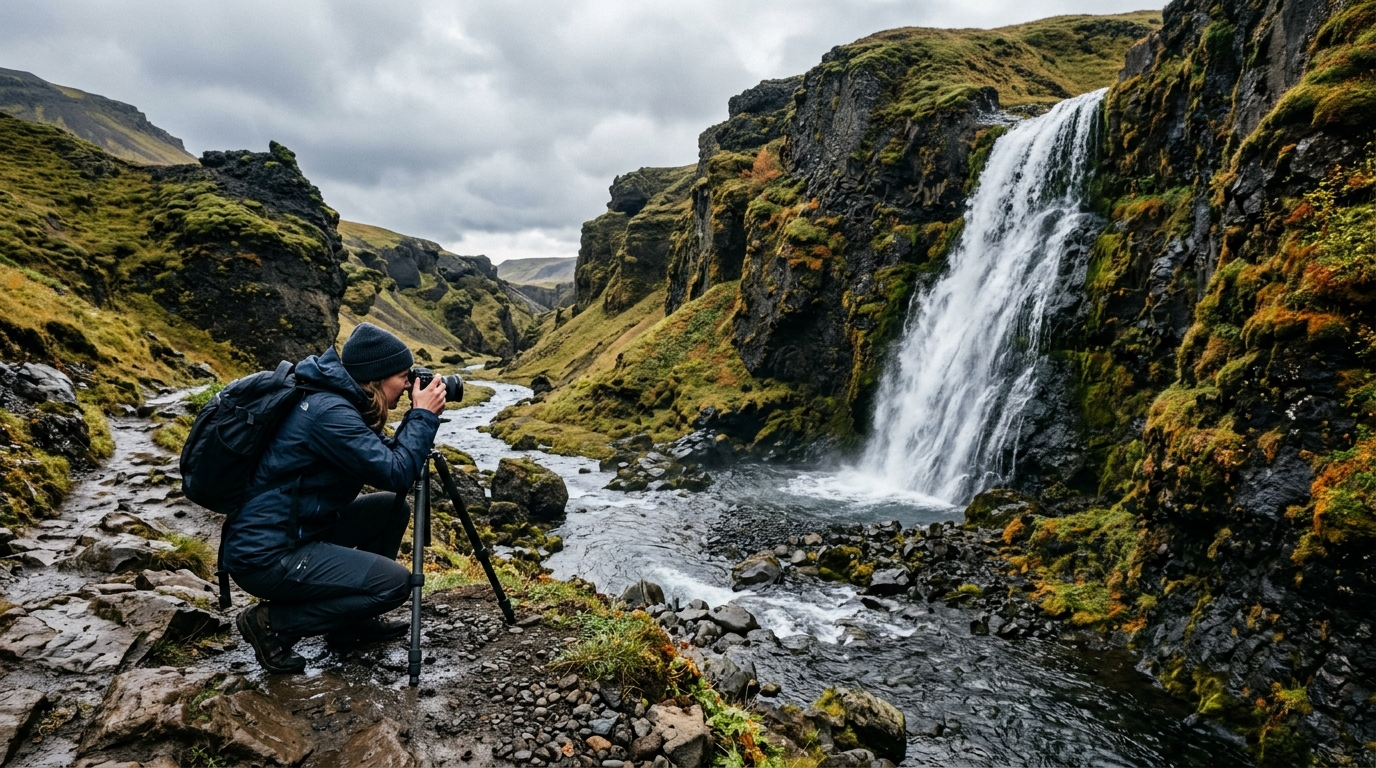
Introduction: Beyond the Beaten Path
Iceland, the land of fire and ice, is renowned globally for its dramatic landscapes, and perhaps no feature is more iconic than its waterfalls. Names like Seljalandsfoss, Skógafoss, and Gullfoss echo in the minds of travelers and photographers alike, drawing countless visitors to witness their majestic power. While undeniably breathtaking, the sheer popularity of these sites often means sharing the experience with throngs of tourists, making it challenging to capture truly unique, intimate photographs.
For the discerning photographer, the allure lies in discovery – in finding those untouched vistas that offer solitude and a fresh perspective. This is where the magic of Iceland's lesser-known waterfalls for photography truly shines. Venturing off the well-trodden Ring Road reveals a different side of the island: serene cascades hidden in dramatic canyons, powerful torrents tucked away in remote highlands, and delicate veils of water cascading over moss-covered cliffs. These hidden gems provide an unparalleled opportunity to connect deeply with Iceland's raw nature, offering distinct photographic opportunities free from crowds and creative clichés.
This comprehensive guide is crafted for the adventurous photographer eager to explore beyond the postcards. We'll delve into how to find and access these captivating hidden waterfalls, equip you with the essential gear for both photography and safety, and share expert techniques to master your shots. Crucially, we'll emphasize responsible tourism, ensuring these pristine locations remain unspoiled for future generations. Prepare to uncover the secret beauty of Iceland, one magnificent, secluded waterfall at a time.
Why Venture Off the Beaten Path for Lesser-Known Waterfalls in Iceland?
While the iconic waterfalls of Iceland are undeniably spectacular, the true reward for a dedicated landscape photographer often lies in the pursuit of the unique. Choosing to seek out lesser-known waterfalls Iceland photography offers a multitude of artistic and experiential advantages that simply cannot be found at the more popular, crowded locations.
Firstly, there's the profound artistic advantage of capturing truly unique and original compositions. Imagine setting up your tripod without another soul in sight, taking your time to observe the light, the flow of the water, and the surrounding geology. This solitude allows for a deeper creative process, enabling you to experiment with angles and perspectives that haven't been over-photographed. At famous sites, you're often vying for space, rushed by the constant flow of people, and constrained by established viewpoints. At a hidden cascade, the canvas is yours alone, inviting you to craft an image that is distinctly your own, reflecting your personal vision rather than replicating an existing one.
Beyond the lens, the experience itself is transformative. Enjoying nature in solitude allows for a more profound connection with the landscape. The roar of a powerful waterfall, the scent of damp earth and moss, the crisp Icelandic air – these sensations are amplified when shared only with the wilderness. It's an opportunity for introspection, a chance to truly immerse yourself in the raw beauty of Iceland without distraction. This deep connection inevitably translates into more authentic and emotive photographs.
Furthermore, by actively seeking out off the beaten path waterfalls Iceland, photographers contribute to a fresh perspective on the island's beauty. In an age of ubiquitous digital imagery, many iconic spots have become saturated with similar photographs. By showcasing new, unexplored locations, you help diversify the visual narrative of Iceland, inspiring others to explore responsibly and appreciate the island's vast, understated grandeur. This shift away from over-photographed locations also subtly helps to distribute tourist impact, reducing pressure on the most popular sites.
Finally, there's the undeniable thrill of discovery and exploration. The journey to a hidden waterfall often involves navigating less-traveled roads, embarking on invigorating hikes, and relying on careful research and intuition. This sense of adventure, of earning your shot, adds immense value to the photographic endeavor. It transforms a simple photoshoot into an expedition, creating memories and images that are far more meaningful and rewarding than those found at easily accessible, crowded viewpoints.
Unearthing Iceland's Hidden Waterfalls: Your Discovery Guide
The quest for Iceland's hidden waterfalls begins long before you pack your camera bag. Successful discovery relies on diligent research, leveraging local insights, and meticulous planning. This isn't about stumbling upon a waterfall; it's about a strategic approach to uncovering these secret gems.
Research Strategies: Navigating the Digital and Cartographic Landscape
- Topographical Maps: Forget standard road maps. For serious exploration, topographical maps are invaluable. Websites like Landmælingar Íslands (National Land Survey of Iceland) offer detailed maps that reveal elevation changes, watercourses, and potential access points. Look for blue lines indicating rivers and streams, especially where contour lines are close together, suggesting a drop in elevation – a potential waterfall. Cross-referencing these with satellite imagery (Google Earth, Strava heatmaps) can often reveal faint trails or clearings.
- Local Forums and Photography Groups: Online communities, especially those focused on Icelandic travel and photography, can be treasure troves of information. Websites like Reddit (r/Iceland, r/VisitingIceland) or specialized Facebook groups for Iceland photographers often have discussions about less-known spots. Be polite, share your genuine interest, and ask for general areas rather than exact GPS coordinates, as some locations are kept secret to preserve their integrity.
- Specialized Guidebooks & Blogs: While many guidebooks focus on popular attractions, some niche publications or photography blogs specifically cater to adventurers seeking off-the-beaten-path locations. These often provide more detailed directions, accessibility notes, and photographic insights. Our own detailed photography maps for Iceland are specifically designed to highlight these unique, less-frequented locations, providing precise coordinates and accessibility information tailored for photographers.
- Academic Papers & Geological Surveys: For the truly dedicated, geological surveys or academic papers on specific regions of Iceland can sometimes reference smaller, unnamed waterfalls that are significant from a geological perspective but unknown to tourism. This is a deep dive but can yield truly unique finds.
Leveraging Local Knowledge: The Human Element of Discovery
No amount of online research can replace the insights of those who live and work in Iceland. Locals, particularly those in rural areas, frequently possess knowledge of beautiful cascades that may not appear in conventional guidebooks. Tour guides who specialize in hiking or adventure tourism, or even staff at smaller guesthouses and hotels, can be excellent sources of information. Engage in friendly conversation, explain your interest in responsible photography, and you might be rewarded with directions to a stunning, secret spot. Fellow photographers, particularly those with a history of exploring Iceland, can also offer valuable advice and even suggest specific regions known for their hidden gems.
Understanding Accessibility: Navigating Iceland's Varied Terrain
Accessing secret waterfalls Iceland often means navigating challenging terrain:
- F-roads: These are mountain roads, often unpaved, rocky, and sometimes involve river crossings. They are typically only open during the summer months (June-September) and are legally restricted to 4x4 vehicles. Attempting F-roads in a 2WD vehicle is illegal, dangerous, and can result in significant fines and vehicle damage. Always check road conditions on road.is before setting out.
- Hiking Trails: Many hidden waterfalls require a hike, ranging from short, easy walks to multi-hour, strenuous treks over uneven and sometimes unmarked terrain. Research the trail difficulty, length, and elevation gain. Be prepared for mud, slippery rocks, and river crossings.
- Private Land Considerations: A significant portion of Iceland is privately owned. often respect private property boundaries. If a waterfall is on private land, seek permission from the landowner before accessing it. Trespassing can lead to legal issues and damages to landowner relations, which are crucial for maintaining access to these areas.
The Importance of Planning Routes and Checking Conditions
Once you've identified a potential waterfall, meticulous planning is paramount. In Iceland, conditions can change rapidly:
- Route Planning: Map out your entire route, including alternatives. Note distances, estimated travel times, and fuel stops.
- Weather Checks: Constantly monitor the weather forecast via vedur.is. High winds, heavy rain, or sudden drops in temperature can make a planned trip unsafe or impossible.
- Road Conditions: As mentioned, road.is is your go-to for current road conditions and closures.
- Emergency Preparedness: Inform someone of your itinerary and expected return time. Carry a fully charged phone, an external battery, and consider a satellite communication device (like a Garmin inReach) for truly remote areas. SafeTravel.is is an essential resource for safety information and emergency contacts in Iceland.
By approaching your search with these strategies, you'll significantly increase your chances of discovering and safely enjoying Iceland's most stunning, secret waterfalls.
Spotlight on Secret Cascades: Top Lesser-Known Waterfalls for Iceland Photography
While the allure of finding your own truly secret waterfall is undeniable, some of Iceland's most rewarding photographic experiences lie at cascades that are "lesser-known" rather than entirely undiscovered. These spots offer a balance of accessibility and unique beauty, providing fantastic opportunities for lesser-known waterfalls Iceland photography without the overwhelming crowds of the more famous sites. Here are a few examples that stand out:
1. Gljúfrabúi (The Canyon Dweller)
- Location: Located just a few hundred meters north of the famous Seljalandsfoss, near the campsite. While technically visible from the road, its hidden nature makes it feel like a secret.
- GPS Coordinates: 63.6200° N, 19.9880° W
- Accessibility: Relatively easy. From the Seljalandsfoss parking lot, walk north along the path. You'll need to wade through a shallow stream (often ankle-deep, sometimes knee-deep in spring melts) into a narrow canyon entrance to reach the main chamber. Waterproof boots are essential.
- Best Time to Visit: Early morning or late evening, especially during shoulder seasons (May, September, October) to avoid the small crowds it does attract. The light inside the canyon can be magical during these times.
- Unique Photographic Features & Challenges:
- Intimate Setting: The waterfall is almost entirely enclosed within a moss-covered canyon, creating a truly intimate and ethereal atmosphere. The light filtering in from above is soft and diffused.
- Composition: The narrow canyon walls provide natural leading lines and framing. Look for unique angles from within the chamber, capturing the towering rock faces and the powerful cascade.
- Water Spray: Expect significant spray. Protecting your camera gear is paramount (rain cover, lens hood, plenty of microfiber cloths). This spray, however, also creates beautiful mist and potential rainbows when the light is right.
- Tripod Stability: The ground inside the canyon can be uneven and slippery. A sturdy tripod is crucial for long exposures, which are ideal here to capture the silky flow of the water.
2. Kvernufoss
- Location: Tucked away in a gorge just east of Skógafoss, accessible from the Skógar Museum parking lot. It shares a similar characteristic with Seljalandsfoss, allowing visitors to walk behind the cascade, but without the crowds.
- GPS Coordinates: 63.5298° N, 19.5082° W
- Accessibility: Moderate. From the Skógar Museum parking lot, walk east, crossing a stile and following a well-defined path along the Kverna river. The hike is about 15-20 minutes over relatively flat terrain. Some scrambling might be required to get behind the falls.
- Best Time to Visit: Any time of day, but golden hour provides beautiful warm light on the surrounding cliffs. It's stunning in winter with ice formations but requires careful footing.
- Unique Photographic Features & Challenges:
- Walk-Behind Feature: Like Seljalandsfoss, you can walk behind Kvernufoss, offering unique perspectives from within the water curtain. This creates fantastic opportunities for dramatic silhouettes and wide-angle shots that incorporate the cave-like structure.
- Mossy Gorge: The gorge leading to Kvernufoss is incredibly green and lush, providing excellent foreground interest and opportunities for macro photography of moss and flora.
- Dynamic Compositions: From behind, the light often creates a halo effect around the falling water. Experiment with different focal lengths – wide for the full experience, or telephoto to compress the view and highlight the textures of the rock and water.
- Slippery Conditions: The path behind the waterfall is notoriously slippery, especially in wet weather or winter. Good hiking boots with excellent grip are essential.
3. Nauthúsagil (Bull's Canyon)
- Location: A narrow, emerald-green gorge in the Þórsmörk (Thórsmörk) valley area, accessible from the F249 road. This is a true adventure into an otherworldly landscape.
- GPS Coordinates: 63.6706° N, 19.5858° W
- Accessibility: Challenging. Requires a robust 4x4 vehicle to navigate the F249 and multiple river crossings to reach the parking area. From there, it's a hike into the canyon, which involves scrambling over rocks, using ropes (often fixed in place), and wading through streams. Expect to get wet up to your knees, potentially higher.
- Best Time to Visit: Mid-summer (July-August) when the F-roads are open and river levels are generally lower. Not recommended in early spring or late autumn due to higher water flow and colder temperatures.
- Unique Photographic Features & Challenges:
- Dramatic Gorge: The canyon itself is the star, with towering, moss-covered walls, intricate rock formations, and several smaller cascades leading to the main waterfall deep inside. The light filtering down is often soft and ethereal.
- Adventure Photography: The journey to the main fall is part of the experience. Capture the sense of scale by including people in your shots (responsibly, of course).
- Wet Conditions: This is a very wet environment. Waterproofing your gear is absolutely critical. Consider a dry bag for your camera and lenses when not actively shooting.
- Logistics: Plan for a full day. The journey is slow and requires careful navigation. Bring plenty of food, water, and warm, waterproof clothing.
4. Aldeyjarfoss
- Location: Situated in the northern Highlands, part of the Skjálfandafljót river, east of Akureyri. It's a powerful waterfall known for its striking basalt columns.
- GPS Coordinates: 65.3639° N, 17.3400° W
- Accessibility: Moderate to challenging. Requires a 4x4 vehicle to drive on the F26 road and then the F821. The road can be rough. From the parking area, it's a relatively easy 15-20 minute walk down to the waterfall viewpoint.
- Best Time to Visit: Summer (June-September) when the F-roads are open. Winter access is extremely difficult and often impossible without specialized vehicles and guides.
- Unique Photographic Features & Challenges:
- Basalt Columns: The dramatic, perfectly hexagonal basalt columns framing the powerful cascade are Aldeyjarfoss's signature feature. This geological wonder creates incredible patterns and textures.
- Turbulent Water: The water plunges into a churning pool, offering opportunities for both long-exposure silky water and capturing the raw power of the falls with faster shutter speeds.
- Dynamic Light: The open nature of the landscape means the light changes throughout the day. Golden hour can illuminate the basalt columns beautifully, while overcast days can bring out the rich blues and greens.
- Wide-Angle Necessity: A wide-angle lens is essential to capture the full grandeur of the falls and its unique basalt formations. Experiment with different perspectives from the viewing platforms.
These hidden waterfalls Iceland photography destinations offer a glimpse into the diverse and stunning beauty that awaits those willing to venture just a little further. Each presents its own set of challenges and rewards, promising truly memorable images.
Gear Up: Photography Essentials and Safety for Remote Icelandic Waterfalls
Venturing into Iceland's less-traveled territories for waterfall photography demands not only the right camera equipment but also a comprehensive approach to personal safety. The remote, often unpredictable Icelandic environment requires careful preparation.
Essential Camera Gear: Capturing the Flow and Form
To truly do justice to the unique beauty of off the beaten path waterfalls Iceland, specific camera gear is non-negotiable:
- Camera Body: A weather-sealed DSLR or mirrorless camera is highly recommended due to the frequent rain, mist, and spray you'll encounter.
- Wide-Angle Lenses (e.g., 16-35mm, 14-24mm): Absolutely critical for capturing the grandeur of the waterfalls and their surrounding landscapes, especially in confined spaces like canyons. A fast aperture (f/2.8) is beneficial for low light conditions, though for waterfalls, you'll often be stopping down.
- Mid-Range Zoom Lens (e.g., 24-70mm): Versatile for wider environmental shots or tighter compositions that isolate interesting details.
- Sturdy Tripod: This is perhaps the most crucial accessory for waterfall photography. A stable tripod is essential for long exposures to achieve that signature silky water effect and for sharp images in low light. Carbon fiber models are lighter for hiking, but ensure it's robust enough to withstand wind and uneven terrain.
- Remote Shutter Release (Cable or Wireless): Minimizes camera shake when using long exposures, ensuring maximum sharpness.
- Extra Batteries and Power Banks: Cold weather drains batteries quickly. It's highly recommended to carry at least 2-3 spare fully charged batteries. A high-capacity power bank is also vital for charging your phone, GPS, or other USB-powered devices, especially in remote areas where power outlets are non-existent.
- Microfiber Lens Cloths: You'll go through many. The constant spray from waterfalls will inevitably coat your lens. Have several dry ones readily accessible.
Filter Considerations: Mastering Light and Motion
Filters are your best friends when photographing waterfalls:
- Neutral Density (ND) Filters: These reduce the amount of light entering your lens, allowing for longer shutter speeds even in brighter conditions. A variable ND filter (ND2-400) offers flexibility, but a set of fixed ND filters (e.g., 3-stop, 6-stop, 10-stop) provides superior image quality. They are essential for achieving the dreamy, silky smooth water effect.
- Circular Polarizing (CPL) Filter: Reduces glare and reflections from water and wet rocks, making colors more saturated and revealing details beneath the surface. It also slightly acts as a 1-2 stop ND filter.
- Graduated Neutral Density (GND) Filters: Balances the exposure between a bright sky and a darker foreground (or waterfall). Soft-edge GNDs are versatile for uneven horizons, while hard-edge ones are good for flat horizons.
Protective Gear: Shielding Your Precious Equipment
- Waterproof Camera Bag/Backpack: Essential for protecting your gear from rain, spray, and accidental dips. Look for bags with a built-in rain cover or invest in a separate dry bag insert.
- Camera Rain Cover: A dedicated cover (or even a shower cap) for your camera body and lens when shooting in wet conditions.
- Lens Hood: Helps to keep spray off the front element of your lens, in addition to reducing flare.
Personal Safety Equipment: Prioritizing Your Well-being
Safety in remote Icelandic areas is paramount. The Icelandic Environment Agency (Umhverfisstofnun) and SafeTravel.is provide crucial guidelines for responsible and safe travel.
- Waterproof Hiking Boots with Ankle Support: Essential for navigating slippery, rocky, and often wet trails. Good grip is non-negotiable.
- Layers of Clothing: Iceland's weather is famously fickle. The "three-layer system" (base layer for moisture-wicking, mid-layer for insulation, outer shell for wind/water protection) is crucial. often carry waterproof and windproof outer layers, even on sunny days.
- First-Aid Kit: Comprehensive and easily accessible, including blister treatment, pain relievers, and any personal medications.
- GPS Device (or GPS-enabled phone with offline maps): Essential for navigation, especially on unmarked trails or in poor visibility. A dedicated GPS device like a Garmin inReach also offers satellite communication for emergencies.
- Emergency Communication: A fully charged phone (be aware of limited signal in remote areas). Consider a satellite phone or a personal locator beacon (PLB) for truly isolated expeditions. Always leave your travel plan with someone and register it with SafeTravel.is.
- Headlamp: Even if you plan to be back before dark, delays can happen.
- Food and Water: Carry more than you think you'll need.
- Thermal Flask: Hot drinks can be a lifesaver on cold days.
By investing in and meticulously preparing this gear, you enhance both your photographic capabilities and your personal safety, ensuring a rewarding and secure adventure to Iceland's hidden cascades.
Mastering the Shot: Techniques for Capturing Lesser-Known Waterfalls
Photographing lesser-known waterfalls Iceland photography is about more than just pointing your camera at the cascade. It requires a blend of technical skill, artistic vision, and an understanding of the unique environment. Here's how to elevate your waterfall imagery:
Composition Tips: Crafting Unique Perspectives
Without the pressure of crowds, you have the luxury of time to explore compositions. Think beyond the obvious:
- Leading Lines: Utilize natural elements like the stream bed, rock formations, or even moss patterns to draw the viewer's eye towards the waterfall. The unique basalt columns around Aldeyjarfoss, for instance, are perfect natural leading lines.
- Framing: Look for natural frames like overhanging branches, cave entrances (as at Gljúfrabúi), or rock arches. This adds depth and context to your image.
- Rule of Thirds: While a classic, don't be afraid to break it. Placing the waterfall off-center can create dynamic tension.
- Negative Space: Sometimes, less is more. Allowing ample negative space around the waterfall can emphasize its isolation and the vastness of its surroundings.
- Foreground Interest: A beautiful foreground (e.g., vibrant moss, wildflowers, interesting rocks) can add depth and engage the viewer before their eye reaches the main subject.
- Vary Your Perspective: Don't just shoot from eye level. Get low to the ground to emphasize reflections or foreground elements, or find higher vantage points for a broader view.
Long Exposure Techniques: The Signature Silky Water
The ethereal, silky smooth water effect is a hallmark of waterfall photography. Achieving it requires specific settings:
- Shutter Speed: This is key. For a soft, flowing effect, aim for shutter speeds between 0.5 seconds and 2 seconds. For a completely misty, ethereal look, you might go up to 10-30 seconds, especially with powerful falls. Experiment to find your preferred aesthetic.
- Aperture: Typically, you'll want a sharp image from foreground to background, so an aperture of f/8 to f/16 is common. This also helps to reduce the amount of light, aiding longer exposures.
- ISO: often keep your ISO as low as possible (e.g., ISO 100 or 64) to minimize noise, especially with longer exposures.
- Using ND Filters: As discussed in the gear section, ND filters are essential for achieving long exposures during daylight hours by reducing light entering the lens.
- Tripod and Remote Release: Absolutely indispensable to prevent camera shake during long exposures.
Working with Natural Light: Adapting to Iceland's Moods
Iceland's light is constantly changing and can be challenging yet rewarding:
- Golden Hour (Sunrise/Sunset): The warm, soft light of golden hour can beautifully illuminate the landscape and the waterfall, creating dramatic shadows and highlights. It's often worth the early start or late finish.
- Blue Hour (Before Sunrise/After Sunset): Characterized by cool, diffused blue light. This creates a moody, serene atmosphere, perfect for capturing the quiet majesty of a hidden cascade.
- Overcast Conditions: Often preferred by landscape photographers. Overcast skies act like a giant softbox, providing even, diffused light that minimizes harsh shadows and brings out the vibrant colors of moss and rocks. This is excellent for long exposures as you don't need as strong an ND filter.
- Challenging Light (Midday Sun, Rain): Midday sun can create harsh contrasts. Use a CPL filter to cut glare and look for compositions in shaded areas. Rain, while challenging, can intensify colors and create a dramatic, atmospheric mood. Protect your gear and embrace the elements.
Capturing Details: Beyond the Grand Shot
Don't just focus on the sweeping vista. Often, the unique character of a secret waterfalls Iceland lies in its intricate details:
- Close-ups of Moss and Flora: Iceland's moss is incredibly vibrant and unique. Capture its texture and color, especially when wet.
- Rock Formations: The geology around Icelandic waterfalls is fascinating, from the basalt columns of Aldeyjarfoss to the layered volcanic rock of other cascades.
- Water Textures: Experiment with faster shutter speeds to freeze the motion of individual water droplets or the turbulent patterns at the base of the falls.
- Abstracts: Look for abstract patterns in the water, reflections, or the interaction of light and mist.
Post-Processing Considerations: Enhancing Your Vision
Post-processing is where you refine your image to match your creative vision:
- Exposure Adjustment: Correcting highlights (to recover sky detail) and shadows (to reveal detail in darker areas).
- Color Correction: Adjusting white balance to reflect the mood (cooler for blue hour, warmer for golden hour). Enhancing the greens of moss and blues of water.
- Contrast and Clarity: Adding punch to the image and defining textures.
- Dodging and Burning: Selectively lightening or darkening areas to guide the viewer's eye and enhance depth.
- Sharpening: Applying a subtle amount of sharpening to bring out fine details.
- Noise Reduction: Especially important for images taken with higher ISO or very long exposures.
By combining these technical and artistic approaches, you'll be well-equipped to capture the profound beauty and unique character of Iceland's hidden waterfalls, creating images that truly stand out.
Leave No Trace: Sustainable Photography at Iceland's Hidden Gems
The privilege of exploring Iceland's hidden waterfalls Iceland photography comes with a profound responsibility: to protect and preserve these pristine environments. The "Leave No Trace" principles are not just suggestions in Iceland; they are a fundamental ethos for responsible travel, especially in less-visited areas where ecosystems are more fragile. Adhering to these guidelines ensures that these natural wonders remain unspoiled for future generations of adventurers and photographers.
Understanding and Adhering to Icelandic Nature Conservation Laws and Guidelines
Iceland has strict environmental protection laws designed to safeguard its unique and delicate ecosystems. Before venturing out, familiarize yourself with these regulations. The Icelandic Environment Agency (Umhverfisstofnun) is the primary resource for information on nature conservation, protected areas, and general guidelines for visitors. Key aspects include:
- Off-Road Driving: Absolutely forbidden. Driving off marked roads or trails is illegal, causes irreversible damage to fragile vegetation (especially moss, which takes decades to recover), and carries hefty fines. Stick to designated roads and parking areas.
- Camping: Only permitted in designated campsites or with explicit permission from landowners. Wild camping is generally not allowed, especially in protected areas.
- Protected Areas: Be aware if you are entering a national park or nature reserve, as these often have additional specific rules regarding access, activities, and photography.
Staying on Marked Paths to Protect Fragile Ecosystems
The most common and destructive impact of tourism in Iceland is damage to vegetation, particularly the slow-growing moss and delicate flora. It takes decades, sometimes centuries, for these plants to recover from being trampled. When you encounter a path, stay on it. Even if it seems like a shortcut or a better angle for a photograph, stepping off the path contributes to erosion and damage. If there is no marked path, exercise extreme caution, walk only on durable surfaces (rock, gravel), and disperse your footsteps to avoid creating new, unauthorized trails.
Respecting Private Property and Local Communities
Many of Iceland's beautiful landscapes, including some hidden waterfalls, are on private land. often respect "No Trespassing" signs. If you are unsure whether an area is private, assume it is and seek permission from the landowner before entering. Engaging respectfully with local communities, asking for advice, and being a considerate visitor helps foster positive relationships, which is crucial for maintaining access to these special places. Remember that locals are often your best source of information, but their willingness to share relies on visitors showing respect for their land and their way of life.
Minimizing Disturbance to Wildlife and Natural Formations
- Wildlife: Observe wildlife from a distance. Do not approach, feed, or disturb animals, especially nesting birds or grazing sheep. Your presence should not alter their natural behavior.
- Natural Formations: Do not move rocks, stack cairns (unless they are official trail markers), or damage geological formations. Leave everything as you found it. This includes not carving initials into rocks or trees.
- Drones: Be mindful of drone usage. While they offer unique perspectives, drone noise can disturb wildlife and other visitors. often check local regulations regarding drone use, especially in national parks or near private property.
Packing Out All Trash and Leaving the Site as You Found It (or Better)
This is perhaps the simplest, yet most critical, Leave No Trace principle. Everything you bring into a remote area, you must pack out – this includes all food wrappers, plastic bottles, tissues, and any other waste. Do not bury trash; animals can dig it up. Carry a small trash bag with you specifically for this purpose. The goal is to leave the site in a condition that shows no one was there, or ideally, in a better condition than you found it, perhaps by picking up any litter left by others.
By committing to these principles, photographers exploring Iceland's secret waterfalls become stewards of the land, ensuring that the untouched beauty that drew them there will continue to inspire for generations to come. Your images will tell a story not just of natural wonder, but also of responsible admiration.
Conclusion: Your Journey to Unique Iceland Waterfall Photography Awaits
The journey into Iceland's interior, away from the well-trodden paths, is an expedition into the heart of its raw, untamed beauty. As we've explored, the rewards of seeking out lesser-known waterfalls Iceland photography are manifold: the unparalleled artistic freedom to craft truly unique compositions, the profound solitude that deepens your connection with nature, and the sheer thrill of discovery that transforms a photo trip into an unforgettable adventure.
You now have the knowledge to research and unearth these hidden gems, understanding the nuances of accessibility and the critical importance of meticulous planning. We've highlighted specific cascades like Gljúfrabúi, Kvernufoss, Nauthúsagil, and Aldeyjarfoss, providing insights into their unique photographic challenges and features. Equipped with a comprehensive gear list for both photography and safety, and armed with advanced techniques for composition, long exposure, and light management, you are ready to master the art of capturing these secret wonders.
However, the greatest takeaway from this guide extends beyond the technical aspects of photography. It's the unwavering commitment to responsible tourism and the Leave No Trace ethos. By respecting the fragile Icelandic environment, adhering to local laws, and treading lightly, you contribute to the preservation of these magnificent landscapes. Your photographs will not only be stunning visual records but also a testament to mindful exploration.
Embrace the adventure, prepare diligently, and venture forth with respect for the land. The lasting impact of capturing these hidden natural wonders will resonate far beyond your memory card, shaping your photographic journey and your appreciation for one of the world's most spectacular and delicate destinations.
Ready to explore and photograph Iceland's hidden gems? Discover our detailed photography maps to plan your adventure to these lesser-known waterfalls.
Frequently Asked Questions
Are lesser-known waterfalls in Iceland safe to visit?
Generally, yes, but safety is highly dependent on preparation, weather conditions, and personal caution. Lesser-known waterfalls often involve more challenging access, such as F-roads requiring 4x4 vehicles, longer hikes over uneven terrain, and potentially river crossings. It's crucial to research conditions (road.is, vedur.is), carry appropriate gear for the weather, inform someone of your itinerary (and ideally register it with SafeTravel.is), and never take unnecessary risks. Many areas lack cell service, so a satellite communication device is recommended for truly remote locations.
What's the best time of year to photograph hidden waterfalls in Iceland?
The "best" time depends on your photographic goals.
- Summer (June-August 2026): Offers the longest daylight hours, often milder weather, and F-roads are typically open, allowing access to the Highlands. The landscape is green and vibrant. However, it's also peak tourist season, even for lesser-known spots.
- Shoulder Seasons (May, September, October 2026): Fewer crowds, often dramatic light, and changing foliage colors (in autumn). Some F-roads may still be open in early autumn. Weather can be more unpredictable, with colder temperatures and higher chances of rain or early snow.
- Winter (November-April 2026): Offers incredible opportunities for ice formations, snowy landscapes, and potentially the Northern Lights. However, access to many hidden waterfalls is severely limited or impossible due to road closures, deep snow, and extreme weather. Specialized equipment and experience (or a guided tour) are essential.
Do I need a 4x4 vehicle to reach these secret waterfalls?
For many truly secret or off-the-beaten-path waterfalls in specific regions, a 4x4 vehicle is absolutely necessary, and often legally required. This is especially true for waterfalls located off F-roads in the Highlands, which are unpaved, rough, and may involve river crossings. Attempting to drive a 2WD vehicle on an F-road is illegal, dangerous, and will void most rental car insurance. Always check the specific access requirements for each waterfall you plan to visit. Some "lesser-known" waterfalls might be accessible via gravel roads that a 2WD can handle, but a 4x4 offers greater peace of mind and capability.
How can I find accurate locations for these off-the-beaten-path waterfalls?
Finding accurate locations requires a multi-pronged approach:
- Specialized Maps: Utilize topographical maps (e.g., Landmælingar Íslands) and satellite imagery (Google Earth) to identify watercourses and terrain features.
- Photography Maps: Resources like our Iceland Photo Map photography maps are designed to provide precise GPS coordinates and detailed access information for unique photographic locations, including many lesser-known waterfalls.
- Local Knowledge: Engage with local residents, tour guides, or fellow photographers in online forums or in person. They often have invaluable insights into hidden gems.
- Detailed Travel Blogs/Forums: Some dedicated travel and photography blogs or forums might share information and directions for less-frequented spots.