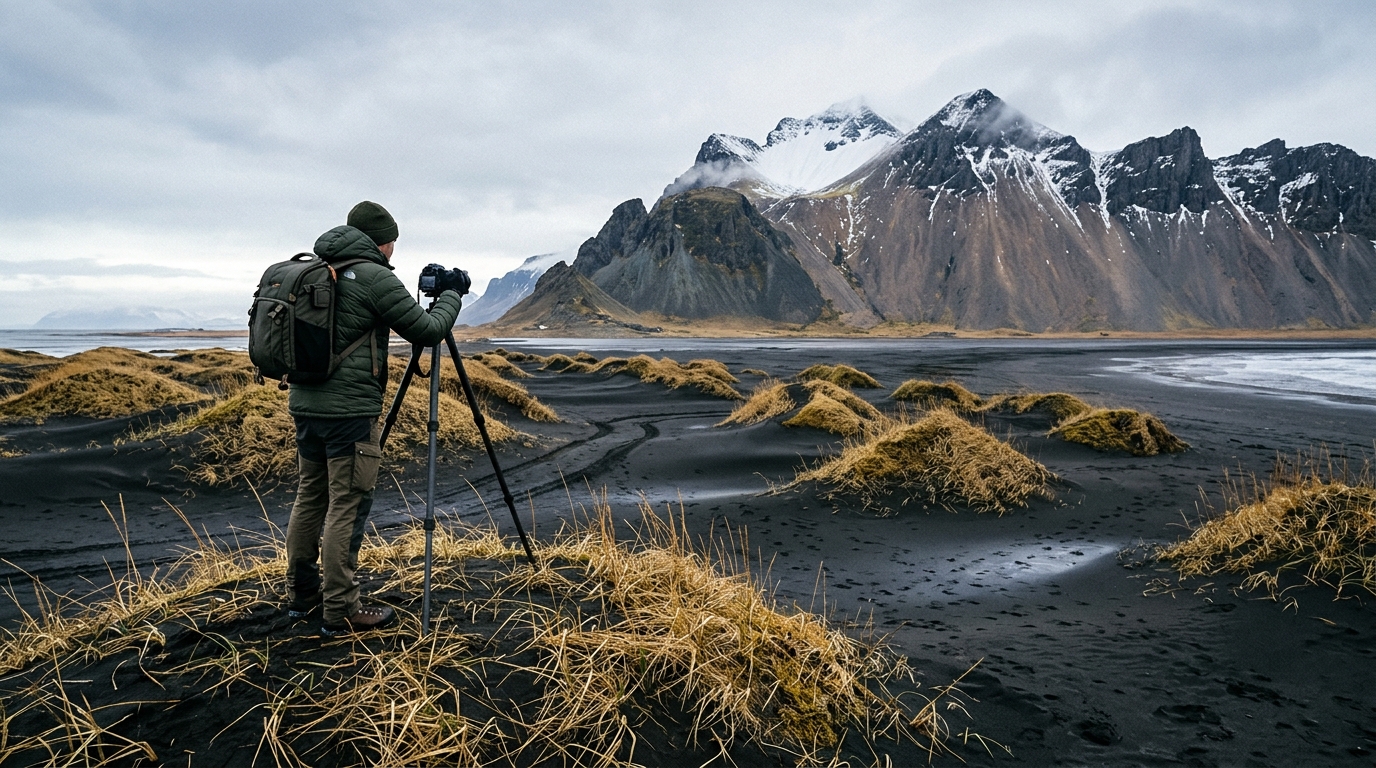
Iceland, a land forged by fire and ice, presents photographers with an unparalleled canvas of dramatic landscapes. From towering glaciers and black sand beaches to geothermal wonders and cascading waterfalls, every corner offers a unique visual story. However, merely pointing your camera at these spectacular scenes often results in a snapshot that fails to capture the true grandeur and emotion. To truly distinguish your work and convey the essence of this Nordic paradise, it's time to move beyond basic photography rules and embrace advanced composition techniques for Iceland landscapes.
This guide is designed for the discerning photographer who seeks to transform their Iceland images from good to extraordinary. We'll delve into sophisticated methods that help you interpret the vast, complex Icelandic terrain, creating images that resonate with depth, emotion, and a powerful sense of place. Prepare to elevate your shots and unlock the full potential of Iceland's breathtaking beauty through thoughtful, intentional composition.
Beyond the Snapshot – Elevating Your Iceland Photography
Iceland's raw, untamed beauty offers both immense opportunities and significant challenges for photographers. The sheer scale can overwhelm, the ever-changing light can be deceptive, and the unique geological features demand a nuanced approach. While the Rule of Thirds and leading lines are foundational, relying solely on them in Iceland's dynamic environment can lead to images that feel generic or fail to convey the true majesty of the scene.
For the expert photographer, the goal is to move beyond simply documenting a scene. It's about interpreting it, infusing it with personal vision, and crafting a visual narrative that draws the viewer in. This involves understanding how elements interact, how light sculpts the landscape, and how to use compositional tools not as rigid rules, but as a flexible framework for creative expression. This guide will cover a range of sophisticated techniques, from mastering scale and perspective to harnessing the power of juxtaposition and color, equipping you with the tools to create truly impactful and memorable images of Iceland.
Beyond the Rule of Thirds: Why Advanced Composition Techniques Matter in Iceland
The Rule of Thirds is a fantastic starting point for any photographer, guiding the eye and creating a sense of balance. However, in the face of Iceland's vast, often chaotic, and incredibly diverse landscapes, its limitations quickly become apparent. Imagine standing before the expansive black sand beach of Reynisfjara, or the immense Dettifoss waterfall. Simply placing a horizon on a third or an interesting rock at an intersection point might result in a "correct" photo, but it often lacks the emotional punch or the true sense of scale and drama that the scene embodies.
Advanced composition techniques for Iceland landscapes are crucial because they empower you to capture the inherent emotion, depth, and unique sense of place that defines this country. Instead of merely dividing a frame, you're learning to sculpt it, to guide the viewer's eye through a complex visual journey. This might involve creating a sense of intimacy within a grand vista, or emphasizing the sheer power of a natural phenomenon. For instance, how do you convey the chilling silence of a glacial lagoon or the fiery intensity of an active geothermal area? Basic rules often fall short here.
Iceland's unique visual language—its stark contrasts, geometric basalt columns, meandering rivers, and dramatic weather patterns—demands a more nuanced approach. It requires you to consider not just where elements are placed, but how they relate to each other, how they interact with light, and what story they collectively tell. By understanding and applying these advanced methods, you move from simply recording what's there to crafting an artistic interpretation that resonates deeply with your audience. To discover prime locations tailored for capturing stunning landscape compositions, explore Iceland Photo Map's curated landscape photography maps. Source: Guidetoiceland source.
Mastering Leading Lines and Curves in Iceland's Dynamic Terrain
While leading lines are a fundamental compositional tool, Iceland elevates their application to an art form. The country's geology and hydrology naturally carve out an abundance of dynamic lines and curves, offering endless opportunities to guide the viewer's eye through your frame and create a profound sense of depth and movement. Moving beyond simply identifying a straight path, mastering these elements in Iceland means understanding their character and how they interact with the overall scene.
Identifying natural leading lines:
- Rivers and Glacial Meltwater: Iceland's braided rivers, like those found in the Highlands or near the Vatnajökull glacier, are a photographer's dream. Their intricate patterns, often seen from a higher vantage point, create stunning S-curves and diagonal lines that lead the eye deep into the landscape. The milky blue-grey tones of glacial meltwater offer a unique color contrast against black sands or green moss.
- Roads and Tracks: The iconic Ring Road (Route 1) and countless gravel tracks crisscrossing the interior provide strong linear elements. A winding road disappearing into the distance can evoke a sense of journey and exploration. Consider how the road interacts with the surrounding mountains or a distant church.
- Basalt Columns: Locations like Reynisfjara or Gerðuberg offer natural, geometric leading lines in the form of hexagonal basalt columns. These can be used to draw the eye upwards, emphasizing height, or horizontally, creating a strong foreground element.
- Coastlines: The dramatic coastlines, particularly those featuring black sand beaches, create sweeping curves and diagonals as waves recede and reveal patterns in the sand. The line where the ocean meets the land can be a powerful horizontal element, but look for the subtle curves in the water's edge or the patterns left by tides.
- Ice Formations: In glacial lagoons like Jökulsárlón or Diamond Beach, the edges of icebergs, reflections, and the lines of the breaking ice can form fascinating leading lines, drawing the viewer towards a larger iceberg or a distant glacier.
Utilizing S-curves and diagonal lines:
- S-curves: These graceful, serpentine lines are incredibly effective at creating a sense of flow and elegance. Rivers, winding paths, or even the gentle slope of a hill can form S-curves. They invite the eye to wander leisurely through the image, adding a dynamic yet harmonious quality.
- Diagonal lines: Unlike horizontal or vertical lines which can feel static, diagonals inject energy and tension into a composition. They imply movement and can lead the eye rapidly through the scene. A mountain ridge sloping into the frame, a ray of light cutting across the sky, or a wave breaking diagonally can add significant impact. Using diagonals can be particularly effective in conveying the dramatic topography of Iceland.
Techniques for creating depth and movement:
To maximize the effect of leading lines, consider these techniques:
- Foreground Interest: Begin your leading line in the foreground to create immediate depth. A stream starting near your feet and winding into the midground and background can be incredibly effective.
- Converging Lines: Parallel lines, such as those of a road or a fence, appear to converge in the distance, naturally drawing the eye to a focal point. This is a powerful way to create a sense of vastness and distance.
- Rule of Odds/Evens: While not strictly about lines, consider how multiple lines interact. An odd number of strong lines can often feel more dynamic and less symmetrical than an even number.
- Long Exposures: For moving elements like water, a long exposure can transform choppy waves or rushing rivers into silky smooth leading lines, emphasizing flow and movement. This works exceptionally well with Iceland's numerous waterfalls and coastal scenes.
By consciously seeking out and utilizing these natural formations, you can craft compositions that are not only visually appealing but also tell a more compelling story of Iceland's ever-changing, dynamic landscape. For further reading on compositional techniques, consider exploring resources like Digital Photography School's articles on advanced composition.
Harnessing Scale and Perspective for Dramatic Iceland Landscapes
One of the most striking characteristics of Iceland is its monumental scale. Waterfalls plunge hundreds of feet, glaciers stretch for miles, and mountains seem to touch the sky. Capturing this grandeur effectively requires a deliberate approach to scale and perspective, moving beyond simply including a wide-angle view. It's about making the viewer truly feel the immensity of the scene.
Emphasizing grandeur by incorporating small human elements or distant geological features:
- Human Element: Placing a lone figure, a hiker, or a small group of people within a vast landscape immediately provides a relatable reference point for scale. A person standing at the base of Skógafoss or walking across a black sand beach instantly communicates the immense size of these features. The key is to make the human element small enough not to dominate, but large enough to be discernible.
- Distant Geological Features: Use a familiar object in the foreground, like a patch of vibrant moss or a distinct rock, to contrast with a colossal background element such as a mountain range, a distant glacier, or the vastness of the ocean. This creates a powerful sense of depth and distance, allowing the viewer to appreciate the true scale of the landscape. For example, a close-up of basalt columns at Dyrhólaey with the archway and distant coastline can emphasize the sheer rock formations.
- Vehicles or Structures: A small car on a winding road, a remote church, or a lighthouse can also serve as excellent scale indicators, particularly when juxtaposed against towering cliffs or endless plains. Consider the iconic Búðakirkja (Black Church) against the dramatic Snaefellsnes Peninsula landscape.
Applying forced perspective techniques to manipulate perceived size and distance:
Forced perspective involves using optical illusion to make objects appear closer, farther away, larger, or smaller than they actually are. While often used for whimsical effects, it can be powerfully applied in landscape photography to exaggerate scale:
- Extreme Foreground: Place a very prominent object in your immediate foreground (e.g., a large rock, a piece of driftwood, or a flower) and compose it with a distant, impressive feature. By carefully aligning them and using a wide-angle lens, you can make the foreground object seem enormous in comparison to the distant subject, or vice-versa, manipulating the perception of depth and scale.
- Layering: Create distinct layers from foreground to background. Each layer provides a visual anchor, allowing the eye to measure distance and scale progressively. Mountains receding into the mist or a series of hills can create this effect.
Choosing between wide-angle and telephoto lenses to best convey scale and immersion:
- Wide-Angle Lenses (14-35mm): These are excellent for capturing expansive views and emphasizing foreground elements. They excel at creating a sense of immersion, pulling the viewer into the scene. Wide-angle lenses naturally exaggerate perspective, making foreground objects appear larger and background elements smaller and further away. This is ideal when you want to show the vastness of a scene and include a strong foreground. They are perfect for conveying the sheer breadth of a glacial lagoon, a black sand beach, or a geothermal field.
- Telephoto Lenses (70-300mm+): While often overlooked for landscapes, telephoto lenses are invaluable for compressing perspective. They make distant objects appear closer together and flatter the scene, reducing the sense of depth. This compression can be incredibly effective for emphasizing the sheer density or height of distant mountains, layers of geological features, or isolating specific elements within a grand vista. For instance, using a telephoto to photograph a distant waterfall nestled between mountains can make the mountains appear more imposing and closer to the waterfall than they are in reality. Telephoto lenses are also excellent for isolating patterns and textures in distant ice formations or mountain slopes.
Understanding when to use each lens type, or even combining perspectives with panoramic stitching, allows you to meticulously control how scale is perceived in your Iceland landscape compositions. For more ideas on where to find such dramatic features, browse Iceland Photo Map's extensive list of photography locations.
Effective Framing: Using Natural Elements to Enhance Your Iceland Photos
Framing is a powerful advanced composition technique that adds depth, context, and visual interest by using elements within the scene to create a "frame" around your main subject. In Iceland, the landscape itself provides an incredible array of natural framing opportunities, turning a simple shot into a layered, compelling image.
Utilizing natural arches, caves, ice formations, and rock structures as compelling frames:
- Natural Arches and Caves: Iceland boasts magnificent natural formations like Dyrhólaey's arch or numerous ice caves. Shooting through these openings, with your main subject (e.g., the ocean, a distant mountain, or a glacier) visible through the arch or cave entrance, adds a profound sense of depth and mystery. The arch or cave itself becomes a natural border, drawing the eye directly to what lies beyond.
- Ice Formations: At glacial lagoons or on Diamond Beach, large ice chunks can be strategically positioned in the foreground to frame a distant iceberg, a mountain, or the sunrise/sunset. The translucent quality of the ice can also add unique light effects to your frame.
- Rock Structures: Jagged cliffs, volcanic rock formations, and even large boulders can serve as natural frames. Consider shooting from behind a prominent rock, allowing its silhouette to frame a waterfall, a black sand beach, or the northern lights. These natural frames often add texture and a sense of ruggedness that complements the Icelandic landscape.
- Vegetation: While less common in the stark interior, areas with moss-covered lava fields or small trees (like those in Burfell Forest) can provide softer, organic frames.
Creating depth and focus by framing your main subject within the scene:
The primary purpose of framing is to direct the viewer's attention and create a sense of three-dimensionality:
- Isolating the Subject: A frame helps to isolate your main subject, preventing distractions from the edges of the photograph. It acts like a spotlight, highlighting what you want the viewer to see.
- Layered Depth: By placing a foreground frame, you immediately create a sense of depth. The viewer's eye travels from the frame, through the mid-ground, to the main subject in the background, adding visual interest and complexity.
- Contextual Storytelling: A frame can add context to your subject. For example, framing a waterfall through the branches of a tree tells a different story than a wide-open shot – perhaps one of hidden beauty or discovery.
The strategic role of negative space and 'framing within a frame' for visual impact:
- Negative Space: While framing often involves solid elements, don't underestimate the power of negative space. A wide-open sky or a calm body of water can act as a natural frame around a distant mountain, allowing the subject to breathe and emphasizing its isolation.
- Framing Within a Frame: This advanced technique involves using multiple layers of frames. For example, you might frame a distant mountain range through a natural arch, which itself is framed by foreground rocks. This creates an incredibly rich and immersive composition, guiding the eye through several stages before reaching the ultimate focal point. It adds complexity and rewards closer inspection.
When scouting locations, often look for these natural opportunities. Get low, get high, and move around to find the perfect angle where the landscape itself becomes your compositional ally.
The Art of Juxtaposition: Contrasting Elements in Icelandic Scenes
Iceland is a land of stark, powerful contrasts, making it an ideal canvas for the art of juxtaposition. This advanced compositional technique involves placing two opposing or contrasting elements close together in a frame to highlight their differences, create tension, or tell a more complex story. In Iceland, these contrasts are often inherent in the landscape, providing endless opportunities for compelling imagery.
Pairing 'ice and fire' (glaciers and geothermal areas) for powerful visual narratives:
The quintessential Icelandic juxtaposition is "ice and fire." This isn't just a metaphor; it's a tangible reality that can be captured in a single frame or across a series of images:
- Glacial Outlets and Volcanic Sands: Photographing a glacial tongue, often streaked with black volcanic ash, against a backdrop of dark, volcanic sand or a distant steaming vent. The cold, ancient ice meets the raw, fiery earth.
- Geothermal Activity Near Glaciers: While less common in a single frame, conceptual juxtaposition can be achieved by showing the vibrant, boiling mud pots and steaming fumeroles of a geothermal area (like Námafjall) and then immediately showcasing the serene, frozen landscape of a nearby glacier. The contrast in color, texture, and temperature is incredibly powerful.
- Icebergs on Black Sand: The luminous blue and white icebergs of Diamond Beach resting on the jet-black volcanic sand are a perfect example of this contrast, highlighting purity against starkness.
Contrasting black sand beaches with white waves, or ancient lava fields with vibrant moss:
- Black Sand and White Waves: The South Coast's famous black sand beaches, such as Reynisfjara or Djúpárlónssandur, offer a dramatic contrast with the white foam of the Atlantic waves. Capturing the dynamic interplay between the dark sand and the frothy water creates a visually striking image that speaks to the power of nature.
- Lava Fields and Moss: Iceland's ancient lava fields, particularly in areas like Eldhraun, are often covered in incredibly vibrant, thick green moss. The rugged, dark, sharp edges of the lava rock juxtaposed with the soft, undulating, luminous green moss creates a textural and color contrast that is uniquely Icelandic and visually captivating.
- Waterfalls and Basalt Columns: The soft, flowing white water of a waterfall (like Svartifoss) against the rigid, dark, geometric patterns of basalt columns behind it is another classic Icelandic juxtaposition.
Integrating man-made structures (churches, lighthouses) against wild nature to create tension:
- Churches in Remote Settings: Small, often brightly colored churches (like Búðakirkja or the Church in Víðimýri) standing alone against a vast, wild landscape of mountains, lava fields, or dramatic skies create a sense of human resilience and isolation. The delicate human structure contrasts sharply with the raw power of nature.
- Lighthouses: Iconic lighthouses, often painted in bright colors, perched on dramatic cliff edges (e.g., Dyrhólaey lighthouse) stand as symbols of guidance and safety against the formidable, often stormy, ocean. This contrast speaks to humanity's struggle and coexistence with nature.
- Isolated Farms/Houses: A lone farmhouse nestled in a sprawling valley or on a remote coastline emphasizes the vastness and solitude of the Icelandic countryside.
When employing juxtaposition, consider not just the elements themselves, but also their relative size, color, texture, and emotional impact. The goal is to create a visual conversation that makes the viewer pause and reflect on the scene's deeper meaning.
Color Theory and Light: Elevating Mood and Impact in Iceland Photography
Light is the essence of photography, and in Iceland, it performs a magnificent, ever-changing dance. Understanding color theory and how to harness Iceland's unique light conditions is paramount for elevating your landscape photography, allowing you to control mood, emphasize features, and create truly impactful images.
Understanding Iceland's unique light conditions: golden hour, blue hour, and the aurora borealis:
- Golden Hour (Sunrise/Sunset): Iceland's low sun angles, especially during the extended summer golden hours, bathe the landscape in warm, soft, directional light. This light accentuates textures, creates long shadows that add depth, and imparts a magical glow to everything it touches. Volcanic rock, glaciers, and waterfalls come alive with rich, saturated colors. This is the prime time for capturing dramatic landscapes.
- Blue Hour (Just Before Sunrise/After Sunset): This period offers a cool, ethereal light that is perfect for capturing moody, serene, or mysterious scenes. The sky takes on deep blues and purples, and artificial lights (if present) glow warmly. Blue hour is excellent for coastal scenes, lighthouses, and urban landscapes, creating a sense of calm and clarity.
- Aurora Borealis (Northern Lights): From late August to April, the aurora offers a spectacular light show. Photographing the aurora requires understanding long exposure techniques and how the green, pink, and purple hues interact with the dark landscape. The aurora itself becomes a dynamic, colorful element against the stark Icelandic night, demanding careful composition to balance the sky with foreground interest.
- Midday Light: While often harsh, Iceland's midday light can be surprisingly useful, especially on overcast days which diffuse the light beautifully, or for emphasizing the vibrant blues of glacial ice or the intense greens of moss. Look for strong shadows and contrast if shooting on a bright, sunny day.
Applying complementary and analogous colors to enhance visual harmony or contrast:
- Complementary Colors: These are colors opposite each other on the color wheel (e.g., blue and orange, red and green). In Iceland, this often translates to the vibrant orange/red of a sunset/sunrise against a deep blue sky or water, or the vivid green moss against the reddish-brown earth. Using complementary colors creates strong visual contrast and energy, making elements pop.
- Analogous Colors: These are colors next to each other on the color wheel (e.g., blues, greens, and purples). Analogous palettes create a sense of harmony, calm, and unity. Think of the various shades of blue in a glacial lagoon, or the greens and yellows of a mossy landscape. They can evoke a peaceful or melancholic mood.
Using monochromatic palettes to convey specific moods and how weather influences color:
- Monochromatic Palettes: Sometimes, the most powerful images strip away color complexity. An all-grey, black, and white scene (e.g., a stormy sky over black sand, or a glacier in dense fog) can convey immense drama, solitude, or raw power. Monochromatic compositions emphasize texture, shape, and light. Consider converting to black and white to highlight these elements.
- Weather's Influence:
- Overcast/Foggy Days: Diffused light reduces contrast and saturates colors, making greens incredibly vibrant and blues deeper. Fog adds mystery and simplifies the scene, allowing you to focus on form and texture.
- Rain: Rain intensifies colors and creates reflective surfaces, adding depth and drama.
- Snow: Fresh snow can create a stunning monochromatic scene, emphasizing shapes and forms, or providing a stark white canvas against which other colors (like a red church or the aurora) pop dramatically.
By consciously observing and utilizing these principles of light and color, you can transform your Iceland photographs into evocative pieces that resonate emotionally with your audience. For more detailed insights into using light in landscape photography, consider resources like Photography Life's comprehensive guide on using light in landscape photography.
Storytelling Through Composition: Crafting Narratives in Your Iceland Images
Beyond capturing beautiful scenes, the most impactful photographs tell a story. In Iceland, where every landscape feels ancient and alive, storytelling through composition allows you to imbue your images with meaning, emotion, and a sense of narrative that goes far beyond a simple visual record. It’s about creating a dialogue between the viewer and the scene.
Building a visual narrative that goes beyond a single shot:
While a single image can be powerful, consider how your photographs might work together to tell a larger story. Think of your trip as a photographic journey, where each image contributes to an overarching theme:
- Sequences: Capture a series of images that show progression – perhaps the changing light over a mountain range, a river flowing from a glacier to the sea, or the stages of a geothermal eruption (from steam to geyser).
- Themes: Focus on a specific theme across multiple shots, such as "the resilience of life in Iceland" (moss on lava, a lone sheep), "the power of water" (waterfalls, glacial rivers, ocean waves), or "humanity's footprint" (isolated churches, lighthouses).
- Contrasting Elements: As discussed with juxtaposition, tell a story through contrast – the delicate balance of ice and fire, or the ancient vs. the modern.
Capturing a sense of place, journey, or a specific moment in time:
- Sense of Place: Use compositional elements that are iconic to Iceland. Frame a waterfall with basalt columns, include a puffin in a coastal shot, or show the distinctive Icelandic horse against a sweeping landscape. These elements immediately ground the viewer in Iceland. Ensure your composition emphasizes the unique characteristics of the location, be it the vastness of the Highlands or the intimacy of a hidden cove.
- Sense of Journey: Leading lines, particularly roads or paths, are excellent for conveying a sense of journey. A winding road disappearing into the distance, or a lone figure walking towards a distant peak, can invite the viewer to imagine themselves on that path. Consider the horizon line and where it leads the eye.
- Specific Moment in Time: Light is crucial here. The dramatic light of a sunrise, the ethereal glow of the blue hour, or the vibrant dance of the aurora borealis instantly anchor an image to a specific moment. Compositionally, this might involve framing the rising sun, or using a long exposure to capture the movement of clouds or water, emphasizing the passage of time.
Connecting emotionally with your audience through thoughtful compositional choices:
Emotional connection is the ultimate goal of storytelling. Your compositional choices directly influence how a viewer feels:
- Evoking Awe: Use scale and wide-angle lenses to emphasize grandeur, making the viewer feel small in the face of nature's majesty.
- Creating Serenity: S-curves, harmonious colors, and a sense of balance can evoke calm.
- Building Mystery: Framing, negative space, and atmospheric conditions (fog, mist) can create intrigue and encourage the viewer to look closer.
- Conveying Solitude: A single, small element in a vast, empty landscape immediately speaks to loneliness or peaceful isolation.
Every decision, from your choice of lens to the placement of elements within the frame, contributes to the narrative. By consciously thinking about the story you want to tell, you move from being a photographer to a visual storyteller. To help plan your narrative journey, explore Iceland Photo Map's curated itineraries which offer routes optimized for photographic discovery. For more on visual storytelling, consider resources like National Geographic's advice on telling stories with photos.
Conclusion: Your Journey to Advanced Iceland Landscape Photography
Iceland is more than just a destination; it's an experience that demands to be captured with intention and artistry. By moving beyond the foundational rules and embracing advanced composition techniques for Iceland landscapes, you unlock a new level of photographic expression. We've explored how mastering leading lines and curves can guide the eye, how harnessing scale and perspective conveys grandeur, and how effective framing creates depth and focus. We've also delved into the art of juxtaposition to highlight Iceland's dramatic contrasts, and understood the profound impact of color theory and light on mood and message. Finally, we've emphasized the power of storytelling through composition, transforming individual shots into compelling narratives.
The true beauty of advanced composition lies not in rigid adherence to rules, but in understanding them deeply enough to apply, adapt, or even break them creatively. Iceland's ever-changing light, weather, and dynamic terrain invite experimentation. We encourage you to practice these techniques, to look at the landscape with fresh eyes, and to develop your own unique photographic vision. Spend time scouting locations, observing the light, and pre-visualizing your shots. Don't be afraid to try different angles, perspectives, and focal lengths.
The reward for this dedication is immense: capturing truly unique, impactful, and emotionally resonant images that not only showcase Iceland's breathtaking beauty but also reflect your personal connection to this extraordinary land. These are the photographs that will stand out, inspire awe, and tell a story that lasts. Your journey to advanced Iceland landscape photography is an ongoing one, filled with discovery and creative growth.
Frequently Asked Questions
What is the most important advanced composition technique for Iceland landscapes?
While all advanced techniques are interconnected, harnessing scale and perspective is arguably the most critical for Iceland landscapes. The country's immense features – vast glaciers, towering waterfalls, and expansive black sand beaches – can easily be lost without conscious compositional choices to emphasize their grandeur. Incorporating small human elements, using forced perspective, and strategically choosing between wide-angle and telephoto lenses are key to conveying the true majesty and making the viewer feel the scene's immensity.
How can I make my Iceland photos stand out from others using composition?
To make your Iceland photos stand out, move beyond obvious viewpoints and common compositions. Focus on:
- Unique Perspectives: Get low, get high, or find unusual angles. Don't just shoot from eye level.
- Emotional Storytelling: Instead of just documenting, think about the emotion or narrative you want to convey. Use juxtaposition, light, and specific elements to tell a deeper story.
- Intentional Use of Light: Master shooting during golden and blue hours, and understand how different weather conditions influence the mood and color palette.
- Layered Depth: Utilize strong foreground interest, mid-ground elements, and a compelling background to create a sense of three-dimensionality that draws the viewer in.
- Break the Rules (Intelligently): Once you understand the rules, know when and how to break them for creative impact. Sometimes, a centered subject or an unconventional crop can be more powerful.
Are there specific locations in Iceland that are best for practicing advanced composition?
Every location in Iceland offers compositional opportunities, but some are particularly rich:
- Reynisfjara Black Sand Beach: Excellent for leading lines (waves, basalt columns), scale (Dyrhólaey arch, sea stacks), and juxtaposition (black sand vs. white foam).
- Jökulsárlón Glacial Lagoon & Diamond Beach: Perfect for leading lines (ice formations), scale (icebergs vs. small human figures), and color theory (blue ice, black sand).
- The Highlands (e.g., Landmannalaugar): Ideal for vast landscapes, emphasizing scale, layered depth, and color theory with its rhyolite mountains.
- Waterfalls (e.g., Skógafoss, Seljalandsfoss, Svartifoss): Great for leading lines (water flow), framing (behind the falls, basalt columns), and conveying motion with long exposures.
- Snaefellsnes Peninsula: Offers diverse opportunities from coastal cliffs and isolated churches (Búðakirkja) to Kirkjufell mountain, allowing practice with framing, juxtaposition, and unique perspectives.
Should I always follow composition rules, or is it okay to break them for creative effect?
Compositional rules like the Rule of Thirds or leading lines are excellent guidelines, not unbreakable laws. For expert photographers, understanding when and how to break them is a hallmark of advanced practice. Break a rule when it serves a specific creative purpose: to create tension, emphasize a feeling, or draw attention to something unexpected. For example, centering a subject can create a powerful, static, and contemplative image, while intentionally placing a strong element right at the edge of the frame can create unease or dynamism. The key is to break rules with intent and understanding, not out of ignorance.
Explore Iceland Photo Map's curated photography maps to find the perfect locations to practice these advanced composition techniques and capture your next masterpiece.