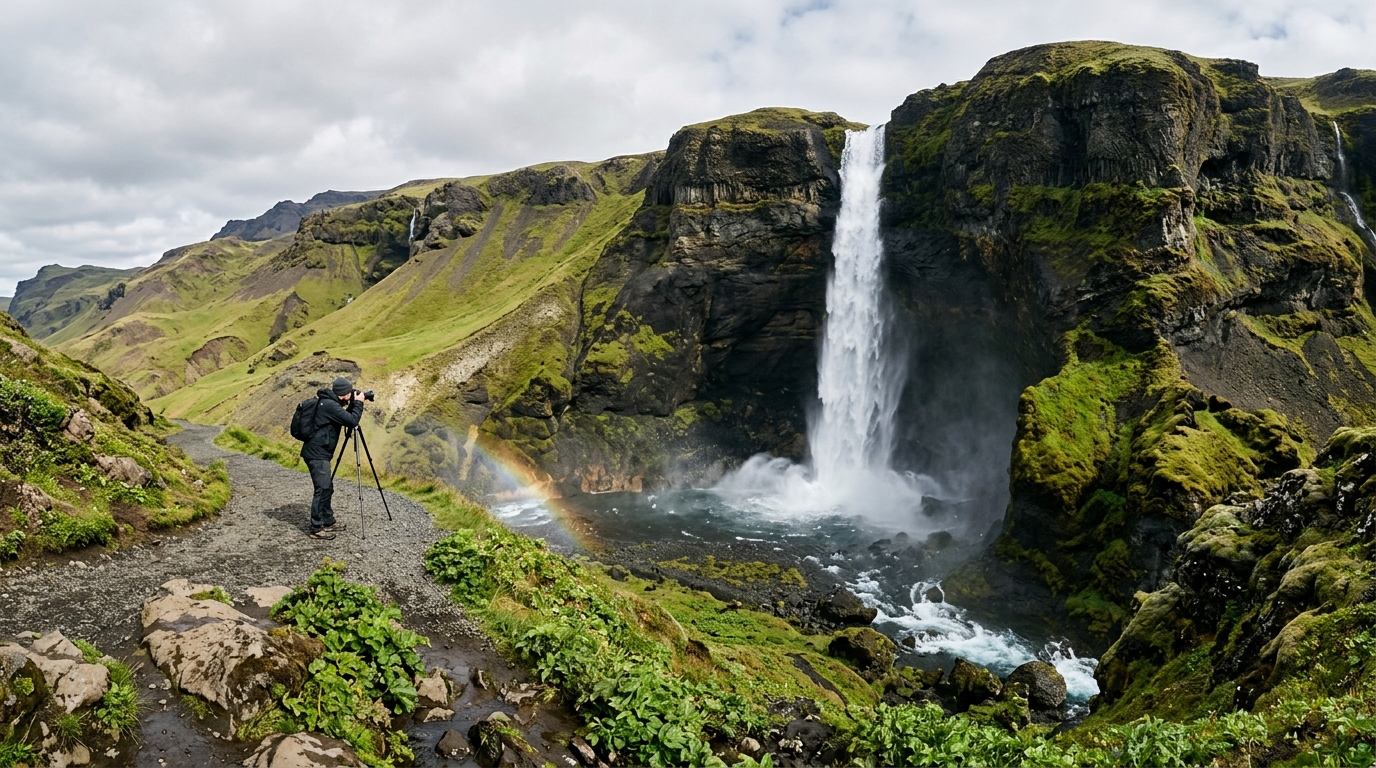
The 12 Best Waterfalls to Photograph in Iceland (With Map & GPS)
Introduction to Iceland Waterfall Photography
Imagine standing before a roaring cascade of glacial water, the mist kissing your face as the dramatic, moody skies of the North Atlantic loom overhead. There is simply no place on earth quite like Iceland for landscape photographers. While this majestic island is globally celebrated as the "Land of Fire and Ice," it is equally the land of countless, awe-inspiring waterfalls. From thunderous drops that shake the earth beneath your boots to delicate, hidden streams weaving through ancient lava fields, finding the best waterfalls to photograph in Iceland is a top priority for any visiting creative.
For both amateur and professional photographers, the sheer volume of photographic opportunities can be overwhelming. Where do you start? How do you find the hidden gems away from the massive tour buses? The purpose of this comprehensive guide is to walk you through the ultimate Iceland waterfall photography journey. We will direct you to the most photogenic locations, provide actionable camera tips, and show you how to use GPS maps to ensure you are in the right place at the exact right time.
Why Iceland is a Paradise for Waterfall Photography
There is a reason why the best waterfalls to photograph in Iceland consistently grace the covers of major photography magazines and dominate social media feeds. The island's unique geological features create an environment perfectly engineered for spectacular cascades. Iceland sits on the Mid-Atlantic Ridge, a hotbed of volcanic activity. Over millennia, volcanic eruptions have carved dramatic basalt columns, deep canyons, and rugged cliffs. Combine this dramatic topography with the massive glaciers that cover 11% of the country—such as Vatnajökull and Langjökull—and you have a constant, powerful supply of glacial meltwater carving its way to the ocean.
This unique geology means you aren't just photographing one type of waterfall. Iceland offers incredible diversity. You will find massive plunge waterfalls that drop straight down from high cliffs, tiered cascading falls that tumble gracefully over rocky steps, and wide block waterfalls that span entire rivers. Every location offers a completely different composition and mood.
Furthermore, the lighting conditions in Iceland are a landscape photographer's dream. During the summer months, the phenomenon of the Midnight Sun provides an extended "golden hour" that can last for hours, bathing the waterfalls in soft, warm, directional light late into the night. Conversely, visiting in the winter introduces the possibility of capturing these frozen or partially frozen falls beneath the dancing green and purple ribbons of the Northern Lights (Aurora Borealis). This dynamic interplay of extreme landscapes and otherworldly lighting elevates Iceland waterfall photography to a league of its own.
The 12 Best Waterfalls to Photograph in Iceland
Whether you are traveling the famous Ring Road or venturing into the remote highlands, prioritizing the best waterfalls to photograph in Iceland will guarantee a stunning portfolio. Here is our curated list of the top 12 must-visit cascades.
1. Skógafoss
Located right off the South Coast, Skógafoss is arguably the most iconic waterfall in the country. A classic Skogafoss photo spot is straight on from the black pebble riverbed, using a wide-angle lens to capture the sheer 60-meter drop and the immense power of the water. On sunny days, the heavy spray almost guarantees a vibrant single or double rainbow, adding a magical element to your composition. Don't forget to climb the steep staircase to the right of the falls; the top-down vantage point offers a fantastic perspective of the river winding toward the ocean.
2. Gullfoss
As the crown jewel of the Golden Circle, Gullfoss photography requires capturing immense scale. Translating to the "Golden Falls," this massive two-tiered waterfall drops a total of 32 meters into a rugged canyon. To truly capture its grandeur, utilize the various walking paths to shoot from different vantage points. A wide-angle lens is essential here to fit the entire width of the Hvítá river into your frame. Try shooting from the lower path to get close to the roaring water, or head to the upper viewing deck for a sweeping, panoramic shot of the canyon.
3. Dettifoss
If you want to capture raw, unbridled power, you must visit Dettifoss in North Iceland. Known as Europe's most powerful waterfall, the milky, grey glacial water of Dettifoss plummets into the Jökulsárgljúfur canyon with terrifying force. The atmosphere here is inherently moody and cinematic. Photographing Dettifoss on an overcast day with a neutral density filter can help you convey the dark, dramatic, and almost apocalyptic beauty of this incredible location.
4. Dynjandi
Tucked away in the remote Westfjords, Dynjandi (also known as Fjallfoss) is a breathtaking bridal-veil waterfall that cascades down a series of rocky terraces. Because it is wider at the bottom than at the top, it offers fantastic natural leading lines. As you hike up the trail to the main falls, you will pass several smaller, highly photogenic waterfalls. Use these smaller drops as foreground interest to lead the viewer's eye up toward the massive main cascade of Dynjandi in the background.
5. Goðafoss
The "Waterfall of the Gods" in North Iceland features a beautiful horseshoe shape that makes for incredibly balanced panoramic photography. The contrasting blue glacial water against the dark basalt rock is stunning, especially during the winter when the surrounding rocks are coated in thick ice and snow.
6. Kirkjufellsfoss
While the waterfall itself is relatively small, Kirkjufellsfoss is famous for its backdrop: the arrow-shaped Kirkjufell mountain. By setting your tripod low near the water, you can frame the cascading streams in the foreground with the majestic mountain towering in the background, creating one of the most recognizable landscape compositions in the world.
7. Aldeyjarfoss
For those willing to drive a bit off the beaten path into the highlands, Aldeyjarfoss offers a striking visual contrast. The powerful white water rushes through a narrow passage surrounded by perfectly formed, geometric black basalt columns. It is a masterclass in texture and natural architecture.
8. Svartifoss
Located in Skaftafell within Vatnajökull National Park, Svartifoss (the Black Falls) is surrounded by dark, hexagonal basalt columns that famously inspired the architecture of Hallgrímskirkja in Reykjavík. A moderate hike is required, but the unique geometric framing makes it a must-shoot location.
9. Hraunfossar
Unlike traditional plunge waterfalls, Hraunfossar is a series of countless tiny springs seeping directly out of the Hallmundarhraun lava field. The water flows over a distance of about 900 meters, pouring into the turquoise Hvítá river. It is a fantastic location for abstract and long-exposure photography.
10. Faxi
Often overshadowed by its massive neighbor Gullfoss, the Faxi waterfall is a wide, peaceful block waterfall on the Golden Circle. It is much less crowded, allowing photographers the time and space to set up precise compositions without tourists walking through the frame.
11. Brúarfoss
Famous for having the bluest water in Iceland, Brúarfoss is a hidden gem that requires a bit of a hike. The glacial water falls into a deep, narrow crevice, swirling in vibrant shades of icy blue. A polarizer is absolutely essential here to cut through the glare and capture the true intensity of the water's color.
12. Kvernufoss
Located just a few minutes from Skógafoss, Kvernufoss is tucked away in a beautiful, moss-lined gorge. Like Seljalandsfoss, you can walk behind this waterfall, but you will often have the place entirely to yourself, making it perfect for uninterrupted creative shooting.
Master Your Camera Settings: Seljalandsfoss Camera Settings & More
Capturing the magic of moving water requires a solid understanding of manual camera controls. Let's look at specific Seljalandsfoss camera settings as a prime example, especially since this is the famous waterfall you can walk entirely behind.
When shooting from behind Seljalandsfoss, you are dealing with high dynamic range—the dark, shadowed cave in the foreground and the bright sky in the background. You have two main creative choices here: freezing the motion or blurring the water. To freeze the explosive spray, you will need a fast shutter speed (e.g., 1/500th of a second) and a wider aperture (f/4 or f/5.6) to let in enough light. However, if you want the classic, dreamy "silky water" effect, you need to slow things down.
To master the exposure triangle for silky waterfalls across Iceland, follow these baseline rules:
- ISO: Keep it as low as possible (ISO 50 or 100) to ensure maximum image quality and reduce the camera's sensitivity to light, allowing for longer shutter speeds.
- Aperture: Find your lens's sweet spot, typically between f/8 and f/11. This provides a deep depth of field, ensuring everything from the rocks in the foreground to the cliffs in the background remains razor-sharp. Avoid stopping down to f/22 if possible, as lens diffraction can soften your image.
- Shutter Speed: To achieve that beautiful silky water effect, aim for a shutter speed between 1/2 second and 2 seconds. Anything longer than 2 seconds might turn the water into a featureless white blob, losing the pleasing texture of the rushing cascade.
Essential Gear for Iceland Waterfall Photography
The conditions in Iceland are notoriously harsh and unpredictable. To successfully execute your Iceland waterfall photography goals, you need to pack the right gear. A camera and a good lens are only the beginning.
Sturdy Tripod: A tripod is non-negotiable for long-exposure photography. However, a flimsy travel tripod will not survive Icelandic winds. Invest in a sturdy, heavy-duty carbon fiber or aluminum tripod. Many photographers hang their camera bags from the center column hook for added stability against strong gusts.
ND Filters and Polarizers: Neutral Density (ND) filters act like sunglasses for your camera lens, allowing you to shoot long exposures even in the middle of the day. A 3-stop or 6-stop ND filter is usually perfect for waterfalls. Additionally, a Circular Polarizer (CPL) is incredibly valuable. It cuts through the atmospheric haze, darkens blue skies, and most importantly, removes the distracting glare from wet, shiny rocks, allowing the natural colors of the moss and stone to pop.
Weather Sealing and Rain Covers: The spray from waterfalls like Skógafoss and Dettifoss is intense—it is essentially a localized rainstorm. Ensure your camera and lenses are weather-sealed. Even with weather sealing, it is highly recommended to use a dedicated camera rain cover or sleeve to protect your electronics from prolonged exposure to moisture.
Microfiber Cloths: You cannot bring too many microfiber cloths to Iceland. You will be constantly wiping mist and water droplets off your front lens element. Keep several dry cloths in your interior pockets so they stay warm and dry.
How to Find the Best Waterfalls to Photograph in Iceland Using Our Maps
One of the biggest challenges landscape photographers face in Iceland is simply finding the locations. While major spots like Gullfoss are well-marked, many of the best waterfalls to photograph in Iceland are hidden at the end of unmarked dirt roads or require navigating obscure trailheads. Relying on vague blog descriptions can lead to wasted hours and missed lighting opportunities.
This is where precision planning becomes your best tool. By utilizing the Iceland Photo Map Waterfall category, you can access interactive, highly detailed maps designed specifically for photographers. Instead of guessing where to park, our maps provide exact GPS coordinates for both the parking areas and the optimal vantage points.
Using GPS coordinates saves you invaluable time on the road. When you know exactly how long it takes to reach a specific hidden canyon or highland cascade, you can perfectly time your arrival to coincide with the golden hour or the blue hour. You can plan a seamless route that maximizes your time behind the lens rather than staring at a confusing paper map.
Safety and Etiquette for Photographers
While chasing the perfect shot, it is crucial to remember that Iceland's nature is as fragile as it is beautiful. The vibrant green moss that frames many of these waterfalls can take decades to grow back if trampled. Always stay on marked paths and respect roped-off areas. No photograph is worth permanently damaging the landscape.
Furthermore, waterfall environments are inherently dangerous. The mist coats the surrounding rocks, mud, and wooden staircases, making them incredibly slippery. High winds can easily throw you off balance. Never stand too close to cliff edges, especially at towering drops like Dettifoss or Gullfoss, as the ground can be unstable.
Finally, practice good etiquette with your fellow photographers and tourists. At highly popular spots, everyone wants to capture the magic. Take your shots, but be mindful not to set up your tripod in the middle of the main viewing platform for an hour, blocking everyone else's view. Patience and politeness go a long way in the photography community.
Conclusion: Start Planning Your Iceland Photography Adventure
Iceland offers an unparalleled canvas for landscape photographers, with its dramatic terrain and endlessly flowing glacial rivers. From the raw power of Dettifoss to the intricate, seeping streams of Hraunfossar, capturing these majestic cascades will undoubtedly be a highlight of your creative journey. By mastering your camera settings, packing the essential protective gear, and respecting the raw power of nature, you are setting yourself up for an unforgettable trip.
The key to a successful photography tour is meticulous planning. Don't leave your itinerary to chance. Use our tools to map out your route, find the hidden gems, and arrive exactly when the light is right.
Frequently Asked Questions
What is the best time of year for Iceland waterfall photography?
Summer (June to August) is fantastic for accessing all regions, including the remote highlands, and taking advantage of the Midnight Sun for extended golden hour lighting. Winter (November to March) offers unique opportunities to photograph partially frozen waterfalls surrounded by snow, with the added bonus of potentially capturing the Northern Lights. However, winter travel requires a 4x4 vehicle and extreme caution regarding weather.
Do I need an ND filter to photograph waterfalls in Iceland?
While not strictly mandatory if you are shooting in low light (like dusk or dawn), an ND (Neutral Density) filter is highly recommended. It restricts the amount of light entering the lens, allowing you to use slower shutter speeds during daylight hours to achieve that smooth, silky water effect without overexposing your image.
How do I protect my camera gear from waterfall spray?
Always use a weather-sealed camera and lens if possible. Bring a dedicated rain sleeve or cover for your camera setup. Keep a lens hood on to block some of the mist, and carry multiple dry microfiber cloths to constantly wipe the front element of your lens. When moving between shots, keep your camera pointed downward or tucked inside your waterproof jacket.
Which waterfall in Iceland is easiest to access for photography?
Skógafoss and Seljalandsfoss are among the easiest to access. Both are located directly off the main Ring Road (Route 1) on the South Coast. You can see them from the highway, and the parking lots are situated just a short, flat walk from the base of the falls, making them incredibly convenient for photographers carrying heavy gear.
Ready to capture Iceland's majestic falls? Explore our interactive Waterfall Photography Map to get precise GPS coordinates, optimal shooting times, and exclusive photo spots for your trip!