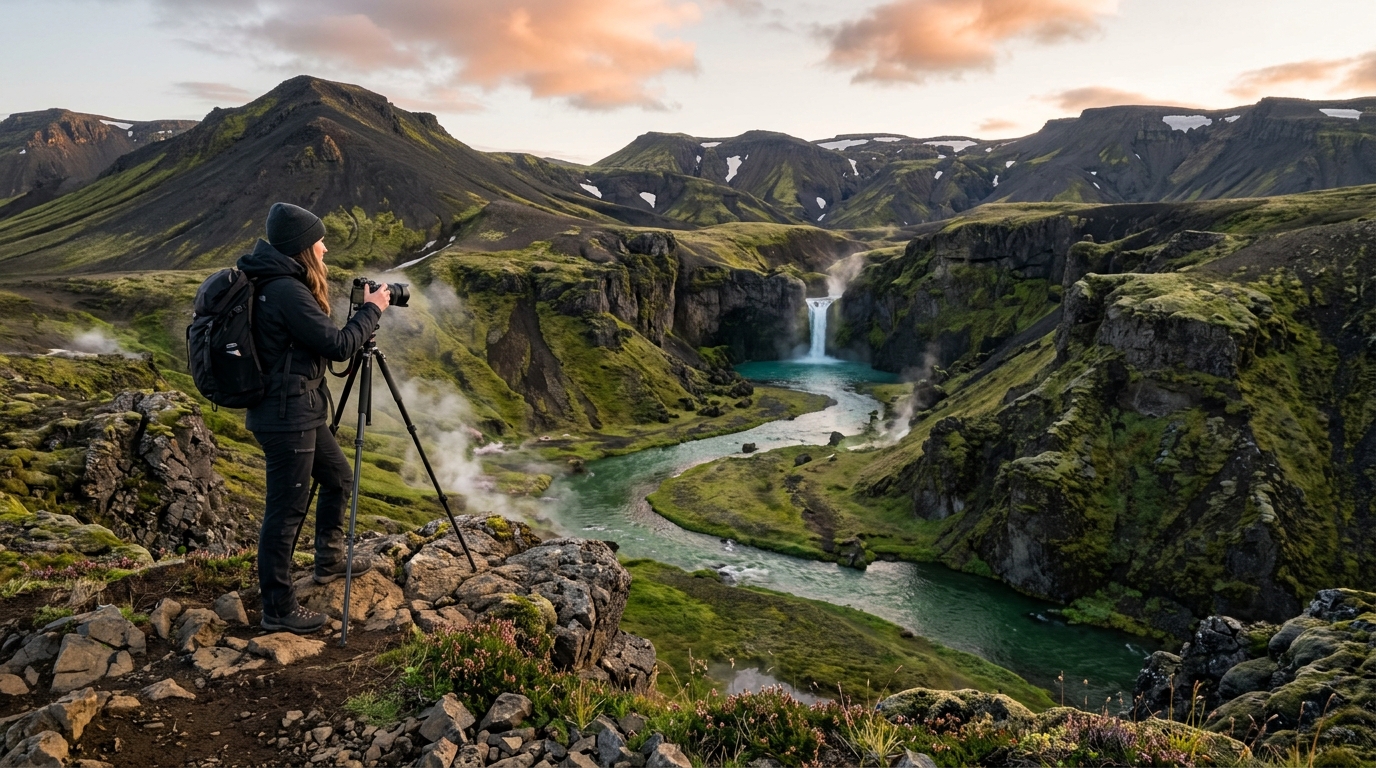
15 Hidden Photo Spots Iceland Has to Offer (And Exactly How to Find Them)
Introduction: The Magic of Finding Hidden Photo Spots Iceland
There is an undeniable allure to Iceland’s untouched beauty. From its jagged volcanic peaks to its sprawling, moss-covered lava fields, the "Land of Fire and Ice" is a bucket-list destination for landscape and wildlife photographers across the globe. However, as the country’s popularity has surged over the last decade, so too have the crowds. Arriving at famous locations like Skógafoss, Kirkjufell, or the black sands of Reynisfjara often means battling busloads of tourists just to capture a cliché, heavily replicated image.
For the dedicated photographer, this presents a significant problem. You travel thousands of miles to capture the wild, untamed essence of the Arctic, only to find yourself standing shoulder-to-shoulder in a designated viewing area. The true magic of this country lies far beyond the paved parameters of the Golden Circle or the easily accessible Ring Road stops. To capture truly unique, breathtaking imagery, you need to seek out the hidden photo spots Iceland has quietly tucked away in its remote fjords, deep canyons, and rugged highlands.
Exploring secret places in Iceland allows you to connect with the landscape on a much deeper level. It gives you the time and space to compose your shots meticulously, wait for the perfect light, and experience the profound silence of the Icelandic wilderness. In this comprehensive guide, we will unveil 15 undiscovered Iceland locations and provide you with the exact tools and techniques you need to find and photograph them.
Secret Waterfalls: Off the Beaten Path Iceland Photography
While the towering drops of Seljalandsfoss and Gullfoss are undoubtedly spectacular, Iceland is home to over 10,000 waterfalls—many of which remain completely uncrowded. If you are looking for off the beaten path Iceland photography opportunities, venturing to these hidden cascades will yield incredibly rewarding results.
First on the list is Kvernufoss. Located just a short distance from the famous Skógafoss, this 30-meter waterfall is hidden away in a lush, moss-draped gorge. Because it requires a short hike into a blind canyon, it is frequently bypassed by the masses. Like Seljalandsfoss, you can actually walk behind Kvernufoss, offering a spectacular framing opportunity from inside the cavern looking out toward the river.
Next is Nauthúsagil, a stunning ravine waterfall located in the south. To reach the main drop, you must wade through a shallow stream and use chains bolted to the rock walls to pull yourself deeper into the canyon. The ravine is famously topped with a canopy of rowan trees, casting an ethereal, dappled light onto the cascading water below.
Finally, there is Aldeyjarfoss, located in the northern Highlands. While Goðafoss gets all the attention in the north, Aldeyjarfoss offers a dramatic contrast of churning, milky glacial water plunging into a basin surrounded by perfectly formed, geometric basalt columns.
To capture these secluded cascades at their best, you will need to master your camera settings. Use a sturdy tripod and a circular polarizer to cut through the glare on wet rocks and enhance the vibrant greens of the moss. For that silky, smooth water effect, attach an ND filter and use a slow shutter speed—anywhere from 0.5 to 2 seconds is usually the sweet spot to retain some texture in the water. Keep your ISO as low as possible (ISO 100) and your aperture between f/8 and f/11 for optimal depth of field.
Finding these unmarked trails can be tricky, but you can easily locate their exact GPS coordinates by utilizing our interactive Waterfall map to plan your route safely.
Undiscovered Iceland Locations for Dramatic Landscapes
Beyond the flowing water, Iceland’s geological diversity provides an endless canvas for landscape photographers. However, finding those truly undiscovered Iceland locations requires a willingness to venture onto gravel roads and hike into the unknown.
One of the most awe-inspiring hidden gems is Múlagljúfur Canyon. Located in the southeast, this majestic canyon looks like a scene straight out of a fantasy novel. With sheer, mossy cliffs plunging into a winding river and two distinct waterfalls (Hangandifoss and Múlafoss) dropping into the abyss, it is a masterclass in scale and depth. There are no large signs pointing to the parking area, keeping the foot traffic incredibly low.
Another breathtaking location is Sigöldugljúfur, often referred to as the "Valley of Tears." Situated in the Highlands, this canyon is lined with countless small waterfalls weeping from the porous volcanic rock into a vibrant, icy-blue river below. The contrast between the dark rock, the green vegetation, and the vivid blue water makes it a photographer’s dream.
For a completely different color palette, visit Rauðaskál, a striking red volcanic crater in the southern Highlands. The oxidized iron in the soil gives the crater an intense crimson hue, which looks particularly dramatic when dusted with a light layer of white snow.
To capture these dramatic landscapes, lighting is everything. The best time of day to shoot is during the Golden Hour, when the low angle of the sun casts long, dramatic shadows that highlight the textures of the canyons and craters. Alternatively, the Blue Hour provides a soft, moody, and ethereal light that perfectly suits Iceland's often melancholic atmosphere. During the summer months, the Midnight Sun provides hours of this perfect, directional light. For exact GPS coordinates and topographic details of these remote areas, be sure to check our dedicated Landscape map.
Remote Lighthouses: Coastal Secret Places in Iceland
Iceland’s rugged coastline is notoriously treacherous, shaped by the relentless pounding of the North Atlantic Ocean. Guarding these shores are some of the most picturesque and isolated lighthouses in the world. These coastal secret places in Iceland offer incredible photographic opportunities, blending man-made architecture with raw nature.
Svörtuloft Lighthouse, located on the westernmost tip of the Snæfellsnes Peninsula, is a brilliant example. Painted a vibrant, high-visibility orange, this square lighthouse stands in stark contrast to the jet-black lava cliffs and the churning, deep blue ocean below. It is a fantastic subject for wide-angle photography, especially when massive waves crash against the cliffs.
In the south, the Knarrarós Lighthouse offers a completely different aesthetic. Built in 1939, it features a unique blend of functionalism and art deco styling. Standing tall and white against a remarkably flat coastal plain, it provides a perfect subject for minimalist photography.
For extreme isolation, the Dalatangi Lighthouse in the remote East Fjords is unmatched. The journey to get there involves navigating a long, winding dirt road that clings to the edge of the mountains. Once you arrive, you are rewarded with two lighthouses (an older stone structure and a newer bright orange one) set against a backdrop of towering, jagged fjord peaks.
The key to photographing these structures is utilizing the contrast of their bright colors against the notoriously moody Icelandic skies. A dark, stormy sky can make a yellow or orange lighthouse pop dramatically. When planning your coastal photography routes, our Lighthouse map is an invaluable resource for finding these isolated beacons.
Isolated Churches and Cultural Hidden Gems
While the black church of Búðir is famous worldwide, Iceland is dotted with dozens of other historic, turf-roofed, and remote churches that see a fraction of the visitors. These architectural beauties offer a glimpse into Iceland’s cultural heritage and serve as fantastic subjects for scale and storytelling in your photography.
Grafarkirkja is widely considered the oldest turf church in Iceland. Located in the north, it is encircled by a circular turf wall and features beautifully carved wooden elements. Nestled in a quiet valley with mountains looming in the background, it feels completely frozen in time.
Another stunning example is Saurbæjarkirkja in Eyjafjörður. It is one of the largest turf churches remaining in the country, boasting thick, insulating walls made of earth and stone, topped with a traditional red roof. The textures of the turf combined with the wooden facade make for highly detailed, intimate architectural shots.
For a beautifully isolated setting, Innra-Hólmskirkja sits quietly on the Akranes peninsula. With its classic Icelandic church design, it stands as a solitary figure against the vast landscapes, perfect for capturing the feeling of isolation that defines rural Icelandic life.
When photographing these cultural hidden gems, it is paramount to be respectful. Many of these churches are surrounded by active graveyards. Never walk on or over graves to get a better angle, stay on designated paths, and be mindful if a local service is taking place. To discover more of these historic structures away from the Golden Circle, point your browser to our Church map.
Wildlife and Bird Photography Away from the Crowds
Iceland is a haven for bird watchers and wildlife photographers. While places like Reynisfjara black sand beach offer glimpses of puffins, they are often too crowded for serious photography. To capture intimate wildlife portraits, you need to seek out secret coastal cliffs and wetlands.
Borgarfjörður Eystri in the East Fjords is arguably the best place in Iceland to photograph Atlantic Puffins. The marina features a wooden boardwalk that allows you to safely get incredibly close to the nesting birds without disturbing them. Unlike the busy south coast, the east sees far fewer tourists, giving you the time and space to set up your tripod and wait for the perfect shot of a puffin returning with a beak full of sand eels.
For sheer scale, the towering cliffs of Látrabjarg in the Westfjords are unmatched. As the westernmost point of Iceland, these cliffs stretch for kilometers and drop hundreds of meters straight into the ocean. They are home to millions of seabirds, including razorbills, guillemots, and puffins. The remote nature of the Westfjords guarantees a peaceful shooting experience.
Finally, the wetlands and coastal areas of the Snæfellsnes Peninsula are excellent for photographing the fierce Arctic Tern. These birds are incredibly agile and make for fantastic in-flight photography subjects.
For wildlife photography, a telephoto lens (anywhere from 200mm to 600mm) is essential. Use a fast shutter speed (1/1000s or faster) to freeze birds in flight, and utilize continuous autofocus to track their erratic movements. Above all, practice ethical wildlife photography: never approach nests too closely, do not use flash, and back away if an animal shows signs of distress. You can track seasonal nesting grounds and find the best viewing spots using our interactive Birds map.
How to Use an Iceland Hidden Gems Map to Plan Your Route
Finding undiscovered Iceland locations comes with a unique set of logistical challenges. Many of these spots are not marked on standard tourist maps, lack road signs, and may require navigating rough gravel roads or F-roads (mountain roads that require a 4x4 vehicle). Furthermore, Iceland's volatile weather can quickly make a seemingly easy detour dangerous. This is where an Iceland hidden gems map becomes your most valuable tool.
Rather than relying on vague blog descriptions or scrolling endlessly through un-geotagged social media posts, you can use a dedicated tool to build a custom, highly efficient itinerary. Here is a step-by-step guide on how to maximize our platform:
- Select Your Category: Navigate to the Iceland Photo Map homepage and choose the specific type of subject you want to shoot—whether it’s waterfalls, landscapes, lighthouses, churches, or birds.
- Explore the Interactive Map: Zoom into regions you plan to visit. Our pins are placed with exact GPS precision, ensuring you won't get lost looking for an unmarked canyon or hidden waterfall.
- Review Location Details: Click on a pin to see sample images, read about the terrain, and understand the ideal lighting conditions for that specific spot.
- Plan Your Route: Export the coordinates directly to your smartphone's navigation app. Group nearby hidden gems together to maximize your shooting time and minimize driving back and forth.
If you need more detailed instructions on filtering locations, saving your favorite spots, or contributing your own discoveries to the community, be sure to highlight the How To section of our site to master all the interactive map features.
Essential Gear for Photographing Secret Places in Iceland
Photographing off the beaten path in Iceland requires more than just a good eye; it demands the right gear to protect yourself and your equipment from the harsh Arctic elements.
First and foremost, a sturdy carbon fiber tripod is non-negotiable. Iceland is notoriously windy, and a flimsy travel tripod will result in blurry images or, worse, your camera being blown over and destroyed. Pair this with a weather-sealed camera body and lenses. You will frequently be shooting in rain, snow, or the heavy mist of a waterfall. A wide-angle lens (such as a 14-24mm or 16-35mm) is essential for sweeping landscapes and tight canyons, while a telephoto lens (70-200mm or longer) is perfect for compressing distant mountain peaks and capturing wildlife.
When venturing into rugged terrain, safety equipment is just as important as camera gear. If you are visiting in winter or shoulder seasons, crampons or microspikes are mandatory for navigating icy trails near waterfalls and canyon edges. Because cell service can be spotty or non-existent in remote areas, carrying a GPS device or a Personal Locator Beacon (PLB) is highly recommended. Dress in proper layers: a moisture-wicking merino wool base layer, an insulating mid-layer, and a high-quality Gore-Tex wind and waterproof outer shell.
Finally, when exploring these pristine, untouched environments, it is vital to emphasize the importance of leaving no trace. Icelandic moss is incredibly fragile and can take decades to recover if trampled. Always stay on marked trails where they exist, take all your trash with you, and never drive off-road under any circumstances.
Conclusion: Start Planning Your Trip to These Hidden Photo Spots Iceland
Iceland remains one of the most visually stunning countries on the planet, but capturing its true essence requires stepping away from the tour buses and the crowded viewing platforms. From the thundering, secluded drops of Kvernufoss and Aldeyjarfoss to the dizzying heights of Múlagljúfur Canyon and the remote, wind-battered lighthouses of the East Fjords, the hidden photo spots Iceland has to offer are nothing short of spectacular.
By venturing off the beaten path, you not only come away with a portfolio of unique, compelling images, but you also get to experience the raw, quiet majesty of the Icelandic wilderness. We encourage all photographers, from enthusiastic hobbyists to seasoned professionals, to step out of their comfort zones and explore the lesser-known corners of this incredible island.
Don't leave your photography itinerary to chance or rely on outdated guidebooks. Utilize the interactive maps to pinpoint exact coordinates, plan your daily routes, and prepare for the lighting conditions of each specific location. The adventure of a lifetime is waiting out there in the ice, rock, and wind.
Frequently Asked Questions
Where are the best secret places in Iceland for photography?
The best secret places are often found in the remote regions outside the popular South Coast and Golden Circle. The Westfjords, the East Fjords, and the central Highlands are packed with undiscovered canyons, isolated turf churches, and stunning coastal cliffs that see very few tourists.
Is it safe to drive to off the beaten path Iceland photography locations?
Yes, but it requires preparation. Many hidden gems are located down gravel roads or F-roads. You must rent a capable 4x4 vehicle, check daily road conditions on road.is, and monitor the weather via vedur.is. Always carry emergency supplies and a GPS device when traveling out of cellular range.
How can I find a reliable Iceland hidden gems map?
The most reliable way to find these locations is by using a dedicated, photographer-curated resource. Platforms like the Iceland Photo Map provide exact GPS coordinates, categorizing spots by type (waterfalls, landscapes, wildlife) and offering tips on lighting and accessibility, ensuring you don't waste time getting lost.
What time of year is best to visit undiscovered Iceland locations?
It depends on your goals. Summer (June-August) offers the Midnight Sun, providing hours of Golden Hour light and access to the Highlands via F-roads. Winter (November-March) provides dramatic snowy landscapes, ice caves, and the Northern Lights, though many remote roads will be closed or impassable.
Ready to capture the untouched beauty of Iceland? Explore our comprehensive Iceland Photo Map to find exact GPS coordinates for all these hidden gems and start planning your ultimate photography road trip today!