Introduction
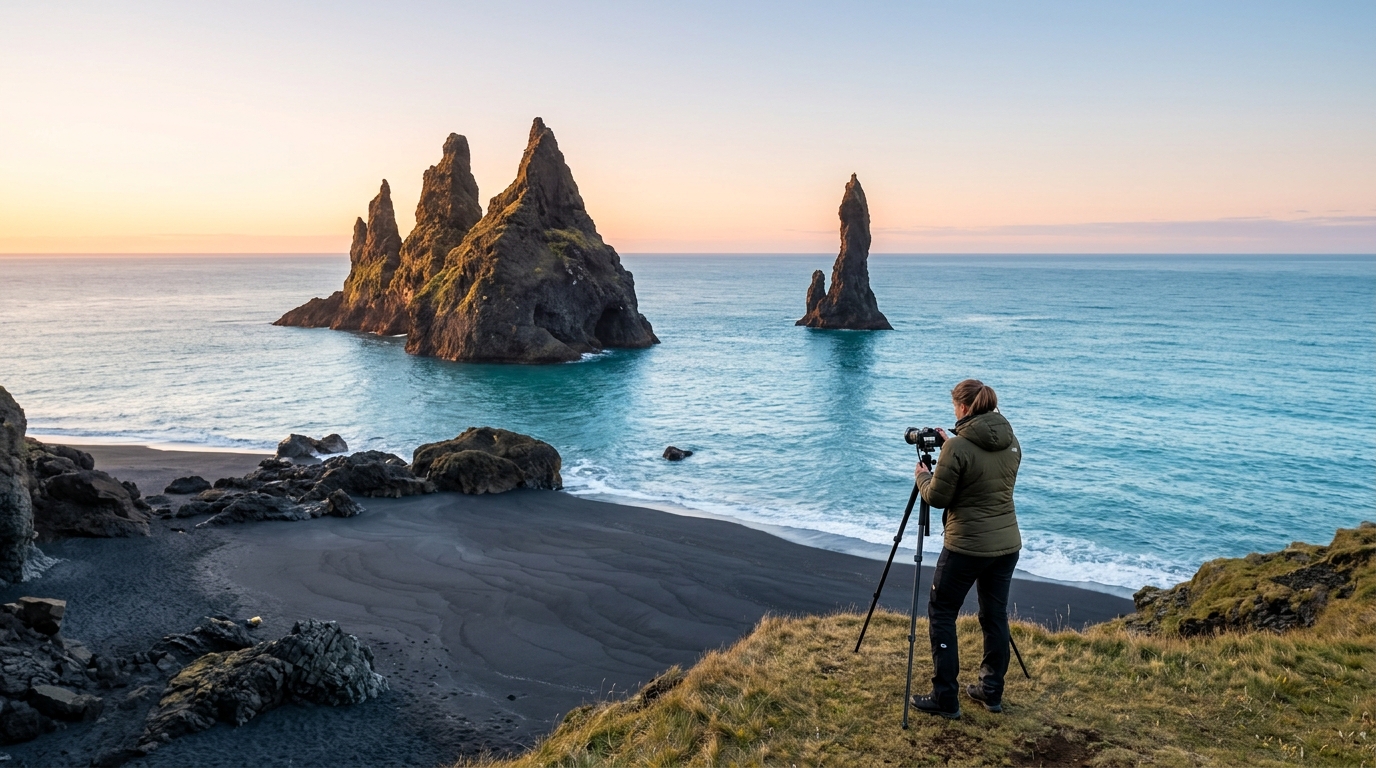
Iceland is undeniably a bucket-list destination for landscape photographers and adventurous tourists alike. With its towering waterfalls, dramatic black sand beaches, sweeping glaciers, and volcanic terrain, the "Land of Fire and Ice" offers an endless array of spectacular compositions. However, this massive popularity comes with a significant challenge: the sheer volume of visitors. Arriving at an iconic location only to find hundreds of tourists in bright rain jackets wandering through your carefully planned frame can be incredibly frustrating. If you are researching how to avoid crowds Iceland photo spots, you already know that capturing those pristine, empty landscapes requires more than just showing up with a good camera.
The challenge of capturing empty landscapes at iconic locations is real, but it is far from impossible. While the golden circle and the southern coast see heavy daily foot traffic, the vast majority of tourists operate on a highly predictable schedule and stick to the most accessible paths. The premise of this guide is simple: with the right strategy, precise timing, and deep location knowledge, you can still find absolute solitude in some of the most beautiful places on earth. By thinking like a local and planning like a professional, you can experience the raw, untouched magic of Iceland without the distraction of the masses.
Why Planning is Crucial: Mastering Iceland Photography Logistics
Standard travel planning usually involves booking a hotel, renting a car, and casually driving from one landmark to the next. For a photographer seeking empty landscapes, this approach will almost certainly guarantee crowded shots. Mastering Iceland photography logistics requires a completely different mindset. You are not just planning around what you want to see; you are planning around the movement of the sun, the predictability of tour buses, and the often-unforgiving Icelandic weather.
One of the most critical aspects of these logistics is accurately calculating driving times between your accommodations and your shoot locations. In Iceland, a distance that looks short on a map can take much longer to traverse due to single-lane bridges, unpaved gravel roads, sudden fog, or wandering sheep. To shoot a location at dawn before the crowds arrive, you must know exactly how long the drive will take in the dark and factor in the time needed to hike from the parking lot to your vantage point. Sleeping an hour away from your sunrise spot means you have to wake up significantly earlier, which can lead to burnout on a multi-day shoot.
Furthermore, tracking sunrise, sunset, and golden hour times based on the specific season is non-negotiable. Because of Iceland's high latitude, the behavior of the sun changes drastically throughout the year. In the summer, golden hour can last for hours, while in the winter, the sun barely crests the horizon, providing a continuous, soft directional light for the few hours of daytime. Utilizing apps to track the sun's trajectory ensures you arrive exactly when the light is best—which, conveniently, is almost always when the casual tourists are either still asleep or eating dinner.
How to Avoid Crowds at Iceland Photo Spots by Adjusting Your Schedule
If you want to know how to avoid crowds Iceland photo spots, the most effective tactic is simply to adjust your daily schedule to run counter to the typical tourist itinerary. The vast majority of visitors in Iceland rely on guided tour buses or follow standard hotel breakfast schedules. As a result, the typical schedule of tour buses and day-trippers usually dictates that crowds begin arriving at major landmarks around 9:00 AM and start to thin out by 5:00 PM. During this eight-hour window, iconic locations are packed.
To combat this, professional photographers employ the "early bird" strategy. This means arriving at your chosen iconic spots well before 8:00 AM. If you can be set up with your tripod by 6:00 AM or 7:00 AM, you will often have the location entirely to yourself, save for perhaps one or two other dedicated photographers. The early morning not only guarantees a lack of crowds but also frequently provides atmospheric conditions like low-lying mist and perfectly still reflections on bodies of water.
Alternatively, the "night owl" strategy is equally effective, particularly in the shoulder seasons and summer. This involves visiting popular locations after 7:00 PM. By this time, the massive tour buses have retreated to Reykjavik or to their respective hotels for the evening. The day-trippers are exhausted and looking for dinner. As a night owl, you can arrive at a famous black sand beach or a towering cliffside just as the golden hour begins, enjoying the dramatic, long shadows and serene quiet that descends upon the landscape once the masses depart.
The Best Time to Visit Iceland Waterfalls for Solitude
Waterfalls are among the most sought-after subjects for photographers visiting the country, but they are also major tourist magnets. Identifying the best time to visit Iceland waterfalls is crucial if you want to avoid people in your frame. The most notoriously crowded waterfalls include Skógafoss, Seljalandsfoss, and Gullfoss. Because they are located just off the Ring Road and the Golden Circle, they see thousands of visitors daily. Trying to photograph the massive curtain of Skógafoss at noon means you will inevitably capture dozens of tourists in colorful ponchos at its base.
To capture these giants in solitude, timing is everything. The absolute best time to visit Iceland waterfalls is in the extreme early morning or late evening. Arriving at Seljalandsfoss at 5:00 AM during the summer allows you to walk behind the falls and capture the sunrise through the cascading water with absolutely no one else in the frame. Early mornings are also the best time to capture the delicate mist rising off the plunge pools before the daytime winds pick up. Late evening visits offer incredibly soft, diffused light, which is ideal for long-exposure photography without the harsh contrast of the midday sun.
If adjusting your schedule isn't enough, the ultimate workaround is to seek out alternative locations. Instead of fighting the crowds at Gullfoss, consider venturing into the highlands or the northern regions. Remote waterfalls like Aldeyjarfoss, with its stunning basalt column formations, require a 4x4 vehicle to reach, which naturally filters out 95% of casual tourists. Exploring lesser-known cascading falls off the beaten path will reward you with unique compositions that haven't been replicated a million times on social media.
Exploring Quiet Photo Locations in Iceland: Beyond the Golden Circle
While the South Coast and the Golden Circle boast incredible natural wonders, they are also the epicenter of Iceland's tourism industry. To truly escape the crowds, photographers must be willing to venture away from these heavily trafficked corridors. Finding quiet photo locations Iceland has to offer requires driving a bit further and embracing the country's more remote regions. The further you get from Reykjavik, the more the crowds dissipate, leaving raw, untouched nature in their wake.
One of the premier destinations for solitude is the Westfjords. This massive, jagged peninsula in the northwest of Iceland is bypassed by the standard Ring Road route, meaning only a tiny fraction of tourists ever make the journey. The Westfjords offer some of the most dramatic, quiet photo locations in Iceland, featuring sheer bird cliffs, deep fjords, winding coastal roads, and the magnificent Dynjandi waterfall. Here, you can easily spend hours photographing breathtaking vistas without seeing another vehicle.
Another incredible option for uncrowded photography is the rugged highland interior, specifically the Fjallabak Nature Reserve. Accessible only during the summer months via rugged F-roads (which require a 4x4 vehicle), this area is a paradise of rhyolite mountains, steaming geothermal vents, and vast lava fields. The logistical hurdle of navigating the F-roads acts as a natural barrier to the masses. Inside Fjallabak, you can capture otherworldly, colorful landscapes that look like they belong on another planet, enjoying a profound sense of isolation and creative freedom.
Leveraging the Midnight Sun and Winter Darkness
Iceland's extreme northern latitude provides photographers with unique seasonal advantages that can be leveraged to avoid crowds entirely. During the peak summer months of June and July, Iceland experiences the phenomenon of the Midnight Sun. Because the sun never truly sets, dipping only slightly below the horizon before rising again, you have 24 hours of daylight. This allows for a brilliant strategy: shooting at 2:00 AM in broad, beautiful daylight. At this hour, even the most popular spots are completely deserted. You can enjoy a continuous, hours-long golden hour, casting warm, directional light across the landscape while the rest of the country sleeps.
Conversely, winter photography presents its own set of benefits for avoiding crowds. The colder months bring a significant drop in overall tourist numbers. The shorter days mean that you don't have to wake up at 3:00 AM to catch a sunrise; the sun might not rise until 10:00 AM or 11:00 AM, allowing for a much more relaxed schedule. However, winter weather logistics become much harder. You must contend with potential snowstorms, road closures, and freezing temperatures. But for those willing to brave the elements, the reward is a pristine, snow-covered landscape with a fraction of the summer crowds.
Winter also brings the opportunity to photograph the Aurora Borealis. When hunting for the Northern Lights, the goal is to get as far away from the light-polluted tourist hubs as possible. By driving just 30 to 40 minutes outside of Reykjavik or away from major South Coast towns, you can find dark, quiet skies. Photographing the aurora reflecting over a frozen, isolated lagoon or a lonely mountain peak is an experience made even better by the absolute silence of the Icelandic winter night.
Top Strategies on How to Avoid Crowds at Iceland Photo Spots During Peak Season
If you are traveling during the peak summer months and want to know how to avoid crowds Iceland photo spots, you need actionable, high-level strategies. One of the best tactics is to reverse the Ring Road. The vast majority of tourists who drive the Route 1 Ring Road travel counter-clockwise, starting with the Golden Circle and the South Coast. By choosing to travel clockwise—heading north towards Snæfellsnes and Akureyri first—you are moving against the primary flow of traffic. This simple directional switch can significantly reduce the number of tour groups you encounter at major stops along the eastern and northern stretches of the island.
Another crucial strategy is your choice of accommodation. Whenever possible, stay overnight as close to your primary morning photo location as possible. If you want to shoot the diamond beach at sunrise, book a guesthouse right near Jökulsárlón rather than a town two hours away. This minimizes your morning driving time, allowing you to easily beat the crowds and maximize your time shooting in the best light.
Finally, utilize specialized landscape photography maps to find secondary, unmarked viewpoints near major attractions. Often, tourists will flock to the main viewing platform of a canyon or waterfall. By using a dedicated photographer's map, you can locate alternative hiking trails or opposite-side viewpoints that offer a unique, uncrowded perspective of the exact same landmark. A shift of just a few hundred yards can mean the difference between a crowded snapshot and a serene, professional landscape image.
Essential Gear and Mindset for Off-Peak Photography
Shooting during off-peak hours to avoid crowds requires specific preparation, both in terms of gear and mindset. Because the best times to shoot are often early in the morning or late at night, you must prepare for colder temperatures. Even in the middle of summer, an Icelandic morning can be biting, especially near glacial lagoons or coastal cliffs. Layered clothing, waterproof outerwear, thermal gloves, and hand warmers are essential. If you are shivering and miserable, your creative eye will suffer, and you will likely abandon the shoot before the light peaks.
In terms of camera gear, Neutral Density (ND) filters are a landscape photographer's best friend in Iceland. If you find yourself at a location where a few tourists are lingering in your frame, a 6-stop or 10-stop ND filter can save the shot. By extending your exposure time to 30 seconds or longer, any people walking through your frame will "ghost" out or disappear entirely, leaving you with a clean, seemingly empty landscape.
Above all, emphasize patience and flexibility in your itinerary. Iceland's weather is notoriously fickle, and crowd surges can happen unexpectedly if a delayed tour bus suddenly arrives. If a spot is too crowded, have a backup location ready, or simply wait it out. Often, large groups will stay for only 15 to 20 minutes before piling back into their vehicles. A patient photographer who is willing to adapt to sudden changes will always come away with the best images.
Conclusion
Capturing the raw, untamed beauty of Iceland without the distraction of crowds is entirely possible if you approach your trip with intention. By mastering your timing, focusing on diligent location scouting, and planning your logistical movements against the grain of typical tourism, you can unlock the true magic of the landscape. Whether you are shooting under the Midnight Sun, hiking into the remote highlands, or simply waking up before the tour buses hit the road, the effort is always worth it.
Reiterating the main point: capturing empty Icelandic landscapes is highly rewarding and elevates your photography from standard travel snapshots to fine art. You don't have to settle for cluttered frames or frustrating experiences.
Ready to plan your crowd-free photography adventure? Explore our interactive Iceland Photography Maps to find hidden gems and map out your perfect, quiet route today!
Frequently Asked Questions
What is the least crowded month to visit Iceland for photography?
The least crowded months to visit Iceland are typically in the deep winter, specifically November, January, and February. During this time, the harsh weather and shorter daylight hours deter casual tourists. If you prefer milder weather but still want to avoid the peak summer rush, the shoulder season months of May and September offer a great balance of manageable crowds, accessible roads, and beautiful transitional lighting.
How early do I need to arrive at popular Iceland waterfalls to avoid crowds?
To guarantee a crowd-free experience at heavily visited waterfalls like Skógafoss or Seljalandsfoss, you should aim to arrive before 7:00 AM, and ideally by 6:00 AM. Tour buses and most self-driving tourists begin arriving between 8:30 AM and 9:00 AM. Arriving early not only ensures an empty frame but also usually provides the calmest wind conditions for capturing reflections and mist.
Are the Westfjords good for quiet photography locations?
Yes, the Westfjords are phenomenal for quiet photography. Because the region requires a significant detour from the main Ring Road and features winding, unpaved mountain passes, it receives only a tiny fraction of Iceland's total visitors. Photographers who make the journey are rewarded with spectacular, untouched fjords, towering bird cliffs, and a profound sense of isolation that is hard to find in the south.
Is it safe to photograph in Iceland at night during the summer?
Absolutely. Photographing "at night" during the Icelandic summer is incredibly safe because it isn't actually dark. Thanks to the Midnight Sun, the hours between midnight and 3:00 AM are bathed in broad daylight or a prolonged, beautiful twilight. Furthermore, Iceland has one of the lowest crime rates in the world, and the wildlife poses no threat to humans, making late-night or early-morning solo photography excursions very safe.