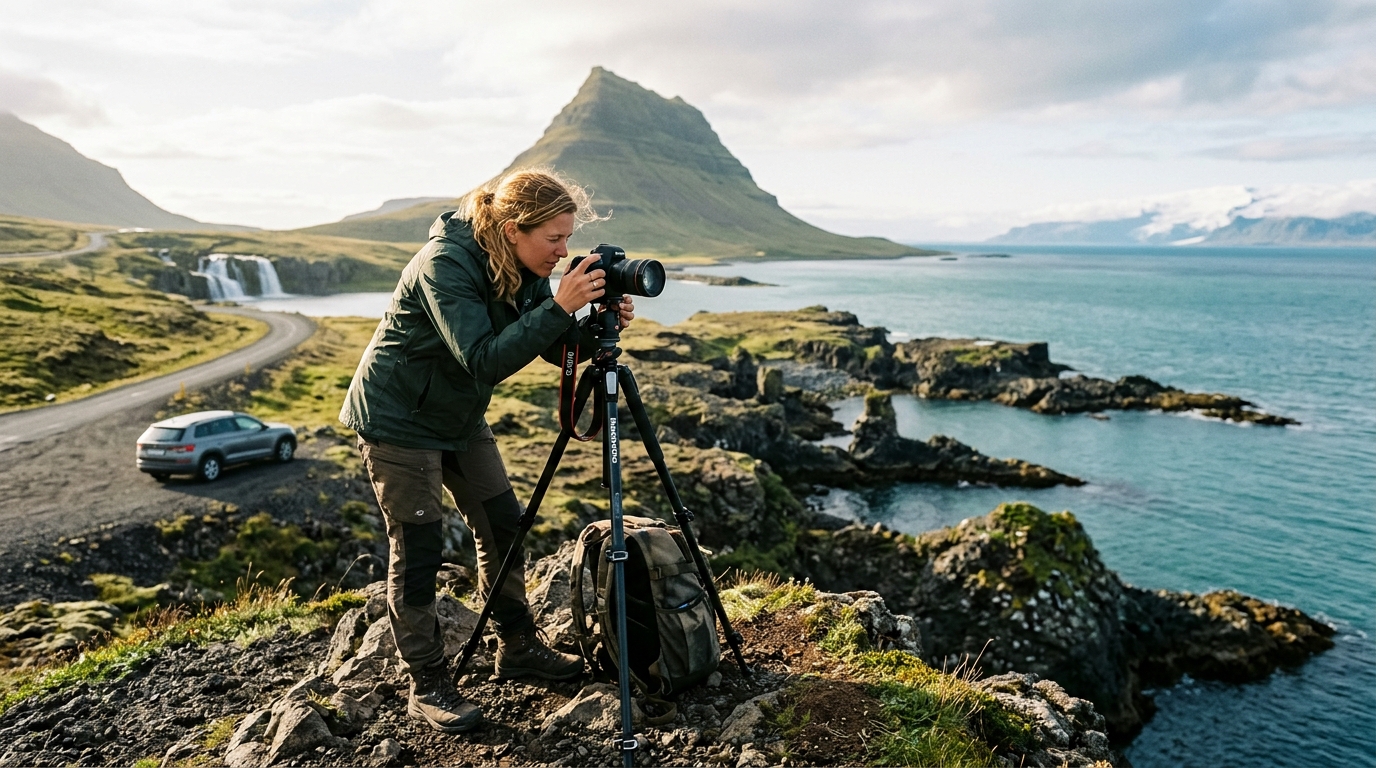
Introduction: Why Snæfellsnes is a Photographer's Paradise
The Snæfellsnes Peninsula, often hailed as "Iceland in Miniature," is a truly extraordinary destination for photographers. This slender finger of land extending into the Atlantic Ocean encapsulates the breathtaking diversity of Iceland's landscapes within a relatively compact area, making it an ideal subject for an intensive photography expedition. From dramatic basalt columns and black sand beaches to ancient lava fields, charming fishing villages, and the majestic Snæfellsjökull glacier, the peninsula offers an unparalleled array of subjects for your lens.
For photographers, Snæfellsnes is a treasure trove of unique geological features and ever-changing light. It's a place where you can capture the raw power of the ocean crashing against rugged cliffs, the ethereal glow of the aurora borealis dancing above iconic peaks, or the serene beauty of a solitary church nestled in a vast landscape. This concentrated natural beauty makes it a must-visit for anyone looking to capture the essence of Iceland without venturing across the entire island. Our expert-curated Iceland Snæfellsnes Peninsula Photography Itinerary is designed to guide you through its most photogenic spots, ensuring you make the most of every precious moment.
Preparing for Your Snæfellsnes Photography Adventure
Embarking on a photography trip to the Snæfellsnes Peninsula requires careful preparation, given Iceland's unique conditions. Being well-equipped ensures you can capture stunning images regardless of the challenges the environment might present.
Essential Photography Gear
A diverse kit will allow you to adapt to the varied landscapes of Snæfellsnes:
- Wide-angle lenses (14-24mm, 16-35mm): Indispensable for capturing grand vistas, expansive skies, and architectural shots like Búðakirkja. These lenses are perfect for emphasizing foreground elements and creating a sense of scale with Iceland's vastness.
- Telephoto lenses (70-200mm, 100-400mm): Crucial for isolating details in the landscape, compressing perspectives, and especially for wildlife photography at locations like Ytri Tunga. They are also excellent for capturing distant mountains or intricate patterns in lava fields.
- Sturdy Tripod: Absolutely non-negotiable. Icelandic winds can be fierce, making a stable tripod essential for sharp images, especially for long exposures of waterfalls, seascapes, and aurora photography. Look for one with a hook to add weight for extra stability.
- ND (Neutral Density) and Polarizing Filters: ND filters (e.g., 3-stop, 6-stop, 10-stop) are vital for creating silky smooth water effects on waterfalls and coastlines, or for shooting landscapes in bright daylight with a wide aperture. A good quality circular polarizer will reduce glare on water and wet rocks, deepen blue skies, and enhance color saturation, which is particularly useful in Iceland's often overcast conditions. Graduated ND filters can help balance bright skies with darker foregrounds.
- Extra Batteries and Memory Cards: Cold weather drains batteries faster, and you'll be shooting a lot. often carry more than you think you'll need.
Weather Considerations: Preparing for Rapidly Changing Conditions
Icelandic weather is notoriously unpredictable, and the Snæfellsnes Peninsula is no exception. It's common to experience sun, rain, hail, and strong winds all within an hour.
- Wind: Can be extreme, affecting tripod stability and even your balance. Use a low center of gravity for your tripod and consider a windbreaker for yourself.
- Rain and Moisture: Waterproof covers for your camera and lens are essential. Even if it's not raining, sea spray can be an issue near the coast. Microfiber cloths are your best friend for keeping lenses clean and dry.
- Temperature Fluctuations: Dress in layers. Even in summer, evenings can be chilly, and winter temperatures can drop significantly, especially with wind chill.
Always check the Icelandic Met Office (Veðurstofa Íslands) for the latest weather forecasts and aurora borealis predictions, as these will heavily influence your shooting plans.
Best Seasons for Photography
Each season offers distinct photographic opportunities:
- Summer (June-August): Characterized by the magical midnight sun, providing endless hours of golden light for photography. Landscapes are vibrant green, and wildlife like puffins are present. This is ideal for long days of exploration and maximizing shooting time.
- Winter (October-March): Offers dramatic, low-angle light, snow-covered landscapes, and the incredible chance to photograph the aurora borealis. The short daylight hours mean more time for astrophotography, but also require careful planning to hit all your desired spots. Roads can be challenging, so flexibility is key.
- Shoulder Seasons (April-May, September-October): A fantastic compromise, offering fewer crowds, unique transitional light, and often a mix of both summer and winter conditions. Autumn brings beautiful colors, while spring sees the landscape awakening.
Packing List Beyond Camera Gear
Your personal comfort and safety are paramount:
- Waterproof and Windproof Clothing: High-quality jacket and trousers are non-negotiable. Layers are key for temperature regulation.
- Sturdy Hiking Boots: Waterproof, ankle-supporting boots are essential for navigating uneven terrain, rocky beaches, and potentially muddy paths.
- Warm Hat, Gloves, and Scarf: Even in summer, these can be lifesavers, especially during sunrise/sunset shoots or if the wind picks up.
- Headlamp: Crucial for early morning/late night shoots, especially in winter or for aurora hunting.
- Snacks and Water: Services can be sparse in remote areas.
- First-Aid Kit: For minor scrapes or emergencies.
Day 1: Western Snæfellsnes – Iconic Peaks and Coastal Drama on Your Photography Itinerary
Your Iceland Snæfellsnes Peninsula Photography Itinerary begins in the dramatic western reaches, home to some of Iceland's most celebrated natural landmarks. This day is about grand compositions and capturing the raw power of the Atlantic.
Kirkjufell and Kirkjufellsfoss: Capturing the Iconic Mountain
No Snæfellsnes photo route is complete without Kirkjufell, the "Church Mountain," arguably the most photographed mountain in Iceland.
- Iconic Angles: The classic shot is from across the road, with Kirkjufellsfoss (Kirkjufell waterfall) in the foreground, creating a perfect leading line. Experiment with different compositions:
- Frame Kirkjufell between the three cascades of the waterfall.
- Use a wide-angle lens to include the entire scene, emphasizing the scale.
- Seek out reflections in the still pools of water around the falls, especially at dawn or dusk.
- Lighting: Sunrise and sunset offer the most dramatic light, painting the mountain in warm hues. The golden hour can be particularly magical. In winter, fresh snow adds another layer of beauty, and the possibility of the aurora dancing over its peak is a photographer's dream.
- Composition Tips: Look for opportunities to include interesting foreground elements like rocks, ice formations (in winter), or even a lone sheep to add depth and interest. Vary your perspective by shooting from higher ground or closer to the water's edge.
Grundarfjörður: Charming Fishing Village and Harbor Shots
Just a short drive from Kirkjufell, Grundarfjörður offers a different kind of photographic opportunity.
- Harbor Life: Capture the colorful fishing boats, bustling harbor activity, and the charming houses nestled against the backdrop of the surrounding mountains.
- Local Atmosphere: Look for candid shots of local life, the textures of fishing nets, or the reflections of the boats in the calm harbor waters.
- Night Photography: If staying overnight, the village lights reflecting on the water can be beautiful, and it's a good spot to base yourself for aurora hunting around Kirkjufell.
Arnarstapi and Hellnar: Exploring Gatklettur and Basalt Columns
These two tiny villages are gateways to a stunning coastal walk, offering dramatic cliff formations.
- Gatklettur (Stone Arch): This natural stone arch is a magnificent subject. Photograph it from various angles along the coastal path, looking for waves crashing through the arch or birds nesting on its ledges. Long exposures can soften the water and emphasize the arch's permanence.
- Basalt Columns: The cliffs around Arnarstapi are characterized by impressive basalt columns. Focus on their geometric patterns, the interplay of light and shadow, and the powerful waves eroding them.
- Cliff Walks: The path between Arnarstapi and Hellnar offers endless compositional possibilities, with sea stacks, hidden coves, and dramatic vistas of the ocean. Be mindful of strong winds and stay on marked paths for safety.
Lóndrangar Basalt Cliffs: Capturing Towering Rock Formations
- Use a wide-angle lens to capture their grandeur against the sky or the vast ocean.
- Birdlife (Seasonal): During nesting season (spring/summer), the cliffs are home to thousands of seabirds, including puffins, kittiwakes, and fulmars. A telephoto lens is essential here to capture their flight and details.
- Composition: Experiment with leading lines from the surrounding landscape towards the pillars. The texture of the dark basalt against the often-turbulent sea makes for powerful images.
Day 2: Southern Snæfellsnes – Black Beaches and Basalt Columns for Photographers
Day two of your Snæfellsnes photo route takes you along the southern coast, a region defined by its unique volcanic geology and compelling historical sites.
Djúpalónssandur Black Pebble Beach: Photographing Shipwreck Remains
Djúpalónssandur is a stunning black pebble beach with a fascinating history.
- Lifting Stones: On the beach, you'll find four large "lifting stones" that local fishermen once used to test their strength. These make excellent foreground elements, telling a story of the past.
- These haunting fragments offer stark, dramatic subjects, especially against the black pebbles and crashing waves. Focus on textures, rust, and the contrast with the natural elements.
- Coastal Dynamics: Capture the receding waves creating patterns on the wet pebbles, or the dramatic contrast of white foam against the dark beach. A sturdy tripod and long exposure techniques can create ethereal effects here.
Dritvík: Nearby Secluded Cove with Historical Significance
Just a short walk from Djúpalónssandur is Dritvík, a secluded cove that was once a major fishing station.
- Remote Beauty: This less-visited spot offers a sense of tranquility and raw natural beauty. The cove is smaller and more intimate than Djúpalónssandur.
- Historical Echoes: While fewer visible remains, the cove's history as a bustling fishing hub adds a layer of narrative to your photographs. Capture the unique rock formations and the quiet solitude of the place.
Búðakirkja (the Black Church): Capturing the Solitary Church
The iconic Búðakirkja, the Black Church, stands in stark contrast against its diverse surroundings, making it a photographer's dream.
- Minimalist Composition: The solitary black church against a backdrop of green moss, a lava field, or even snow, offers endless minimalist compositions. Frame it against the dramatic Snæfellsjökull glacier in the distance.
- Weather Play: The church looks equally striking under a bright blue sky, shrouded in mist, or under a dramatic storm cloud. Use the weather to your advantage to convey different moods.
- Aurora Photography: In winter, Búðakirkja is an exceptional foreground subject for aurora borealis photography, its dark silhouette providing a powerful contrast.
Rauðfeldsgjá Gorge: Exploring the Hidden Canyon
Rauðfeldsgjá is a hidden, mystical gorge that cuts into the cliffs, offering a unique photographic experience.
- Unique Light: The narrow opening allows only a sliver of light to penetrate, creating dramatic shafts of light and shadow within the gorge. Look for reflections in the stream that runs through it.
- Intimate Details: This is a place for macro and intimate landscape photography. Focus on the moss-covered walls, the patterns of the rock, and the small waterfalls inside. Be prepared for wet conditions and slippery rocks; waterproof shoes are a must.
Ytri Tunga Seal Colony: Opportunities for Wildlife Photography (Seasonal)
Ytri Tunga is a well-known place in Iceland to spot seals.
- Seal Photography: During the summer months, seals often bask on the rocks near the shore. A telephoto lens (200mm+) is essential to get clear shots without disturbing them. Capture their expressions, their interactions, and their sleek forms against the rocky coastline.
- Tidal Considerations: The seals are often more visible at low tide when more rocks are exposed. Check tide times before your visit.
- Respect Wildlife: often maintain a respectful distance and avoid making sudden movements or loud noises that could scare them.
Day 3: Northern Snæfellsnes – Hidden Gems and Fishing Villages to Photograph
On the final day of your 3 day Snæfellsnes photography adventure, we turn our attention to the northern side, revealing charming towns, ancient lava fields, and unique cultural experiences.
Stykkishólmur: Colorful Harbor, Lighthouse, and Charming Town Architecture
Stykkishólmur is the largest town on the peninsula and a vibrant hub with a picturesque harbor.
- Colorful Harbor: The town's multi-colored houses and fishing boats provide excellent subjects for vibrant, character-filled photographs. Focus on reflections in the water, the textures of the boats, and the daily activity.
- Sugandisey Island Lighthouse: Walk up to the lighthouse on Sugandisey Island (accessible by a short path) for panoramic views of the harbor, town, and Breiðafjörður bay. The lighthouse itself is a striking red, offering a strong focal point. Sunrise or sunset here can be spectacular.
- Town Architecture: Explore the charming streets, capturing the unique Icelandic architecture, often painted in bright colors. Look for interesting details, doorways, or street scenes.
Berserkjahraun Lava Field: Dramatic Textures and Otherworldly Landscapes
This ancient lava field, steeped in sagas, offers a starkly beautiful and otherworldly landscape.
- Dramatic Textures: The Berserkjahraun lava field is characterized by its rugged, moss-covered black rocks, twisted formations, and craters. This is a paradise for abstract and texture photography. Use a wide-angle lens to capture the vastness or a telephoto to isolate intricate patterns.
- Otherworldly Feel: The landscape here feels truly ancient and raw. Look for leading lines created by the flow of the lava, or isolate a particularly interesting rock formation against the sky. Overcast days can enhance the moodiness, while sunlight creates dramatic shadows.
Bjarnarhöfn Shark Museum: Cultural Photography and Unique Icelandic Traditions
For a unique cultural insight, a visit to the Bjarnarhöfn Shark Museum offers a glimpse into an old Icelandic tradition.
- Cultural Storytelling: While not a traditional landscape spot, the museum provides opportunities for cultural photography. Capture the process of preparing hákarl (fermented shark), the traditional drying huts, and the artifacts related to this ancient practice.
- Unique Subjects: The weathered buildings and the hanging shark meat offer fascinating, if unusual, subjects that tell a story about Icelandic heritage and resilience.
Less-Visited Viewpoints and Coastal Paths for Unique Perspectives
Beyond the well-known spots, Snæfellsnes is full of hidden gems.
- Explorer's Mindset: Dedicate time to simply drive along the coastal roads, looking for unmarked turn-offs, small paths leading to the shore, or elevated viewpoints. Use our Landscape Photo Maps to identify potential lesser-known scenic areas.
- Coastal Paths: Many stretches of the coastline offer informal paths that lead to secluded beaches, interesting rock formations, or dramatic cliff edges away from the main tourist hubs. often prioritize safety and respect private property.
- Local Insight: Chat with locals in villages like Hellnar or Arnarstapi; they often know about hidden spots or the best times to visit certain areas.
Essential Photography Tips for Your Snæfellsnes Peninsula Journey
To truly elevate your photography on the Snæfellsnes Peninsula, mastering certain techniques and preparing for the unique Icelandic environment is crucial.
Mastering Golden Hour and Blue Hour Timing for Optimal Light
- Golden Hour: The hour after sunrise and the hour before sunset provide soft, warm, diffused light that is incredibly flattering for landscapes. Colors become richer, and shadows are longer and more defined, adding depth and drama. Plan your day around these times for your most important shots at iconic locations like Kirkjufell or Lóndrangar.
- Blue Hour: The period just before sunrise and immediately after sunset, when the sun is below the horizon but residual light paints the sky in cool blue tones. This is perfect for capturing moody landscapes, cityscapes (like Stykkishólmur's harbor lights), and for dramatic architectural shots, especially of structures like Búðakirkja.
- Midnight Sun (Summer): In summer, the golden hour can last for several hours, providing an extended period of incredible light. Utilize this by planning late-night "sunset" shoots and early morning "sunrise" shoots that blend into each other.
Techniques for Long Exposures on Waterfalls and Coastlines
Snæfellsnes is rich with opportunities for long exposure photography, particularly at waterfalls like Kirkjufellsfoss and along its rugged coastlines.
- Equipment: A sturdy tripod is paramount. You’ll also need ND filters (e.g., 6-stop, 10-stop) to reduce the amount of light entering your lens, allowing for longer shutter speeds even in daylight. A remote shutter release or self-timer will prevent camera shake.
- Settings:
- Set your camera to aperture priority (Av/A) or manual (M) mode.
- Choose a narrow aperture (f/8 to f/16) for maximum depth of field.
- Set ISO as low as possible (e.g., 100) to minimize noise.
- Adjust your shutter speed based on the desired effect and the ND filter used. Start with a few seconds and increase to 30 seconds or more for truly smooth water.
- Shoot in RAW for maximum flexibility in post-processing.
- Composition: Look for leading lines in the water flow, interesting foreground rocks, or dramatic sea stacks to anchor your long exposure shots.
Composition Tips: Leading Lines, Rule of Thirds, Framing, and Capturing Scale
Strong composition transforms a snapshot into a compelling photograph.
- Leading Lines: Use natural elements like paths, rivers, coastlines, or rock formations to draw the viewer's eye into and through your image. The road leading to Kirkjufell, or the stream at Kirkjufellsfoss, are perfect examples.
- Rule of Thirds: Imagine a tic-tac-toe grid over your image and place key subjects or points of interest along the lines or at their intersections. This creates a more balanced and engaging composition than simply centering everything.
- Framing: Use natural elements like rock arches (Gatklettur), trees, or even clouds to frame your main subject, adding depth and context.
- Capturing Scale: Icelandic landscapes are vast. Include a person (yourself or a fellow traveler), a small building (like Búðakirkja), or a vehicle in your wide-angle shots to provide a sense of the immense scale of the environment.
Drone Photography Regulations and Best Practices in Iceland
Iceland offers incredible aerial perspectives, but drone usage is regulated.
- Regulations: As of 2026, general rules stipulate that drones must be flown below 120 meters (393 feet), within visual line of sight, and at least 1.5 km (0.9 miles) from airports. Commercial use often requires additional permits. Crucially, flying drones in national parks and protected areas is generally restricted or requires specific permission. Always check the latest guidelines from the Environment Agency of Iceland before flying, as rules can change.
- Respect Privacy: Avoid flying over private property, crowded areas, or disturbing wildlife.
- Weather: High winds are common in Snæfellsnes and can be dangerous for drones. often check wind forecasts before launching. Rain and moisture are also significant risks.
Protecting Your Gear from Wind, Sand, and Moisture
Iceland's elements can be harsh on camera equipment.
- Weather Sealing: Invest in weather-sealed camera bodies and lenses if possible.
- Rain Covers: often carry a dedicated rain cover for your camera and lens, or even a simple plastic bag can work in a pinch.
- Lens Cloths: Keep multiple clean microfiber cloths handy to wipe away spray, rain, or dust from your lenses.
- Backpack Protection: Use a waterproof camera backpack or a rain cover for your existing backpack.
- Changing Lenses: Avoid changing lenses in windy or wet conditions if possible. If you must, do so quickly with your back to the wind, protecting the camera's sensor.
- Condensation: When moving from cold outdoors to warm indoors, condensation can form. Place your camera in a sealed plastic bag before entering warmth, allowing it to acclimate slowly.
Accommodation and Logistics for Your Snæfellsnes Peninsula Photography Itinerary
Careful planning of your accommodation and logistics is key to a smooth and productive Snæfellsnes Peninsula Photography Itinerary. The peninsula is manageable to drive, but knowing where to stay and how to get around will save you time and stress.
Recommended Towns for Overnight Stays
To minimize driving and maximize shooting time, consider strategically located towns:
- Grundarfjörður: Centrally located for accessing Kirkjufell (especially for sunrise/sunset/aurora), and a good base for exploring the western and northern parts of the peninsula. It offers a selection of guesthouses and hotels.
- Stykkishólmur: A larger town with more amenities, including restaurants, grocery stores, and diverse accommodation options. It's a great base for exploring the northern and eastern parts of Snæfellsnes, and for ferries to the Westfjords.
- Arnarstapi/Hellnar: These smaller villages on the southern coast offer charming guesthouses and are perfect for immersing yourself in the dramatic coastal scenery. They are ideal if you want to be right on the doorstep for golden hour shoots at Gatklettur or the Lóndrangar cliffs. Options here are more limited, so book well in advance, especially for 2026 travel.
Given the relatively short distances, it's also feasible to stay in one central location for all three nights if you prefer not to move your base.
Car Rental Tips: 4x4 vs. 2WD Considerations, Fuel Stops, and Road Conditions
A rental car is essential for exploring Snæfellsnes.
- 4x4 vs. 2WD: For a summer trip (June-August), a 2WD vehicle is generally sufficient for the main Ring Road (Route 1) and most primary roads on Snæfellsnes. However, if you plan to venture onto F-roads (mountain roads, which typically open late June/early July and are rare on Snæfellsnes itself but might be relevant for connecting routes) or if you're traveling in winter (October-April), a 4x4 is highly recommended for safety and accessibility. Winter conditions can bring snow and ice, making a 4x4 with studded tires (often standard in winter rentals) invaluable.
- Fuel Stops: Fuel stations are available in larger towns like Stykkishólmur, Grundarfjörður, and Ólafsvík. often fill up when you see a station, especially before heading into more remote areas, as distances between them can be significant.
- Road Conditions: Check road.is daily for updated road conditions, especially in winter. Weather can lead to road closures or hazardous driving.
Food Options and Planning Meals in Remote Areas
Dining options vary greatly across the peninsula.
- Towns: Stykkishólmur, Grundarfjörður, and Ólafsvík offer a selection of restaurants, cafes, and grocery stores. Plan to stock up on essentials here.
- Smaller Villages: Arnarstapi and Hellnar have a few guesthouses with restaurants, but options are limited and may require reservations.
- Remote Areas: Outside of these towns, food options are scarce. Pack snacks, water, and consider bringing ingredients for simple packed lunches to maximize your time at photography spots. A thermos with hot coffee or tea can be a lifesaver on cold mornings or late-night aurora hunts.
Safety Precautions: Checking Weather and Road Alerts, Informing Others of Your Plans
Safety should often be a top priority.
- Weather Alerts: Regularly check the Icelandic Met Office for weather warnings, especially regarding strong winds, storms, or heavy precipitation.
- Road Alerts: Use road.is to stay informed about road closures, icy conditions, or detours.
- Inform Others: If you plan any hikes or ventures into more remote areas, inform your accommodation host or a trusted contact of your itinerary. Consider using the SafeTravel app or website (SafeTravel Iceland) to register your travel plan, especially if you're exploring off-the-beaten-path locations.
- Coastal Safety: Be extremely cautious near coastlines. Rogue waves (sneaker waves) are a real danger and can sweep people into the frigid ocean. rarely turn your back on the sea.
Maximizing Your Iceland Snæfellsnes Peninsula Photography Itinerary
To truly capture the magic of Snæfellsnes, an expert photographer knows how to adapt, explore, and respect the environment. This isn't just about hitting spots; it's about the experience.
Embracing Flexibility: Adapting to Weather Changes and Unexpected Discoveries
Icelandic weather is the ultimate wildcard. Your carefully planned Iceland Snæfellsnes Peninsula Photography Itinerary should be a guide, not a rigid schedule.
- Weather Adaptability: Be prepared to pivot. If a storm rolls in, instead of abandoning your plans, look for photographic opportunities in the dramatic light, mist, or crashing waves. Sometimes the most unique shots come from unexpected conditions.
- Spontaneity: Allow time for spontaneous stops. A beautiful patch of wildflowers, an interesting cloud formation, or a herd of Icelandic horses might present themselves. These unexpected discoveries often lead to some of your most cherished images.
- Backup Plans: Have alternative locations in mind. If a coastal spot is too windy or rainy, perhaps an inland lava field or a sheltered village offers a better shooting environment.
Exploring Off-the-Beaten-Path Locations: Using Maps and Local Insights
While the main attractions are stunning, the true gems often lie just beyond the well-trodden path.
- Detailed Maps: Utilize high-quality topographical maps or our specialized Iceland Photo Maps to identify lesser-known viewpoints, hidden waterfalls, or secluded coves. Look for small access roads or hiking trails that might lead to unique perspectives.
- Local Knowledge: Engage with locals at guesthouses, cafes, or gas stations. They often have invaluable insights into hidden spots, the best times to visit, or local stories that can enrich your photographic narrative.
- Satellite Imagery: Before your trip, use satellite imagery (Google Earth, etc.) to scout potential locations and identify interesting features or access points that might not be obvious from a standard map.
Engaging with Locals: Cultural Photography and Unique Perspectives
Beyond landscapes, Iceland's culture and people offer rich photographic subjects.
- Asking Permission: often ask permission before photographing people, especially in small communities. A friendly "Can I take your photo?" (or "Má ég taka mynd af þér?" in Icelandic) goes a long way.
- Cultural Context: Seek out opportunities to capture local life – fishermen at the harbor, farmers with their sheep, or artisans in their workshops. These images add depth and a human element to your travel story.
- Storytelling: Look for details that reflect Icelandic traditions, resilience, and connection to nature.
Respecting Nature and Local Guidelines: Leaving No Trace
As photographers, we have a responsibility to protect the pristine environments we capture.
- Stay on Marked Paths: Icelandic moss and delicate ecosystems are easily damaged. often stay on marked trails and paths, especially in lava fields and protected areas.
- Leave No Trace: Pack out everything you pack in. Do not litter.
- Wildlife: Maintain a respectful distance from all wildlife. rarely feed animals. Be especially mindful during nesting seasons for birds.
- Drone Etiquette: Adhere to all drone regulations, especially regarding protected areas and proximity to wildlife. The Environment Agency of Iceland provides up-to-date information on protected zones where drone flying is prohibited or restricted.
Post-Processing Considerations for Icelandic Landscapes
The unique light and colors of Iceland often benefit from thoughtful post-processing.
- RAW Workflow: often shoot in RAW format to retain maximum image data for editing flexibility.
- Color Grading: Icelandic landscapes often feature muted tones, dramatic contrasts, and specific color palettes (e.g., the greens of moss, the blues of glaciers, the black of volcanic rock). Experiment with color grading to enhance these natural hues without over-saturating.
- Contrast and Clarity: Use contrast and clarity adjustments to bring out the textures in lava fields, basalt columns, and dramatic skies.
- Sharpening and Noise Reduction: Apply sharpening carefully, especially to details. For high ISO shots (common during aurora photography), judicious noise reduction is essential.
- White Balance: Pay attention to white balance. The light in Iceland can shift rapidly, and correcting white balance in post-processing can accurately reflect the scene's mood.
Conclusion: Your Unforgettable Snæfellsnes Photo Journey Awaits
The Snæfellsnes Peninsula truly lives up to its moniker as "Iceland in Miniature," offering an astonishing array of photographic opportunities within its relatively small confines. From the iconic silhouette of Kirkjufell to the dramatic basalt cliffs of Lóndrangar, the serene beauty of Búðakirkja, and the otherworldly textures of Berserkjahraun, this region is a dream destination for any photographer.
This 3-day photography itinerary is designed not just to guide you to the best stops Snæfellsnes has to offer, but to empower you with the knowledge and tips to truly capture its essence. By preparing your gear, understanding the unique environmental challenges, and embracing flexibility, you are well on your way to an unforgettable photographic adventure. The magic of Iceland's 'miniature' landscape awaits your lens, promising images that will tell tales of dramatic beauty, ancient forces, and serene moments.
Ready to plan your dream photography trip to Snæfellsnes? Explore our detailed Iceland Photo Maps to discover even more hidden gems and plan your perfect route! You can also find more inspiration on our Iceland itineraries page.
Frequently Asked Questions
What is the best time of year to photograph the Snæfellsnes Peninsula?
The "best" time depends on your photographic goals. For long daylight hours, vibrant green landscapes, and the chance to photograph puffins, summer (June-August) is ideal, offering the magical midnight sun. For dramatic, low-angle light, snow-covered scenes, and the opportunity to capture the aurora borealis, winter (October-March) is unparalleled. The shoulder seasons (April-May, September-October) offer a good balance of fewer crowds and interesting transitional light, often with a mix of both summer and winter elements.
Do I need a 4x4 vehicle for a photography trip to Snæfellsnes?
For most of the main roads and popular photography spots on the Snæfellsnes Peninsula, a 2WD vehicle is generally sufficient during the summer months (June-August). The main roads are paved and well-maintained. However, if you plan to travel in winter (October-April) when snow and ice are common, or if you intend to explore any unpaved, rougher tracks, a 4x4 vehicle is highly recommended for safety and accessibility. Always check current road conditions on road.is before setting out.
What are the absolute must-see photography spots on the Snæfellsnes Peninsula?
The top photography spots that should be on every Iceland Snæfellsnes Peninsula Photography Itinerary include:
- Kirkjufell and Kirkjufellsfoss: The iconic "Church Mountain" with its accompanying waterfall.
- Búðakirkja (the Black Church): A striking solitary church against diverse backdrops.
- Arnarstapi and Hellnar: Featuring the Gatklettur (Stone Arch), dramatic basalt columns, and coastal cliffs.
- Djúpalónssandur Black Pebble Beach: With its unique lifting stones and shipwreck remains.
These locations offer a fantastic representation of the peninsula's diverse beauty.
How many days are ideal for a dedicated photography itinerary in Snæfellsnes?
A dedicated 3-day photography itinerary for the Snæfellsnes Peninsula is often recommended for photographers to thoroughly explore the key photographic locations and account for potential weather delays. This allows ample time to thoroughly explore the key photographic locations, revisit spots during different lighting conditions (e.g., sunrise, sunset, blue hour), and account for potential weather delays. While it's possible to rush through in 1-2 days, a 3-day plan provides the necessary flexibility for a truly immersive and productive photography trip, especially for an expert photographer looking for high-quality shots.
What unique challenges might I face photographing in Snæfellsnes and how can I prepare?
Photographers in Snæfellsnes might face:
- Rapidly Changing Weather: Be prepared for sun, rain, wind, and even hail within a short period. Pack waterproof and windproof clothing, and robust camera protection.
- Strong Winds: Icelandic winds can make tripod stability challenging. Use a sturdy tripod, weigh it down, and protect your gear from blowing sand or spray.
- Limited Daylight (Winter): Short winter days mean careful planning to hit all your spots during prime light. Conversely, the midnight sun in summer means continuous shooting opportunities but less "darkness" for aurora.
- Remote Locations: Services like fuel, food, and restrooms can be sparse outside main towns. often carry snacks, water, and ensure your vehicle is fueled.
- Coastal Hazards: Be aware of rogue waves ("sneaker waves") on black sand beaches and slippery rocks. rarely turn your back on the ocean.
Preparation includes checking weather forecasts daily, dressing in layers, protecting your gear, carrying extra batteries, and informing others of your travel plans via services like SafeTravel Iceland.