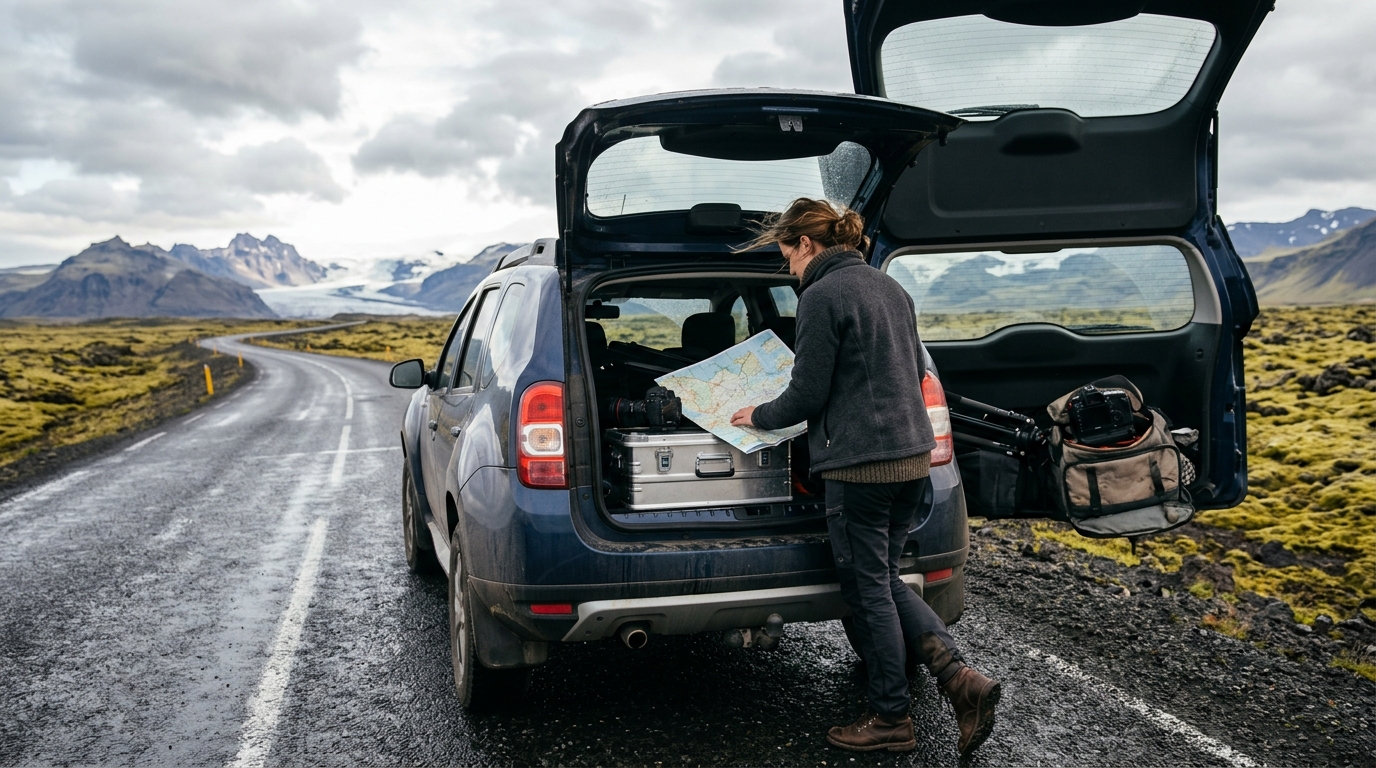
The Reality of Iceland Photography Logistics for Solo Travelers
Mastering
Iceland photography logistics for solo travelers requires a fundamental shift in mindset from traditional landscape photography. In an environment where the nearest help can be hours away, your ability to manage your safety, gear, and itinerary determines the success of your expedition. The primary challenge for a one-person crew is the lack of redundancy; if you suffer a minor injury or gear failure, there is no partner to assist with navigation or equipment management.
Preparation is the primary factor in successful solo expeditions. While many photographers focus on the aesthetic potential of the landscape, the reality of the Icelandic environment demands that you prioritize physical and digital infrastructure. Balancing the desire for remote, untouched locations with the necessity of reliable communication is a constant negotiation. You must be willing to sacrifice a "perfect" shot if the conditions compromise your ability to return to your vehicle safely. Every solo photographer needs to approach Iceland not just as a creative space, but as a high-stakes environment that rewards meticulous planning over spontaneity. According to guidelines provided by
SafeTravel Iceland, the most common incidents involving solo travelers stem from underestimating the speed at which weather conditions deteriorate, making pre-trip planning the most effective safety tool available.
Strategic Route Planning and Itinerary Management
Effective planning begins long before you board your flight. Using digital mapping tools to pre-scout locations allows you to understand the terrain, elevation changes, and potential hazards of your target sites. When planning your route, it is vital to share your detailed itinerary with a trusted contact or, in high-risk areas, register your travel plans with local authorities.
To streamline this process, you can utilize the
Iceland Photo Map to distinguish between easily accessible roadside stops and remote backcountry locations that require specialized gear. For instance, while a visit to
Dettifoss is relatively straightforward, venturing deeper into the Highlands requires a different level of logistical preparation. By mapping out your daily goals, you can ensure that you are never pushing into remote territory without a clear "exit strategy" should weather patterns turn suddenly. Always account for "buffer time" in your schedule; in 2026, road closures due to sudden wind or snow events remain a common logistical hurdle for independent travelers, as noted by the Icelandic Road and Coastal Administration.
Safe Photography Travel in Iceland: Weather and Terrain
Safe photography travel in Iceland is predicated on your ability to respect the volatility of the North Atlantic climate. The most essential tool for any photographer is the
Vedur.is weather forecast, which provides hyper-local data that is far more accurate than international weather apps. You must learn to interpret these forecasts for wind speed and precipitation, as "standard" weather can change to a life-threatening storm in under an hour.
Navigating hazardous terrain, such as the unpredictable sneaker waves on black sand beaches or the unstable edges of glaciers, requires constant vigilance. The "Rule of Three" is your best defense: always check the weather forecast, confirm road conditions via
SafeTravel Iceland, and strictly adhere to your planned daylight hours. Never attempt to "chase the light" into remote areas when the sun is setting, as navigation becomes significantly more difficult in the dark. If you find yourself in a situation where visibility drops below 50 meters, standard safety protocols suggest staying with your vehicle rather than attempting to navigate on foot, as the landscape can become disorienting very quickly.
Essential Gear Security for the Solo Photographer
Protecting your equipment is just as critical as protecting yourself. Iceland’s extreme moisture and high-velocity wind act as catalysts for gear failure. Always carry a dedicated rain cover for your camera and ensure your tripod is weighted down to prevent it from tipping in gale-force winds.
When choosing how to store your gear, consider these strategies:
- Rental Vehicle Security: When parking at trailheads or remote viewpoints, it is a recommended best practice to keep high-value gear out of sight. While crime rates are low, storing your primary camera bodies and lenses in a locked compartment or covering them with a dark blanket when parked is a prudent measure to avoid opportunistic theft, as suggested by general travel safety advisories for the region.
- Hiking Security: Use a high-quality, weather-sealed backpack with a chest strap to ensure the weight is distributed correctly, reducing the risk of a fall on uneven volcanic rock.
- Insurance: Standard travel insurance rarely covers professional-grade photography gear. Invest in a dedicated policy that includes "unattended equipment" coverage. Be aware that most insurers require you to keep the gear within your "line of sight" or locked in a secure vehicle to maintain coverage eligibility.
Optimizing Iceland Photography Logistics for Solo Travelers on the Road
When optimizing
Iceland photography logistics for solo travelers, your vehicle is your mobile base camp. A 4x4 is highly recommended for anyone planning to venture off the Ring Road, as gravel, mud, and river crossings are common
in many parts of the country.
Battery and Workflow Management
Cold weather drastically reduces battery life. Always keep spare batteries in an inner pocket of your jacket, close to your body heat, rather than in your camera bag. Establish a daily workflow for data management: upload your photos to a ruggedized portable SSD each night and, if possible, utilize a cloud backup service if you have a stable connection.
Vehicle Selection Considerations
| Vehicle Type |
Best For |
Trade-offs |
| Standard Compact |
Ring Road, paved access |
Cannot access F-roads; limited space for gear |
| 4x4 SUV |
General photography, gravel roads |
Higher fuel costs; more stable in wind |
| 4x4 Camper Van |
Multi-day remote shoots |
Increased height makes it prone to wind gusts; high daily cost |
For those looking to explore specific subjects, our
waterfalls category offers curated insights into the best times of day to visit various falls to avoid crowds and maximize light, which is crucial for solo photographers who may not have someone to help manage a tripod in high-traffic areas.
Communication and Emergency Preparedness
If you are hiking into remote areas, a standard cellular phone is insufficient. The necessity of carrying a satellite messenger, such as a Garmin inReach or an equivalent personal locator beacon, cannot be overstated. These devices allow for two-way text communication and SOS signaling even when you are miles from the nearest cell tower.
Always download offline maps before leaving your hotel or base. Furthermore, ensure you have the
112 Iceland app installed. This app allows you to send your GPS coordinates directly to emergency responders if you need assistance. Most importantly, know when to abort a shoot. If the wind is too strong to keep your tripod steady or if the clouds are obscuring your path, the most professional decision is to pack up and return to safety.
Leveraging Local Resources for Better Results
You don't have to navigate the Icelandic landscape alone. Utilizing regional photography guides or local photography communities can provide real-time updates on site accessibility, such as road closures or unexpected trail conditions. Many local photographers provide insights that are not found in standard guidebooks.
You can also use specialized resources to refine your subject selection. For example, if you are interested in coastal architecture, our
lighthouses category provides specific coordinates and structural details to help you plan your shoot. Engaging with these resources allows you to spend less time guessing where to go and more time focusing on the composition and technical execution of your images.
Advanced Field Techniques for the Solo Photographer
Working solo means you are responsible for every aspect of the shoot, including lighting adjustments and composition. In high-wind scenarios, which are frequent in Iceland, consider using a lower-profile tripod setup. If you are shooting long exposures of waterfalls or coastal waves, ensure your tripod legs are fully extended into the ground or anchored with a sandbag to prevent micro-vibrations.
Furthermore, consider the "Golden Hour" logistics. In the summer months, the sun may remain low on the horizon for extended periods, providing a long window for photography. However, in the winter, you may only have four to five hours of usable light. Planning your location visits to align with these specific solar windows is essential for maximizing your output. Always verify the sunrise and sunset times for your specific coordinates on the day of your shoot, as these vary significantly across the island.
Frequently Asked Questions
Is it safe to travel alone for photography in Iceland?
Yes, solo photography in Iceland is safe provided you adhere to strict safety protocols. The country is politically stable and has excellent emergency services, but the environment itself is the primary risk. If you stay on marked paths, monitor weather reports, and never underestimate the terrain, you can have a highly successful and safe trip.
What is the most important piece of safety gear for a solo photographer?
A satellite messenger or personal locator beacon is widely considered the most important piece of safety gear. Because cellular coverage is inconsistent in remote areas, a satellite-based device is a highly effective way to call for help if you are injured or stranded.
How do I keep my camera gear safe from Iceland's unpredictable weather?
Use high-quality, weather-sealed bags and rain covers for your camera. Avoid changing lenses in the open air during high winds or rain to prevent moisture and volcanic dust from entering the sensor chamber. Always carry silica gel packets in your bag to absorb moisture.
Should I rent a 4x4 vehicle for my photography trip?
If you plan to photograph anything beyond the main tourist stops on the Ring Road, a 4x4 is essential. Many of the most iconic locations in Iceland are accessed via gravel roads or F-roads, which are legally restricted to 4x4 vehicles. A 4x4 also provides a higher clearance and better stability during the frequent, high-wind conditions found across the island.
How can I manage my itinerary effectively as a solo traveler?
Effective itinerary management involves balancing your creative goals with realistic travel times. Use tools like the Iceland Photo Map to identify locations that are clustered together to minimize driving time. Always build in a 20% time buffer for each location to account for weather delays or the need to wait for optimal light conditions.
Ready to plan your solo expedition? Browse our interactive photography maps to build your custom itinerary and ensure you hit the best locations safely.