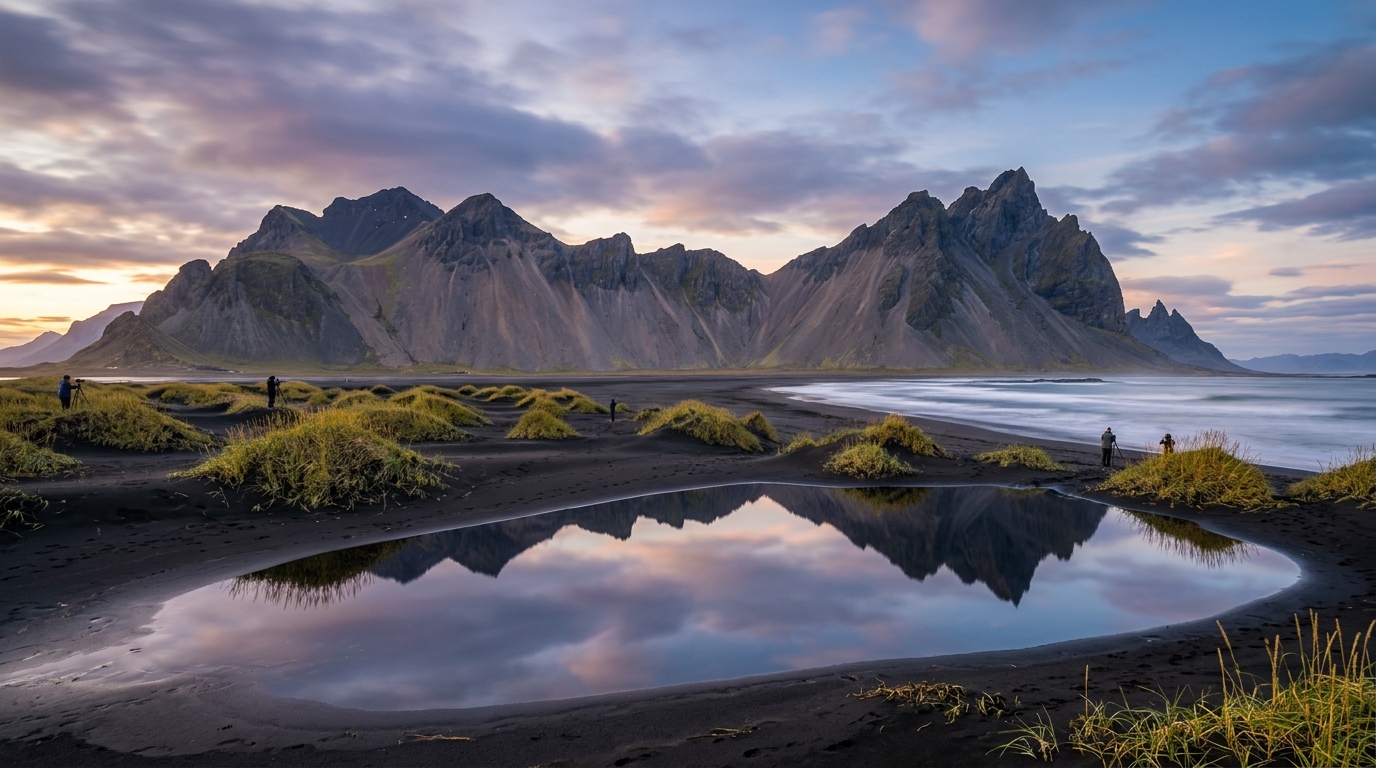
Welcome to the mesmerizing world of Icelandic landscape photography, where jagged mountains meet the roaring Atlantic Ocean and endless stretches of black sand create mirror-like illusions. Among the countless breathtaking locations scattered across the Land of Fire and Ice, few are as instantly recognizable and universally revered as the mighty Vestrahorn mountain. To ensure you capture the absolute best images of this iconic location, we have put together this comprehensive Vestrahorn photography guide. Whether you are a seasoned professional carrying a bag full of prime lenses or an enthusiastic beginner traveling with a smartphone, mastering the nuances of this location will elevate your portfolio to new heights.
Situated on the dramatic Stokksnes peninsula in the southeastern corner of the country, Vestrahorn is a place where weather, tides, and light converge to create pure photographic magic. However, capturing its true essence requires more than just showing up and pressing the shutter. It requires an understanding of tidal movements, a solid grasp of the local logistics, and a keen eye for composition. In this Vestrahorn photography guide, we will walk you through every critical detail—from navigating the private roads and finding the perfect foregrounds to protecting your camera gear from the harsh coastal elements.
Welcome to the Ultimate Vestrahorn Photography Guide
Often affectionately referred to as the "Batman Mountain" due to its distinctive, bat-wing-shaped jagged peaks, Vestrahorn is a geological masterpiece. Unlike the volcanic basalt columns found in many other parts of Iceland, Vestrahorn is primarily composed of unstratified gabbro rock, which gives it a remarkably dark, brooding, and textured appearance. Rising an impressive 454 meters (1,490 feet) straight out of the flat, black sand beach, the sheer verticality of the mountain creates a stunning visual contrast that immediately draws the viewer's eye.
For decades, this location has stood as a holy grail and a bucket-list destination for landscape photographers worldwide. The reasons are abundant: the sweeping dunes adorned with vibrant tufts of green marram grass, the dynamic tidal flats that act as a giant natural mirror, and the ever-changing atmospheric conditions that range from moody, low-hanging fog to explosive, colorful sunsets. Every time you visit Stokksnes, the mountain presents a completely different mood, ensuring that no two photographs are ever exactly alike.
Throughout this comprehensive Vestrahorn photography guide, we will cover everything you need to know to plan a successful shoot. We will dive deep into the practicalities of getting there, paying the entrance fees, and finding the best parking. We will explore the science of the tides to help you time your visit for those coveted mirror reflections. Finally, we will break down the best camera settings, compositional techniques, and seasonal considerations to ensure you leave with gallery-worthy images.
Navigating Stokksnes Logistics and Viking Cafe Parking
Getting to the Stokksnes peninsula is a relatively straightforward journey, but there are a few logistical quirks that every photographer needs to be aware of. Located just a short drive east of the town of Höfn, you will turn off the main Ring Road (Route 1) onto an unmarked gravel road (Route 99, which transitions into Stokksnesvegur). You will follow this bumpy but manageable road for about 5 kilometers until you reach a dead end at a small, unassuming building known as the Viking Cafe.
One of the most important things to understand before you arrive is that the Stokksnes peninsula and the land surrounding Vestrahorn are privately owned. Unlike many of the national parks and public natural wonders in Iceland, accessing this specific beach requires paying an entrance fee. You can pay this fee directly inside the Viking Cafe or at an automated ticket machine located outside if the cafe is closed. The fee goes directly toward the maintenance of the private road, the preservation of the delicate dune ecosystem, and the upkeep of the facilities.
Once you have purchased your ticket, you will scan a barcode to lift the automated boom gate. This brings us to the logistics of the Viking Cafe parking. You have two main options: you can park right at the cafe and walk to the beach, or you can drive your vehicle through the gate and follow the dirt track further down the peninsula toward the NATO radar station. If you choose the Viking Cafe parking lot, expect a scenic 10 to 15-minute walk through the dunes to reach the water's edge. Driving closer to the radar station will cut down your walking time significantly, which is highly recommended if you are carrying heavy camera gear or shooting in the dark during the winter months.
Chasing the Perfect Vestrahorn Reflection
If there is one specific shot that draws creatives to this corner of Iceland, it is the legendary Vestrahorn reflection. When the conditions align, the wet black sand acts as a flawless, glass-like mirror, perfectly duplicating the jagged peaks of the mountain against the sky. However, achieving this shot is heavily dependent on your understanding of the relationship between the ocean tides and the topography of the beach.
The tidal flats at Stokksnes are incredibly shallow. During high tide, the ocean completely swallows the beach, pushing all the way up to the base of the grassy dunes. While you can still capture beautiful images of crashing waves, the mirror effect is completely lost in the turbulent water. The absolute best time to photograph the Vestrahorn reflection is during a receding tide or at dead low tide. As the ocean pulls back, it leaves behind a millimeter-thick layer of water trapped on top of the heavily compacted black sand. Because the water is so shallow, it remains perfectly still, creating an undisturbed mirror.
While chasing this reflection, safety and gear protection must be your top priorities. The Atlantic Ocean is notorious for "sneaker waves"—powerful, unexpected surges of water that can rush hundreds of feet further up the beach than previous waves. Never turn your back on the ocean. Furthermore, walking on wet sand means your tripod will inevitably sink over time, potentially ruining long-exposure shots. Make sure to press your tripod legs firmly into the sand before shooting, and always thoroughly rinse your tripod joints with fresh water afterward to prevent the highly corrosive saltwater and fine black sand from seizing the mechanisms.
How to Photograph Vestrahorn: Composition and Settings
Knowing exactly how to photograph Vestrahorn involves a mix of creative vision and technical precision. The sheer scale of the mountain combined with the vastness of the beach means you will want to utilize a variety of focal lengths. A wide-angle lens (typically in the 14-24mm range on a full-frame camera) is the most popular choice. This allows you to get incredibly close to the black sand dunes and the tufts of green grass, using them as strong foreground anchors that lead the viewer's eye straight toward the mountain in the background. Conversely, a telephoto lens (such as a 70-200mm) is excellent for compressing the scene, isolating the dramatic, jagged peaks, and capturing the intricate textures of the gabbro rock.
When composing your shot, the foreground is just as important as the mountain itself. The rolling black sand dunes, capped with golden-green marram grass, provide incredible leading lines and color contrast. When photographing the dunes, try getting your camera as low to the ground as possible to exaggerate their size. If you are shooting the reflection, position the horizon line dead center in your frame to emphasize the symmetry between the sky and the wet sand.
For your camera settings, the goal is maximum sharpness and dynamic range. Here are a few recommended settings to start with:
- Aperture: Shoot between f/8 and f/11 to ensure a deep depth of field, keeping both the immediate foreground grass and the distant mountain in sharp focus.
- ISO: Keep your ISO at its base level (usually ISO 100) to minimize digital noise and maximize image quality.
- Focus Stacking: If your foreground is extremely close to the lens, consider focus stacking—taking multiple shots focused at different distances and blending them in post-processing.
- Long Exposures: Use a 6-stop or 10-stop Neutral Density (ND) filter to drag your shutter speed out to 30 seconds or more. This will blur the moving clouds into dramatic streaks and smooth out any ripples in the water, enhancing the ethereal mood.
Top Stokksnes Photo Spots Beyond the Main Peaks
While the classic mountain reflection is the undeniable star of the show, there are numerous other Stokksnes photo spots that deserve your attention. One of the most fascinating detours you can take is a visit to the abandoned Viking Village film set. Located just a short walk from the Viking Cafe, this incredibly detailed replica village was built in 2010 for a movie that was ultimately never filmed. Today, the wooden palisades, turf-roofed houses, and carved wooden doors are slowly weathering in the harsh Icelandic elements, providing endless opportunities for moody, textured, and cinematic photography.
As you move further down the peninsula, you will encounter the Stokksnes lighthouse. While it may not be as famous as some other coastal beacons, it stands as a brilliant splash of yellow and red against the often gloomy, monochromatic landscape. If you enjoy capturing maritime history, it is well worth adding this to your list of photographing Icelandic lighthouses. Just behind the lighthouse sits an imposing relic of the Cold War: the old NATO radar station. The giant, golf-ball-like radomes offer a bizarre, almost sci-fi contrast to the rugged natural beauty surrounding them.
Finally, do not forget to turn your camera toward the ocean itself. The eastern side of the Stokksnes peninsula features a rugged, rocky coastline where the relentless Atlantic waves crash violently against the shore. Using a fast shutter speed to freeze the explosive spray, or a slow shutter speed to capture the water dragging over the dark, smooth stones, can yield spectacular, dramatic seascape images that perfectly complement your mountain landscapes.
Seasonal Planning for Your Vestrahorn Photography Guide
No Vestrahorn photography guide would be complete without discussing the profound impact of the seasons. Iceland is a country defined by its shifting weather, and Stokksnes transforms entirely depending on the time of year you choose to visit. Winter photography (roughly November through March) offers a stark, monochromatic wonderland. The jagged peaks are often dusted with brilliant white snow, creating incredible contrast against the dark rock. The black sand beach frequently freezes solid, and if you are lucky, the long, dark nights provide the perfect canvas for capturing the Aurora Borealis dancing directly over the mountain.
Summer photography (June through August), on the other hand, is all about vibrant colors and endless light. The marram grass on the dunes bursts into a vivid, saturated green, providing a stunning foreground. Because of the midnight sun, the "golden hour" can last for hours on end, giving you an incredibly long window to shoot under soft, warm, directional light. You can easily arrive at 11:00 PM and shoot a spectacular sunset that slowly bleeds directly into a sunrise.
Regardless of the season, you must be prepared to deal with harsh Icelandic winds and rapidly changing weather conditions. Stokksnes is highly exposed to the open ocean. High winds can whip the fine black sand into a frenzy, which is not only painful to exposed skin but can easily scratch your lens elements and ruin your camera's internal mechanics. Always check the local weather forecasts (Vedur.is) before heading out, carry a protective rain cover for your camera, and never change lenses out in the open wind.
Integrating Vestrahorn into Your East Iceland Itinerary
Because Stokksnes is located in the southeastern corner of the country, integrating it into your travel plans requires a bit of forethought. For most travelers, a visit to Vestrahorn serves as the perfect transition point between the popular southern waterfalls and the remote, dramatic fjords of the east. If you are planning an extended road trip, we highly recommend dedicating a few days to exploring East Iceland, using the nearby town of Höfn as your basecamp. Höfn is famous for its langoustine, offering a great place to warm up and enjoy a hearty meal after a cold morning shoot.
When calculating your driving times, keep in mind that Iceland is vast and speed limits are strictly enforced. Driving directly from Reykjavik to Vestrahorn takes roughly six to seven hours without stopping—though you will undoubtedly want to stop. If you are traveling from the South Coast, specifically from the town of Vík, expect the drive to take about three and a half hours. The route takes you past the spectacular glacier lagoons of Jökulsárlón and Diamond Beach, making for an unforgettable day of photography.
To make the most of your time on the road, it is crucial to plan an efficient route. We recommend using our comprehensive Iceland landscape maps to pinpoint exact parking locations, hidden viewpoints, and nearby points of interest. By mapping out your stops in advance, you can ensure you are arriving at locations like Vestrahorn precisely when the light and tides are at their absolute best.
Conclusion: Final Thoughts on Capturing Vestrahorn
Capturing the raw beauty of Vestrahorn is an experience that stays with a photographer forever. From the moment you pay your entrance fee at the Viking Cafe to the second you see the jagged peaks reflecting perfectly in the wet black sand, Stokksnes delivers a masterclass in landscape photography. By understanding the tides, utilizing the grassy dunes for foreground interest, and preparing for the unpredictable Icelandic weather, you are well on your way to capturing a portfolio-defining image.
As a final, vital reminder, please respect the delicate ecosystem of the Stokksnes peninsula. The marram grass that holds the black sand dunes together is incredibly fragile and takes years to grow in this harsh environment. Always stay on the marked paths, never trample the vegetation to get a better angle, and practice "leave no trace" principles so that future generations of photographers can enjoy this pristine location.
We hope this Vestrahorn photography guide has provided you with the insights and inspiration needed to tackle this iconic mountain. Embrace the wind, chase the light, and do not forget to share your incredible photos with the world as you continue to explore the breathtaking landscapes of Iceland.
Frequently Asked Questions
Do I have to pay to photograph Vestrahorn?
Yes, you do have to pay an entrance fee to access the beach and photograph Vestrahorn. The land encompassing the Stokksnes peninsula, the Viking Village, and the black sand dunes is privately owned. The fee (typically around 900 to 1000 ISK per person) is paid at the Viking Cafe. This money is used by the landowner to maintain the access road, manage the parking facilities, and protect the fragile dune ecosystem from over-tourism.
What is the best time of day to photograph Vestrahorn?
The best time of day heavily depends on the season and the tides, but generally, the golden hours of sunrise and sunset offer the most spectacular lighting. During these times, the low angle of the sun casts long shadows across the black sand dunes and paints the jagged peaks of the mountain in warm, glowing light. However, because the Vestrahorn reflection is so highly sought after, timing your visit to coincide with a low or receding tide is often more important than the time of day.
Can I fly a drone at Stokksnes?
Yes, flying a drone is generally permitted at Stokksnes, and the aerial perspectives of the crashing waves meeting the black sand are truly phenomenal. However, you must fly responsibly. Always adhere to Icelandic drone regulations, which include keeping your drone within line of sight and not flying directly over crowds of people. Additionally, the winds at Stokksnes can be incredibly fierce and unpredictable; many drones have been lost to sudden gusts. Always check the wind forecast and be mindful of local bird populations during nesting season.
How long should I spend at Vestrahorn for photography?
To truly do justice to the location, you should plan to spend a minimum of two to four hours at Stokksnes. This gives you enough time to park, walk through the dunes, explore the Viking Village, wait for the optimal tidal conditions for reflections, and experiment with different focal lengths and compositions. If the weather is highly variable, staying longer allows you to capture the mountain in multiple different moods as the clouds and light shift.
Ready to plan your ultimate Iceland photography road trip? Explore our interactive Landscape Maps to discover Vestrahorn and hundreds of other stunning locations across East Iceland.