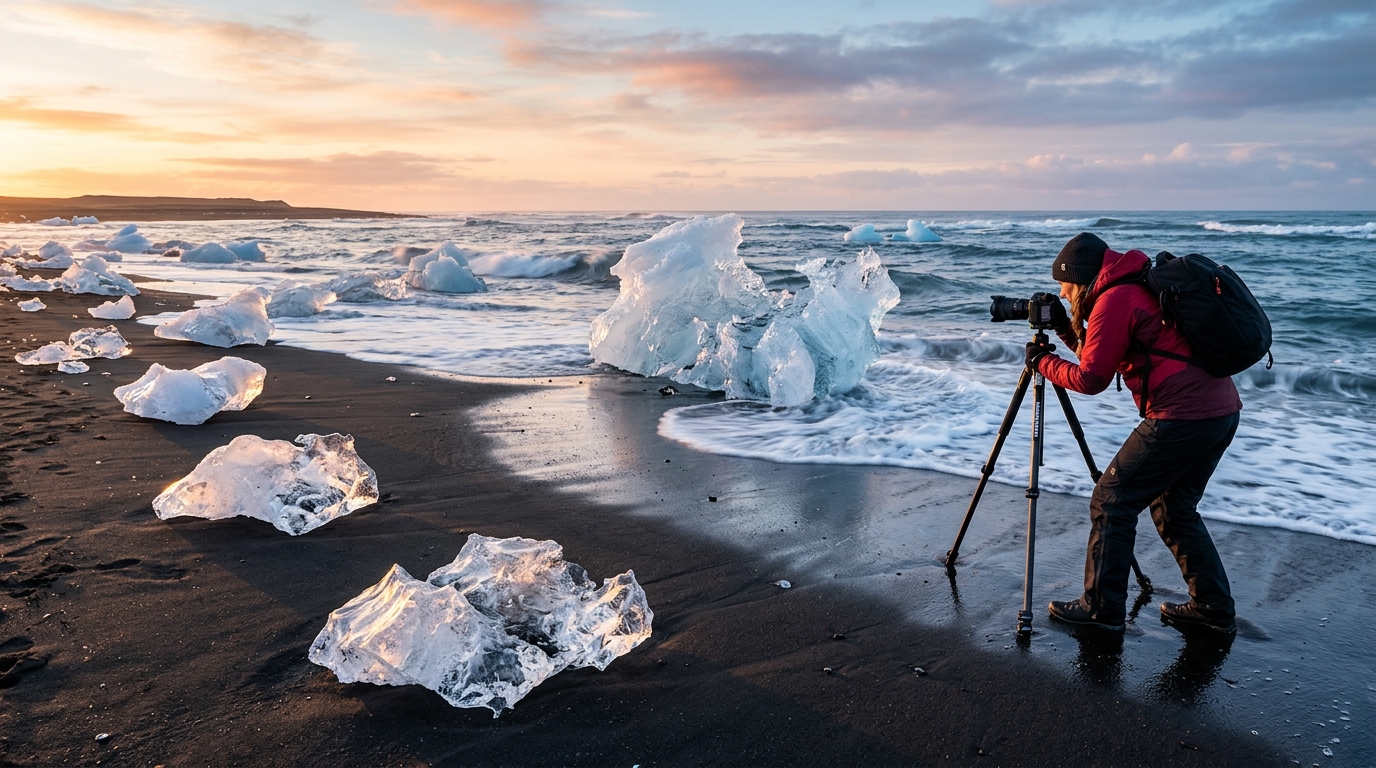
Imagine walking onto a pitch-black volcanic shoreline scattered with glittering, diamond-like ice sculptures. Welcome to Breiðamerkursandur, famously known around the globe as Diamond Beach. For landscape shooters visiting Iceland, mastering Diamond Beach photography is often at the very top of the bucket list. The striking contrast between the crystal-clear ice fragments and the dark, velvety sand provides an otherworldly canvas that is simply unmatched anywhere else on Earth.
Whether you are an enthusiastic amateur with a smartphone or a seasoned professional with a full-frame DSLR, capturing this dynamic environment requires preparation, precise timing, and an understanding of the elements. In this ultimate guide, we will walk you through everything you need to know—from the essential camera settings and composition techniques to crucial safety tips and understanding the tides. Grab your camera bag, and let's dive into the fascinating world of photographing Iceland's most famous icy shoreline.
Getting Started with Diamond Beach Photography
Before you set up your tripod, it is essential to understand the landscape you are working with. Diamond Beach, officially known as Breiðamerkursandur, is a strip of black volcanic sand located on the South Coast of Iceland, sitting right next to the famous Route 1 Ring Road. But what gives this beach its unique visual appeal?
The magic begins just across the highway at the Breiðamerkurjökull glacier. As the glacier naturally melts and shifts, massive chunks of ancient, compressed ice calve off into a deep glacial lagoon. These icebergs eventually drift through a narrow waterway and out into the churning Atlantic Ocean. However, the relentless ocean waves and the changing tides immediately push many of these glacial ice chunks back onto the shoreline. The result is a beach littered with translucent, beautifully sculpted "diamonds" resting on a bed of stark black volcanic sand.
When approaching Diamond Beach photography, setting the right expectations is crucial. This is a highly dynamic and ever-changing environment. No two visits will ever be the same. On one day, the beach might be covered in massive, SUV-sized icebergs glowing with deep blue hues. On another day, you might find thousands of small, fist-sized ice fragments scattered like shattered glass. The ice melts, shifts, and washes away with every passing tide. Embracing this unpredictability is the first step to capturing truly unique images that stand out in your portfolio.
The Best Time for Diamond Beach Photos
Lighting and tides dictate the success of your shoot. Understanding how these two factors interact will help you determine the absolute best time for Diamond Beach photos.
First and foremost, you must pay attention to the tides. The ideal window for photography is usually during the transition from high tide to low tide. During high tide, the ocean brings fresh ice chunks onto the shore. As the tide begins to recede, it leaves these pristine pieces of ice stranded on the freshly washed, wet black sand. The outgoing tide also creates beautiful, receding water trails around the base of the ice, which are perfect for long-exposure photography.
Lighting is the second critical factor. Like most landscape photography, the golden hour—the period shortly after sunrise and just before sunset—provides spectacular conditions. The low angle of the sun casts a warm, golden glow that literally refracts through the clear ice, illuminating it from within. Blue hour, the twilight period before sunrise and after sunset, is equally stunning. The soft, cool light emphasizes the natural deep blues of the older, more compressed glacial ice.
Seasonal differences also dramatically alter your experience. In the summer months, Iceland experiences the midnight sun, offering hours of prolonged, soft golden light that gives you endless time to compose your shots. Conversely, winter brings very short days, but it offers something truly magical: the opportunity to capture the vibrant green ribbons of the northern lights dancing over the glowing ice. Winter also tends to produce larger, more dramatic ice chunks due to the colder temperatures preventing rapid melting.
Essential Diamond Beach Camera Settings
Nailing your Diamond Beach camera settings is the difference between a snapshot and a fine-art masterpiece. Because you are dealing with moving water, bright ice, and dark sand, you must take full manual control of your camera.
Let's start with shutter speed, which is your most important creative tool on the beach. If your goal is to freeze the explosive power of a wave crashing against a large iceberg, you will need a fast shutter speed—typically 1/500th of a second or faster. However, the classic, highly sought-after look involves capturing the "drag" or "silky" effect of the water washing around the ice. To achieve this, you need a slow shutter speed, usually between 0.5 seconds and 2 seconds. The exact speed depends on how fast the water is moving, so take a few test shots. A 1-second exposure is often the sweet spot for capturing beautiful streaks of white foam without turning the water into an undefined milky blur.
For your aperture, maximizing your depth of field is generally the goal. You will often have a piece of ice just a few feet from your lens, with the ocean stretching out to the horizon. An aperture setting between f/8 and f/11 is ideal for keeping the entire scene sharp. Avoid stopping down to f/22 unless absolutely necessary, as lens diffraction will begin to soften your image.
Finally, your ISO should be kept as low as possible—ideally at your camera's base ISO of 100 or 200. This ensures maximum dynamic range, allowing you to capture the bright highlights in the ice and the deep shadows of the black sand without introducing digital noise. If you are shooting during the dim light of blue hour and need a faster shutter speed to freeze the water, you may need to increase your ISO to 400 or 800. Just remember that a sturdy tripod is your best friend for keeping ISO low in fading light.
Composition Tips for Photographing Ice on Beach
Once your settings are dialed in, it is time to focus on composition. Photographing ice on beach environments requires a physical shift in perspective. If you shoot from a standing, eye-level position, the resulting images often look flat and uninspiring.
The number one rule for composing on Diamond Beach is to get low to the ground. By lowering your camera to just inches above the sand, you instantly emphasize the size and texture of the ice chunks. A piece of ice the size of a football can look like a towering glacial monolith when shot from a low angle with a wide lens. Getting low also allows you to frame the ice against the dramatic sky and the crashing ocean waves in the background.
Next, look for leading lines. The ocean provides a continuous, moving set of lines in the form of receding waves. As a wave crashes and pulls back into the sea, it leaves streaks of white foam on the dark sand. Time your shutter release so that these streaks draw the viewer's eye directly from the bottom of the frame up to your main subject—the glowing ice.
Contrast is another vital element of your composition. The visual power of Diamond Beach lies in the stark contrast between the bright, translucent ice and the pitch-black volcanic sand. Look for pieces of ice that are particularly clear or possess a deep, sapphire-blue hue. Isolate these pieces against a clean, footprint-free patch of black sand to make the subject pop. Don't be afraid to walk further down the beach away from the crowds to find pristine, untouched areas to set up your shot.
Essential Gear for Diamond Beach Photography
The harsh Icelandic environment demands reliable gear. If you are planning on capturing sweeping landscapes, bringing the right equipment is just as important as knowing your settings.
A sturdy tripod is absolutely non-negotiable. A lightweight travel tripod will simply not survive the coastal winds or the force of the ocean waves. Furthermore, the wet sand on Diamond Beach acts like quicksand; as the water washes around your tripod legs, they will slowly sink, ruining your long exposures. You need a robust tripod, and you must firmly push the legs deep into the sand until they hit a solid layer before taking your shot.
Filters are your secret weapon here. A Circular Polarizer (CPL) is highly recommended. It cuts through the harsh glare reflecting off the wet ice and the glossy black sand, revealing the deep, rich colors and internal textures of the icebergs. Additionally, Neutral Density (ND) filters are essential if you are shooting during daylight hours. To achieve that 1-second shutter speed for silky water motion when the sun is up, a 3-stop or 6-stop ND filter will be required to prevent your image from being completely overexposed.
When it comes to lenses, versatility is key. A wide-angle lens (such as a 16-35mm) is perfect for getting up close to the ice while still capturing the sweeping ocean and dramatic skies. A mid-range zoom (like a 24-70mm) is incredibly useful for standard landscape framing. Finally, do not leave your telephoto lens (70-200mm or longer) in the car. A telephoto or macro lens allows you to isolate distant icebergs crashing in the surf, compress the perspective, or capture the intricate, abstract bubbles and patterns frozen deep inside the ice.
Safety First: Navigating Sneaker Waves and Tides
While the beauty of the beach is captivating, it is also one of the most dangerous locations in Iceland if you are not paying attention. Navigating this environment safely is paramount.
The most significant danger comes from "sneaker waves." These are disproportionately large coastal waves that can suddenly and silently surge dozens of feet further up the beach than the preceding waves. They are incredibly powerful and can easily knock a person off their feet, dragging them and their camera gear into the freezing, turbulent Atlantic Ocean. The golden rule of photographing the Icelandic coastline is to never turn your back to the ocean. Always keep one eye on the incoming surf, even when looking through your viewfinder.
Protecting your gear is also a major concern. The combination of corrosive saltwater spray and blowing volcanic sand can destroy a camera in minutes. Keep a rain cover over your camera, or at least have a micro-fiber cloth handy to constantly wipe sea spray off your front element. When you return to your accommodation, be sure to extend your tripod legs and rinse them thoroughly with fresh water to prevent the salt and sand from seizing the joints.
Finally, dress appropriately. Proper footwear is essential. Waterproof boots or chest waders are highly recommended. To get the best shots of the water moving around the ice, you will inevitably have to stand in the surf. Keeping your feet dry and warm will allow you to stay out longer and focus on your photography rather than your freezing toes.
Exploring Nearby Jokulsarlon Photo Spots
You cannot visit Diamond Beach without exploring the area immediately across the Ring Road. The adjacent Jökulsárlón Glacier Lagoon offers a completely different, yet equally mesmerizing, photographic experience. When planning your trip, allocating time for the various Jokulsarlon photo spots is a must.
While Diamond Beach is defined by the chaotic, crashing waves of the Atlantic, Jökulsárlón is defined by its serene, deep blue waters. Here, you can capture massive, building-sized icebergs floating peacefully before they begin their journey out to sea. On calm mornings, the water in the lagoon becomes like glass, offering incredible opportunities for perfect reflection shots of the towering ice formations.
The lagoon is also a fantastic location for wildlife photography. Harbor seals are frequently seen swimming in the frigid waters or resting lazily on the floating ice floes. A telephoto lens is ideal for capturing these curious creatures as they pop their heads out of the water to observe the photographers on the shore. The juxtaposition of the dark seals against the bright blue and white ice makes for stunning wildlife portraits.
Conclusion: Elevating Your Iceland Portfolio
Capturing the perfect shot at this iconic location is a thrilling challenge that blends technical skill, artistic vision, and a healthy respect for nature. By understanding the tides, mastering your manual settings, and utilizing creative composition techniques, you can walk away with images that truly elevate your photography portfolio.
Remember to embrace the unpredictable Icelandic weather and the ever-changing ice formations. The most dramatic and compelling images are often captured when the weather is at its moodiest. Stay safe, protect your gear, and allow the raw beauty of the environment to inspire your creativity. Whether you are hunting for the perfect piece of clear ice or waiting for the northern lights to illuminate the sky, the rewards of this location are well worth the effort.
If you are looking to build a comprehensive itinerary of Iceland's top photography locations, knowing exactly where to go and when to be there is half the battle.
Frequently Asked Questions
What is the best time of day for Diamond Beach photography?
The absolute best times are during the golden hour (just after sunrise and just before sunset) and the blue hour (twilight). During these times, the soft light refracts beautifully through the ice. Additionally, timing your visit to coincide with the transition from high tide to low tide is ideal, as the receding water leaves fresh ice chunks beautifully stranded on the black sand.
Do I need an ND filter for photographing ice on the beach?
If you are shooting during daylight hours and want to achieve the popular "silky water" effect around the ice, yes, an ND (Neutral Density) filter is highly recommended. To get a shutter speed of 0.5 to 2 seconds in bright light, a 3-stop or 6-stop ND filter will prevent your image from being overexposed. If you are shooting in the dark conditions of winter or twilight, you may not need one.
How do I protect my camera gear from the salt and sand at Diamond Beach?
Always use a clear UV filter to protect your lens's front element from flying sand and sea spray. Carry multiple microfiber cloths to constantly wipe away moisture. Using a plastic rain sleeve over your camera body is a great way to protect it from sudden splashes. Lastly, always rinse your tripod legs with fresh water at the end of the day to prevent salt corrosion and sand buildup in the locking mechanisms.
Is Diamond Beach better to photograph at high tide or low tide?
The sweet spot is actually the transition between high and low tide. High tide brings the ice chunks ashore from the ocean. As the tide begins to go out (ebbing tide), it leaves the ice resting securely on the sand, while the receding waves create beautiful, leading-line water trails around the base of the icebergs.
Ready to plan your ultimate Iceland photography road trip? Explore our interactive South Coast photography map to discover more stunning locations near Diamond Beach!