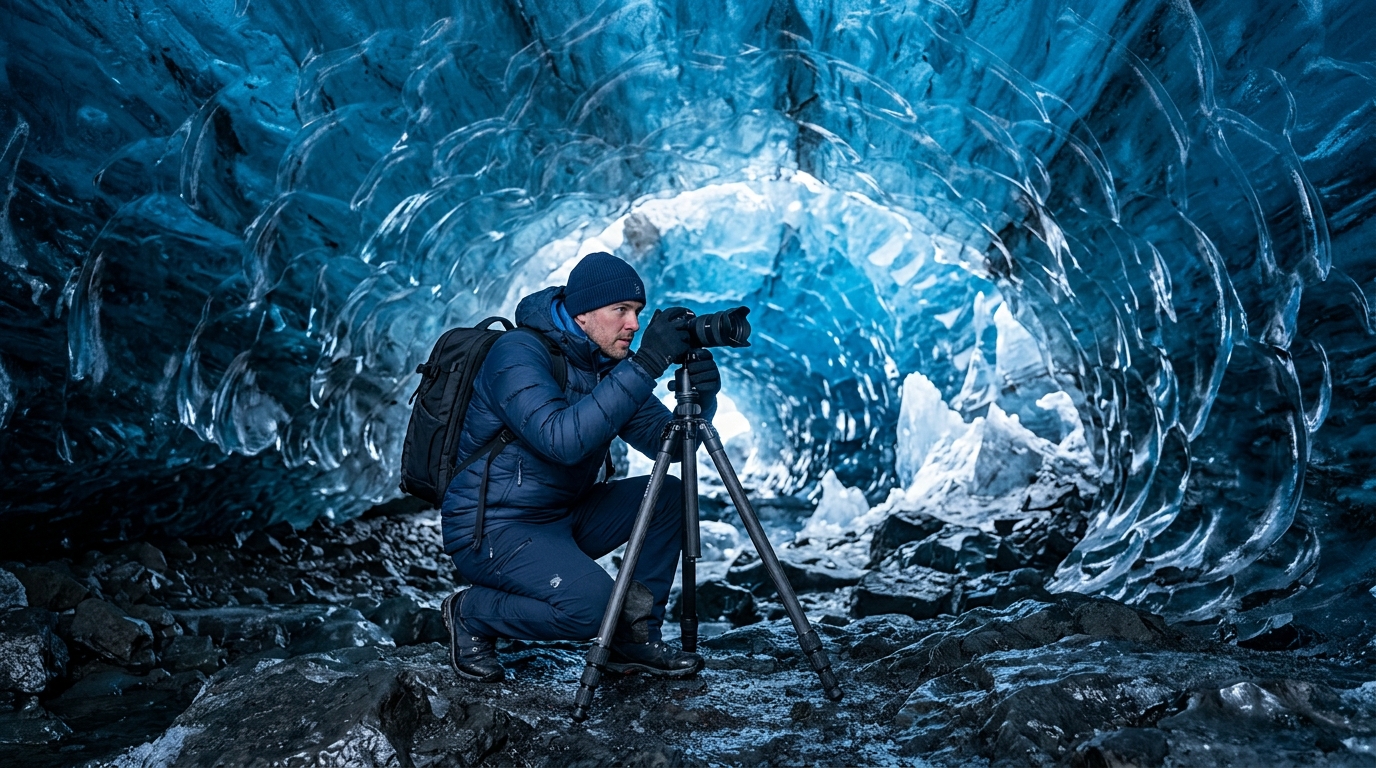
There are few places on Earth that offer the sheer photographic majesty of a Nordic winter, and mastering Iceland ice cave photography is often at the very top of every landscape photographer’s bucket list. Stepping into a subterranean world of glowing blue ice, sculpted by the slow, powerful movement of ancient glaciers, feels like entering another dimension. For photographers, these ephemeral ice caverns provide an unparalleled opportunity to capture light, texture, and color in ways that are simply impossible anywhere else in the world.
Whether you are a seasoned professional carrying a bag full of prime lenses or an enthusiastic amateur hoping to capture the perfect shot of a glowing blue tunnel, preparation is key. The environment inside a glacier is as challenging as it is beautiful, requiring specific gear, specialized camera settings, and a deep understanding of the icy terrain. In this comprehensive guide, we will walk you through everything you need to know to master Iceland ice cave photography, from finding the best locations and booking the right tours to dialing in your exposure for the perfect glacial masterpiece.
Introduction to Iceland's Frozen World
When winter descends upon Iceland, the landscape transforms into a dramatic canvas of stark contrasts. The lush green moss and flowing rivers of summer are replaced by endless stretches of white snow, dark basaltic rock, and the towering, jagged edges of massive glaciers. This unique winter landscape provides endless inspiration for visual artists, but the true hidden gems lie beneath the surface of the ice.
The magic of capturing light through ancient blue ice is difficult to overstate. Glacial ice is not like the ice you find in your freezer; it has been compressed over centuries, squeezing out oxygen bubbles and increasing its density. When sunlight filters through this incredibly dense ice, it absorbs the red end of the light spectrum and transmits the blue, resulting in a surreal, luminous sapphire glow that illuminates the dark caverns.
In this guide, we will cover the essential elements of a successful glacial photography expedition. We will explore the best locations on the island, detail the specific gear you need to protect your camera and nail your shots, break down the technical camera settings required for low-light ice textures, and offer practical advice on navigating these spaces safely.
Why Iceland Ice Cave Photography is a Must-Do Experience
For any dedicated landscape shooter, Iceland ice cave photography is a must-do experience that offers rewards far beyond a typical photo walk. One of the most compelling reasons to photograph these caves is their ephemeral nature. Ice caves are not permanent structures; they are formed during the summer months when meltwater carves intricate tunnels beneath the glaciers. When winter arrives and the temperatures drop, these rivers freeze, leaving behind hollowed-out caves. Because the glacier is constantly moving and melting, the caves change every single year. A cave you photograph this winter will likely not exist next winter, meaning every image you capture is a totally unique, unrepeatable slice of history.
Furthermore, the unique lighting conditions inside these caves provide an incredible playground for photographers. As the sun sits low on the horizon during the Icelandic winter, its rays pierce the entrance of the caves, illuminating the vibrant blue hues of the ice. The play of light and shadow creates dynamic, natural leading lines that draw the viewer’s eye deep into the frame.
Adding to this visual drama is the striking contrast between the crystal-clear ice and the dark volcanic ash trapped within it. Over centuries, volcanic eruptions have deposited layers of black ash onto the glaciers. As the ice compresses and moves, these ash layers form sweeping, ribbon-like patterns suspended in the blue ice. Capturing this stark contrast between the fiery geological history of the island and its frozen present is what makes Iceland ice cave photography so visually arresting.
Top Locations to Photograph Glaciers in Iceland
If you want to successfully photograph glaciers Iceland has to offer, you need to know where to look. While glaciers cover about 11% of the country's landmass, not all of them are accessible or safe for photography. The premier destination for glacier and ice cave photography is undoubtedly the South Coast. This region is home to some of the most dramatic and easily accessible glacial tongues in the country, making it the perfect basecamp for your winter photography itinerary.
One of the top spots along the South Coast is the Skaftafell Nature Reserve, part of the larger Vatnajökull National Park. Skaftafell features several prominent glacier tongues, including Svínafellsjökull and Falljökull. These outlet glaciers cascade down the mountainsides like frozen rivers, offering incredible opportunities to photograph jagged seracs, deep crevasses, and towering ice walls. The relatively short hike to the base of these glaciers makes them ideal for photographers carrying heavy gear.
However, safety considerations must be your top priority when you photograph glaciers in Iceland. Glaciers are dynamic, moving bodies of ice that pose significant risks, including hidden crevasses, unstable ice roofs, and sudden rockfalls. You should never attempt to walk onto a glacier or enter an ice cave without a certified local glacier guide. They possess the necessary safety equipment, local knowledge, and training to ensure you get your shots without putting your life in danger.
Exploring the Famous Vatnajokull Ice Caves
When it comes to subterranean photography in Iceland, the Vatnajokull ice caves are universally considered the crown jewel of exploration. Vatnajökull is the largest ice cap in Europe by volume, covering roughly 8% of Iceland. Its massive size and varied topography create the perfect conditions for some of the largest, most spectacular ice caves on the planet.
Photographers visiting the Vatnajokull ice caves will encounter two primary types of ice: sapphire blue ice and black ice. The sapphire blue caves, often referred to as "Crystal Caves," are famous for their translucent, glowing ceilings that look like frozen ocean waves. These are the most highly sought-after locations for photographers. On the other hand, black ice caves—sometimes called "Dragon Glass" caves—are heavily heavily striated with volcanic ash. While they may not have the bright, glowing blue of the crystal caves, black ice caves offer incredible mood, contrast, and texture, making for highly dramatic, almost otherworldly photographs.
One of the biggest challenges when shooting inside the Vatnajokull ice caves is accurately framing their massive scale. Without a point of reference, a photograph of an ice cave wall can look like a macro shot of an ice cube. To convey the sheer size of the caverns, it is highly recommended to include a human figure in your composition. Placing a guide or a fellow photographer in the distance, perhaps wearing a brightly colored jacket (like red or yellow) to contrast with the blue ice, instantly provides scale and adds a compelling narrative element to your image.
Essential Gear for Iceland Ice Cave Photography
Executing successful Iceland ice cave photography requires more than just a good eye; it requires gear that can withstand harsh, freezing, and wet conditions. The environment inside an ice cave is inherently hostile to electronics and challenging for stabilization, so coming prepared is non-negotiable.
- Sturdy, Spiked Tripods: A tripod is absolutely essential for ice cave photography due to the low light conditions, which necessitate long exposures. However, a standard tripod will slip and slide on the slick ice. You must use a sturdy tripod equipped with metal spiked feet to grip the slippery glacier floor securely.
- Wide-Angle Lenses: Ice caves are often tight, enclosed spaces, but you want to capture the sweeping, majestic ceilings and the leading lines of the tunnel. A wide-angle lens—typically in the 14mm to 24mm range—is ideal for capturing the expansive nature of the caves. Be mindful of edge distortion, but use the wide field of view to emphasize the dramatic curves of the ice.
- Weather-Sealed Camera Bodies: Even in the dead of winter, ice caves are constantly melting. You will frequently encounter dripping water falling from the ceiling. A weather-sealed camera body and lens setup are crucial to prevent water damage.
- Lens Wipes and Microfiber Cloths: Dripping water means water droplets on your front glass. You must carry multiple dry microfiber cloths and lens wipes to constantly clean your lens between exposures. Condensation is also a major issue when moving from a warm vehicle to the freezing cave, so allow your gear to acclimate slowly.
Camera Settings for Low Light and Ice Textures
Once you are inside the cave and your gear is set up, dialing in the correct camera settings is the next critical step. The lighting inside an ice cave is notoriously tricky. It is usually quite dark, with extreme dynamic range between the bright entrance of the cave and the pitch-black recesses.
To capture the maximum dynamic range and keep noise to an absolute minimum, you should shoot at your camera's base ISO (usually ISO 100 or 64). Because you are using a low ISO in a dark environment, you will need to use long exposures—often ranging from a few seconds to over 30 seconds. This is why your spiked tripod is so critical. Set your aperture between f/8 and f/11 to ensure maximum sharpness across the frame.
To keep both the intricate textures of the foreground ice and the distant background of the cave razor-sharp, focus stacking is a highly recommended technique. By taking multiple shots focused at different distances (foreground, midground, and background) and blending them together in post-processing, you can achieve an infinite depth of field that a single exposure simply cannot capture.
Finally, pay close attention to your white balance. Cameras often struggle with the overwhelming blue tones of the ice and may try to warm the image up, resulting in muddy, grayish ice. Manually adjusting your white balance (usually between 3500K and 4500K) or shooting in RAW so you can adjust it later is vital to capturing the true, vibrant blue of the glacier.
Making the Most of a Crystal Cave Photo Tour
If you are serious about your photography, booking a dedicated crystal cave photo tour is one of the best investments you can make. While standard tourist runs are great for sightseeing, they are often crowded, rushed, and incredibly frustrating for photographers who need time to set up tripods and compose long exposures.
The primary benefit of a dedicated crystal cave photo tour is the pacing and the group size. Photo tours are typically limited to a handful of participants, meaning you won't be fighting for tripod space. Furthermore, the guides on these tours are often photographers themselves. They understand the need for clean, uncrowded angles and will often take you to lesser-known, remote caves that the large bus tours cannot reach.
Working closely with your guides is essential. They know the caves intimately and can point out hidden compositions, unique light refractions, and the best angles to capture the ash layers. Time management is also critical in a guided group setting. Even on a photo tour, time is limited. Have your camera settings dialed in, your tripod legs extended, and your wide-angle lens attached before you even step foot inside the cave so you can maximize every minute of your shooting time.
Mastering Glacier Lagoon Photography
No winter photography trip to Iceland is complete without transitioning from the subterranean caves to the stunning landscapes above. When you finish your cave exploration, the next logical step is to master glacier lagoon photography. The most famous of these is Jökulsárlón, a vast lagoon where massive icebergs calve off the Breiðamerkurjökull glacier and float serenely toward the Atlantic Ocean.
Right across the highway from Jökulsárlón is the world-renowned Diamond Beach, where these icebergs wash ashore and sit glistening on the black volcanic sand. Transitioning from cave photography to the lagoon and beach requires a slight shift in technique. Here, the use of Neutral Density (ND) filters becomes incredibly valuable. By using a 6-stop or 10-stop ND filter, you can achieve long exposures even in daylight. This allows you to smooth out the water of the lagoon or the crashing waves of the ocean, creating a milky, ethereal background that makes the sharp, static icebergs pop in your composition.
Timing your visit is everything for spectacular glacier lagoon photography. While the ice is beautiful at any time of day, arriving at sunrise or sunset elevates the scene to a masterpiece. The low angle of the sun casts warm golden, pink, and magenta hues across the sky, which reflect beautifully off the cold blue ice and the still waters of the lagoon, creating a breathtaking color contrast.
Conclusion: Planning Your Winter Photo Adventure
Photographing Iceland's ice caves and glaciers is an incredibly rewarding endeavor that pushes your technical skills and creative vision to new heights. By understanding the unique challenges of the environment, investing in a sturdy spiked tripod, utilizing wide-angle lenses, and mastering long-exposure and focus-stacking techniques, you can capture the true magic of this frozen world.
As you plan your adventure, remember to always respect the fragile glacial environment. These ancient ice structures are highly sensitive to climate change and human impact. Always travel with certified guides, leave no trace, and prioritize safety above getting the shot. By doing so, you help preserve these magnificent landscape locations for future generations of photographers.
Your next step is to map out your itinerary. Iceland is vast, and travel times in winter can be unpredictable due to weather. Taking the time to research specific glacier tongues, lagoons, and cave departure points will ensure your trip is as productive and stress-free as possible.
Frequently Asked Questions
What is the best time of year for Iceland ice cave photography?
The best time for ice cave photography in Iceland is during the winter months, specifically from mid-November through March. During this time, temperatures are consistently low enough to keep the ice caves stable and safe to enter. The winter months also offer the beautiful, soft, low-angle light of the Icelandic winter sun, which is perfect for illuminating the blue ice.
Do I need a guide to visit the Vatnajokull ice caves?
Yes, absolutely. It is incredibly dangerous and highly discouraged to attempt to visit the Vatnajökull ice caves without a certified local glacier guide. The glacier is constantly shifting, and guides monitor the caves daily for structural integrity, toxic gas buildups, and flooding risks. Furthermore, guides provide the necessary safety gear, such as crampons and helmets, which are mandatory for walking on the ice.
What lens is best for photographing inside an ice cave?
An ultra-wide-angle lens is the best choice for photographing inside an ice cave. Focal lengths between 14mm and 24mm on a full-frame camera are ideal. These wide focal lengths allow you to capture the sweeping curves of the cave ceilings and walls in tight spaces, creating a dramatic sense of scale and depth in your images.
How cold does it get inside Iceland's ice caves?
Temperatures inside the ice caves generally hover right around freezing (0°C or 32°F) or slightly below. Interestingly, because the caves block the harsh winter winds, it can sometimes feel warmer inside the cave than it does standing out on the open glacier. However, you will be standing on solid ice, and the cold will seep through your boots, so insulated, waterproof footwear and warm, layered clothing are essential.
Ready to plan your ultimate winter photography trip? Explore our interactive Iceland Photo Maps to find the exact coordinates of the best landscape and glacier locations for your itinerary!