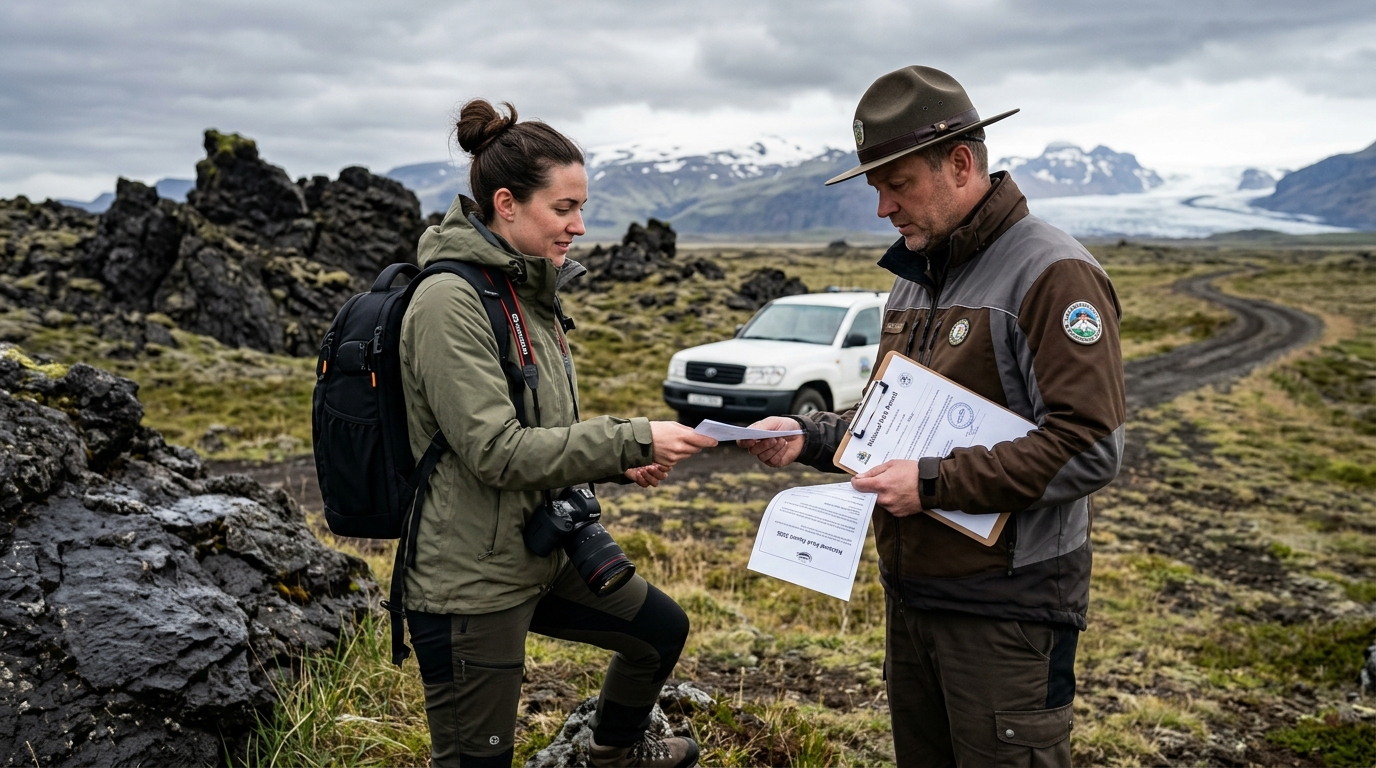
Securing the necessary Iceland photography legal permits is the most critical step in ensuring your 2026 production remains compliant, professional, and free from costly on-site interruptions. Navigating the regulatory landscape requires a clear understanding of the distinction between personal travel photography and commercial projects, as Icelandic authorities are increasingly vigilant about protecting the country's fragile ecosystems from unauthorized mass-media disruption.
Understanding Iceland Photography Legal Permits and Land Access
To ensure you are fully prepared for your 2026 trip, you must first understand the fundamental distinction between personal and commercial photography. Personal photography—capturing images for your own enjoyment or non-monetary use—is generally unrestricted on public land. However, once your project involves a financial gain, brand promotion, or a professional crew, you enter the realm of commercial work, which requires specific legal authorization. The Environment Agency of Iceland, or *Umhverfisstofnun*, is the primary governing body responsible for issuing permits for photography and filming in protected areas. Their mandate is to prevent damage to Iceland’s sensitive volcanic terrain and moss-covered landscapes. Because many of the most iconic locations are strictly regulated, using professional interactive scouting tools is vital. Our platform allows you to identify protected zones, national park boundaries, and private land, ensuring you don't accidentally stray into areas that require high-level permits or are completely off-limits to commercial activity. According to the Environment Agency of Iceland, permits are mandatory for any commercial filming or photography that involves significant equipment or potential environmental impact.When Do You Need a Commercial Photography Permit in Iceland?
The threshold for what constitutes "commercial" activity is often broader than many photographers anticipate. While a solo influencer shooting a social media campaign for a brand clearly falls under commercial guidelines, even small film crews using tripods, external lighting, or drones may trigger permit requirements. Commercial activity is typically defined by the intent of the work and the impact on the environment. If you are producing content for a third-party brand, a film production, or a commercial stock photography portfolio, you are likely required to apply for a permit. Factors that increase your permit necessity include:- Equipment Footprint: Using multiple tripods, light modifiers, or track systems.
- Crew Size: Any production involving more than just the photographer is generally viewed as a professional operation.
- Location Sensitivity: High-traffic sites have stricter thresholds for equipment than remote, less-visited areas.
Drone Permit Iceland Photography: Rules and Restrictions
The use of unmanned aerial vehicles (UAVs) is strictly governed by the Icelandic Transport Authority, *Samgöngustofa*. For those planning to capture footage via drone, compliance is non-negotiable. As of 2026, all drone operators must adhere to strict altitude limits, visual line-of-sight requirements, and, crucially, no-fly zones. Popular sites, such as the cliffs at Dyrhólaey, have stringent drone prohibitions to protect nesting bird populations. Flying in these areas without explicit permission can lead to heavy fines and the immediate confiscation of gear.Drone Compliance Checklist
| Requirement | Details for 2026 |
|---|---|
| Registration | All commercial drone operators must register with the Icelandic Transport Authority. |
| Insurance | Third-party liability insurance is mandatory for all commercial drone operations. |
| Altitude Limit | Maximum operating altitude is generally 120 meters (approx. 400 feet) above ground level. |
| Prohibited Zones | Strict no-fly zones exist near airports, national parks, and protected bird colonies. |
Navigating Protected Areas and National Parks
Iceland’s national parks, such as Vatnajökull and Þingvellir, operate under specific mandates to preserve the integrity of the landscape. According to the Vatnajökull National Park guidelines, all commercial filming and photography must be approved in advance, and fees are often assessed based on the size of the crew and the duration of the shoot. The primary concern for these authorities is the protection of Iceland’s fragile moss and volcanic soil. Off-trail photography is a significant issue; even a few footsteps can leave a scar on the landscape that takes decades to recover. We strongly recommend using our comprehensive planning guide to identify established paths and viewing platforms. By sticking to these routes, you not only ensure your work remains legal but also contribute to the long-term sustainability of the sites you are photographing.The Application Process: Timelines and Documentation
Do not wait until you are on the plane to apply for your permits. The application process for commercial photography in protected areas can take several weeks, depending on the complexity of your request. To ensure a smooth approval process, prepare the following documentation:- Detailed Project Scope: A clear description of what you are shooting, the equipment you are using, and the final output (e.g., commercial advertisement, documentary, social media campaign).
- Crew List: Names and roles for every individual involved in the production.
- Insurance Proof: Documentation showing comprehensive liability insurance that specifically covers your activity in Iceland.
- Site-Specific Maps: Clearly mark your intended locations, especially if you are requesting access to restricted areas.
Common Pitfalls and Legal Risks for Photographers
The most common pitfall for photographers in 2026 is the assumption that because a site is "publicly accessible," it is "publicly shootable." Commercial photography is not a right; it is a privilege that can be revoked if abused. Unauthorized commercial shoots often lead to:- Immediate Shutdown: Rangers have the authority to stop any production that lacks the proper permits.
- Hefty Fines: Legal penalties for filming without a permit in protected areas can be severe.
- Reputational Damage: Being flagged by local authorities can make it difficult to obtain future permits for subsequent projects.