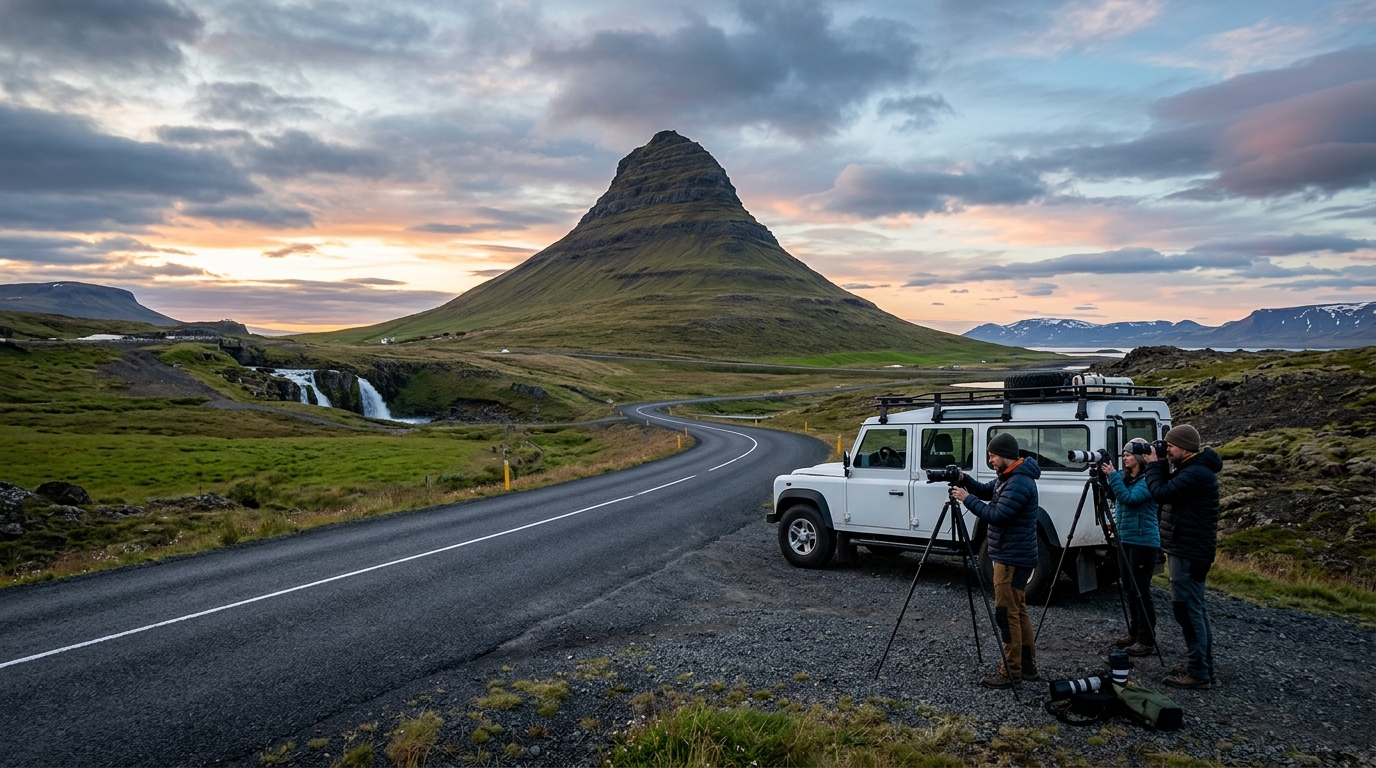
Introduction: Capturing the Land of Fire and Ice
There are few places on Earth that ignite a photographer's imagination quite like Iceland. From its roaring glacial rivers and towering basalt columns to its luminous ice caves and the ethereal dance of the aurora borealis, the "Land of Fire and Ice" is a visual playground. Every twist in the road reveals a new, dramatic landscape, making it a bucket-list destination for landscape and nature photographers worldwide. However, when planning your adventure, the biggest decision you will face is choosing between an Iceland photography tour vs self drive expedition.
This single choice will dictate your itinerary, your budget, and ultimately, the kind of images you bring home. Do you want the seamless, stress-free experience of a guided tour where local experts handle the logistics and lead you directly to the best vantage points? Or do you crave the absolute freedom of renting a vehicle, chasing the ever-changing light, and discovering hidden gems on your own terms?
The purpose of this comprehensive guide is to break down both travel styles. By comparing costs, flexibility, planning requirements, and creative control, we will help you decide exactly which approach aligns best with your unique photography goals, experience level, and budget.
The Great Debate: Iceland Photography Tour vs Self Drive
The debate between an Iceland photography tour vs self drive trip is a frequent topic of discussion among creatives. Both options offer incredible opportunities, but they cater to very different types of travelers.
A guided photography tour is a highly structured, all-inclusive experience. When you book a tour, you are paying for a curated itinerary designed specifically for photographers. Transportation is typically handled via a comfortable multi-passenger van or a rugged super jeep capable of tackling harsh terrain. Accommodation and most meals are pre-booked. Most importantly, you are led by professional photography guides who provide in-the-field instruction, composition tips, and post-processing workshops. They know exactly where to be for sunrise and sunset, and they understand how to read Iceland's notoriously fickle weather.
Conversely, a self-drive photography trip places you firmly in the driver's seat—both literally and creatively. You rent your own car or campervan, book your own accommodations (or campsites), and design your own daily route. This method relies heavily on your personal pacing and independent scouting. If the light is perfect at a particular fjord, you can stay for hours. If a storm rolls in, you can pivot and drive in the opposite direction to find clear skies.
Ultimately, the right choice depends on three main factors: your budget, your comfort level with independent travel in unpredictable environments, and your desired level of flexibility.
Pros and Cons of a Guided Iceland Photo Tour
Before committing to a high-ticket guided experience, it is vital to weigh the advantages and disadvantages. Guided tours offer a premium, curated experience, but they are not for everyone.
The Pros
- Expert Local Knowledge: Icelandic weather changes by the minute. Local guides know how to read the cloud cover, wind patterns, and aurora forecasts to ensure you are in the best possible location for optimal lighting.
- Logistics are Handled: Forget about navigating icy roads, deciphering foreign road signs, or stressing over hotel bookings. Everything is taken care of, allowing you to focus 100% of your energy on capturing stunning images.
- Networking and Community: Tours group you with like-minded creatives. It is a fantastic opportunity to network, share techniques, and build lasting friendships with photographers from around the globe.
- Safety in Harsh Conditions: Iceland's nature is as dangerous as it is beautiful. From sneaker waves on black sand beaches to sudden whiteout blizzards, traveling with a seasoned professional ensures your safety is prioritized.
The Cons
- Strict Schedules: You are tied to the group's itinerary. If you find a composition you love but the bus is leaving, you have to pack up your gear. There is little room for spontaneous detours.
- Less Creative Freedom: Because you are traveling with a group, you will likely be shooting the exact same iconic locations from the exact same vantage points as a dozen other photographers. Finding a unique composition requires extra effort.
- Higher Upfront Costs: Guided tours are a premium service. You are paying for the expertise, the transportation, and the convenience, which makes this option significantly more expensive than traveling independently.
The Appeal of an Iceland Photography Road Trip
For many creatives, the ultimate dream is embarking on an Iceland photography road trip. There is an undeniable romance in packing your camera gear into a rugged vehicle, hitting the open road, and letting the landscape dictate your day.
The greatest appeal of a road trip is the ultimate freedom it provides. Landscape photography is entirely dependent on light and weather. When you are driving yourself, you have the agility to chase the best conditions. If the aurora forecast predicts clear skies in the north, you can adjust your plans and drive there. During the summer months, the phenomenon of the Midnight Sun provides nearly 24 hours of daylight. On a self-drive trip, you can flip your sleep schedule—sleeping during the harsh midday sun and photographing the soft, golden light from 10 PM to 4 AM when the popular tourist spots are completely empty.
Furthermore, a self-drive adventure allows you to fully immerse yourself in a location. You can stay at the thunderous power of Dettifoss for hours, experimenting with different neutral density filters and shutter speeds without feeling rushed. You can spend three days exploring the dramatic sea stacks and glaciers of the iconic South Coast, waiting patiently for the perfect break in the clouds. This level of intimacy with the landscape often results in more personal, emotive, and unique photographs.
Is an Iceland Photo Tour Worth It? Cost Comparison
When deciding between travel styles, budget is often the deciding factor. So, is an Iceland photo tour worth it from a financial perspective? Let us break down the numbers.
An all-inclusive, multi-day guided photography tour in Iceland typically ranges from $3,500 to $7,000+ USD per person for a 7-to-10-day trip. This price generally includes your accommodation, ground transportation in specialized vehicles, breakfasts, guide fees, and photography instruction. It usually does not include your international flights, travel insurance, or evening meals. You are paying a premium for convenience, safety, and guaranteed access to prime locations at the right times.
On the other hand, a DIY trip can be tailored to fit various budgets. Renting a standard 4x4 vehicle might cost between $80 to $150 per day, while a fully equipped 4x4 campervan could range from $150 to $300 per day. Gas in Iceland is notoriously expensive (often over $8-9 per gallon). Accommodations can range from $20 per night for a campsite to $150+ for a standard guesthouse. By shopping at local grocery stores like Bónus and cooking your own meals, you can save hundreds of dollars.
A 10-day DIY trip for two people sharing a campervan and splitting gas might cost around $1,500 to $2,500 per person. The value proposition becomes clear: a guided tour is worth the investment if you value education, stress-free travel, and networking. However, if you prefer to stretch your budget, the thousands of dollars saved on a self-drive trip could be used to purchase a new wide-angle lens, upgrade your drone, or extend your stay in Iceland for an extra week.
Planning a DIY Photography Trip Iceland: What You Need
If you have decided that the independent route is for you, planning a DIY photography trip Iceland style requires meticulous preparation. The logistics of an Icelandic road trip are uniquely challenging, and success depends heavily on your pre-trip research.
First and foremost is choosing the right vehicle. If you are visiting in the summer and plan to stick to the Ring Road (Route 1), a standard 2WD vehicle is sufficient. However, if you want to venture into the rugged Highlands to photograph the colorful rhyolite mountains of Landmannalaugar, or if you are traveling during the snowy winter months, a 4x4 vehicle is absolutely mandatory. In fact, it is illegal to drive on Iceland's unpaved mountain roads (F-roads) without a 4x4. Always opt for comprehensive rental insurance that includes gravel, sand, and ash protection, as the harsh winds can easily strip the paint off a car.
Beyond transportation, you need to understand Icelandic road conditions. The weather can change from bright sunshine to a blinding snowstorm in minutes. Regularly checking the official Icelandic weather website (Vedur.is) and the road conditions website (Road.is) is a daily necessity.
Finally, the most crucial tool for your trip is a reliable location database. While the famous spots are well-marked, the true magic lies off the beaten path. Utilizing dedicated photography maps allows you to pinpoint exact coordinates for hidden canyons, remote turf churches, and lesser-known glacial lagoons, ensuring you never waste precious golden hour light searching for a location.
Essential Locations for Your Self Guided Photography Tour Iceland
Mapping out a self guided photography tour Iceland itinerary is incredibly exciting. The country is divided into distinct regions, each offering its own unique photographic flavor.
A great starting point for any trip is the Golden Circle. While popular with tourists, spots like the mighty Gullfoss waterfall and the erupting Strokkur geyser offer fantastic dynamic subjects for fast shutter speeds and dramatic lighting. Arrive at dawn to beat the tour buses and capture the steam rising in the morning chill.
Moving south, the South Coast is arguably the most photographically dense region in the country. Here, you can frame the stunning Icelandic waterfalls like Seljalandsfoss and Skógafoss. Further east, the black sand beach of Reynisfjara offers moody, monochromatic seascapes with its jagged basalt sea stacks. Do not miss the Glacier Lagoon (Jökulsárlón) and nearby Diamond Beach, where glittering chunks of ancient glacial ice wash up on the dark volcanic sand, creating perfect macro and wide-angle foregrounds.
If you have more time, venture to the Snæfellsnes Peninsula in the west. Often called "Iceland in Miniature," it is home to the iconic Kirkjufell mountain and its accompanying waterfalls. You will also find dramatic coastal cliffs, rugged lava fields, and picturesque coastal beacons. Exploring the various lighthouses along this peninsula provides excellent focal points for long-exposure coastal photography.
To maximize your time in these regions, using interactive, photography-specific maps can streamline your daily route planning. Instead of guessing where the best vantage points are, you can drive directly to the exact GPS coordinates where the most compelling compositions await.
How to Choose: Iceland Photography Tour vs Self Drive
Still on the fence? Choosing between an Iceland photography tour vs self drive experience ultimately comes down to your personality and your goals for the trip. Here is a quick summary to help you finalize your decision.
Choose a Guided Photography Tour if:
- You want a completely stress-free, zero-planning vacation.
- You are a beginner or intermediate photographer looking for hands-on instruction and post-processing tutorials from a professional.
- You have a limited amount of time (e.g., 5-7 days) and want to guarantee you see the absolute best locations without getting lost.
- You are traveling solo and want the camaraderie and safety of a group setting.
- You are nervous about driving in extreme winter weather conditions or on unpaved mountain roads.
Choose a Self-Drive Photography Trip if:
- You are an experienced traveler who enjoys the logistics of trip planning and navigation.
- You want total creative control over your schedule, including the ability to stay at one location for hours or chase a sudden break in the weather.
- You are traveling on a tighter budget and want to allocate your funds toward camera gear or a longer stay.
- You prefer solitude and want to experience Iceland's vast, empty landscapes without a crowd of people around you.
- You are an advanced photographer who already knows the techniques and simply needs the time and space to execute your vision.
Conclusion: Making Your Iceland Photography Dream a Reality
Whether you opt for the structured expertise of a guided group or the wild, untamed freedom of a personal road trip, photographing Iceland is an experience that will profoundly impact your portfolio and your perspective as an artist. Both options offer incredible opportunities to capture the stunning, otherworldly images that make this island so famous.
The key to a successful trip lies in honest self-assessment. Evaluate your budget, your desire for instruction, and your need for flexibility. Once you have made your choice, the real fun begins: preparing your gear, studying the landscapes, and visualizing the shots you want to capture.
Frequently Asked Questions
Do I need a 4x4 for a self-drive photography tour in Iceland?
It depends entirely on when and where you plan to go. If you are visiting between May and September and intend to stay strictly on the paved Ring Road (Route 1) and the Golden Circle, a standard 2WD vehicle is perfectly fine. However, if you are traveling during the winter months when snow and ice are prevalent, or if you plan to drive on the rugged inland F-roads (which are only open in summer) to access the Highlands, a 4x4 is absolutely essential and legally required.
What is the best time of year for an Iceland photography road trip?
Every season offers a distinct photographic advantage. Summer (June to August) provides the Midnight Sun, offering endless hours of soft, golden light and access to the remote Highlands. Autumn (September to October) brings beautiful fall colors and the return of dark nights, making it the start of the aurora season. Winter (November to March) transforms the country into a snowy wonderland with opportunities for ice cave photography and strong Northern Lights, though the daylight hours are very short. Spring (April to May) is a transitional period with melting snows and fewer crowds.
Is an Iceland photo tour worth it for beginner photographers?
Yes, absolutely. For beginners, a guided photo tour acts as an intensive, immersive workshop. You are not just paying for transportation; you are paying for direct access to professional photographers who can teach you about exposure triangles, composition, focusing in the dark for astrophotography, and editing techniques. It accelerates your learning curve in one of the most photogenic environments on earth.
How many days do I need for a self-guided photography tour in Iceland?
To truly do justice to a self-guided trip without feeling incredibly rushed, a minimum of 10 to 14 days is recommended, especially if you plan to drive the entire Ring Road. Photography requires patience—you will often need to wait out bad weather or return to a location multiple times for the best light. If you only have 5 to 7 days, it is best to focus on just one or two regions, such as the South Coast and the Snæfellsnes Peninsula, rather than trying to circumnavigate the entire island.
Ready to plan the ultimate DIY photography adventure? Explore our comprehensive Iceland Photography Maps to find the exact coordinates of the country's most breathtaking locations and start building your perfect itinerary today!