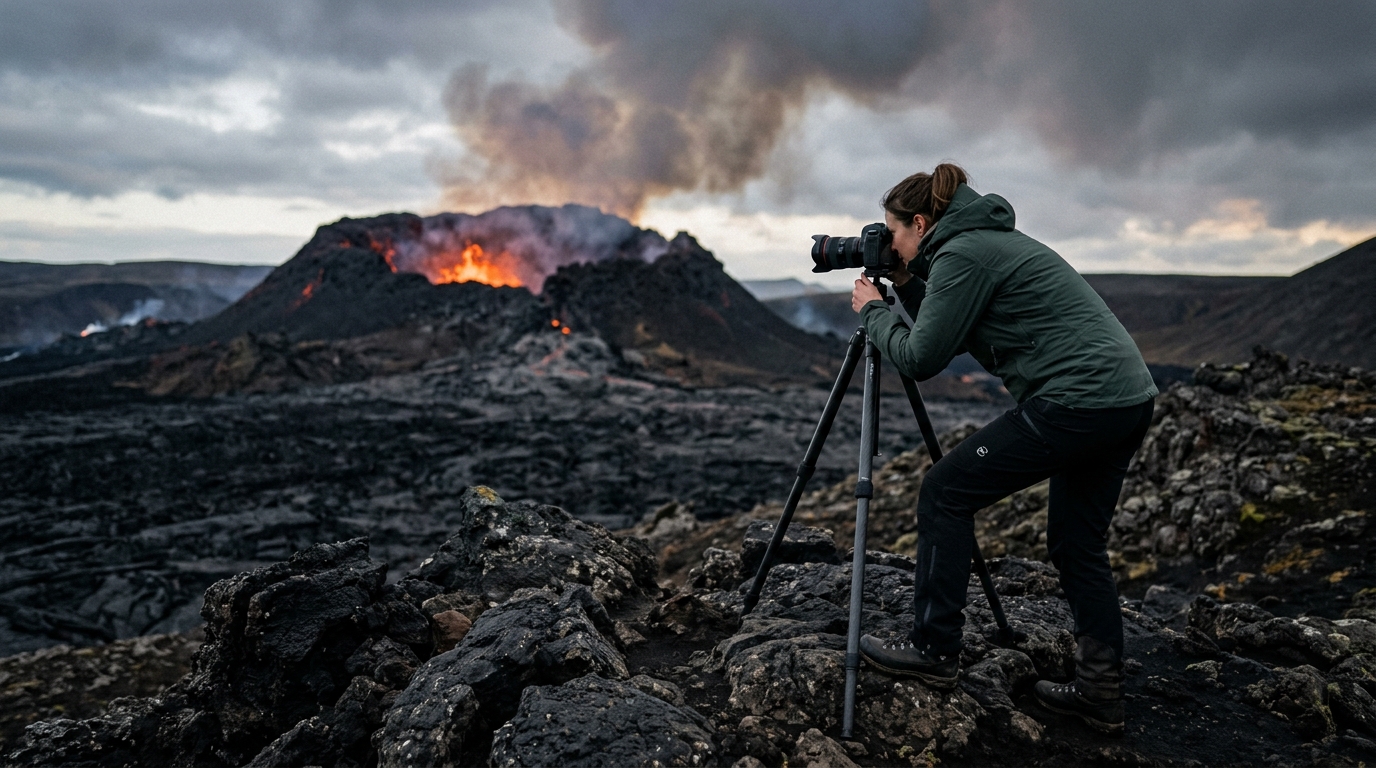
Introduction: Witnessing the Earth's Raw Power Through Your Lens
Iceland, the land of fire and ice, offers a photographic experience unlike any other. Its dramatic landscapes, sculpted by millennia of volcanic activity, present a unique challenge and reward for photographers. From the ethereal glow of an active lava flow to the stark beauty of a freshly formed lava field, the opportunity for stunning Iceland volcano photography is immense. This guide is crafted for the discerning photographer, providing specific, practical, and well-researched advice to help you capture these awe-inspiring moments safely and artistically.
We'll delve into everything from understanding Iceland's volatile geology and selecting the right gear, to mastering advanced compositional techniques and post-processing your fiery images. Crucially, we'll place paramount importance on safety, ensuring your quest for breathtaking shots doesn't come at the expense of your well-being or the fragile environment. Prepare to elevate your Iceland volcano photography skills and bring home images that truly convey the Earth's raw, magnificent power.
Understanding Iceland's Volcanic Activity: A Photographer's Primer
To truly excel at Iceland volcano photography, a foundational understanding of the island's geological heartbeat is essential. Iceland sits atop the Mid-Atlantic Ridge, a divergent plate boundary, making it one of the most volcanically active regions on Earth, as detailed by the Icelandic Met Office (IMO). This constant geological churn creates dynamic, ever-changing landscapes that are a dream for photographers.
Recent eruptions have captivated the world, none more so than the series of events on the Reykjanes Peninsula. The Fagradalsfjall eruptions, starting in 2021, and subsequent events like the 2023 Litli-Hrútur eruption, offered unparalleled opportunities for photographers to witness effusive lava flows up close. These events showcased the photographic potential of slow-moving, glowing lava, allowing for dramatic long exposures and intimate detail shots. While these specific eruptions may be dormant, the region remains seismically active, and new events could occur.
Volcanic eruptions in Iceland primarily fall into two categories:
- Effusive Eruptions (Lava Flows): Characterized by relatively gentle outpourings of molten rock. These are typically less explosive and produce spectacular rivers and fountains of lava. For photographers, these offer incredible opportunities for capturing the textures, colors, and movement of lava, particularly at night when the glow is most intense. The challenge lies in dealing with extreme heat, volcanic gases, and often unpredictable flow paths.
- Explosive Eruptions (Ash Plumes): These are more violent, characterized by the rapid release of gas, ash, and volcanic bombs. While visually dramatic, often producing towering ash columns and lightning, they are far more dangerous and usually involve significant exclusion zones. Photographing these often requires powerful telephoto lenses from a considerable, safe distance.
The best seasons and conditions for observing volcanic activity are often less about specific months and more about visibility and accessibility. Clear, calm weather is ideal for viewing and photographing, as strong winds can disperse gas plumes quickly and make conditions challenging. Winter can offer incredible contrasts with snow and ice, but also brings harsher weather and shorter daylight hours. Staying informed is paramount. For the most current and reliable information on geological events, seismic activity, and potential eruptions, always consult the official channels. The Icelandic Met Office (IMO) provides real-time seismic data and geological warnings, while the Department of Civil Protection and Emergency Management issues public safety advisories and determines access to active sites.
Before embarking on any Iceland volcano photography expedition, thoroughly research the current situation. Volcanic landscapes are dynamic and can change rapidly, making up-to-date information critical for both safety and successful photography.
Essential Gear for Your Iceland Volcano Photography Expedition
Photographing Iceland's volcanoes demands specialized gear capable of performing in harsh, unpredictable environments. Investing in the right equipment is not just about getting the shot; it's also about protecting yourself and your valuable tools. Here's what you'll need for your Iceland volcano photography adventure:
Camera Bodies: Weather-Sealed DSLRs/Mirrorless for Harsh Conditions
Your camera body needs to be robust. Weather-sealed DSLRs or mirrorless cameras are highly recommended to protect against volcanic ash, dust, rain, and cold. Brands like Canon (5D series, R series), Nikon (D850, Z series), Sony (Alpha series), and Fujifilm (X-T series) offer excellent weather-sealed options. While full-frame sensors generally offer better low-light performance and dynamic range, APS-C cameras are also capable, especially with good lenses. Consider a body with excellent high-ISO performance for night shots of glowing lava.
Lenses: Wide-Angle for Expansive Scenes, Telephoto for Details and Compression
- Wide-Angle Lenses (e.g., 14-24mm, 16-35mm): Essential for capturing the immense scale of the volcanic landscape, incorporating foreground interest, and showing the vastness of lava fields. These are also excellent for night sky photography, pairing the fiery glow with the Milky Way or aurora borealis.
- Mid-Range Zooms (e.g., 24-70mm, 24-105mm): Versatile workhorses for general landscape photography, offering flexibility for various compositions without constant lens changes.
- Telephoto Lenses (e.g., 70-200mm, 100-400mm): Crucial for isolating details of lava flows, compressing distant features, and maintaining a safe distance from volatile areas. They allow you to capture intricate patterns in cooling lava, distant eruptions, or the textures of steam plumes without putting yourself in harm's way. A 2x teleconverter can extend reach further if needed, though with some loss of light and sharpness.
Remember, volcanic ash is abrasive and can damage lenses. Minimize lens changes in dusty or windy conditions.
Tripods: Sturdy and Stable for Long Exposures in Windy Environments
A sturdy tripod is non-negotiable. You'll be doing a lot of long-exposure photography, especially at night to capture the glow of lava and the movement of gas. Look for a carbon fiber tripod for its strength-to-weight ratio and vibration dampening, or a robust aluminum one. It must be able to withstand strong Icelandic winds. Ensure it has a stable ball head or geared head that can support your camera and heaviest lens combination securely.
Protective Gear: Gas Masks, Eye Protection, Sturdy Hiking Boots, Gloves
This category is as important as your camera gear for safe volcano photography Iceland:
- Gas Mask/Respirator: Absolutely essential if you plan to be anywhere near active gas plumes. A P3/FFP3 particulate filter combined with an ABEK (acid gas, organic vapor, ammonia, inorganic gas) filter is recommended for protection against sulfur dioxide (SO2) and other volcanic gases, as advised by SafeTravel Iceland. However, these filters do not provide protection against carbon dioxide (CO2) when it displaces oxygen, which can be extremely dangerous. Ensure it fits properly and you know how to use it.
- Eye Protection: Safety glasses or goggles are vital to protect your eyes from ash, dust, and volcanic gases.
- Sturdy Hiking Boots: Waterproof, ankle-supporting hiking boots with excellent grip are a must for navigating uneven, rocky, and potentially hot terrain.
- Gloves: Protect your hands from sharp lava rocks, cold, and potential heat.
- Warm, Layered Clothing: Iceland's weather is notoriously fickle. Layers are key, including waterproof and windproof outer shells, even in summer.
- Headlamp: Essential for navigating in the dark, especially when approaching or leaving sites before sunrise or after sunset. Choose one with a red light option to preserve night vision.
Accessories: Remote Shutter Release, Extra Batteries, Headlamp, Lens Cloths
- Remote Shutter Release: Prevents camera shake during long exposures.
- Plenty of Extra Batteries: Cold weather drains batteries quickly, and you'll be taking many long exposures.
- Power Bank: For charging phones and other small electronics.
- Lens Cloths and Blower Brush: Volcanic ash and dust will inevitably get on your lenses. Keep them clean.
- Water and Snacks: You might be out for hours in remote locations.
- GPS Device or Offline Map: Phone signal can be unreliable. Consider downloading Iceland Photo Map offline maps.
- First-Aid Kit: For minor injuries.
Preparing thoroughly with the right gear ensures you're ready for the challenges and opportunities of Iceland volcano photography, allowing you to focus on capturing incredible images while staying safe.
Safety First: Navigating Active Sites for Iceland Volcano Photography
The allure of capturing a live volcanic eruption is undeniable, but it comes with significant risks. Prioritizing safety is not merely a recommendation; it is an absolute imperative when engaging in safe volcano photography Iceland. The dynamic and unpredictable nature of volcanic environments demands extreme caution and adherence to expert guidance.
Adhering to Official Warnings and Restricted Zones
The single most critical rule is to always respect and adhere to official warnings and restricted zones. The Department of Civil Protection and Emergency Management (Almannavarnir) and the Icelandic Met Office (IMO) are the primary authorities. They monitor seismic activity, gas levels, and lava flow paths, issuing real-time updates and closing areas when conditions are unsafe. Ignoring these warnings not only endangers yourself but also rescue teams who may have to risk their lives to assist you. Always check their websites before heading out, and be prepared for conditions to change rapidly, necessitating a retreat.
Understanding and Mitigating Gas Hazards (SO2, CO2) and Wind Direction
Volcanic gases, particularly sulfur dioxide (SO2) and carbon dioxide (CO2), pose significant health risks. SO2 can cause respiratory irritation, while CO2 is heavier than air and can accumulate in depressions, leading to suffocation, as highlighted by SafeTravel Iceland. The danger of these gases is highly dependent on wind direction and strength. Always be aware of the wind. If the wind shifts and blows gas plumes towards you, retreat immediately to higher ground or an area clear of gas. Even in seemingly calm conditions, CO2 can be present in dangerous concentrations in low-lying areas. Never lie down or set up camp in a depression near an active vent. As mentioned in the gear section, a proper gas mask with appropriate filters is essential for any close-range observation.
Recognizing Unstable Ground, New Lava Fields, and Hidden Fissures
Volcanic landscapes are inherently unstable. New lava fields, while visually stunning for lava field photography, can be extremely fragile and dangerous:
- Unstable Ground: Fresh lava fields often have hidden cracks, voids, and unstable crusts that can collapse underfoot, exposing you to extreme heat or toxic gases.
- Hidden Fissures: New fissures can open up without warning, releasing gases or even lava.
- Surface Heat: Even cooled lava can retain immense heat for days, weeks, or even months beneath the surface, posing risks of burns or melting boot soles if not properly respected, according to the Department of Civil Protection and Emergency Management.
- Sharp Edges: Lava rock is incredibly sharp and abrasive, posing a significant risk of cuts and falls.
Stick to marked trails and designated viewing areas. Rarely venture onto fresh lava fields, even if they appear solid. The ground around active vents can also be unstable due to seismic activity or hydrothermal changes.
Emergency Preparedness: Communication, First Aid, Knowing Your Limits
Before you go:
- Inform Someone: Let someone know your plans, your route, and your estimated return time.
- Communication: Carry a fully charged phone and consider a satellite messenger or personal locator beacon (PLB) for areas with no cell service. SafeTravel Iceland offers a service where you can leave your travel plan.
- First-Aid Kit: A comprehensive kit is essential, including burn dressings, bandages, and pain relief.
- Water and Food: Carry more than you think you'll need.
- Know Your Limits: Be honest about your physical fitness and experience. Volcanic hikes can be strenuous, often over uneven terrain and in challenging weather. If you feel unwell or conditions deteriorate, turn back.
- Travel Insurance: Ensure your travel insurance covers activities in volcanic areas and potential medical evacuation.
The Importance of Guided Tours Versus Independent Exploration
For many, especially those new to volcanic environments, joining a guided tour is highly recommended. Experienced guides have local knowledge, understand the terrain, monitor conditions, and can provide critical safety equipment like gas masks. They know the safest routes and the best vantage points for volcanic eruption photography tips. While independent exploration offers more freedom, it demands a much higher level of preparedness, experience, and self-reliance. Always weigh the risks and rewards carefully. When planning your trip, consider checking our Iceland Photo Map itineraries for potential routes that incorporate safety considerations.
Remember, no photograph is worth risking your life. Prioritize safety above all else, and you'll return with not only incredible images but also a powerful story of responsible adventure.
Mastering Composition and Lighting for Dynamic Volcanic Scenes
Once safety is assured and your gear is ready, the artistic challenge of capturing Iceland's volcanic drama truly begins. Volcanic eruption photography tips often revolve around unique compositional and lighting scenarios.
Composing with Lava Flows: Leading Lines, Foreground Interest, Sense of Scale
Lava flows offer incredible dynamic elements for composition:
- Leading Lines: Utilize the rivers of molten rock as natural leading lines to draw the viewer's eye through the frame, towards the source or a distant feature.
- Foreground Interest: Incorporate elements like cooled lava rocks, volcanic ash, or even hardy vegetation in the foreground. This adds depth and a sense of place, grounding the fiery spectacle.
- Sense of Scale: It's easy for lava flows to look abstract without context. Include human figures (at a safe distance), distant mountains, or familiar objects to convey the immense scale of the eruption. Wide-angle lenses are excellent for this.
- Patterns and Textures: Look for intricate patterns formed by cooling lava, cracks, and fissures. Telephoto lenses are perfect for isolating these details.
Capturing Steam, Ash Plumes, and Volcanic Gases Effectively
Volcanic gases, steam, and ash plumes add an ethereal and dynamic quality to your images:
- Movement and Flow: Use longer shutter speeds (e.g., 1/2 second to several seconds) to blur the movement of steam and gases, creating a soft, painterly effect. Experiment with different speeds to find the sweet spot.
- Backlighting: When the sun or moon is behind a plume, it can create a dramatic silhouette and highlight the edges of the gas, making it glow.
- Color and Texture: Ash plumes can range from white to dark grey or even reddish. Pay attention to their texture and how light interacts with them.
Long Exposure Techniques for Glowing Lava and Ethereal Effects
Long exposures are fundamental for lava field photography, especially at night:
- Capturing the Glow: The human eye perceives lava as brighter than your camera sensor does. Long exposures (from a few seconds to 30 seconds or more) are necessary to capture the vibrant, intense glow of molten rock.
- Smooth Movement: Long exposures can smooth out the turbulent movement of active lava, creating a more ethereal, painterly effect.
- Combining with Stars/Aurora: In Iceland, you might be able to combine the fiery glow of lava with the dance of the Northern Lights or a star-filled sky. This requires careful balancing of exposure times for both elements. Start with exposures around 15-25 seconds at a wide aperture (f/2.8-f/4) and high ISO (1600-6400).
- Neutral Density (ND) Filters: If photographing lava flows during daylight and you still want long exposures to smooth the flow, ND filters will be essential to reduce the amount of light entering the lens.
Balancing Extreme Dynamic Range Between Bright Lava and Dark Surroundings
One of the biggest technical challenges in Iceland volcano photography is the extreme dynamic range between the intensely bright lava and the dark, often shadowed surroundings. Here are strategies:
- Exposure Bracketing: Take multiple exposures of the same scene at different brightness levels (e.g., -2, 0, +2 EV). These can then be blended in post-processing to create an HDR image that retains detail in both highlights and shadows.
- Graduated Neutral Density (GND) Filters: These filters have a dark half and a clear half, helping to balance the exposure between a bright sky (or lava glow) and a darker foreground. However, their use can be tricky with an uneven horizon line created by lava.
- Exposing for Highlights: Often, it's best to expose for the brightest parts of the lava to retain detail there, accepting that shadows might be very dark. You can then recover some shadow detail in post-processing. Blown-out highlights in lava are often unrecoverable.
Night Photography Considerations: Stars, Aurora, and the Fiery Glow
Night offers the most dramatic opportunities for volcanic eruption photography tips:
- Optimal Glow: The contrast between the glowing lava and the dark night sky is maximized.
- Astrophotography Potential: Combine the lava with the Milky Way or Northern Lights. Use a wide-angle lens with a large aperture (f/2.8 or wider) for stars and aurora. Focus on the lava or a distant mountain.
- Light Pollution: Volcanic sites are often remote, minimizing light pollution and enhancing celestial visibility.
- Manual Focus: Autofocus struggles in the dark. Manually focus on the brightest part of the lava or a distant light source, then lock focus.
Experimentation is key. The conditions at a volcanic site are constantly changing, so be flexible and adapt your techniques to the moment. For more general advice on capturing stunning landscapes, explore our Iceland Landscape Photo Maps.
Post-Processing Your Fiery Images: Enhancing the Volcanic Drama
Once you've returned from your Iceland volcano photography expedition, the magic continues in post-processing. This is where you can truly enhance the drama, depth, and intensity of your volcanic images, bringing out the vibrant colors and intricate details that represent the raw power you witnessed.
Techniques for Handling High Dynamic Range (HDR, Exposure Blending)
As discussed, volcanic scenes often present extreme dynamic range. Post-processing offers powerful solutions:
- HDR Software: Programs like Adobe Lightroom, Photoshop, or dedicated HDR software (e.g., Aurora HDR) can merge bracketed exposures. This creates a single image with detail preserved in both the intensely bright lava and the deep shadows of the surrounding landscape. Be careful not to over-process, which can lead to an unnatural, "crunchy" HDR look. Aim for a natural blend.
- Manual Exposure Blending: For more control, you can manually blend different exposures in Photoshop using layer masks. This allows you to precisely paint in the best exposed areas from each shot, ensuring a seamless and realistic result. This is often preferred by experts for its subtlety.
- Global Adjustments: Even without bracketing, you can often recover significant detail from RAW files by adjusting highlights, shadows, whites, and blacks sliders. Prioritize preserving the detail in the lava's brightest areas.
Color Grading: Enhancing the Reds, Oranges, and Yellows of Lava
The fiery colors of lava are central to volcanic eruption photography. Post-processing allows you to make them pop:
- Temperature and Tint: Adjust the white balance to bring out the warmth of the lava. Slightly increasing the 'Temperature' (warmer) and 'Tint' (magenta) can enhance the reds and oranges.
- HSL/Color Mixer Adjustments: Use the HSL (Hue, Saturation, Luminance) or Color Mixer tools to fine-tune specific color ranges. Increase the saturation and luminance of reds, oranges, and yellows to make the lava glow more intensely. You can also subtly shift their hues to create a more vibrant or menacing appearance.
- Split Toning: Experiment with split toning to add warm tones to the highlights (lava) and cool tones to the shadows (sky, cooled rock), creating a compelling contrast.
- Vibrance vs. Saturation: Use 'Vibrance' to boost less saturated colors without overdoing the already vibrant lava. 'Saturation' affects all colors more uniformly.
Noise Reduction for High ISO Shots Taken in Low Light
Nighttime lava field photography often requires high ISO settings, which can introduce digital noise. Effective noise reduction is crucial:
- Luminance Noise Reduction: Targets the graininess in your image. Apply judiciously, as too much can smooth out fine details.
- Color Noise Reduction: Addresses colored speckles, often more aggressively than luminance noise.
- Masking: Apply noise reduction selectively to areas that need it most (e.g., dark skies) while preserving detail in sharper areas (e.g., lava flows).
- Dedicated Software: Programs like Topaz DeNoise AI or DxO PureRAW offer advanced noise reduction capabilities that can yield superior results.
Sharpening and Detail Enhancement for Texture in Lava Fields
To convey the ruggedness and texture of the volcanic landscape:
- Selective Sharpening: Apply sharpening primarily to areas of interest, such as the intricate patterns in cooled lava, the edges of rocks, or the texture of ash. Avoid over-sharpening skies or smooth areas, which can introduce artifacts.
- Clarity and Dehaze: These sliders can add local contrast, enhancing the perception of detail and texture in lava fields and rocky terrain. Be mindful not to overdo 'Clarity,' which can make images look gritty.
- Texture Slider: Modern editing software often includes a 'Texture' slider, which can selectively enhance or smooth medium-sized details without affecting fine details or overall contrast.
Creating a Sense of Atmosphere and Scale Through Editing
Post-processing can reinforce the feeling of being present at such a powerful natural event:
- Vignetting: A subtle dark vignette can draw the viewer's eye towards the glowing lava in the center of the frame.
- Dodging and Burning: Selectively lighten (dodge) areas of interest, like the brightest parts of the lava, and darken (burn) less important areas, such as the edges of the frame, to guide the viewer's gaze.
- Atmospheric Haze: Sometimes, adding a touch of digital haze or fog can enhance the sense of depth and mystery, especially in wide landscape shots.
- Cropping and Aspect Ratio: Experiment with different crops to emphasize scale or isolate specific elements. A panoramic crop, for example, can enhance the expansive feel of a lava field.
Remember, post-processing is a tool to enhance your vision, not to create something that wasn't there. Aim for a natural yet dramatic look that accurately reflects the awe-inspiring experience of photographing Iceland's volcanoes. For more tips on how to maximize your photographic output, check out Iceland Photo Map's how-to guides.
Responsible Photography: Minimizing Your Impact on Iceland's Fragile Volcanic Landscapes
As photographers, we have a unique privilege to witness and document some of the planet's most extraordinary natural phenomena. With this privilege comes a profound responsibility to protect these environments. Responsible photography is not just about adhering to rules; it's about understanding and minimizing our impact on Iceland's fragile volcanic landscapes, ensuring they remain pristine for future generations and for the continued health of the ecosystem.
Adhering to 'Leave No Trace' Principles in Volcanic Areas
The "Leave No Trace" principles are paramount in any natural environment, but they gain even greater significance in delicate volcanic areas. These principles include:
- Plan Ahead and Prepare: Know the regulations, weather, and potential hazards. Pack out everything you pack in.
- Travel and Camp on Durable Surfaces: Stick to established trails and designated viewing areas. Avoid walking on new lava, moss, or fragile geological formations.
- Dispose of Waste Properly: Pack out all trash, including organic waste. Human waste should be buried in catholes 6-8 inches deep and at least 200 feet from water, trails, and campsites.
- Leave What You Find: Do not collect souvenirs like rocks, lava fragments, or plants. Leave natural objects and cultural artifacts undisturbed.
- Minimize Campfire Impacts: In volcanic areas, open fires are often prohibited due to fire risk and lack of fuel. Use portable stoves.
- Respect Wildlife: Observe animals from a distance. Do not disturb them or feed them.
- Be Considerate of Other Visitors: Share the trails and minimize noise. Allow others to enjoy the solitude and natural beauty.
Staying on Marked Paths and Designated Viewing Areas
This point cannot be stressed enough. Marked paths and designated viewing areas are established for your safety and for the protection of the environment. Venturing off-trail in volcanic regions can lead to:
- Personal Injury: Hidden fissures, unstable ground, scalding hot spots, and dangerously sharp lava rock are common hazards off-trail.
- Environmental Damage: Fragile mosses and lichens, which take decades or centuries to grow on new lava fields, are easily destroyed by a single footstep, as emphasized by SafeTravel Iceland. These pioneer species are vital for the ecosystem's recovery.
- Disturbance of Wildlife: Even seemingly barren volcanic areas can be home to ground-nesting birds or other wildlife.
- Legal Consequences: Ignoring official warnings and entering restricted areas can result in fines or other legal actions.
It is often assumed that any unmarked ground in a volcanic area is dangerous or fragile, a principle strongly advocated by Icelandic safety authorities.
Respecting the Delicate Ecosystem and Geological Formations
Volcanic landscapes, while appearing barren, are often teeming with unique and resilient life. The mosses that carpet older lava fields are particularly vulnerable. They are slow-growing and provide crucial habitat and soil formation. Stepping on them compacts the soil and breaks the delicate plant structure, leaving lasting scars. Similarly, geological formations like lava tunnels, pseudo-craters, or specific rock structures are part of the natural heritage and should be admired, not altered or damaged.
The Role of Photographers in Promoting Sustainable Tourism
As photographers, we have a powerful platform. Images captured by photographers can inspire others to visit, but they also carry the responsibility to educate. By showcasing responsible practices in their own work and sharing information about safety and environmental protection, photographers can contribute to sustainable tourism. This includes:
- Captioning with Caution: When sharing photos, include information about the challenges and dangers, and emphasize the importance of safety and respect for nature.
- Avoiding Misleading Images: Do not post photos that encourage unsafe or irresponsible behavior (e.g., standing too close to lava, entering restricted areas).
- Supporting Local Initiatives: Patronize local businesses and guided tours that prioritize safety and environmental stewardship.
Educating Others on Safe and Ethical Practices
Be an ambassador for responsible travel. If you see others acting unsafely or disrespectfully, consider politely informing them about the risks or the fragility of the environment. Share resources like the Icelandic Civil Protection and SafeTravel Iceland websites. By leading by example and gently educating others, photographers can collectively ensure that Iceland's incredible volcanic landscapes remain a source of wonder and inspiration for years to come.
Conclusion: Your Journey to Unforgettable Iceland Volcano Photography
Photographing Iceland's volcanoes is an experience that transcends mere picture-taking; it's an encounter with the raw, untamed power of our planet. This comprehensive guide has equipped you with the knowledge, techniques, and crucial safety protocols needed to capture these awe-inspiring moments responsibly and artistically. We've covered everything from understanding the dynamic geology and selecting essential gear to mastering compositional challenges and refining your images in post-processing.
Remember, the journey to unforgettable Iceland volcano photography begins and ends with respect – respect for the immense power of nature, respect for the fragile environment, and respect for your own safety. Arm yourself with the right gear, stay informed through official channels, and rarely compromise safety for a shot. Embrace the challenges, from battling the elements to mastering extreme dynamic range, and you will be rewarded with images that truly convey the fiery heart of Iceland.
As you embark on this incredible photographic adventure, may your lenses capture the molten magic, your compositions tell compelling stories, and your memories be as vivid as the glowing lava itself. Ready to plan your volcanic photography adventure? Explore our Iceland Photo Maps to discover prime locations and plan your route!
Frequently Asked Questions
Is it safe to photograph active volcanoes in Iceland?
It can be safe, but only if you strictly adhere to official warnings, restricted zones, and safety guidelines issued by the Icelandic Department of Civil Protection and Emergency Management (Almannavarnir) and the Icelandic Met Office (IMO). The primary dangers are toxic gases (SO2, CO2), unstable ground, new lava fields, and extreme heat. Always be aware of wind direction, carry appropriate protective gear like a gas mask, and consider joining a guided tour.
What kind of lens is best for volcano photography in Iceland?
A versatile kit includes both wide-angle and telephoto lenses. A wide-angle lens (e.g., 14-35mm) is excellent for capturing the vast scale of the landscape and incorporating foreground interest. A telephoto lens (e.g., 70-200mm or 100-400mm) is crucial for isolating details of lava flows, compressing distant features, and maintaining a safe distance from active vents. A mid-range zoom (e.g., 24-70mm) is also very useful.
How do I find out where the current volcanic activity is in Iceland?
The most reliable sources are the official government agencies: the Icelandic Met Office (IMO) for seismic activity and geological warnings, and the Department of Civil Protection and Emergency Management (Almannavarnir) for public safety advisories and access restrictions. SafeTravel Iceland also provides general safety information and alerts.
What are the biggest challenges when photographing lava flows?
The biggest challenges include the extreme dynamic range between the bright lava and dark surroundings, which requires careful exposure bracketing or HDR techniques. Other challenges are dealing with harsh weather conditions (wind, cold, rain, ash), toxic gas plumes, navigating unstable and hot terrain, maintaining sharp focus in low light, and the need for long exposures to capture the lava's glow and movement, especially at night.
Do I need a gas mask for volcano photography in Iceland?
Yes, if you plan to be anywhere near an active eruption site or areas where volcanic gases are prevalent, a gas mask (respirator) with appropriate filters (e.g., P3/FFP3 particulate filter combined with ABEK filters for SO2 and other gases) is absolutely essential, as recommended by SafeTravel Iceland. Volcanic gases like sulfur dioxide (SO2) and carbon dioxide (CO2) can be extremely dangerous, especially in low-lying areas or when the wind shifts.