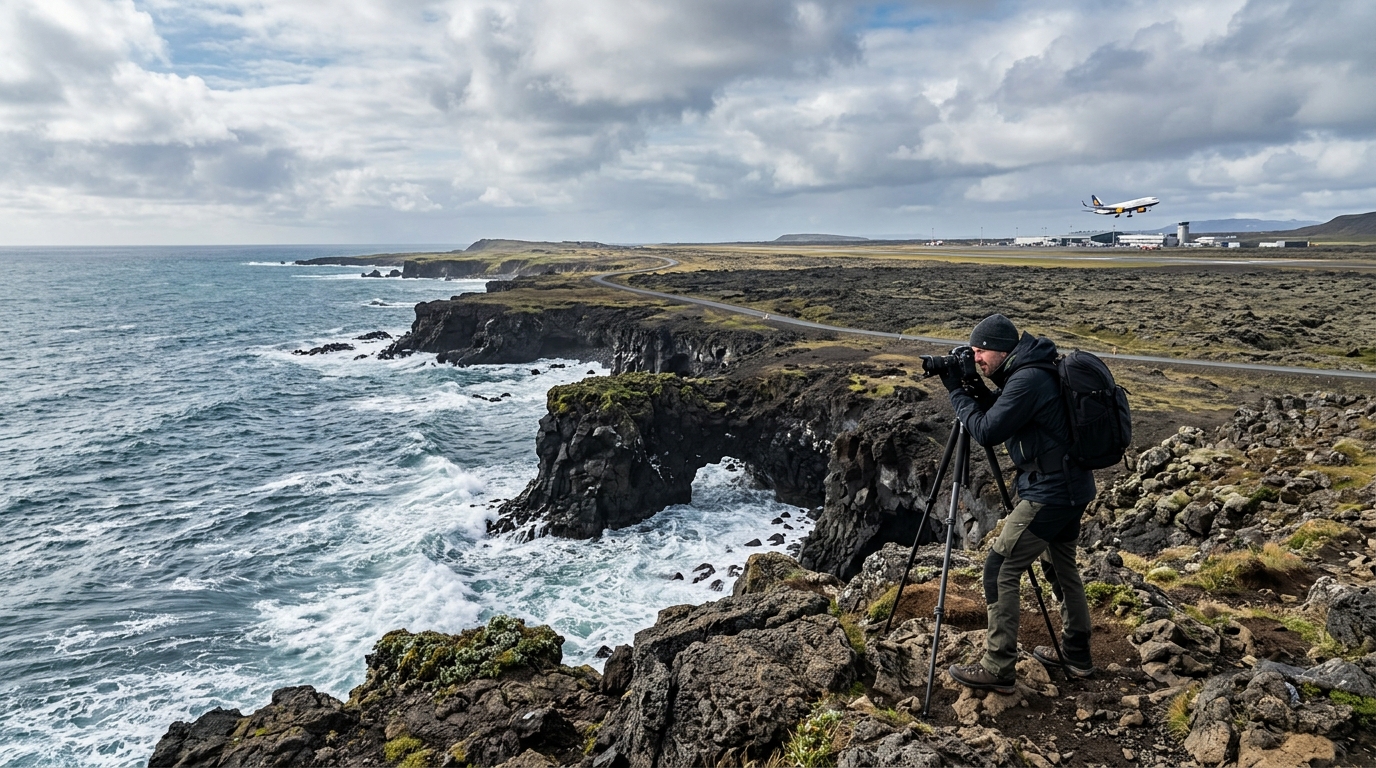
When landing at Keflavík International Airport, many travelers immediately head toward Reykjavík or the Golden Circle, completely bypassing the raw, dramatic beauty of the surrounding peninsula. This is a missed opportunity, especially for photographers. The Reykjanes Peninsula is a UNESCO Global Geopark packed with dramatic volcanic landscapes, steaming geothermal fields, rugged coastlines, and iconic lighthouses—all within a short drive from the airport terminal.
Whether you have a few hours during a layover or are beginning an extended road trip, exploring the Reykjanes Peninsula photography spots will reward you with some of the most striking, otherworldly imagery in Iceland. To help you navigate these locations efficiently and capture them in the best light, using a dedicated planning tool like the Iceland Photo Map is highly recommended. It provides precise coordinates, local insights, and real-time routing to ensure you never miss a shot.
Top Coastal and Geological Photography Spots
The coastline of the Reykjanes Peninsula is shaped by the relentless forces of the North Atlantic Ocean and tectonic activity. Here are the must-visit coastal spots for your photography itinerary.
Valahnúkamöl and Reykjanesviti
Valahnúkamöl is one of the most dramatic coastal locations in Iceland. Here, massive waves crash against a rugged shoreline composed of large, rounded volcanic boulders. Just offshore, the striking Karlinn sea stack rises abruptly from the ocean, providing a powerful focal point for long-exposure seascapes. The cliffs themselves are a nesting ground for seabirds, offering opportunities for wildlife photography during the summer months.
Standing on the hill overlooking Valahnúkamöl is Reykjanesviti, Iceland’s oldest lighthouse location. The current structure, built in 1907–1908, features a classic design that contrasts beautifully with the dark volcanic landscape. Photographing the lighthouse during the golden hour or under the Northern Lights provides a quintessential Icelandic scene.
The Bridge Between Continents
The Mid-Atlantic Ridge emerges from the ocean and runs directly through the Reykjanes Peninsula. At the Bridge Between Continents (Brú milli heimsálfa), a footbridge spans a deep, sandy fissure carved by drifting tectonic plates. This spot offers a unique geological narrative. Photographers can capture wide-angle shots from inside the fissure looking up at the bridge, or use the leading lines of the bridge itself to guide the viewer's eye across the stark, sandy landscape.
Garður Lighthouses
Located at the northern tip of the peninsula, Garður features two distinct lighthouses. The older, smaller lighthouse sits close to the shoreline and is highly photogenic, especially when framed against crashing waves. The newer, taller lighthouse stands further back and offers a panoramic view of the ocean. This location faces north, making it one of the premier spots on the peninsula for photographing the Northern Lights over the sea during the winter months.
Geothermal Wonders and Volcanic Landscapes
The Reykjanes Peninsula is a hotbed of geothermal activity, characterized by boiling mud pools, roaring steam vents, and vast lava fields that showcase the earth's raw energy.
Gunnuhver Geothermal Area
Named after a legendary angry female ghost, Gudrun, Gunnuhver is a highly active geothermal area featuring Iceland's largest mud pool. The ground here is stained in vibrant shades of red, yellow, and orange from mineral deposits. Massive plumes of steam rise constantly from the vents, swirling in the wind and creating a mysterious, atmospheric setting. Photographers should use fast shutter speeds to freeze the motion of the steam, or slow shutter speeds to create a soft, ethereal look. Be sure to bring a lens cloth, as the moisture-laden steam can quickly coat your camera lens.
Seltún and Krísuvík Geothermal Area
Located further east on the peninsula, Seltún is a stunning geothermal field accessible via wooden boardwalks. The contrast between the boiling grey mud pots, steaming vents, and the multicolored mineral-stained hillsides is spectacular. The boardwalks themselves serve as excellent leading lines for composition. For the best view, hike up the trail to the viewing platform overlooking the entire valley to capture the scale of this thermal landscape.
Kleifarvatn Lake
Kleifarvatn is the largest lake on the Reykjanes Peninsula and is surrounded by a dramatic volcanic wilderness. The lake has no visible surface inlets or outlets; its water level is filled entirely by groundwater and can shift dramatically following seismic activity. The shores are covered in black volcanic sand, and strange basalt rock formations rise from the water. The dark, moody atmosphere of Kleifarvatn makes it a favorite for landscape photographers, particularly on overcast days when the textures of the volcanic mountains are emphasized.
Documenting the Changing Landscape: Volcanic Eruptions
The geography of the Reykjanes Peninsula has been fundamentally reshaped by the volcanic eruptions that began in 2021 at Fagradalsfjall, followed by subsequent eruptive episodes along the Sundhnúkur crater row. These events ended an 800-year period of volcanic dormancy on the peninsula, creating vast new lava fields and altering the local topography.
For a detailed historical breakdown of these geological events, you can explore the timeline of volcanic eruptions on the Reykjanes Peninsula. These newly formed lava fields present unique photographic opportunities, showcasing the stark contrast between fresh, dark basalt and the older, moss-covered landscapes surrounding them.
However, photographing active or recently active volcanic zones carries inherent risks. Gas emissions, unstable ground, and sudden changes in volcanic activity can pose serious hazards. Photographers must prioritize safety and strictly adhere to local guidelines. Before planning any trip to these areas, always check for active closures, trail conditions, and safety alerts on SafeTravel Iceland. Additionally, you can monitor real-time weather, wind directions, and seismic activity updates through the Icelandic Meteorological Office to ensure a safe and successful shoot.
Essential Photography Tips for the Reykjanes Peninsula
To capture the best possible images during your visit, keep these practical photography tips in mind:
- Manage the Wind: The Reykjanes Peninsula is notoriously windy. A heavy, sturdy tripod is essential for long-exposure photography, especially when shooting coastal waves at Valahnúkamöl or steam at Gunnuhver.
- Use Neutral Density (ND) Filters: ND filters are invaluable for slowing down your shutter speed during the day. This allows you to smooth out the chaotic ocean waves or create a silky texture in the rising geothermal steam.
- Protect Your Gear: Geothermal steam contains sulfur and silica, which can leave residue on your lenses and camera body. Keep your camera covered when not shooting, and clean your front lens element regularly with specialized wipes.
- Embrace Moody Weather: Do not be discouraged by overcast or rainy weather. The dramatic, dark volcanic textures of Reykjanes often look their best under moody, flat lighting, which enhances the saturated colors of the geothermal areas and the black sands of Kleifarvatn.
Frequently Asked Questions
How close are these photography spots to Keflavík Airport?
Most of the major photography spots on the Reykjanes Peninsula are incredibly close to the airport. Garður is about a 15-minute drive north, while Valahnúkamöl and Gunnuhver are roughly 25 to 30 minutes to the southwest. This makes the peninsula highly accessible even for travelers with short layovers.
Can I see and photograph the Northern Lights on the Reykjanes Peninsula?
Yes, the Reykjanes Peninsula is an excellent region for Northern Lights photography. Because it features vast open spaces with minimal light pollution, you can easily find dark skies. Locations like the Garður lighthouses and Kleifarvatn Lake offer fantastic foreground elements facing north, which is ideal for capturing the aurora borealis.
Is a 4x4 vehicle required to reach these photography spots?
Most of the primary photography locations on the peninsula, including Seltún, Gunnuhver, Valahnúkamöl, and the lighthouses, are accessible via paved or well-maintained gravel roads. A standard passenger car is usually sufficient during the summer. However, if you are visiting in the winter, a 4x4 vehicle is highly recommended to safely navigate sudden snow accumulation and icy road conditions.
How can I find the exact locations of these spots?
While some spots are marked on standard maps, many of the best composition angles and parking areas are off the beaten path. Using the Iceland Photo Map allows you to access exact GPS coordinates, detailed parking information, and tailored photography tips for every single location on the peninsula, saving you time and ensuring you capture the best shots possible.