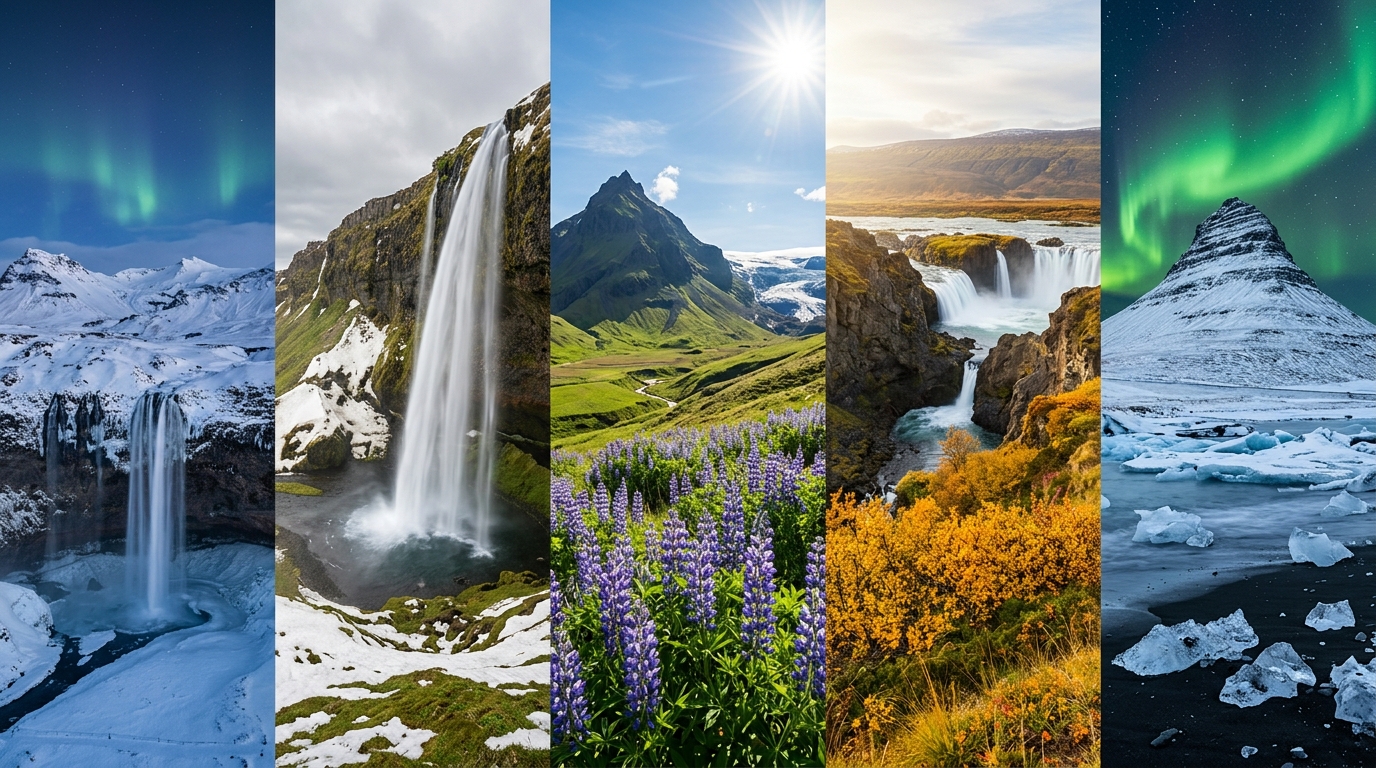
For landscape and wildlife shooters, planning a trip to Iceland often begins with a critical question: when is the ideal time to visit? The best time of year to photograph Iceland depends entirely on the specific images you want to capture. Unlike many global destinations where a "monsoon season" or "dead of winter" might ruin a photography trip, Iceland simply transforms. Every month offers distinct environmental conditions, lighting scenarios, and subject matter.
Whether you are chasing the ethereal glow of the aurora borealis, aiming your telephoto lens at nesting seabirds, or looking to capture the rugged highlands under a 24-hour sun, timing is everything. In this comprehensive 2026 seasonal guide, we will break down the Iceland photography seasons, compare summer vs winter Iceland photos, and help you build the ultimate itinerary for your portfolio.
How to Choose the Best Time of Year to Photograph Iceland
The first rule of planning an Icelandic photography expedition is understanding that there is no objectively "bad" season—only different opportunities and logistical constraints. The best time of year to photograph Iceland is the season that aligns perfectly with your creative vision and technical capabilities.
The most dramatic variable you will face is the shift in daylight. According to historical weather patterns and daylight data from the Icelandic Meteorological Office, the country experiences extreme swings in solar activity. In the depths of December, photographers generally have a brief window of twilight-like daylight to execute their shot lists. Conversely, June provides nearly 24 hours of continuous light, fundamentally changing how you structure your sleeping and shooting schedules.
Choosing your travel dates means aligning your itinerary with specific, time-sensitive subjects. If your portfolio is missing deep blue glacier ice caves or the Northern Lights, a summer trip will leave you disappointed. If you want to photograph the remote, vibrant rhyolite mountains of the highlands, a winter trip is impossible due to impassable snow. By working backward from your desired subjects, you can pinpoint the exact weeks that will yield the best results.
Spring and Summer (April - August): Midnight Sun and Wildlife
Spring and summer unlock access to the entirety of the island, bringing vibrant colors, abundant wildlife, and the most forgiving shooting conditions of the year.
The crown jewel of summer photography is the Midnight Sun, which peaks in June and July. During this period, the sun dips just below the horizon before rising again, creating an extended "golden hour" that can last for several hours. This phenomenon allows photographers to shoot iconic locations like Skógafoss or Kirkjufell at 2:00 AM, bathing the landscapes in soft, directional light while avoiding the midday tour bus crowds.
Summer also marks the return of the Atlantic Puffin. Based on seasonal wildlife migration patterns tracked by Visit Iceland, these incredibly photogenic seabirds nest along the coastal cliffs from May through mid-August. Locations like the Látrabjarg cliffs in the Westfjords or the Dyrhólaey promontory in the south become bustling colonies. If capturing these birds in flight or with beaks full of sand eels is a priority, exploring our interactive bird photography maps will help you pinpoint the most active nesting grounds.
Furthermore, summer is the only time the rugged interior of the country is accessible. The highland F-roads typically open in late June or early July, depending on the snowmelt. Photographing the braided glacial rivers and the geothermal valleys of Landmannalaugar requires a 4x4 vehicle and careful attention to the F-road opening schedules managed by SafeTravel Iceland.
The major trade-off for all this access and light? The lack of dark skies. Due to the extended daylight hours from mid-April to late August, the sky rarely gets dark enough to photograph the Northern Lights, making traditional astrophotography highly challenging during the peak summer months.
Autumn and Winter (September - March): Northern Lights and Ice Caves
As September arrives, the midnight sun fades, and true night returns to Iceland. This transition kicks off the aurora borealis season, drawing astrophotographers from around the globe. The 2026 season is particularly notable; based on the Solar Cycle 25 progression monitored by the NOAA Space Weather Prediction Center, we are currently experiencing solar maximum effects, resulting in highly intense and frequent aurora displays.
Winter transforms the landscape into a high-contrast, monochromatic wonderland. This is the time to capture partially frozen Iceland waterfall photography locations, where blue glacial water cuts through thick layers of white snow and ice. Winter is also the exclusive season for photographing the naturally forming blue ice caves beneath the Vatnajökull glacier. These caves are unstable and flooded during the summer, but from November to March, they freeze solid, offering surreal, crystalline textures that are unlike anything else on earth.
However, winter photography in Iceland is notoriously challenging. The weather is volatile, with strong winds, sudden whiteouts, and frequent road closures. The limited daylight requires precise, tactical planning. You cannot simply drive around looking for compositions; you must know exactly where you are going before the sun rises.
Summer vs Winter Iceland Photos: A Direct Comparison
When analyzing summer vs winter Iceland photos, the aesthetic differences are staggering. The season you choose will dictate the entire color palette and mood of your portfolio.
Summer images are characterized by hyper-vibrant hues. You will capture the neon greens of moss-covered lava fields, the bright purple blooms of Nootka lupines stretching across the foregrounds, and the deep, saturated blues of the ocean and glacial lagoons under clear skies. The mood is often energetic, vast, and inviting.
Winter images, by contrast, rely on stark minimalism and dramatic contrasts. The landscape is stripped down to deep blacks (volcanic rock and sand) and brilliant whites (snow and ice). The low angle of the winter sun casts long, dramatic shadows all day, creating a moody, atmospheric, and often foreboding aesthetic.
Accessibility also plays a massive role in this comparison. Consider a location like Dettifoss, widely recognized as one of Europe's most powerful waterfalls. In the summer, you can easily access both the east and west banks to find your preferred composition. In the deep winter, the east bank is frequently impassable, and the massive spray from the falls creates treacherous, icy conditions on the viewing platforms. Similarly, photographing the Westfjords is a summer endeavor; during winter, heavy snows cut off entire towns and mountain passes in this region, making it largely inaccessible to visiting photographers.
Finally, crowd levels impact your wide-angle shots. Summer is peak tourism season. Photographing iconic South Coast spots like Seljalandsfoss or Reynisfjara without tourists in your frame requires shooting in the middle of the night. In winter, the crowds thin out significantly, making it easier to capture clean, isolated landscape images during normal daylight hours.
The Best Month for Iceland Photography Based on Your Subject
If you are still struggling to narrow down the best month for Iceland photography, it helps to look at the calendar through the lens of specific sub-genres.
- September: The Ultimate Hybrid Month. If you want a little bit of everything, September is widely considered the best time of year to photograph Iceland. The highland roads are often still open in the first half of the month, the autumn colors (yellows and reds in the low brush) are peaking, and the nights are finally dark enough to photograph the Northern Lights. You get the accessibility of summer with the atmospheric skies of winter.
- June and July: The Peak for Wildlife and Light. If your primary goal is building a wildlife portfolio featuring puffins, Arctic foxes, and whales, or if you want to shoot sweeping landscapes bathed in the midnight sun, mid-summer is unmatched. The endless light allows for a relaxed shooting pace.
- February: The Deep Winter Experience. For photographers chasing the ultimate frozen aesthetic, February is ideal. The ice caves are at their most stable, the snow coverage is usually absolute, and the nights are long and dark, providing ample hours to hunt for the aurora borealis.
Essential Gear for Every Iceland Photography Season
No matter which of the Iceland photography seasons you choose, the environment will test your equipment. Arriving unprepared can result in missed shots or, worse, ruined gear.
A heavy, wind-resistant carbon fiber tripod is highly recommended. Icelandic winds can easily topple lightweight travel tripods. In the winter, many photographers swap their rubber tripod feet for metal spikes to ensure stability on the slick ice around waterfalls and glaciers. Similarly, microspikes or crampons for your own boots are essential for your personal safety while operating the camera.
Weather-sealing is another critical factor. Iceland's weather changes rapidly, and you will frequently find yourself shooting in horizontal rain or heavy mist from waterfall spray. It is highly recommended to use weather-sealed camera bodies and lenses, and many photographers choose to carry dedicated rain covers and microfiber cloths to help keep front elements dry.
Your filter kit should adapt to the season. In the summer, strong Neutral Density (ND) filters (6-stop to 10-stop) are crucial for dragging your shutter to blur the water at highly illuminated waterfalls. In the winter, a light pollution filter can help cut through the sodium glow of nearby towns when shooting the aurora, while a clear protective filter is advised to shield your lens from blowing black volcanic sand.
Finally, battery management is vital, particularly in winter. Freezing temperatures will drain lithium-ion batteries at an alarming rate. Many experienced winter photographers recommend carrying extra batteries and keeping spares tucked into an inside jacket pocket close to body heat to help them retain their charge.
Conclusion: Booking Your Best Time of Year to Photograph Iceland in 2026
Ultimately, the best time of year to photograph Iceland is a deeply personal choice dictated by the images you want to bring home. Whether you are drawn to the vibrant, endless days of the midnight sun, the rugged isolation of the autumn highlands, or the frozen, aurora-filled skies of deep winter, Iceland delivers world-class photographic opportunities year-round.
Because 2026 is seeing a surge in aurora tourism due to the solar maximum, and summer accommodations historically book out months in advance, we strongly encourage photographers to finalize their travel dates and secure their lodging as early as possible. Once your dates are locked in, the real location scouting begins.
Explore our complete collection of interactive Iceland photography maps to start planning your 2026 itinerary based on your chosen season!
Frequently Asked Questions
What is the best month to photograph the Northern Lights in Iceland?
The best months to photograph the Northern Lights in Iceland are September, October, February, and March. These months offer a perfect balance of dark skies—which are required to see the aurora—and relatively manageable weather compared to the brutal storms of December and January. The equinox months (September and March) are historically known for strong geomagnetic activity, making them prime targets for astrophotographers.
Can I photograph puffins in Iceland during the winter?
No, you cannot photograph Atlantic Puffins in Iceland during the winter. Puffins are pelagic birds, meaning they spend the majority of their lives out on the open ocean. They only return to the Icelandic coastal cliffs to breed and raise their chicks. To photograph puffins, you must plan your trip between early May and mid-August.
Is it safe to drive and photograph in Iceland during winter?
Driving and photographing in Iceland during the winter is safe provided you take the necessary precautions and respect the weather. You must rent a 4x4 vehicle equipped with studded winter tires. It is critical to check local road conditions and weather forecasts multiple times a day, as whiteouts and severe wind events can occur suddenly. According to SafeTravel Iceland guidelines, drivers must never park on the shoulder of the Ring Road to take a photo, and visitors are strongly advised to wear crampons when walking near icy cliff edges or waterfalls.
Do I need a drone for Iceland photography?
While not strictly necessary, a drone is a highly valuable tool for Iceland photography. The landscape features massive, sprawling textures—like braided glacial river systems, vast lava fields, and volcanic craters—that are best appreciated from an aerial perspective. However, strict regulations apply. Drones are banned in all National Parks (including Vatnajökull and Þingvellir) and at many popular tourist sites to protect wildlife and preserve the experience for others. often check local signage and respect no-fly zones.