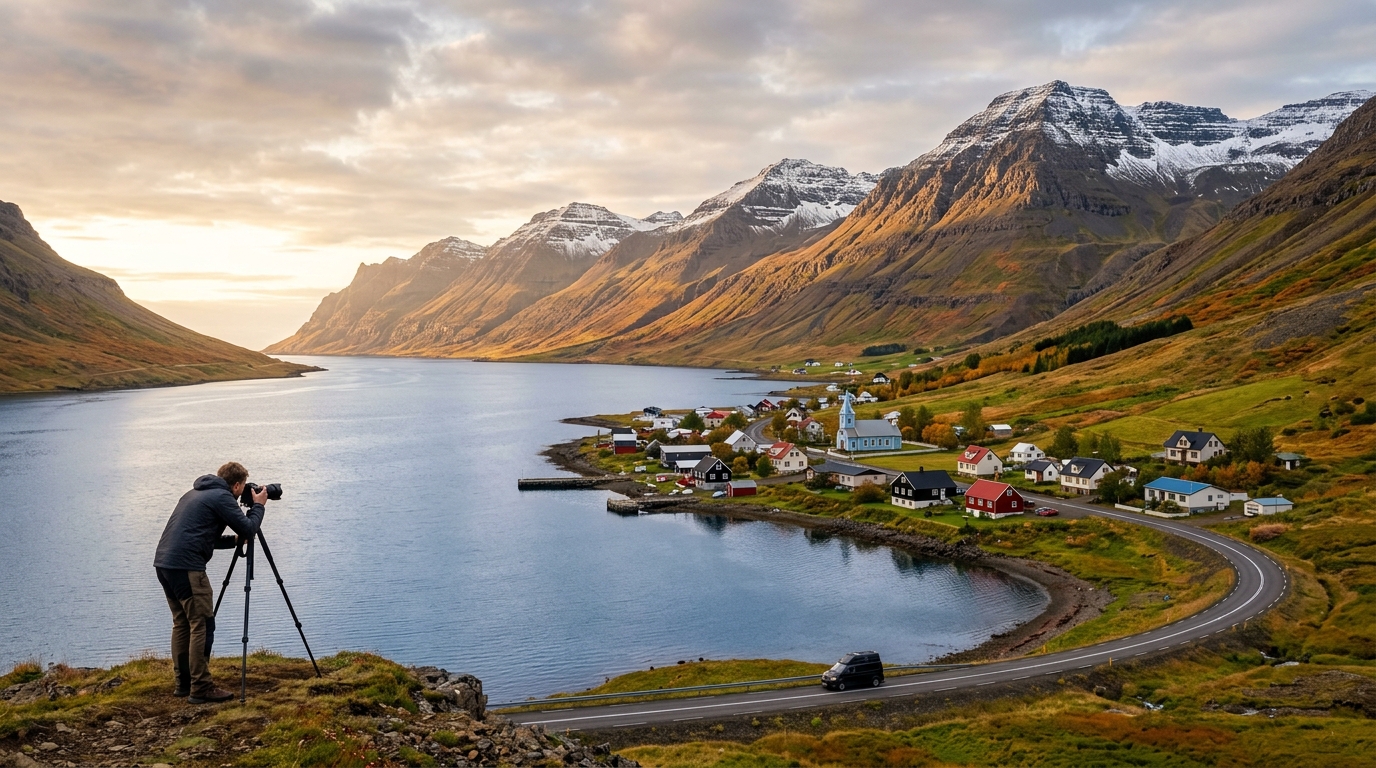
If you are planning a photography expedition to Iceland in 2026, you already know that the famous South Coast is packed with tour buses and tripods. For landscape photographers seeking pristine, untouched beauty, discovering the best East Fjords Iceland photography spots offers a chance to capture dramatic coastlines, cascading waterfalls, and rare wildlife without fighting for tripod space. This remote region, characterized by deep fjords, steep mountains, and winding coastal roads, is a masterclass in dramatic landscape composition.
We will break down everything you need to know about photographing East Iceland. From the iconic rainbow street of Seyðisfjörður to the hidden hexagonal basalt columns of Litlanesfoss, we will provide expert technical advice, gear recommendations, and compositional strategies to help you make the most of your 2026 road trip.
Why East Fjords Iceland Photography Spots Are Worth the Drive
When you contrast the East Fjords with the heavily trafficked South Coast, the immediate value for landscape photographers becomes obvious: uninterrupted, crowd-free shooting. You can spend hours working a composition along a remote black sand beach without a single person walking into your frame. But the appeal of the East Fjords Iceland photography spots goes far beyond just a lack of crowds; it is rooted in the region's unique geological history.
The East Fjords feature some of the oldest geological formations in Iceland. Unlike the young, porous, moss-covered lava fields of the southwest, the East features towering basalt mountains carved by ancient glaciers. This deep glacial erosion has exposed ancient magma chambers, resulting in colorful rhyolite mountains—particularly around Borgarfjörður Eystri—and dramatic, jagged igneous dikes that jut out into the ocean. These geological anomalies provide incredible leading lines and contrasting colors for your wide-angle landscape shots.
Furthermore, the region's microclimate is a massive asset for photographers. The steep mountains often trap weather systems, meaning the East Fjords frequently experience entirely different lighting and weather conditions compared to the rest of the island. To understand the rich natural history and local conservation efforts that protect these pristine landscapes, you can review the regional facts provided by Visit Austurland, the official regional destination board.
If you are mapping out your journey, exploring our dedicated East Iceland region map is the best way to visualize how these geological wonders are clustered along Route 1 and the coastal detours.
Top Seydisfjordur Photo Spots: The Crown Jewel of the East
No list of East Fjords Iceland photography spots is complete without Seyðisfjörður. Nestled at the innermost point of a deep fjord, this vibrant town is widely considered the cultural and visual crown jewel of the East. The drive into town via the Fjarðarheiði mountain pass offers sweeping panoramic views as you descend into the valley.
The most famous of the Seydisfjordur photo spots is undoubtedly the Blue Church (Seyðisfjarðarkirkja). The town has painted a vibrant rainbow path on the street leading directly to the church doors, creating a perfect, ready-made leading line. For the best composition, use a mid-range zoom lens (around 50mm to 70mm). This focal length allows you to compress the charming blue church against the towering mountains in the background. If you want to dive deeper into capturing these historic structures, check out our guide to photographing Icelandic churches.
Before you reach the town, you must stop at Gufufoss. Located right on the Fjarðarheiði pass, this striking waterfall bears a resemblance to the famous Skógafoss, but with a fraction of the visitors. The best vantage point is from the lower banks of the river, using a wide-angle lens to capture the block-shaped falls framed by the rugged canyon walls. An ND filter and a 1-second exposure will beautifully blur the water while retaining the violent texture of the falls.
To truly capture the magic of Seyðisfjörður, time your shoot for the blue hour. Because the town is sheltered by steep mountains, the winds often die down completely at dusk. Setting up your tripod along the water's edge allows you to capture the glowing lights of the heritage timber houses reflecting perfectly in the calm waters of the North Atlantic.
Photographing East Iceland's Dramatic Coastlines and Black Sand Beaches
When photographing East Iceland, the coastline demands your attention. The rugged shores of Fáskrúðsfjörður and Stöðvarfjörður offer endless opportunities for dramatic seascape photography. Unlike the flat, expansive black sand plains of Reynisfjara in the south, the eastern shores feature transition zones where pitch-black sand meets steep, jagged mountain bases. This creates high-contrast composition opportunities that look spectacular in black and white or moody, desaturated color grades.
Scattered along these eastern shores are numerous dramatic sea stacks. These monolithic rock formations jutting out of the turbulent North Atlantic are perfect subjects for long-exposure photography. To smooth out the violent waves and create an ethereal, misty effect around the base of the sea stacks, you will need a 6-stop or 10-stop Neutral Density (ND) filter. Depending on the ambient light, aim for a shutter speed between 30 seconds and 2 minutes.
Technical execution is critical here. Ensure your tripod is firmly planted—preferably pushing the spiked feet deep into the wet sand—and turn off your lens's optical image stabilization when mounted. Use a remote shutter release or a 2-second timer to prevent camera shake. The resulting images will contrast the sharp, jagged textures of the ancient volcanic rock against the silky, ethereal motion of the ocean. For more locations that feature these stunning coastal transitions, browse our dramatic coastal landscapes category.
Hidden Waterfalls: Best Places to Photograph in East Iceland
While the entire country is famous for its cascading water, some of the absolute best places to photograph in East Iceland are its remote, hidden waterfalls. These locations require a bit more hiking than the drive-up falls of the Golden Circle, but the visual reward is immense.
Hengifoss is one of the highest waterfalls in Iceland and a must-visit East Fjords Iceland photography spot. The hike takes about 45 to 60 minutes uphill. What makes Hengifoss unique is the striking layers of red clay sandwiched between thick layers of dark basaltic rock on the cliff face behind the water. To capture this distinct strata, use a telephoto lens (70-200mm) to isolate the waterfall and the red rock patterns, cropping out the empty sky. Afternoon light is best here, as the sun illuminates the canyon walls.
On the hike up to Hengifoss, you will pass Litlanesfoss. This lower waterfall is surrounded by some of the most impressive hexagonal basalt columns in the country. The viewing platforms offer a slightly downward angle. To frame the falls within the rock formations, use a wide-angle lens (16-35mm) and look for foreground elements, such as native flora or unique rock edges, to anchor your composition.
For a truly off-the-beaten-path experience, venture into Mjóifjörður to photograph Klifbrekkufossar. This magnificent, multi-tiered waterfall cascades down the side of the fjord in a spectacular zig-zag pattern. Because of its sheer scale, a wide-angle lens often makes the falls look distant and small. Instead, use a short telephoto (around 85mm to 135mm) to compress the distinct tiers into a single, powerful frame. If you are building a shot list of cascades, our waterfall photography spots directory is an invaluable planning tool.
Wildlife Photography: Puffins, Reindeer, and Arctic Foxes
East Fjords road trip photography is not limited to landscapes; the region is a haven for wildlife photographers. One of the primary draws is the Atlantic puffin, and there is no better place in Iceland to photograph them than Borgarfjörður Eystri. The Hafnarhólmi marina features purpose-built wooden boardwalks and viewing platforms that put you mere feet away from the nesting birds.
Unlike the high cliffs of Látrabjarg, Borgarfjörður Eystri allows you to photograph puffins safely and at eye level without hanging over a dangerous edge. For the best shots, visit during the golden hour when the birds are actively returning from the ocean with beaks full of sandeels. A 70-200mm or 100-400mm lens is perfect here. Keep your shutter speed high (at least 1/1000s) to freeze their rapid wing movements as they come in for a landing.
East Iceland is also known for its wild reindeer herds. According to Visit Austurland, these herds roam freely across the eastern highlands and fjords. In the summer, they stay high in the mountains, but during the winter and early spring, they migrate down to the lowlands and can often be photographed right from the Ring Road.
When photographing reindeer or the elusive Arctic fox, you will need a serious telephoto lens (such as a 200-600mm) to maintain a safe and respectful distance. Because wildlife is most active during the low-light hours of dawn and dusk, a lens with a wide maximum aperture (f/2.8 or f/4) is highly recommended to keep your ISO manageable while maintaining the fast shutter speeds required for moving animals. Discover more locations for avian subjects on our bird photography maps.
Essential Gear for East Fjords Road Trip Photography
The elements in Iceland are notoriously unforgiving, and the East Fjords are no exception. East Fjords road trip photography requires gear that can withstand sudden downpours, relentless sea spray, and freezing waterfall mist.
First and foremost, weather-sealing is mandatory. Ensure your camera body and lenses are fully weather-sealed. Even with sealed gear, pack dedicated rain sleeves or covers to protect your electronics during extended shoots near waterfalls like Gufufoss or Hengifoss. Bring plenty of microfiber cloths; you will be wiping your front element constantly.
A heavy-duty, wind-resistant tripod is the backbone of your Icelandic photography kit. The winds funneling through the fjords can easily topple a lightweight travel tripod. Opt for a sturdy carbon fiber model with spiked feet for gripping ice, mud, and wet sand. If your tripod has a center column hook, hang your camera bag from it to lower the center of gravity and increase stability.
Finally, your core filter kit should include a Circular Polarizer (CPL) and a set of ND filters. The CPL is essential for cutting through the harsh glare on the wet rocks of the fjords and enriching the greens of the summer moss. ND filters (3-stop, 6-stop, and 10-stop) will allow you to control your exposure times on waterfalls and coastal sea stacks, regardless of the ambient daylight.
Planning Your 2026 Itinerary: Weather, Roads, and Lighting
Timing your 2026 visit to the East Fjords Iceland photography spots will drastically alter the images you capture. Summer (June through August) offers the midnight sun, providing hours of soft, directional golden hour light. This allows you to shoot through the night and sleep during the harsh midday sun. Conversely, winter (November through March) transforms the fjords into an icy wonderland and offers the chance to photograph the northern lights dancing over jagged peaks.
Regardless of the season, weather and road safety must dictate your itinerary. The mountain passes in the East, particularly the infamous Öxi pass (Route 939), are steep, winding, and often unpaved. While Öxi is a scenic shortcut, it is frequently enveloped in dense fog or rendered impassable by snow. Always check current road conditions, closures, and safety warnings for remote East Fjord mountain passes via The Icelandic Road and Coastal Administration (IRCA) before setting out. Additionally, review the official safety guidelines for navigating remote coastal areas provided by SafeTravel Iceland.
Predicting the weather is famously difficult, but accurate weather, cloud cover, and aurora forecasts are essential for planning your photography shoots. The most reliable source is the Icelandic Meteorological Office. Monitor their low, middle, and high cloud cover maps to find breaks in the overcast skies for landscape and aurora photography.
Finally, utilize sun-tracking apps. Because the East Fjords are characterized by incredibly steep, deep valleys, the mountains will block the sun long before the official sunset time. A sun-tracking app will help you predict exactly when the light will hit or leave a specific waterfall or valley floor, saving you from arriving at a location that is already cast in deep, unworkable shadow.
Map Your East Fjords Iceland Photography Spots
To maximize your time on the ground, you need to map your East Fjords Iceland photography spots meticulously. Using digital photography maps allows you to cluster locations logically, minimizing the time you spend driving back and forth along the winding fjord roads.
For a highly productive 2-day itinerary specifically focused on the East Fjords, consider the following route: On Day 1, start in Egilsstaðir and hike up to Hengifoss and Litlanesfoss in the morning. In the afternoon, drive the Fjarðarheiði pass, stopping at Gufufoss, and spend the evening capturing blue hour reflections in Seyðisfjörður. On Day 2, head south along the coastline. Detour into Mjóifjörður to photograph Klifbrekkufossar, then spend the afternoon shooting the dramatic coastlines and sea stacks around Fáskrúðsfjörður, finishing your day near the jagged peaks of Vestrahorn.
Because cellular service can drop frequently in the remote eastern valleys, we strongly encourage you to save offline maps to your device before leaving your hotel. Our interactive photography maps are designed to help you pinpoint exact parking coordinates and trailheads, ensuring you never miss a shot due to poor navigation.
Frequently Asked Questions
How many days do I need for East Fjords road trip photography?
To properly photograph the East Fjords without rushing, you should allocate a minimum of two to three full days. This allows enough time to hike to remote waterfalls like Hengifoss, wait out unpredictable weather, and capture key locations like Seyðisfjörður during optimal lighting conditions (such as blue hour or golden hour). Rushing through in a single day will force you to shoot in harsh midday light and miss the hidden coastal gems.
When is the best time of year to photograph East Iceland?
The best time depends entirely on your photographic goals. Summer (June to August) is ideal for midnight sun photography, vibrant green moss, and accessible mountain passes. It is also the only time you can photograph puffins. Winter (December to March) offers incredible snow-capped mountain landscapes, frozen waterfalls, and the northern lights, but many remote roads (like the Öxi pass or the road to Mjóifjörður) will be closed due to snow.
Where can I photograph puffins in the East Fjords?
The absolute best location to photograph Atlantic puffins in the East Fjords is Borgarfjörður Eystri, specifically at the Hafnarhólmi marina. It features safe, accessible wooden boardwalks that bring you remarkably close to the nesting burrows. The puffins are typically present from early May until mid-August. Early morning or late evening provides the best light and the highest bird activity.
Are the roads in the East Fjords safe for winter photography?
Winter driving in the East Fjords requires caution, a 4x4 vehicle with studded winter tires, and flexibility in your itinerary. While the main Ring Road (Route 1) is generally cleared by snowplows, high winds can cause sudden ice patches and whiteout conditions. Many secondary mountain passes and unpaved coastal detours are not maintained in winter and become impassable. Always check the IRCA website (umferdin.is) for real-time road conditions before driving.
Ready to plan your East Iceland adventure? Explore our interactive East Iceland Photography Map to pinpoint these exact locations and build your perfect 2026 road trip itinerary.