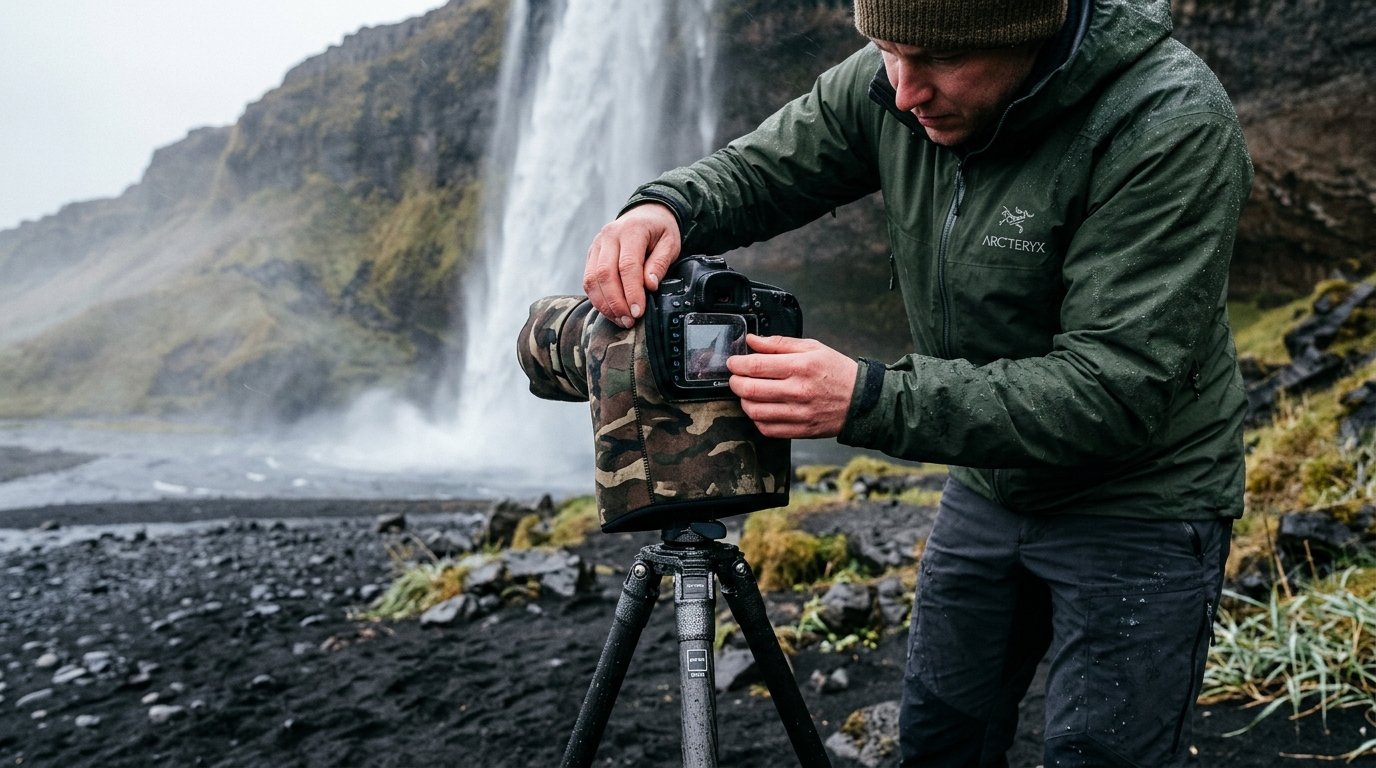
Planning a photography trip to the land of fire and ice is an exhilarating experience, but learning how to protect camera gear in iceland must be at the very top of your preparation checklist. Iceland offers some of the most dramatic, raw, and awe-inspiring landscapes on Earth. However, the very elements that make this island so photogenic—towering waterfalls, active volcanic zones, black sand beaches, and fast-moving weather systems—also make it one of the most hostile environments in the world for delicate electronic camera equipment.
For search-quality context, Google guidance on creating helpful content emphasizes people-first content that directly helps readers complete their task.
For implementation context, Google's SEO Starter Guide outlines stable fundamentals for making pages easier for search engines and users to understand.
At Iceland Photo Map, we have spent years helping photographers safely navigate this spectacular terrain. We know firsthand that a single rogue wave, a sudden gust of wind-blown basaltic sand, or a heavy drenching of waterfall spray can instantly turn thousands of dollars of high-end camera gear into an expensive paperweight. To help you prepare, we have put together this comprehensive guide to protecting your equipment, designed to keep your camera functioning flawlessly so you can focus on capturing the shot of a lifetime.
Whether you are a seasoned professional or an ambitious amateur, this guide provides practical, field-tested advice on managing rain, spray, sand, and cold. By understanding these environmental challenges and preparing your kit accordingly, you can protect your investment and capture stunning images even when the storm rolls in.
Why You Need to Know How to Protect Camera Gear in Iceland
Iceland's weather is notoriously unpredictable, often changing from bright sunshine to horizontal rain, sleet, or snow within a matter of minutes. The island sits at the confluence of cold polar air masses and warm Gulf Stream currents, creating a highly volatile atmosphere. According to the Icelandic Meteorological Office, weather conditions can shift rapidly, making it common to experience multiple seasons in a single afternoon. If you do not know how to protect camera gear in iceland, you risk severe gear damage within your first few days on the road.
The primary threat to your camera gear is not just water, but the specific types of environmental hazards unique to Iceland's geography:
- Horizontal Rain: Icelandic winds are legendary, regularly reaching high speeds during storms. When rain falls in these winds, it does not drop from above; it travels horizontally, finding its way into the smallest seams, dials, and ports of your camera body.
- Abrasive Volcanic Dust: Much of Iceland's soil consists of fine, black basaltic sand and volcanic ash. High winds can whip this dust into airborne clouds that act like sandpaper, scratching lens elements, jamming zoom rings, and invading camera sensors during lens changes.
- Mineral-Rich Moisture: The mist from Iceland's waterfalls and the sea spray along its coastlines are loaded with minerals and salt. Unlike pure rainwater, this moisture leaves behind corrosive deposits when it dries, which can permanently damage optical coatings and short-circuit internal electronics.
Understanding these hazards and preparing for them before you step off the plane at Keflavík is the only way to prevent costly gear failures during a once-in-a-lifetime shoot. A broken camera or a ruined lens mid-trip is not just a financial blow—it can completely derail your creative plans.
Battling the Elements: Iceland Photography Weather Protection Basics
Before diving into specific shooting scenarios, it is vital to establish a solid foundation for your iceland photography weather protection strategy. Many photographers arrive in Iceland with a false sense of security, believing that their "weather-sealed" camera body and professional-grade lenses are impervious to the elements. This is a dangerous misconception.
The Myth of "Weather Sealing"
There is a vast difference between "weather-resistant" and "waterproof." Camera manufacturers use rubber gaskets and silicone seals around buttons, dials, battery compartments, and lens mounts to resist moisture and dust. However, there is no standardized IP (Ingress Protection) rating system for most consumer and professional cameras.
While a weather-sealed camera can easily survive a light, vertical drizzle in a forest, it is not designed to withstand the high-pressure, wind-driven horizontal rain or the dense, constant saturation of Icelandic waterfall mist. Over time, constant exposure to high humidity and water droplets can breach these seals, causing condensation inside the viewfinder, unresponsive buttons, or complete electronic failure. While modern cameras offer impressive build quality, many industry experts, including those at LensRentals in their teardowns of weather-sealed gear, warn that weather resistance is not the same as waterproofing and can fail under sustained, high-pressure moisture. Relying solely on your camera's built-in weather sealing in extreme environments can be a risky strategy.
Essential Baseline Gear for Your Camera Bag
To help keep your gear safe, we recommend packing a few simple, inexpensive items that serve as an excellent first line of defense in the field:
- Microfiber Cloths (and lots of them): Do not just bring one or two. Pack at least 10 to 15 high-quality, high-absorbency microfiber cloths. Suede-style cloths are excellent for wiping down glass, while plush, thicker microfiber cloths are perfect for drying the camera body and lens barrel. Keep them in individually sealed, dry Ziploc bags so they do not absorb ambient moisture before you even use them.
- A High-Volume Rocket Blower: Avoid using your breath to blow water droplets or dust off your lens element, as the warm moisture from your breath can easily cause the glass to fog up or leave persistent smears. A rocket blower is essential for blasting away loose sand, dust, and water droplets safely without touching the glass.
- Silica Gel Packs: Keep several large, rechargeable silica gel packs inside your main camera compartment. These packs actively absorb moisture and humidity that enters your bag when you open it in damp conditions, helping to dry out your gear while you travel between locations.
Defeating the Mist: Protecting Camera from Waterfall Spray
Iceland is home to thousands of waterfalls, each with its own unique character. From the sheer, thunderous power of the mighty Dettifoss waterfall in the north to the delicate, wind-whipped plumes of the South Coast, these natural wonders are a primary target for visiting photographers. You can explore our dedicated guide to stunning Icelandic waterfalls to plan your shoot, but you must be prepared for the intense localized microclimates they create.
As millions of gallons of water plunge over cliffs, they generate massive, constant clouds of heavy mist. This spray behaves like a localized rainstorm that blows in every direction, swirling around obstacles and coating everything in seconds. When protecting camera from waterfall spray, you must adopt a strict, highly disciplined shooting workflow.
The "Lens Hood and Wipe" Technique
When shooting close to a high-spray waterfall, keeping your front lens element dry is a constant battle. Water droplets on your lens will ruin your images, causing soft spots, loss of contrast, and ugly flare patterns. Use this step-by-step workflow to keep your glass clean and dry between frames:
- Use a Deep Lens Hood: Keeping your lens hood attached is one of the simplest ways to protect your front element. A deep, physical hood acts as a shield, blocking swirling mist from reaching the front element of your lens, especially when shooting at narrower focal lengths.
- Keep the Lens Cap On: Do not remove your lens cap until your tripod is locked down, your composition is set, and your exposure settings are dialed in. Keep the camera pointed slightly downward, away from the spray, while preparing.
- The Ready-Wipe-Shoot Protocol: When you are ready to shoot, take off the lens cap, quickly wipe the front element with a fresh, dry microfiber cloth, immediately trigger your shutter (ideally using a 2-second timer or remote release to avoid camera shake), and then immediately replace the lens cap or cover the front of the lens with your hand or a cloth.
- Shoot in Bursts: If you are capturing a long exposure or a series of brackets, check the front element between every single shot. If even a tiny droplet is visible, wipe it clean.
Using Protective Filters as a Sacrificial Barrier
Glacial meltwater in Iceland is packed with fine mineral particles and suspended silica. When waterfall spray dries on your lens, these minerals can leave behind stubborn water spots that are incredibly difficult to remove without scratching the lens's delicate anti-reflective coatings.
Consider screwing on a high-quality, multi-coated UV or clear protector filter before heading into a waterfall spray zone. If the mineral-rich water dries and leaves a permanent mark, or if you accidentally scratch the surface while wiping off grit in a rush, you have only ruined a replaceable filter rather than a multi-thousand-dollar lens.
Choosing the Best Camera Rain Cover for Iceland
When the weather turns truly foul, a dedicated rain cover is your best defense. However, not all covers are created equal, and the conditions in Iceland will quickly expose the flaws of poorly designed gear. When selecting a camera rain cover iceland photographers can trust, you must balance protection, wind resistance, and ease of use.
Disposable Plastic Sleeves vs. Heavy-Duty Storm Jackets
There are two main categories of rain covers available on the market, each with its own set of trade-offs:
| Feature | Disposable Plastic Sleeves (e.g., Op/Tech) | Heavy-Duty Storm Jackets (e.g., Think Tank, Peak Design) |
|---|---|---|
| Cost | Very low (a few dollars per pack) | Moderate to high ($50 - $150+) |
| Weight & Packability | Extremely light, fits easily in any pocket | Bulkier, requires dedicated space in your bag |
| Wind Resistance | Poor; flaps violently in high winds | Excellent; snug fit with drawstrings and straps |
| Durability | Single-use or limited reuse; tears easily | Highly durable, designed for years of rugged use |
| Usability | Can block viewfinders and restrict access to dials | Dedicated clear windows, sleeve access for hands |
While cheap plastic sleeves are great to keep in your bag as an emergency backup, they are generally a poor choice for primary use in Iceland. The relentless Icelandic wind will catch the loose, thin plastic of a cheap sleeve, causing it to flap violently. This flapping not only creates a loud, distracting noise but also acts like a sail, introducing significant camera shake that will ruin long exposures and sharp landscape shots. Furthermore, the wind can easily rip thin plastic sleeves off your camera entirely.
For Iceland, we highly recommend investing in a high-quality, form-fitting storm jacket. Look for models made of durable, water-resistant ripstop nylon or polyester with adjustable drawstrings that tighten securely around the lens hood and your hands. Brands like Think Tank Photo (Hydrophobia series) or Peak Design (Shell) offer excellent protection because they can be cinched down tight to prevent flapping in gale-force winds.
How to DIY an Emergency Rain Cover in a Pinch
If you find yourself caught in a sudden downpour without a dedicated cover, you can easily fashion an emergency rain cover using items you likely have in your rental car:
- Take a standard plastic grocery bag or a clear Ziploc freezer bag.
- Cut a hole in the bottom of the bag that is slightly smaller than the diameter of your lens hood.
- Push the lens hood through the hole from the inside of the bag, so the plastic edge sits snug around the outer rim of the hood.
- Secure the plastic to the lens hood using a thick rubber band, hair tie, or gaffer tape to create a watertight seal.
- Pull the rest of the bag back over the camera body, leaving the open end of the bag facing backward so you can access the viewfinder and controls from underneath.
Volcanic Sand and Dust: The Silent Gear Killers
While water damage is immediate and obvious, volcanic sand and dust represent a slower, more insidious threat to your equipment. Iceland's dramatic black sand beaches, such as those near the towering cliffs of Dyrhólaey and the world-famous Reynisfjara, are composed of basaltic sand. This sand is not like the soft, quartz-based sand found on tropical beaches; basalt is a volcanic rock that is highly abrasive, sharp, and magnetic.
If fine basaltic dust gets inside your camera body or lens, it acts as an abrasive paste. It can quickly grind down the delicate plastic and metal gears inside autofocus motors, jam zoom mechanisms, scratch optical glass, and leave permanent dark spots on your camera's digital sensor.
The Golden Rule: Never Change Lenses Outdoors
The single most important rule of shooting on Iceland's black sand beaches is simple: rarely change your lens outdoors . If you must switch focal lengths, walk back to your rental car, close all the doors and windows to block the wind, and perform the change in a clean, controlled environment.
If you absolutely must change a lens in the field, find a windbreak, turn your back to the wind, shield the camera body inside your zipped-up jacket, point the camera mount directly down toward the ground, and swap the lenses as quickly and carefully as possible. However, the safest approach is to carry two camera bodies pre-mounted with your favorite lenses (such as a wide-angle zoom and a telephoto zoom) to eliminate the need for field changes entirely.
How to Safely Clean Sand Particles Off Your Gear
If your camera or lens gets coated in fine black sand, your natural instinct may be to grab a microfiber cloth and wipe it clean. Do not do this. Wiping dry sand across your camera body or lens glass will grind the sharp basalt particles into the surfaces, permanently scratching your LCD screen, camera paint, or lens coatings.
Instead, follow this strict cleaning sequence when you return to your vehicle or accommodation:
- Blow: Use your rocket blower to blast away as much loose sand as possible from all surfaces, paying close attention to the seams around dials, buttons, and the lens mount.
- Brush: Use a clean, soft-bristled makeup brush or a dedicated lens cleaning brush (like a Lenspen brush) to gently sweep away any remaining sand particles from crevices and seals. Keep the camera pointed downward so gravity helps pull the sand away.
- Wipe: Only after you are many certain that all abrasive sand particles have been removed should you use a damp microfiber cloth to wipe down the exterior surfaces of your camera body and lens barrel.
Cold Weather and Condensation: Managing Batteries and Lenses
Iceland's climate is characterized by cool summers and surprisingly mild winters (thanks to the Gulf Stream), but temperatures still regularly hover near or below freezing, especially in the highlands, during the shoulder seasons, and throughout the winter months. Cold weather introduces two distinct challenges for photographers: rapid battery drain and internal condensation.
Keeping Lithium-Ion Batteries Warm
Cold temperatures slow down the chemical reactions inside lithium-ion batteries, causing them to lose voltage rapidly. Your camera may report that a fully charged battery is completely dead after just 30 minutes of shooting in freezing conditions.
To combat this, often travel with at least three to four spare batteries. Keep your active battery in the camera while shooting, but store your spare batteries in an inner zippered pocket of your jacket, close to your body. Your body heat will keep the batteries warm and preserve their charge. As detailed in Canon's cold weather photography guide, keeping spare batteries close to your body heat is essential for maintaining their charge in freezing environments. When the battery in your camera dies, swap it with a warm spare from your pocket. Place the "dead" cold battery back into your inner pocket; as it warms up, you will often find that it regains a significant portion of its remaining charge, allowing you to use it again later.
The Physics of Condensation: The Ziploc Bag Trick
Condensation is one of the most common causes of electronic failure in cold climates, yet many photographers do not understand how it occurs. When you bring a freezing cold camera and lens inside a warm, humid environment—such as your rental car, a café, or your hotel room—moisture from the warm air immediately condenses on the cold surfaces of your gear.
This moisture does not just form on the outside of your lens; it also forms *inside* the lens barrel, behind the front and rear glass elements, and inside the camera's sensor chamber. This internal condensation can take hours to dry, during which time it can cause mold growth, rust, and short-circuits.
To prevent this, use the classic Ziploc bag trick:
- Before you step inside a warm building or vehicle, place your cold camera and lens inside a large, airtight plastic Ziploc freezer bag while you are still outside in the cold air. Zip the bag completely shut, trapping the dry, cold outdoor air inside.
- Bring the sealed bag indoors. As the cold gear warms up, the moisture in the warm indoor air will condense on the *outside* of the plastic bag, while your camera gear remains safe and dry inside.
- Leave the gear inside the sealed bag for at least 1 to 2 hours, allowing it to acclimate slowly to the indoor temperature before opening the bag and removing your equipment.
Practical Field Workflow: How to Protect Camera Gear in Iceland While Shooting
Maintaining a highly disciplined field workflow is the ultimate secret to successful iceland photography weather protection. Knowing how to protect camera gear in iceland is not just about having the right accessories; it is about establishing safe habits and a consistent routine that minimizes risk at every location.
Securing Your Tripod in High Winds
Icelandic winds are powerful enough to blow car doors off their hinges, and they can easily tip over a heavy tripod carrying expensive gear. To prevent a catastrophic gear drop, follow these tripod safety rules:
- rarely Leave Your Camera Unattended: Even if your tripod feels rock-solid, a sudden, violent gust of wind can catch your camera body or lens hood like a sail and send the entire rig crashing onto the rocks. often keep your hand on the camera strap or stand within arm's reach of your tripod.
- Splay the Tripod Legs Wider: Most professional tripods allow you to adjust the angle of the legs. In high winds, splay the legs out to a wider angle to lower the tripod's center of gravity and create a much wider, more stable base.
- Hang Your Bag Safely (With Caution): Many tripods feature a hook at the bottom of the center column designed for hanging a camera bag to add stabilizing weight. However, use caution in high winds. If your bag is light or loose, the wind can catch it and turn it into a pendulum, causing the bag to swing violently and actually pull the tripod over. If you hang your bag, ensure it is heavy enough to remain stationary, or anchor it directly to the ground using a strap.
- Use Spiked Feet: If you are shooting on ice, wet grass, or soft mud, swap your tripod's rubber feet for metal spikes to ensure a solid grip on the slippery ground.
Smart Camera Bag Organization
How you pack and access your gear in the field is just as important as how you protect it while shooting. When choosing a camera backpack for Iceland, look for a model with a rear-access panel (where the zipper is located on the back harness side of the pack).
A rear-access bag allows you to lay the front of the pack down on wet grass, mud, or black sand while keeping the harness and back panel clean and dry. This design also prevents rain and spray from falling directly into your open gear compartments while you are accessing your lenses. Keep your bag zipped shut at all times unless you are actively retrieving or storing a piece of gear.
Post-Shoot Maintenance: The Evening Routine
Your job is not finished when you pack up your gear at the end of the day. When you return to your hotel or guesthouse, dedicate 15 minutes to performing essential post-shoot maintenance:
- Take all your gear out of your camera bag. Remove the batteries, memory cards, and lenses from the camera bodies.
- Wipe down all exterior surfaces of your camera bodies, lens barrels, and tripod legs with a clean, dry microfiber cloth to remove any salt residue, moisture, or dust.
- Leave your gear spread out on a clean desk or table in a warm, dry room to allow any residual moisture to evaporate completely overnight. rarely store wet or damp gear inside a closed camera bag.
- Inspect your lens elements and filters for mineral spots or smudges, and clean them thoroughly using optical lens cleaner and fresh lens tissues.
Frequently Asked Questions
Is a weather-sealed camera completely waterproof in Iceland?
No, weather-sealed cameras are not completely waterproof. Weather sealing is designed to resist light rain, dust, and minor splashes, but it does not provide a intended IPX rating. The high-pressure, wind-driven horizontal rain and dense, heavy waterfall spray common in Iceland can easily penetrate standard weather seals, especially around ports, dials, battery doors, and lens mounts. often use an external rain cover in wet or windy conditions.
What is the best way to clean waterfall spray off my lens in the field?
The best method is to use a high-quality, dry, suede-style microfiber cloth. Before wiping, use a rocket blower to blast away any loose water droplets or grit to avoid scratching the glass. Wipe the lens in a gentle, circular motion from the center outward. often keep a deep lens hood attached to block spray, and keep your lens cap on until the exact moment you are ready to press the shutter.
How do I prevent my tripod from blowing over in Icelandic winds?
To stabilize your tripod in high winds, splay the tripod legs to a wider angle to lower the center of gravity. rarely leave your camera unattended on a tripod, as sudden gusts can easily tip it over. You can hang your camera bag from the center column hook to add weight, but ensure the bag is heavy enough that it does not swing in the wind like a pendulum, which can actually destabilize the tripod.
Can I change lenses while shooting on Iceland's black sand beaches?
We strongly advise against changing lenses outdoors on black sand beaches like Reynisfjara or Diamond Beach. The fine, black basaltic sand is highly abrasive and magnetic, and high winds can easily blow it into your open camera body, damaging the sensor and internal mechanisms. If you must change lenses, return to your rental car, close all doors and windows, and perform the change inside the clean vehicle.
Conclusion: Safe Gear Means Spectacular Photos
Protecting your camera gear in Iceland requires preparation, high-quality protective accessories, and a strict, disciplined field workflow. By understanding the unique environmental hazards of this stunning island—from horizontal rain and mineral-rich waterfall spray to abrasive volcanic sand—you can take the necessary steps to safeguard your investment. Remember the golden rules: often keep your camera covered when not in use, clean your gear constantly using safe techniques, and let your equipment acclimate slowly to prevent internal condensation. With the right preparation, you can shoot confidently in any weather Iceland throws at you, capturing spectacular images that will last a lifetime.
Ready to capture Iceland's dramatic landscapes without losing your way or missing the best light? Explore our comprehensive Iceland Photography Maps to plan your perfect, weather-ready route.