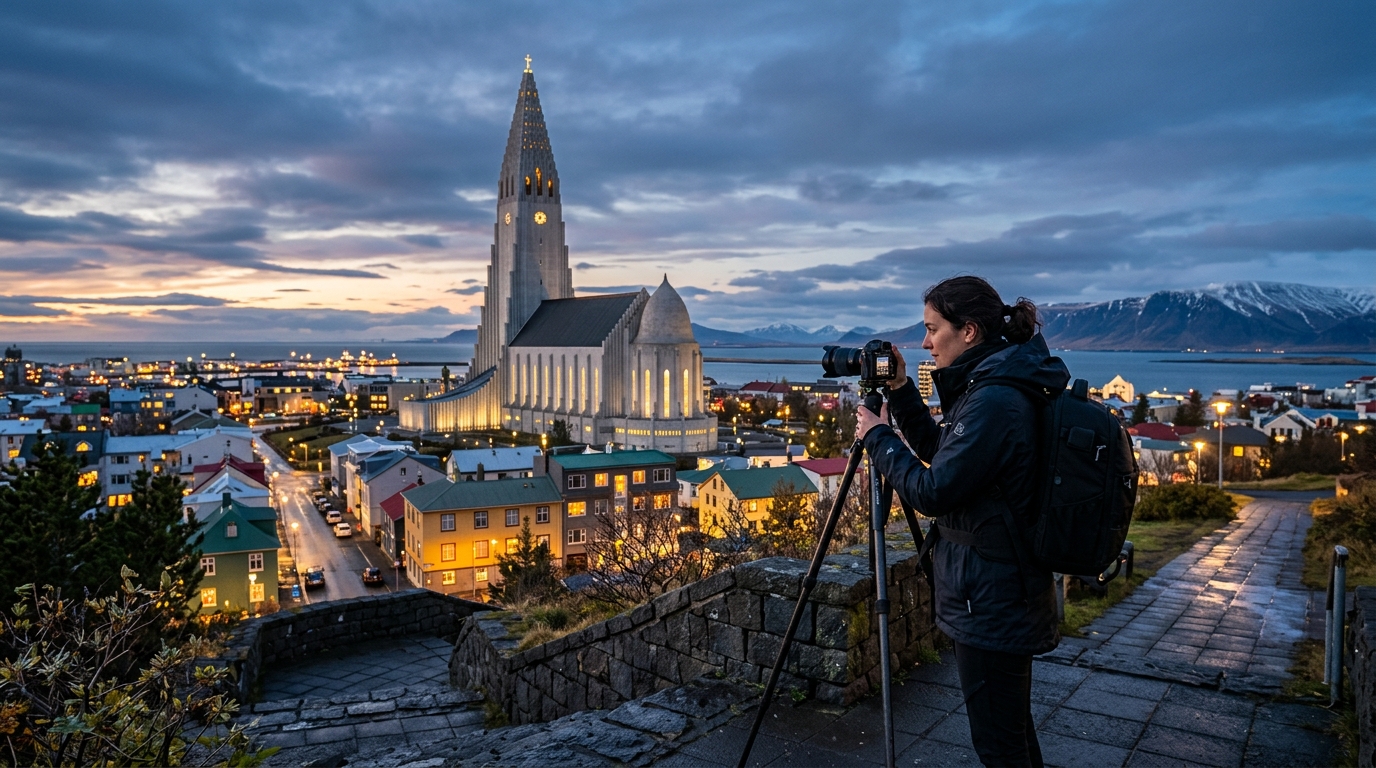
When planning an Icelandic adventure, many travelers rush straight to the dramatic waterfalls of the South Coast or the volcanic landscapes of the highlands. However, skipping the capital city is a massive missed opportunity for any visual storyteller. The diverse array of Reykjavik photography spots offers a stunning blend of avant-garde architecture, historic Scandinavian charm, and rugged coastal beauty. Whether you are a professional landscape photographer, an architectural enthusiast, or a street photographer looking for candid moments, Reykjavik serves as an exceptional starting point for your creative journey.
Our team at Iceland Photo Map has spent years documenting these urban environments to help you optimize your shooting schedule and capture portfolio-worthy images. We will explore the best locations, technical strategies, and seasonal nuances of photographing Iceland's capital. To ensure you get the most out of your trip, we recommend pairing our local insights with official travel resources like Visit Iceland, focusing on practical, actionable advice that you can implement the moment you step onto the city's streets.
Photographing Reykjavik requires an understanding of its unique coastal light, rapid weather shifts, and distinct seasonal variations. In the summer, you will experience the endless glow of the midnight sun, while the winter months offer brief, low-angle golden hours and the thrilling possibility of capturing the Aurora Borealis dancing over the city skyline. Let's explore the essential locations and techniques that make Reykjavik a photographer's playground.
Iconic Landmarks: The Must-Shoot Reykjavik Photography Spots
The architectural landscape of Reykjavik is defined by a bold contrast between minimalist Nordic design, historic corrugated iron structures, and ultra-modern geometric installations. To capture the definitive look of the city, you must start with its three most iconic landmarks.
Hallgrímskirkja
Towering over the city center, Hallgrímskirkja is perhaps the most recognizable structure in Iceland. Designed by the state architect Guðjón Samúelsson in 1937 and completed in 1986, the church’s dramatic concrete facade was inspired by the basalt lava columns found throughout Iceland's volcanic landscapes. When photographing the exterior, a common challenge is perspective distortion; shooting from too close with a wide-angle lens will make the tower appear to fall backward. To avoid this, walk down Skólavörðustígur (the Rainbow Street) and use a medium focal length (50mm to 85mm) to compress the perspective, or utilize a tilt-shift lens if you have one in your kit.
Don't limit your shoot to the exterior. Step inside to document the light-filled interior, featuring clean lines and the massive pipe organ consisting of thousands of pipes. For a symmetric, abstract composition, position yourself exactly in the center of the main aisle with an ultra-wide-angle lens (14mm to 20mm), aiming upward to capture the clean lines of the Gothic-style vaulting. For a panoramic view of the city's colorful rooftops, pay the small fee to take the elevator to the tower's observation deck. From here, you can capture stunning geometric patterns of the colorful corrugated iron houses below. This site is a staple of Icelandic church photography, showcasing how religious architecture can harmonize with natural geological forms.
Harpa Concert Hall
Located at the edge of the Old Harbour, the Harpa Concert Hall is a masterclass in modern architectural photography. Designed by Danish-Icelandic artist Olafur Eliasson in collaboration with Henning Larsen Architects, the building features a quasi-brick glass facade that mimics the crystalline structure of basalt columns. The glass panels are tinted in various colors, which react dynamically to the changing angle of the sun, coastal weather, and interior lighting.
To photograph Harpa successfully, you must work with reflections. On a clear day, the exterior glass acts as a giant mirror reflecting the Faxaflói Bay and Mount Esja. During the blue hour, the building is illuminated by an internal LED system, making it look like a glowing jewel box. Step inside the south foyer to play with light and shadow. The geometric concrete stairs, steel support structures, and multi-faceted glass panels create endless opportunities for abstract, high-contrast black-and-white compositions. Use a polarizing filter to selectively control the reflections on the glass panels, allowing you to either emphasize the interior structure or highlight the external coastal reflections.
The Sun Voyager (Sólfar)
Just a short walk from Harpa along the scenic waterfront path sits the Sun Voyager (Sólfar), a massive stainless-steel sculpture by Jón Gunnar Árnason. Often described as a Viking longship, the artist intended it to represent a vessel of hope, progress, and the promise of undiscovered territory. The sculpture is positioned perfectly to frame Mount Esja across the bay, making it one of the premier Reykjavik photography spots for sunrise and sunset compositions.
To capture a unique shot of this highly photographed monument, arrive early in the morning when the water is calmest and tourist traffic is minimal. Get low to the ground to frame the sleek steel curves against the sky, or use a neutral density (ND) filter to execute a long exposure (typically 30 to 60 seconds). This technique will smooth out the ripples of the tide and turn the clouds into soft, painterly streaks, emphasizing the clean, industrial lines of the sculpture. In the winter, look for frost or ice accumulating on the steel frame, which adds a gritty, cold texture to your foreground.
Capturing the Soul of the City: Reykjavik Street Photography
Beyond the grand monuments, the true essence of the capital lies in its vibrant, walkable urban core. Engaging in reykjavik street photography allows you to document the intersection of historic Icelandic heritage and modern, cosmopolitan life. The city’s compact layout makes it incredibly pedestrian-friendly, allowing you to easily explore diverse neighborhoods on foot.
Start your street photography walk on Skólavörðustígur, famously known as the Rainbow Street. The brightly painted street leads the viewer's eye directly to the imposing facade of Hallgrímskirkja, providing a classic leading-line composition. To make your shot stand out, wait for a rainy day when the wet asphalt reflects the rainbow colors, or shoot during the blue hour when the warm streetlights contrast beautifully with the deep blue sky. From there, transition to Laugavegur, the main shopping street. Here, you will find a mix of historic timber buildings clad in colorful corrugated iron, trendy cafes, and local characters. A fast prime lens, such as a 35mm or 50mm f/1.8, is ideal for this environment, allowing you to isolate subjects against a soft, blurred background while maintaining a low profile.
Reykjavik is also home to a world-class street art scene. Vast, professionally commissioned murals cover entire sides of multi-story buildings, particularly around the Vesturbær and Grandi districts. When photographing street art, try to incorporate human elements to provide scale and context. Wait for a local resident walking past a mural, or use the graphic elements of the artwork to frame a candid portrait. The colorful corrugated iron houses—originally imported as a durable, weather-resistant building material in the late 19th century—offer a distinct texture that is uniquely Icelandic. Look for details such as contrasting window frames, vintage door handles, and small garden spaces that showcase the local pride of ownership.
When practicing street photography in Reykjavik, keep these practical tips in mind:
- Respect local privacy: Standard travel etiquette in Iceland suggests asking for permission when taking close-up portraits of residents, or shooting candidly from a respectful distance without disrupting daily life.
- Look for reflections: Use the large glass windows of modern shops and cafes along Laugavegur to create double-exposure-style reflections, blending the interior life of the city with the historic streetscapes outside.
- Embrace the overcast sky: Heavy cloud cover acts as a giant softbox, eliminating harsh shadows and making the vibrant colors of the buildings and murals pop without clipping your highlights.
Coastal Views and Harbor Charm: Best Photo Locations Reykjavik
Reykjavik is intimately connected to the ocean, and its maritime heritage is visible along every stretch of its coastline. To capture this connection, you must explore the shoreline, where rugged natural elements meet industrial development. This makes the coastal perimeter some of the best photo locations reykjavik has to offer.
The Old Harbour
The Old Harbour (Gamla Höfnin) is a bustling hub where traditional wooden fishing boats sit side-by-side with modern whale-watching vessels and luxury yachts. This area offers a fantastic contrast between the old maritime way of life and modern urban development. For the best compositions, walk along the wooden piers during the early morning hours when the harbor water is as still as a mirror. The reflections of the brightly painted boat hulls and the surrounding green-and-yellow harbor sheds create striking, colorful abstracts.
Look across the harbor toward the dry docks, where massive ships are pulled out of the water for maintenance. The industrial cranes, rusted chains, and weathered wood provide excellent textures for detailed close-up shots. As the sun begins to set, head to the western edge of the harbor to capture the silhouettes of the boats against the warm glow of the sky, with the modern architecture of Harpa framing the background.
Grótta Lighthouse
Located at the westernmost tip of the Seltjarnarnes peninsula, Grótta Lighthouse is an absolute must-visit for any serious photographer. This historic site features a picturesque, distinctive white lighthouse with a red top standing against the wild, wind-swept Atlantic Ocean. It is one of the most popular historic Icelandic lighthouses to photograph due to its dramatic setting and accessibility from the city center.
Grótta is a highly dynamic shooting location. At high tide, the causeway leading to the lighthouse is completely submerged, isolating the structure on a small island. At low tide, the rocky causeway is exposed, allowing you to walk across and explore the tide pools, which are filled with sea kelp, smooth black pebbles, and reflections of the sky. Important Safety Warning: Always check local tide tables and coastal conditions before crossing the causeway to the lighthouse, as rising tides can quickly cut off your return route. For general travel safety information in Iceland, consult resources like SafeTravel Iceland. From a compositional standpoint, use the leading line of the rocky causeway to guide the viewer’s eye toward the lighthouse. The area is also highly regarded for dark sky photography, as it faces away from the main light pollution of the city, making it a popular urban location for aurora hunting.
Solfar Cove and the Sculpture Path
Running along the northern coast of the city, the sculpture path offers wide, unobstructed views of Faxaflói Bay and the Esja mountain range. This coastal path is dotted with various art installations, but the real draw is the dramatic weather. On stormy days, massive waves crash against the black basalt seawall, sending dramatic plumes of sea spray into the air. Use a fast shutter speed (1/1000s or faster) to freeze the motion of the water droplets, or use a slow shutter speed with a tripod to capture the churning, chaotic energy of the sea.
Hidden Gems and Lesser-Known Reykjavik Photo Spots
While the major landmarks are essential, finding unique perspectives often requires stepping off the beaten path. These lesser-known reykjavik photo spots offer quiet, atmospheric compositions away from the main tourist crowds.
Þúfa (The Tufa)
Located in the Grandi harbor area, Þúfa is a large, grass-covered dome installation designed by artist Ólöf Nordal. A narrow, spiral walking path winds its way up to the top of the dome, where a small wooden shed used for traditional fish-drying sits. This installation represents a bridge between modern art and historic Icelandic fishing culture.
Climbing to the top of Þúfa provides an elevated, 360-degree viewpoint of the harbor, the Harpa Concert Hall, and the distant mountain ranges. To photograph Þúfa itself, stand back near the harbor entrance and use a wide-angle lens to capture the perfect symmetry of the green mound against the industrial harbor structures. The spiral path also provides an excellent geometric leading line, especially if you capture a person walking up the path to add a sense of scale and journey to your image.
Tjörnin (The Pond) and City Hall
Situated in the heart of the city, Tjörnin is a peaceful lake surrounded by historic, brightly colored houses, parks, and the striking concrete architecture of Reykjavik City Hall (Ráðhús). The pond is home to a thriving population of whooper swans, greylag geese, and mallards, offering fantastic opportunities for wildlife photography within an urban setting.
For the best shots, shoot from the southern end of the pond looking north. On a calm morning, the historic houses and the spire of the Fríkirkjan church reflect perfectly in the still water. If you walk along the concrete walkway of City Hall, which appears to float directly on the water, you can capture unique architectural juxtapositions where raw, modernist concrete meets the natural elements of the lake. Use a telephoto lens (70-200mm) to isolate the swans gliding through the reflections of the colorful buildings.
Elliðaárdalur Valley
Most tourists are surprised to learn that a lush, forested valley with a wild salmon river and multiple waterfalls exists directly within the Reykjavik city limits. Elliðaárdalur Valley is a green oasis that feels miles away from the urban center, offering a peaceful retreat for landscape photographers.
A notable feature is the Kermóafoss waterfall, a beautiful, multi-tiered cascade surrounded by basalt rock formations and dense birch forests. To photograph the waterfall, bring a sturdy tripod and a neutral density filter to achieve a silky water effect. The forested paths of the valley are particularly stunning during the autumn months when the birch leaves turn vibrant shades of yellow and orange, contrasting beautifully with the dark basalt rocks and rushing blue water. It is an excellent location to practice classic landscape photography techniques without leaving the convenience of the capital.
Essential Gear and Technical Tips for Reykjavik Photography Spots
To get the most out of your visit to these diverse Reykjavik photography spots, you must pack the right equipment and understand how to handle the unique technical challenges of the Icelandic environment.
Lens Selection
A versatile kit is essential for capturing both the grand architecture and the intimate street details of Reykjavik. We recommend the following lens selection:
- Wide-Angle Zoom (16-35mm f/4 or f/2.8): Crucial for capturing the massive scale of Hallgrímskirkja, the expansive interior spaces of Harpa, and the wide coastal vistas at Grótta.
- Fast Prime Lens (35mm or 50mm f/1.4 or f/1.8): Perfect for low-light street photography, candid portraits, and capturing the vibrant colors of Laugavegur with a shallow depth of field.
- Telephoto Zoom (70-200mm f/4 or f/2.8): Excellent for compressing architectural details, isolating wildlife at Tjörnin, or framing the distant peaks of Mount Esja behind the harbor.
Protecting Your Gear from the Elements
Icelandic weather is notoriously unpredictable. A sunny morning can quickly transition into a freezing rainstorm or a howling gale. When shooting along the coast at Grótta or the Old Harbour, your gear will be exposed to wind-blown salt spray and moisture. Experienced outdoor photographers recommend carrying high-quality microfiber lens cloths and a dedicated rain cover to protect your camera body and lens from sudden downpours and coastal spray. If salt spray gets on your lens element, do not wipe it off dry, as the salt crystals can scratch the glass coatings; instead, use a damp lens wipe or a small amount of lens cleaning solution first. A sturdy, heavy-duty tripod is also highly recommended, especially for long exposures along the coast where strong gusts of wind can easily introduce camera shake.
Using Filters Effectively
Filters are highly powerful tools in architectural and coastal photography. A circular polarizer is essential when shooting the Harpa Concert Hall, as it allows you to control the intensity of the reflections on the glass panels, revealing the complex interior structure or enhancing the external colors. Neutral density (ND) filters (such as a 6-stop or 10-stop) are invaluable for daytime long exposures, allowing you to smooth out the choppy waters of Faxaflói Bay around the Sun Voyager or create dramatic, streaking clouds over the Grótta Lighthouse. Graduated ND filters can also help balance the bright sky with the darker foreground elements during sunrise and sunset.
Structuring your technical approach ensures you can quickly adapt to changing conditions and capture the exact shots you want. This preparation is especially important when shooting in unpredictable coastal environments, where having the right gear and safety awareness makes all the difference.
Best Times to Shoot: Golden Hour, Blue Hour, and Northern Lights
The quality of light in Iceland is unlike almost anywhere else on Earth, dictated by the country's high latitude. Understanding how this light changes throughout the year is key to planning your shoots.
Understanding Daylight Variations in 2026
In the summer months (June to August), Reykjavik experiences the phenomenon of the midnight sun. The sun barely dips below the horizon, resulting in hours of continuous golden light and a prolonged blue hour that stretches through the middle of the night. This is an incredible time for photography, as you can shoot popular spots like the Sun Voyager or Hallgrímskirkja at 2:00 AM in beautiful, soft light with absolutely no other tourists around.
Conversely, during the winter months (November to February), daylight is limited to just a few hours of low-angle daylight per day. However, because the sun never rises high in the sky, the entire day is essentially one long, low-angle golden hour. The shadows are long and dramatic, and the light has a warm, painterly quality that is perfect for street and architectural photography. This seasonal contrast is a vital consideration for anyone planning a route using our Reykjavik area photography guide.
Blue Hour Strategies
The blue hour—the period of twilight when the sun is significantly below the horizon—is particularly magical in Reykjavik. The deep blue sky provides a stunning backdrop for the warm artificial lights of the city. To capture this contrast, set up your tripod at the Old Harbour or in front of Harpa. Use an aperture of f/8 to f/11 to create a "starburst" effect on the streetlights, and keep your ISO low (ISO 100) to minimize digital noise in the dark shadow areas. The blue hour is also the perfect time to capture the reflections of the colorful houses around Tjörnin.
Chasing the Aurora Borealis in the City
While light pollution makes photographing the Northern Lights within a city challenging, Reykjavik has several excellent dark spots. Grótta Lighthouse is a popular urban location for aurora hunting. Because it sits at the end of a peninsula facing north over the open ocean, you can capture the green lights dancing above the lighthouse with minimal interference from city lights. Another excellent option is Öskjuhlíð hill, the forested area surrounding the Perlan dome. The elevated position gets you above some of the low-lying light pollution, allowing you to frame the aurora over the city skyline. For aurora photography, typical starting settings include a fast, wide-angle lens (f/2.8 or faster), an ISO between 1600 and 3200, and a shutter speed of 2 to 8 seconds depending on the speed and brightness of the lights.
Conclusion: Crafting Your Perfect Reykjavik Photo Itinerary
Reykjavik is a city of endless photographic contrasts. From the soaring, basalt-inspired architecture of Hallgrímskirkja to the quiet, natural beauty of the Elliðaárdalur Valley, the Icelandic capital offers a rich tapestry of subjects for photographers of all styles. By understanding the nuances of the local light, preparing for the unpredictable coastal weather, and exploring both iconic landmarks and hidden gems, you can build a diverse and compelling portfolio of images during your stay.
As you explore these locations, we urge you to practice responsible photography. Always respect local communities, stay on marked pedestrian paths, protect fragile nesting bird populations (especially around Tjörnin and Grótta), and strictly adhere to local safety guidelines regarding tides and drone usage. When designing our maps and itineraries, we ensure that our digital layouts remain highly accessible to all users, allowing you to cross-reference our interactive maps with real-time weather and aurora forecasts from the Icelandic Meteorological Office so that every photographer can easily navigate our photography maps and plan their dream shoot safely.
Frequently Asked Questions
What is the best time of day to photograph Hallgrímskirkja?
The best time to photograph the exterior facade of Hallgrímskirkja is during the early morning or late afternoon. In the morning, the rising sun illuminates the front facade of the church, highlighting the texture of the concrete basalt columns. Shooting in the morning also helps you avoid the large crowds of tourists that gather in the plaza later in the day. If you want to shoot the interior or visit the observation tower, check the current opening hours, as they can vary seasonally, and try to go immediately when it opens to have the space to yourself.
Can you see and photograph the Northern Lights from Reykjavik?
Yes, you can successfully see and photograph the Northern Lights from Reykjavik, provided the solar activity is strong and the skies are clear. To get the best results, you must minimize light pollution. Head to the western edge of the city at Grótta Lighthouse, which faces the open ocean and offers dark, northern-facing skies. Alternatively, the elevated hill of Öskjuhlíð near Perlan offers a high vantage point above the city lights. Use a sturdy tripod, a wide-angle lens with a fast aperture (f/1.4 to f/2.8), and manual exposure settings.
Is a tripod necessary for street photography in Reykjavik?
No, a tripod is generally not necessary—and can actually be a hindrance—for day-to-day street photography along Laugavegur or Skólavörðustígur. Street photography relies on speed, mobility, and candid moments, which are best captured hand-held using a fast prime lens (such as a 35mm or 50mm) and a fast shutter speed to freeze motion. However, if you plan to shoot street scenes during the late blue hour, execute creative panning shots, or capture reflections on wet asphalt during a rainy night, a lightweight travel tripod or monopod can be highly beneficial.
What are the best indoor photography spots in Reykjavik when it rains?
When the Icelandic weather takes a turn for the worse, Reykjavik offers several exceptional indoor locations. The Harpa Concert Hall is an exceptional indoor photography spot, offering endless geometric angles, reflections, and light patterns within its massive glass and concrete atrium. The interior of Hallgrímskirkja offers a beautiful, light-filled space with clean lines and a grand pipe organ. Additionally, you can explore the local museums, such as the Perlan exhibition space, or cozy up in one of the city's historic, colorful cafes along Laugavegur to capture atmospheric, candid indoor lifestyle shots.
Ready to capture the magic of Iceland's capital and beyond? Explore our interactive Iceland Photo Map to discover exact GPS coordinates, shooting tips, and hidden locations curated by professional photographers.