Grótta
Reykjavík's aurora lookout — Mount Esja across the bay, no highway drive required. Grótta is the peninsula at the northwest tip of Reykjavík, 15 minutes from downtown. When the aurora forecast reads green, this is where locals go — because you can walk to it, the foreground is clean (a small lighthouse, a tidal causeway, rock), and the background is Mount Esja looming across Faxaflói bay.
What you'll shoot
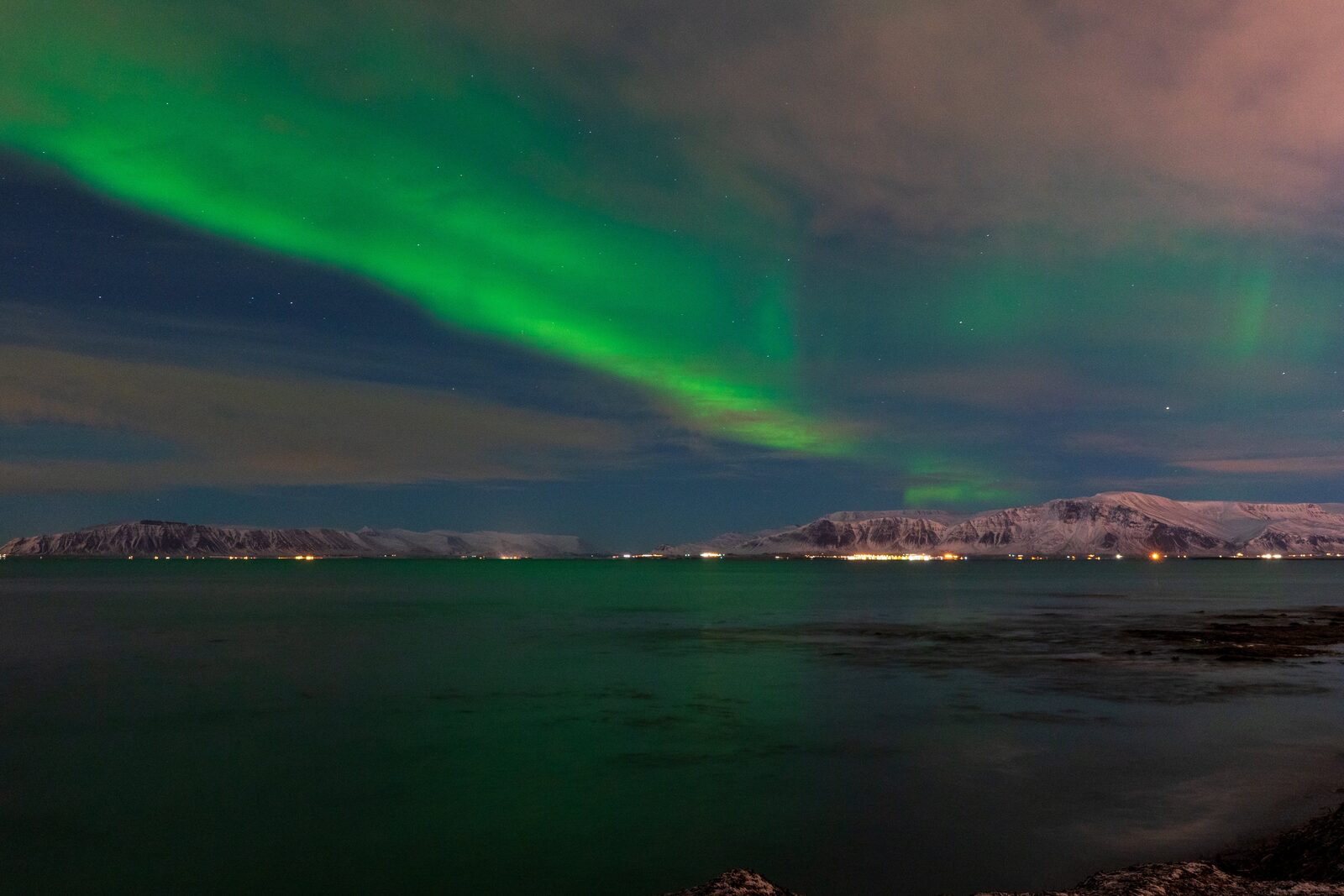
A classic arc — aurora stretched west-to-east over Esja on a KP 4 night.
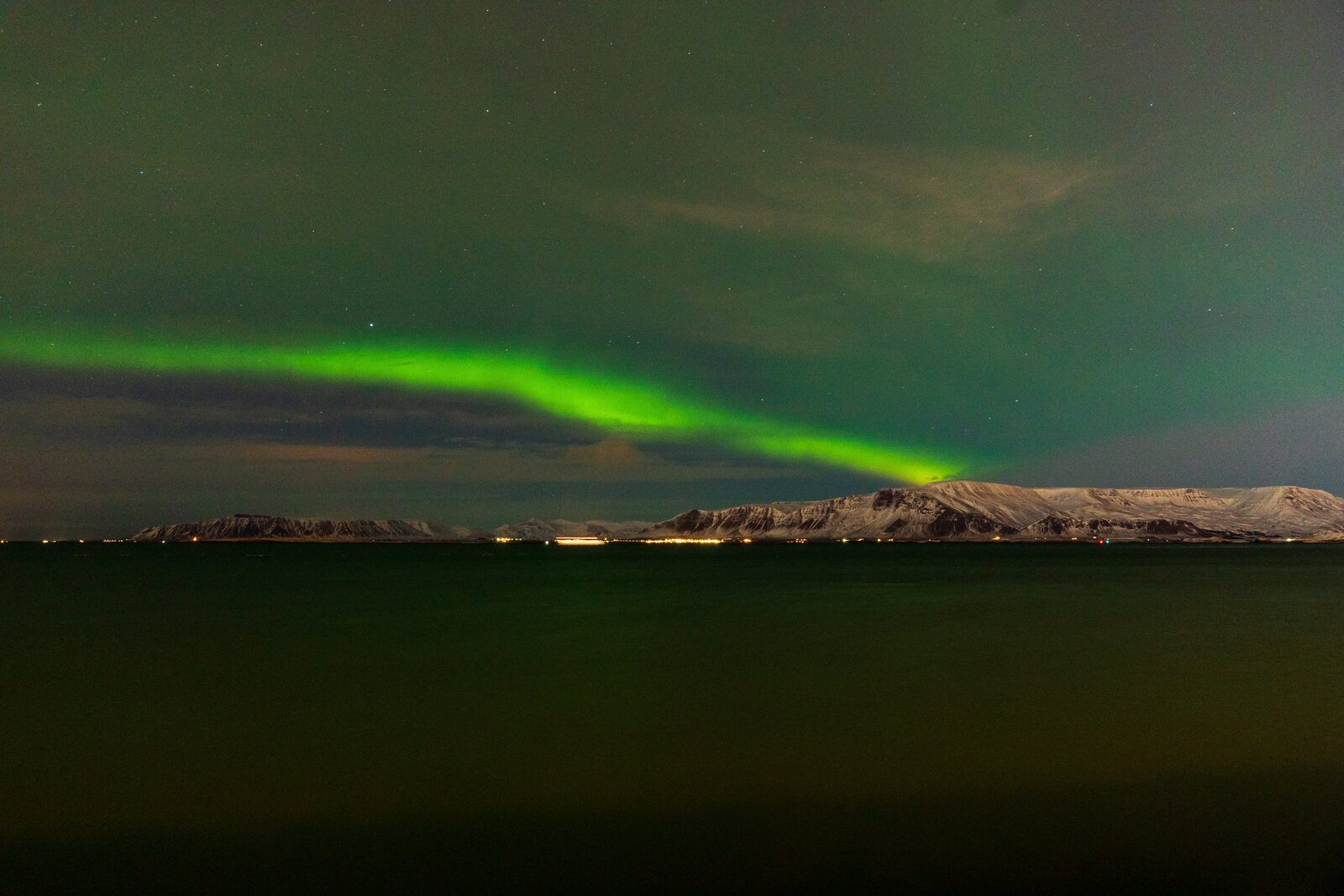
Mid-display — the band sharpens into a single cleaner arc. Same spot, ten minutes later.
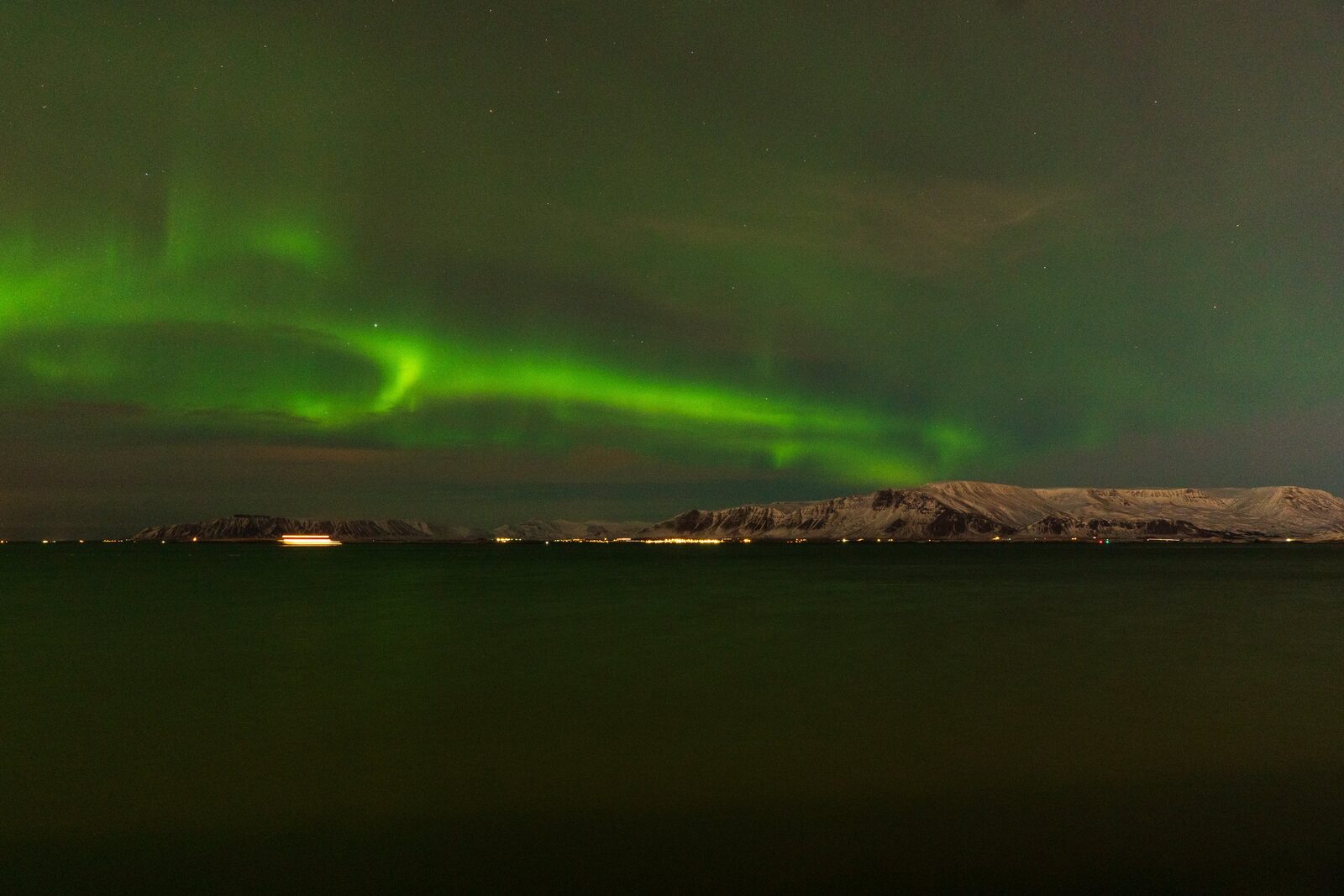
Corona forming overhead — when the band starts to spiral, switch to a wider lens fast.
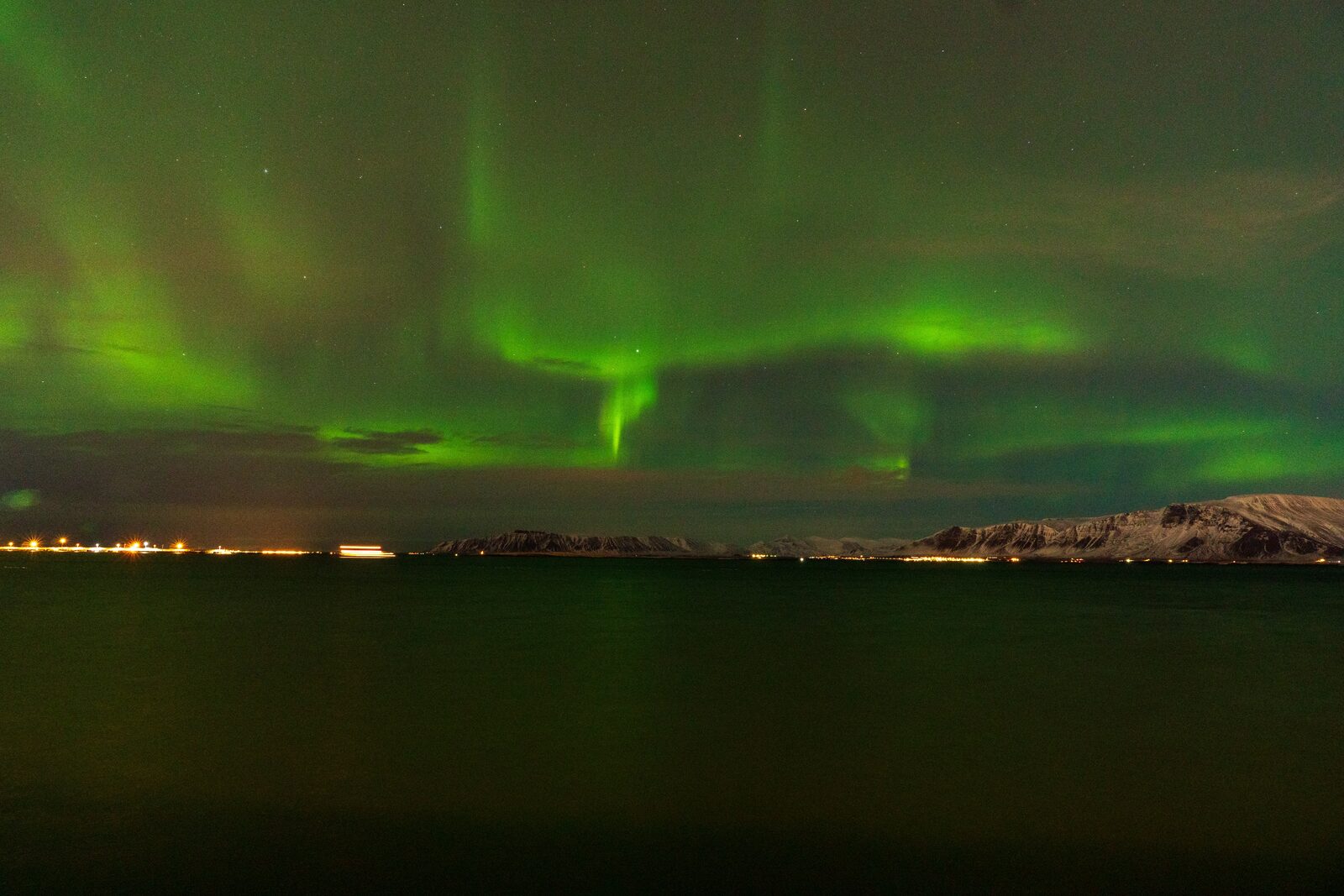
The tail end — vertical corona pillars as the display collapses. Rare and under-photographed.
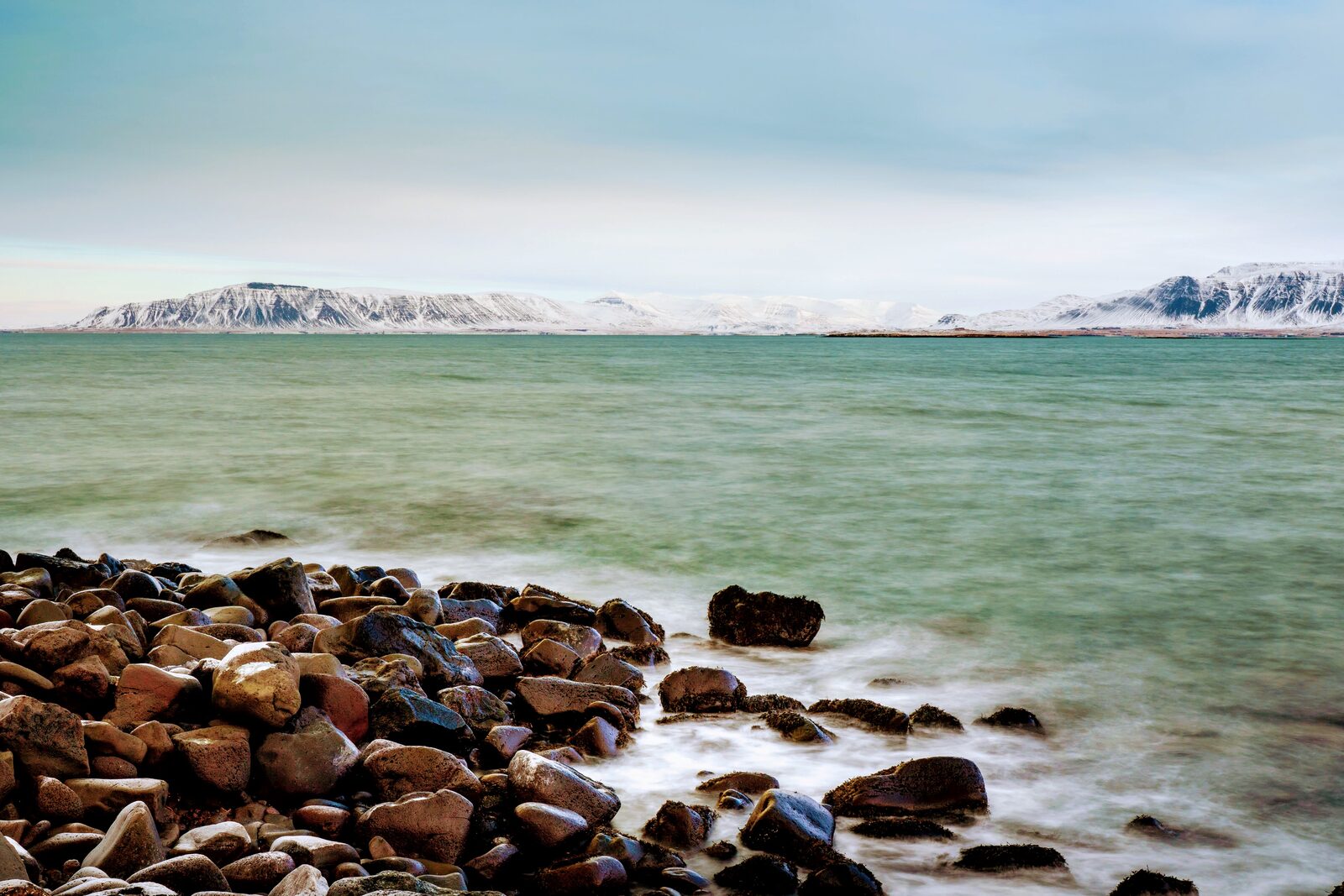
Same vantage in daylight — Esja across the bay, basalt rocks at the water line.
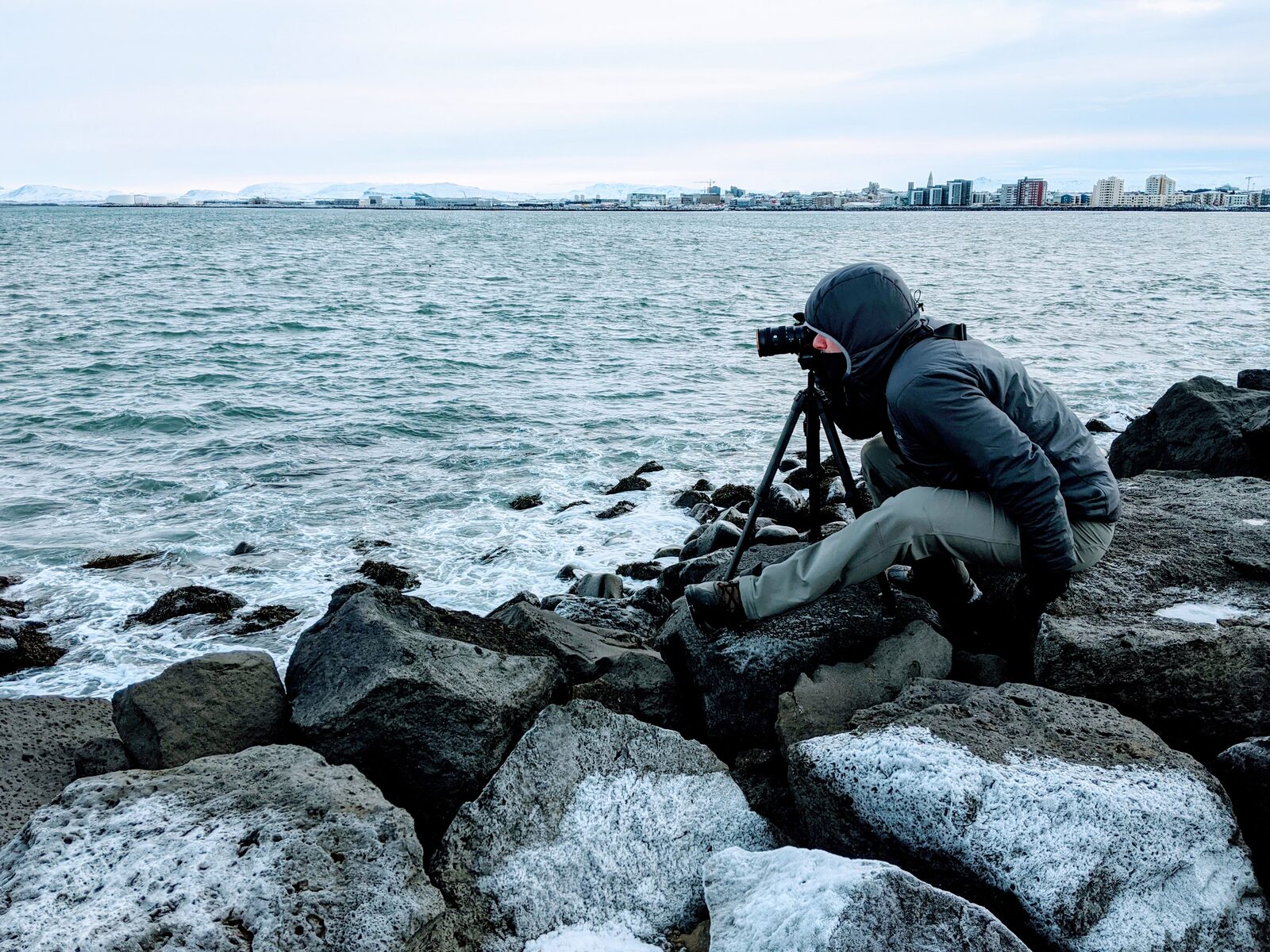
Working a long exposure on the Reykjavík seafront — Harpa and the city behind, Esja across the water.
Access restriction
Grótta and its shore are a protected area, first designated in 1974, closed to all traffic during the arctic tern nesting season, from 1 May to 15 July — Seltjarnarnes extended the 2026 closure to 31 July.
- dogs are banned on the western shore through the nesting season
- drones need a permit from Náttúruverndarstofnun, and permits are not issued for recreational photography
Best window: August and September, once the nesting closure has lifted — and check the tide table, because the causeway floods and cuts the island off.
Friðland við Gróttu, friðlýst 1974; the seasonal closure is announced annually by Seltjarnarnesbær
Overview
Grótta is a nature reserve on the tip of the Seltjarnarnes Peninsula, in the north-westernmost part of the Greater Reykjavík Area
Grótta sits inside the Iceland lighthouse map, alongside the other spots worth routing a day around.
Reykjavík's aurora lookout — Mount Esja across the bay, no highway drive required.
Grótta is the peninsula at the northwest tip of Reykjavík, 15 minutes from downtown. When the aurora forecast reads green, this is where locals go — because you can walk to it, the foreground is clean (a small lighthouse, a tidal causeway, rock), and the background is Mount Esja looming across Faxaflói bay.
On the same coastline heading east from Grótta, the Reykjavík seafront (around Harpa and Sæbraut) offers the same Esja-backdrop with city lights for foreground interest. You can shoot the aurora from either vantage; which you prefer depends on whether you want darkness (Grótta) or ambient light (Sæbraut).
Best time to shoot
Aurora: September through April, KP 3+ for a solid display. Daytime: golden hour year-round for the rocky tidal pools.
- Aurora forecast: check en.vedur.is/weather/forecasts/aurora. KP 3 is usually enough on a clear night here.
- Best aurora windows are 21:00–02:00. On strong nights the show can start earlier.
- Tide matters for the lighthouse causeway — a low tide gives you access to the tidal island; high tide cuts it off.
- Daytime winter: the rocks ice over and the light stays low all day — shoot long exposures at the water's edge.
Light & aurora at this spot
Calculated from this location’s coordinates (64.167, -22.024). Iceland stays on UTC year-round, so these are local times.
- Summer
- June: sun up 02:57–00:00 (21.1 h). Evening golden hour 22:05–00:00, light coming from the NNW.
- Winter
- December: only 4.2 h of daylight (11:17–15:29), but the sun never climbs above 2.6° — the entire day is golden hour. Sunrise bears SSE, sunset SSW.
- Aurora
- Aurora-grade darkness Sep–Mar, peaking at 12.9 h a night in December. Not possible Apr, May, Jun, Jul, Aug — the sky never gets dark enough.
Bar height is daylight hours. Months marked • have enough astronomical darkness for aurora; the rest do not.
Gear
- Lens
- Wide and fast — 14mm f/2.8 or 16–35mm f/2.8 for aurora. Zoom for compressed Esja compositions at dawn
- Tripod
- Essential — every shot here is a long exposure, daytime or night
- Filter
- Clear UV filter for sea spray protection; ND for long-exposure daytime surf
- Protection
- Hand warmers in the tripod bag — your fingers will give out before your battery does
Difficulty
Easy — flat paved and gravel paths
Aurora shooting is in the dark; a headlamp with a red filter preserves night vision.
Parking & access
Free street parking at the end of Nesvegur road. 5-minute walk to the lighthouse.
- From downtown Reykjavík: 15 min drive or 25 min on the #11 bus.
- No services — bring a thermos; it gets cold on the peninsula in winter.
Shoot the aurora AS IT BUILDS. The strongest display is usually 15–30 minutes in, but the early arc and the post-peak residual are both more photogenic — cleaner sky, softer bands. Stay past the peak.
Questions & answers
Yes. Grótta and its shore are a protected area, first designated in 1974, closed to all traffic during the arctic tern nesting season, from 1 May to 15 July — Seltjarnarnes extended the 2026 closure to 31 July. Dogs are banned on the western shore through the nesting season; drones need a permit from Náttúruverndarstofnun, and permits are not issued for recreational photography. Plan for August and September, once the nesting closure has lifted — and check the tide table, because the causeway floods and cuts the island off.
Yes, from dark-enough spots like Grótta and the northern seafront. The city skyglow takes a bite out of weaker displays, but any KP 3+ night with clear skies shows plainly.
KP 3 gives a visible arc on the horizon. KP 5+ fills the sky overhead. Below KP 2, you'll see a faint green glow at best.
Þingvellir is darker and more dramatic. Grótta is walkable from Reykjavík on any night — you can check the forecast at 22:00 and be shooting at 22:30. For quick nights, Grótta wins. For a dedicated aurora chase, drive to Þingvellir or further.
Mid-September to early April. October and February typically have the best combination of darkness and weather windows. Avoid June–August entirely — it doesn't get dark enough.