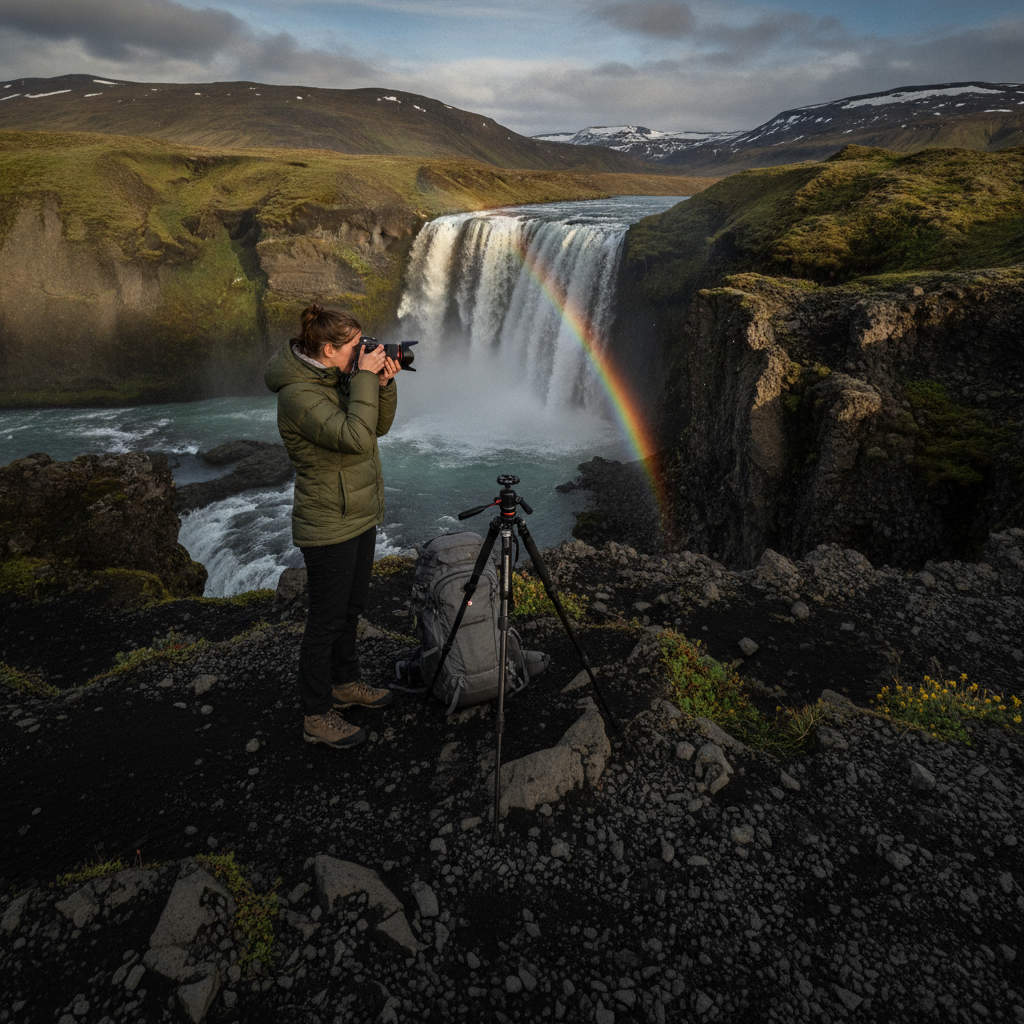
Introduction: Why Iceland is a Photographer's Paradise (and a Challenge for Beginners)
Iceland, a land sculpted by fire and ice, stands as an unparalleled muse for photographers worldwide. From its dramatic, ever-changing light to its breathtaking diversity of landscapes—cascading waterfalls, black sand beaches, geothermal hot springs, and ancient glaciers—it's a place where every turn presents a new, awe-inspiring vista. For those embarking on their first time photography Iceland journey, it truly is a photographer's paradise. However, this same raw beauty also presents unique challenges, especially for those new to serious photography. Unpredictable weather, vast distances between sites, and the sheer technical demands of capturing its dynamic light can be daunting.
This comprehensive guide to Iceland photography for beginners is designed to equip you with the knowledge and confidence to transform these challenges into opportunities. We'll walk you through everything you need to know, from essential gear and mastering basic camera settings to composition techniques, navigating Iceland's unique light, and discovering beginner-friendly locations. We’ll also cover crucial ethical considerations, ensuring your stunning shots are captured responsibly. By the end of this article, you'll have a solid foundation to capture truly stunning shots on your Icelandic adventure in 2026.
Essential Gear for Iceland Photography Beginners
Packing the right gear is paramount for a successful photography trip to Iceland. The country's notoriously capricious weather can be unforgiving, and having the correct equipment will not only protect your investment but also enable you to capture incredible images regardless of the conditions.
- Camera Body: For Iceland photography beginners, an entry-level mirrorless or DSLR camera is an excellent starting point. Brands like Sony, Fujifilm, Canon, and Nikon offer fantastic options that provide manual controls, good image quality, and robust weather sealing in their mid-range models. Look for a camera with a good dynamic range to handle Iceland's dramatic contrasts between bright skies and dark landscapes.
- Lenses: A versatile lens setup is key.
- Wide-angle lens (e.g., 16-35mm): This is arguably your most important lens for capturing Iceland's vast landscapes, towering waterfalls, and the expansive Northern Lights. It allows you to fit more of the scene into your frame, emphasizing scale and grandeur.
- Telephoto zoom lens (e.g., 70-200mm): While wide-angle is primary, a telephoto zoom is invaluable for compressing distant landscapes, isolating details, or capturing wildlife like puffins (during summer). It adds versatility to your kit, allowing you to capture diverse scenes.
- Standard zoom lens (e.g., 24-70mm): If you can only bring one lens, a good quality standard zoom can cover many situations, offering a balance between wide and telephoto capabilities.
- Tripod: This is non-negotiable for Iceland. A sturdy, stable tripod is essential for:
- Achieving sharp landscape shots, especially in lower light.
- Long exposures to create silky smooth water effects on waterfalls and rivers.
- Capturing the Northern Lights, which requires exposures of 10-30 seconds.
- Self-portraits against epic backdrops.
Invest in one that is lightweight but robust enough to withstand Iceland's often strong winds.
- Filters: Filters are powerful tools that can dramatically enhance your images directly in-camera.
- Neutral Density (ND) filters: These reduce the amount of light entering your lens, allowing for longer shutter speeds even in bright conditions. They are crucial for achieving that dreamy, silky smooth effect on waterfalls and turbulent ocean waves. A variable ND filter or a set of fixed ND filters (e.g., 3-stop, 6-stop, 10-stop) will be very useful.
- Circular Polarizer (CPL) filter: A CPL filter reduces glare and reflections from water, wet rocks, and foliage, saturating colors and enhancing contrast in the sky. It's excellent for making blue skies deeper and clouds pop.
- Batteries & Storage: Cold weather notoriously drains camera batteries faster. Carry at least three fully charged spare batteries. For storage, bring multiple high-capacity SD cards. It's better to spread your photos across several smaller cards than to put all your eggs in one large basket, in case a card fails.
- Weather Protection: Iceland's weather can shift from sunny to torrential rain and strong winds in minutes.
- Rain covers: Essential for your camera and lens. Simple plastic covers or dedicated waterproof sleeves work wonders.
- Waterproof camera bag: Protects your entire kit from rain and spray.
- Microfiber lens cloths: You'll go through many of these, especially near waterfalls or on windy, rainy days, to keep your lenses clean and dry.
- Dry bag: A small dry bag can be useful for protecting extra layers, snacks, or other electronics.
- Comfort: Don't underestimate the importance of your own comfort. Warm, waterproof clothing, insulated waterproof hiking boots (with good ankle support), and waterproof gloves (preferably touch-screen compatible for camera controls) are vital. Staying warm and dry allows you to focus on your photography, not on shivering. For more general advice on preparing for your trip, explore Iceland Photo Map's how-to guides.
Mastering Basic Camera Settings for Iceland Photography Beginners
Understanding your camera's core settings is fundamental to capturing compelling images, especially in a dynamic environment like Iceland. These easy photography tips Iceland visitors can learn quickly will make a significant difference.
- Aperture (f-stop): Controls the depth of field (how much of your image is in focus) and the amount of light entering the lens.
- For vast landscapes, you'll generally want a large depth of field, meaning more of the scene from foreground to background is sharp. This is achieved with a smaller aperture number, typically f/8 to f/16. Be mindful that going beyond f/16 can introduce diffraction, making your image slightly softer.
- If you want to isolate a subject (like a lone horse) against a blurred background, use a wider aperture (smaller f-number like f/2.8 or f/4).
- Shutter Speed: Determines how long your camera's sensor is exposed to light and controls motion.
- Freezing motion: For sharp images of moving subjects (e.g., birds in flight, powerful waves), use a fast shutter speed (e.g., 1/500s or faster).
- Blurring water/motion: To create the signature silky smooth effect on waterfalls, rivers, or ocean waves, you'll need a slow shutter speed (e.g., 1/2s to 2 seconds or even longer). This is where your ND filters and tripod become indispensable. Experiment to find the right balance for the flow of water.
- For Northern Lights photography, shutter speeds typically range from 10-30 seconds, depending on the aurora's intensity.
- ISO: Represents your camera's sensitivity to light.
- Aim to keep your ISO as low as possible (typically ISO 100-400) for minimal noise and maximum image quality, especially in well-lit conditions. This is a fundamental principle for achieving crisp, clean images.
- You'll need to increase ISO in very low light situations, such as photographing the Aurora Borealis (ISO 800-3200, or even higher, depending on your camera's capabilities and desired exposure). Understand that higher ISO values introduce digital noise, which can degrade image quality.
- White Balance: Ensures accurate colors by telling your camera how to interpret different light sources.
- While "Auto White Balance" (AWB) works well in many situations, learning to use presets (e.g., "Daylight," "Cloudy," "Shade," "Tungsten") or even custom white balance can yield more accurate and aesthetically pleasing colors, especially during sunrise/sunset or under artificial light.
- Shooting in RAW gives you complete flexibility to adjust white balance in post-processing, making it less critical to get it perfect in-camera.
- Shooting in RAW: This is one of the most crucial beginner camera settings Iceland photographers should adopt. Shooting in RAW format is highly recommended as it captures all the data from your camera's sensor, offering maximum flexibility for post-processing adjustments (exposure, white balance, color, shadows, highlights) without degrading image quality. While JPEG files are smaller and ready to share, they discard a lot of image data, limiting your editing potential. Consider shooting RAW+JPEG if storage isn't an issue to have both options. (Source)
- Exposure Compensation: This setting allows you to quickly make your image brighter or darker. It's particularly useful in Iceland where bright snow or ice can fool your camera's meter into underexposing, making the scene too dark. Conversely, dark lava fields might cause overexposure. Use positive exposure compensation (+0.3 to +1.0 EV) for bright scenes and negative compensation (-0.3 to -1.0 EV) for dark scenes to achieve a balanced exposure. For more detailed guides on specific settings, consider exploring Iceland Photo Map's photography tutorials.
Composition Tips for Stunning Iceland Shots
Beyond technical settings, composition is what elevates a snapshot to a stunning photograph. These principles will help you create visually engaging images that tell a story.
- Rule of Thirds: Imagine your frame divided into nine equal sections by two horizontal and two vertical lines. Placing your main subject or points of interest along these lines or at their intersections creates a more dynamic and balanced composition than simply centering everything. For instance, position the horizon on one of the horizontal lines, not dead center.
- Leading Lines: Utilize natural elements like winding roads, rivers, fences, or the edges of a glacier to draw the viewer's eye into and through your photograph. These lines create depth and direct attention to your main subject.
- Foreground Interest: Iceland's vast landscapes can sometimes feel overwhelming. Adding an interesting element in the foreground—a unique rock, a patch of wildflowers, a piece of glacial ice on Diamond Beach, or even a textured patch of moss—adds depth, scale, and a point of entry for the viewer. It helps to ground the scene and emphasize the grandeur of the background.
- Framing: Look for natural frames within the landscape. This could be an archway, a cave entrance, or even tree branches (though trees are rare in Iceland!). Framing helps to isolate your subject and create a sense of looking into a scene.
- Capturing Scale: Iceland's landscapes are immense. To truly convey their vastness, include a recognizable element of scale. A person standing by a waterfall, a car on a distant road, or a small boat in a lagoon can give the viewer a sense of the immense size of the environment. often be mindful of safety and environmental impact when including people in your shots, ensuring you adhere to local guidelines and respect the natural environment.
- Reflections: Iceland is dotted with countless lakes, puddles, and calm bodies of water. Utilize these natural mirrors to create stunning symmetrical compositions. A perfectly still reflection of a mountain or the Northern Lights can be incredibly powerful. Experiment with different angles and perspectives to find the best reflection.
Navigating Iceland's Unique Light and Weather Challenges
Iceland's geographical position and extreme weather patterns create incredibly unique photographic opportunities and challenges. Being prepared for both is key.
- Golden Hour & Blue Hour: These are universally considered the best times for photography.
- Golden Hour: The hour after sunrise and the hour before sunset, characterized by soft, warm, diffused light that casts long shadows and bathes the landscape in a golden glow. It’s ideal for landscapes and portraits.
- Blue Hour: The period just before sunrise and just after sunset, when the sun is below the horizon but still illuminating the atmosphere. This results in a cool, ethereal blue light that is perfect for atmospheric landscapes, cityscapes, and adding a dramatic mood.
- Midnight Sun: During summer months (roughly May to August), Iceland experiences nearly 24 hours of daylight. This means you have an extended "golden hour" that can last for several hours around midnight, offering endless opportunities for soft, beautiful light. The challenge is adapting your sleep schedule and managing harsh midday light if you're out all day.
- Aurora Borealis (Northern Lights): From late August to April, Iceland is one of the best places to witness and photograph the Northern Lights.
- Tips for spotting: Check aurora forecasts (Kp index), look for clear skies away from city lights, and be patient.
- Tips for photographing: Use a wide-angle lens with a wide aperture (f/2.8 or wider), high ISO (800-3200), and a long shutter speed (10-30 seconds). A sturdy tripod is absolutely essential. Focus manually to infinity.
- Dealing with Rain & Wind: These are constant companions in Iceland.
- Protecting gear: As mentioned, rain covers are vital. Shield your lens from direct rain and spray with your body or an umbrella.
- Embracing the mood: Don't let bad weather deter you. Overcast, rainy, or stormy conditions can create incredibly dramatic and moody photographs. Look for strong compositions, reflections in puddles, and the intensity of the elements.
- Finding shelter: Utilize natural rock formations or your vehicle for temporary shelter while composing shots or changing lenses.
- Fog & Mist: Often accompanying rain, fog and mist can transform familiar landscapes into mystical, ethereal scenes. Use these atmospheric conditions to simplify compositions, create a sense of mystery, and emphasize texture and form.
- Harsh Midday Sun: While golden hour is ideal, sometimes you have no choice but to shoot in bright midday sun.
- Strategies: Look for shade, use a CPL filter to reduce glare, or focus on details and abstracts rather than expansive landscapes.
- Dynamic range: Be mindful of the extreme contrast between highlights and shadows. You may need to bracket your exposures (take multiple shots at different exposures) to capture detail in both, then blend them in post-processing.
Top Beginner-Friendly Photography Locations in Iceland
Iceland is replete with incredible photo opportunities, and many are easily accessible for first time photography Iceland visitors. Our interactive
maps of Iceland are an invaluable resource for planning your route.
- Golden Circle: This popular tourist route offers a fantastic introduction to Iceland's diverse landscapes and is perfect for Iceland photography for beginners.
- Gullfoss Waterfall: A powerful, multi-tiered waterfall that provides ample opportunities for long exposure photography.
- Thingvellir National Park: A UNESCO World Heritage site with dramatic rift valley landscapes, historic sites, and the Almannagjá gorge.
- Geysir Geothermal Area: Capture the explosive Strokkur geyser erupting every few minutes.
The Golden Circle is easily accessible from Reykjavik and offers a variety of subjects within a relatively small area.
- South Coast: Arguably Iceland's most iconic stretch for photographers, offering an abundance of stunning, easy-to-reach locations.
- Seljalandsfoss: A unique waterfall you can walk behind (wear waterproofs!).
- Skogafoss: A powerful, wide waterfall often graced by rainbows on sunny days.
- Reynisfjara Black Sand Beach: Dramatic basalt columns, powerful waves, and the Reynisdrangar sea stacks. Be extremely cautious of sneaker waves.
- Dyrholaey: A stunning arch and cliff formation, offering panoramic views of the black sand beaches and the coastline. It's also a great spot for puffin photography during nesting season (summer). You can find more details on this specific location on our Dyrholaey page.
The South Coast region is packed with iconic spots, making it ideal for maximizing your photographic yield.
- Jökulsárlón Glacier Lagoon & Diamond Beach: Further along the South Coast, these locations offer otherworldly ice photography.
- Jökulsárlón: Icebergs of all shapes and sizes calve from the glacier into a serene lagoon, often with seals swimming amongst them.
- Diamond Beach: Chunks of glacial ice, polished smooth by the ocean, wash ashore on a black sand beach, glistening like diamonds. These offer incredible foreground interest and abstract photo opportunities.
- Snæfellsnes Peninsula: Often called "Iceland in Miniature," this peninsula packs a diverse range of landscapes into a smaller area, making it perfect for a concentrated photography trip.
- Kirkjufell: The iconic "Church Mountain," often photographed with its accompanying waterfall, Kirkjufellsfoss.
- Búðir Black Church (Búðakirkja): A striking black wooden church set against a dramatic backdrop of lava fields and mountains.
- Reykjavík Area: Don't overlook the capital for urban photography.
- Hallgrímskirkja Church: Its unique architecture provides striking lines and forms.
- Harpa Concert Hall: A modern architectural marvel with stunning glass facades that reflect the city and sky.
These locations emphasize accessibility, safety, and variety, making them perfect for first-time photography Iceland visitors. They allow you to practice different techniques without extensive travel between sites. You can explore more specific locations and categorize them by type, such as
waterfalls, on our website.
Ethical Photography and Safety in Iceland
Capturing beautiful images in Iceland also comes with a responsibility to protect its fragile environment and ensure your own safety.
- Stay on Marked Paths: Iceland's moss and lava fields are incredibly delicate and take decades, if not centuries, to recover from human footsteps. often stay on marked trails and designated viewing platforms. This protects the fragile ecosystem and keeps you safe from hidden dangers like unstable ground or slippery surfaces. For more on responsible travel, consult official guidelines from Visit Iceland, such as The Icelandic Pledge.
- Respect Wildlife: Maintain a respectful distance from all wildlife, especially birds during nesting season (e.g., puffins). rarely disturb animals for a photo. Use a telephoto lens if you want close-up shots.
- Drone Regulations: Iceland has specific drone regulations. Generally, drones are prohibited in national parks, nature reserves, and near airports. Always check local signage and current regulations before flying. Be mindful of privacy and other visitors. As of 2026, general rules for drone operation in Iceland include registration for drones over 250g and adherence to specific height and distance limits. Always check the latest regulations from the Icelandic Transport Authority or official tourism sites before flying. (Source)
- Personal Safety: Iceland's beauty can be deceiving. Weather changes: Be prepared for sudden shifts in weather. Dress in layers. Strong currents: rarely turn your back on the ocean, especially on black sand beaches like Reynisfjara, where sneaker waves are a serious and deadly threat. Slippery surfaces: Many popular spots (waterfalls, ice caves) have extremely slippery, icy, or wet surfaces. Wear appropriate footwear with good grip. Geothermal areas: Stay on marked paths in geothermal areas; the ground can be dangerously hot and unstable.
- Leave No Trace: This principle is paramount. Pack out everything you pack in, including all trash. Do not disturb rocks, plants, or natural features. Respect private property and close gates behind you.
Post-Processing Basics to Enhance Your Iceland Photos
Capturing a great RAW file is only half the journey; post-processing is where you can truly refine your vision and make your images shine.
- Software Overview: For Iceland photography beginners, popular and powerful editing software includes:
- Adobe Lightroom Classic/Lightroom CC: Industry standard for organizing, editing, and managing large photo libraries.
- Capture One: Known for its excellent color rendition and tethering capabilities, often preferred by professionals.
- Affinity Photo: A one-time purchase alternative to Adobe's subscription model, offering robust editing tools.
Many cameras also come with basic editing software from their respective manufacturers.
- Basic Adjustments: Start with these fundamental edits:
- Exposure: Adjust overall brightness.
- Contrast: Enhance the difference between light and dark tones.
- Highlights & Shadows: Recover detail in overly bright or dark areas.
- Whites & Blacks: Set the true white and black points for optimal dynamic range.
- Color Correction:
- White Balance: Fine-tune the color temperature and tint to achieve accurate or desired color casts. This is where RAW's flexibility truly shines.
- Saturation & Vibrance: Increase or decrease the intensity of colors. Vibrance intelligently boosts muted colors without over- saturating already vibrant ones.
- Sharpening & Noise Reduction:
- Sharpening: Enhances edge contrast to make your images appear crisper. Apply sparingly to avoid artifacts.
- Noise Reduction: Reduces digital grain, especially noticeable in high ISO shots (e.g., Aurora photos). Be careful not to overdo it, as it can soften details.
- Cropping & Straightening: Improve your composition by cropping out distracting elements and straightening skewed horizon lines. This is a simple yet powerful way to refine your image.
- Exporting: Once your edits are complete, export your images.
- For web/social media: Export as a JPEG, sRGB color space, with a resolution of 72 DPI and dimensions suitable for online viewing (e.g., 2048 pixels on the long edge).
- For print: Export as a high-resolution JPEG or TIFF, Adobe RGB or ProPhoto RGB color space, at 300 DPI, matching the print dimensions.
Conclusion: Your Journey into Iceland Photography Begins
Embarking on your first time photography Iceland adventure is an experience that will undoubtedly leave you with incredible memories and, with these tips, stunning photographs. We've covered the essential gear to brave Iceland's elements, the fundamental camera settings to master, and compositional techniques to elevate your shots. We've also highlighted some of the best beginner-friendly locations and, crucially, discussed the ethical responsibilities that come with photographing this pristine land.
Remember, practice and experimentation are your best teachers. Don't be afraid to try different settings, angles, and compositions. Some of the most memorable shots come from unexpected moments. More importantly, allow yourself to truly experience Iceland beyond the viewfinder. The magic of the landscapes, the power of the elements, and the unique culture are all part of the journey. Your Iceland photography for beginners journey is just starting, and we at Iceland Photo Map are here to help you every step of the way. We encourage you to share your experiences and photographic discoveries!
Frequently Asked Questions
What is the most important piece of gear for Iceland photography beginners?
While many pieces of gear are important, a sturdy tripod is arguably the single most crucial item for Iceland photography beginners. It's essential for sharp landscape photos, long exposures of waterfalls, and capturing the Northern Lights, which simply cannot be done handheld. Without a tripod, you'll miss out on some of Iceland's most iconic photographic opportunities.
When is the best time of year for a beginner to photograph Iceland?
The "best" time depends on what you want to photograph. For the Northern Lights and dramatic, often snowy landscapes, visit between September and April. For the Midnight Sun, puffins, and easier access to Highlands, late May to August is ideal. For a beginner, late August/early September offers a good balance: milder weather, still long days, good chances for aurora, and fewer crowds than peak summer, making it excellent for first time photography Iceland.
What are some common mistakes beginners make when photographing in Iceland?
Common mistakes include not preparing for the weather (lack of waterproof gear, insufficient batteries), not using a tripod, neglecting composition, and not understanding basic camera settings like aperture and shutter speed. Another frequent error is rushing through locations instead of taking the time to explore different angles and light. Additionally, many beginners forget to shoot in RAW, limiting their post-processing flexibility.
Do I need a special camera to get good photos in Iceland?
No, you don't necessarily need a professional-grade camera. An entry-level mirrorless or DSLR camera with manual controls is perfectly sufficient for Iceland photography beginners. The key is understanding how to use your camera's settings and applying good compositional techniques. Even advanced smartphones can capture decent images in good light, though they lack the flexibility and quality of dedicated cameras for challenging conditions like low light or long exposures.
How can I protect my camera gear from Iceland's unpredictable weather?
Protecting your gear is vital. Always carry rain covers for your camera and lenses, use a waterproof camera bag, and keep plenty of microfiber cloths handy to wipe off moisture. Be mindful of strong winds and saltwater spray near the coast. When not actively shooting, keep your camera in its bag. Consider bringing desiccant packets to absorb moisture if your gear gets damp.
What are some easy photography tips Iceland visitors can use right away?
Start with the basics:
- Look for strong compositions using the Rule of Thirds and leading lines.
- Use a tripod for waterfalls and low-light shots.
- Shoot in RAW mode for maximum editing flexibility.
- Protect your gear from the elements with rain covers.
- Pay attention to the light; golden and blue hours are your best friends.
- Don't forget to look for foreground interest to add depth to your landscape shots.
These easy photography tips Iceland visitors can implement immediately will significantly improve their results.
Ready to plan your Iceland photography adventure? Explore our interactive
maps and discover hidden gems for your next stunning shot!