Introduction: The Reality of Parking in Iceland's Wilds
For landscape photographers, there is no place on Earth quite like Iceland. The ethereal glow of the midnight sun bouncing off basalt columns, the roaring spray of glacial rivers, and the dramatic silhouettes of volcanic peaks draw thousands of creatives to the island every year. However, as you pack your neutral density filters, sturdy tripods, and weather-sealed camera bodies, there is one practical aspect of your road trip that requires careful planning: understanding how to navigate Iceland photography spots parking fees. Iceland has experienced a significant increase in tourism over recent years. While this has brought global appreciation for the island's raw beauty, it has also put immense pressure on local infrastructure. In response, land managers, municipalities, and private landowners have shifted from a model of free, unregulated access to a highly structured, fee-based parking system. If you are planning a road trip in 2026, you must adapt to a landscape dominated by Automatic Number Plate Recognition (ANPR) camera systems. Gone are the days when you could simply pull over onto a gravel patch, snap a quick long-exposure shot of a waterfall, and drive away without a second thought. Today, camera-based license plate scanning is the standard across the island's most iconic locations. This guide provides a comprehensive, practical roadmap to understanding these fees, using the latest payment technologies, and avoiding costly, automated fines so you can keep your focus entirely on capturing stunning imagery.Why Do Iceland Photography Spots Have Parking Fees?
It is easy for visiting photographers to feel frustrated when confronted with a paywall at a natural site. However, understanding the ecological and logistical realities of Iceland helps put these costs into perspective. When planning your route using the Iceland Photo Map, it is helpful to understand that the revenue generated from parking fees at these locations is not designed to exploit tourists; rather, it is directly reinvested into protecting the very landscapes you have traveled to photograph.Funding Conservation and Infrastructure
The sheer volume of visitors to sites like Seljalandsfoss or Thingvellir National Park requires constant maintenance. Parking fees directly fund the construction and upkeep of:- Safety Barriers and Platforms: Maintaining sturdy boardwalks and viewing platforms that keep photographers safe from sheer drops and unstable volcanic rock.
- Sanitation Facilities: Building and cleaning public restrooms, preventing the ecological contamination of pristine wilderness areas.
- Erosion Control: Laying down gravel paths and geotextile mats to prevent foot traffic from turning delicate soil into impassable mud baths.
Managing Overtourism at Fragile Sites
Iceland’s subarctic ecosystem is incredibly fragile. Volcanic ash soils are easily eroded by wind and rain once the protective layer of moss or vegetation is damaged. Volcanic moss, such as Racomitrium lanuginosum, can take decades to recover from a single misplaced footstep. By implementing structured parking fees and clearly designated parking zones, park authorities can regulate the flow of visitors, discourage off-road parking, and protect delicate flora from being trampled by heavy camera gear and eager crowds. When you pay a parking fee, you are directly contributing to the preservation of these iconic landscapes. It ensures that the dramatic vistas photographers capture today remain pristine for the next generation of visual artists.How to Pay for Parking at Iceland Waterfalls and Parks
The payment ecosystem for parking in Iceland is highly digitized. Cash is virtually obsolete at these sites, and attempting to pay with physical currency is no longer an option. To ensure a seamless trip, you must familiarize yourself with the digital payment methods used across the country.The Automatic License Plate Recognition (ANPR) System
Most major photography spots in Iceland use advanced ANPR camera systems. As you turn off the main road and enter the parking lot, high-definition cameras capture your rental vehicle’s front and rear license plates. The system logs your exact entry time. When you leave, another camera logs your exit. There are no physical barriers, gates, or ticket dispensers. This design prevents traffic backups on narrow rural roads. However, it also means that you will not be physically stopped or reminded to pay. If you drive in, park, take your photos, and drive out without initiating a payment through an approved channel, the system flags your license plate as unpaid.Using the Parka.is App and Website
The most common and convenient way to pay for parking at Iceland's natural attractions is through the Parka.is platform.- Download the App: Before you leave Reykjavik or your arrival airport, download the Parka app onto your smartphone (available for both iOS and Android).
- Register Your Vehicle: Input your rental car's license plate number and country of registration. Ensure you enter the characters exactly as they appear on the plate, including any small letters or numbers.
- Link a Payment Card: Add a valid credit or debit card to your account.
- Select the Zone: When you arrive at a designated parking area, open the app. It will use your phone's GPS to suggest the correct parking zone, or you can manually search for the location (e.g., Skaftafell or Seljalandsfoss).
- Confirm Payment: Select your vehicle and confirm the payment. For flat-rate daily fees, the app will charge your card immediately. For time-based zones, you will start the session upon arrival and stop it when you depart.
Using Physical Payment Kiosks
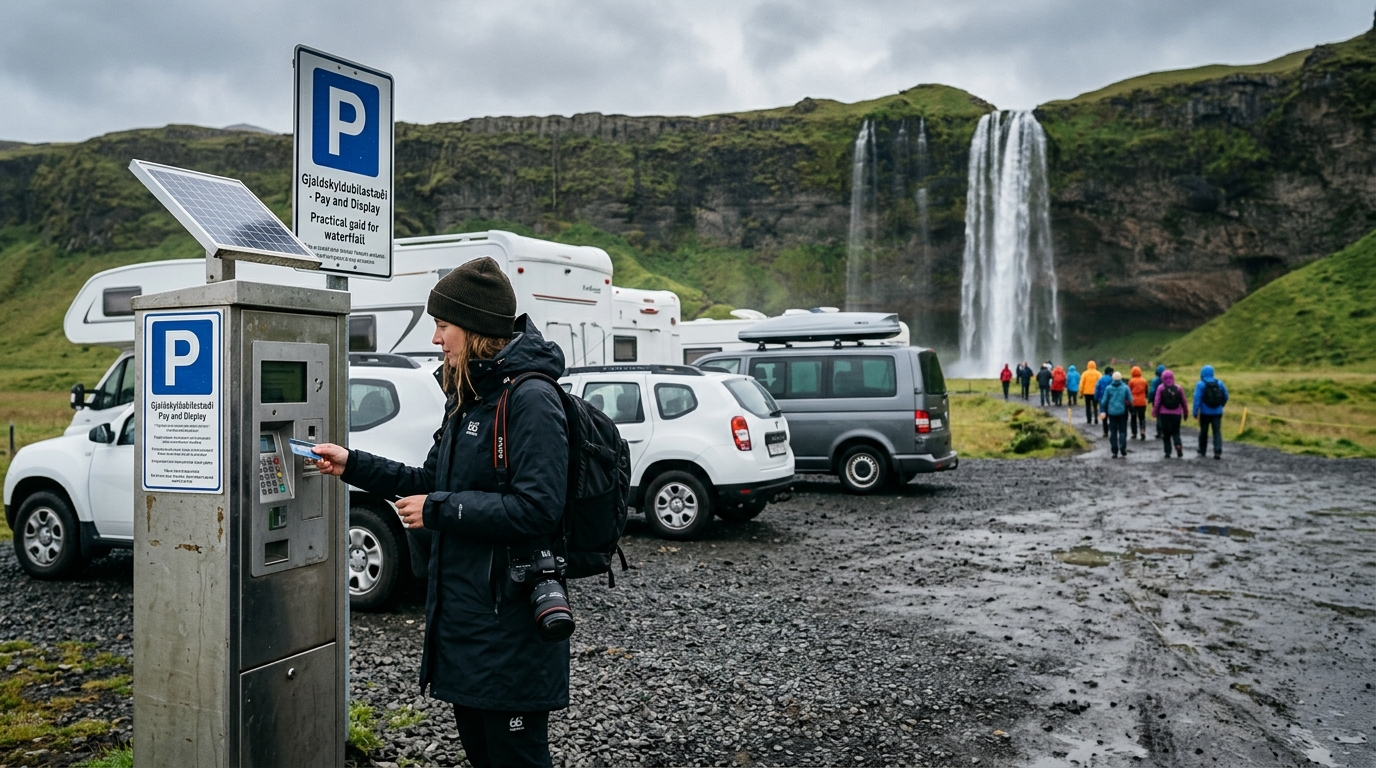
If you prefer not to use a smartphone app, or if your phone's battery dies in the cold Icelandic air, almost all major paid parking lots feature physical touchscreen kiosks. These kiosks are equipped with multi-lingual interfaces (including English, German, French, and Spanish). To pay, you must manually type in your rental vehicle's license plate number, select your duration or vehicle class, and insert or tap your credit/debit card. These machines support contactless payments, allowing you to pay quickly with Apple Pay, Google Pay, or chip-and-PIN cards.Tip: It is highly recommended to double-check your receipt screen to confirm that your license plate was entered correctly. A typo may prevent the system from matching your payment to your vehicle, which can lead to automated non-payment notifications.
Understanding Iceland Photography Spots Parking Fees by Region
Parking costs are not uniform across the country. They vary significantly depending on the region, the popularity of the site, and the size of the vehicle you are driving. When budgeting for your road trip, understanding how these fees are structured by region will help you avoid financial surprises.Regional Breakdown of Parking Fees
To help you plan your travel budget, here is an estimate of typical rates for standard passenger vehicles at key photography locations, based on standard rates for the 2026 travel season:| Region | Key Photography Spots | Estimated Fee (ISK) | Payment System |
|---|---|---|---|
| Golden Circle | Thingvellir National Park (P1, P2, P5), Kerid Crater | 1,000 ISK (Thingvellir) / 600 ISK (Kerid entry fee) | Parka.is / Kiosk |
| South Coast | Seljalandsfoss, Skaftafell, Jökulsárlón Glacier Lagoon | 1,000 ISK per site | Parka.is / Kiosk |
| Snæfellsnes | Kirkjufell, Djúpalónssandur | 1,000 ISK (Kirkjufell) | Parka.is / Kiosk |
| North Iceland | Dettifoss (West Side), Hverir Geothermal Area | 800 - 1,000 ISK | Parka.is / Kiosk |
Vehicle Categories: Standard Cars vs. Campervans
When navigating Iceland photography spots parking fees, be aware that rates are scaled based on vehicle size. If you are renting a compact hatchback or a standard 4x4 SUV (Category A), you will pay the base rate (usually 1,000 ISK). However, if you are traveling in a campervan, a larger 9-seater passenger van, or a modified super-jeep (Category B), the parking fees are slightly higher, typically ranging from 1,200 ISK to 1,350 ISK per spot. Large motorhomes and commercial tour buses (Category C) face even higher rates. Always make sure you select the correct vehicle category in the app or kiosk; parking wardens do physical spot-checks, and cameras can cross-reference vehicle registration classes.How to budget for parking fees across a 10-day ring road itinerary in 2026
If you are planning a comprehensive 10-day Ring Road photography trip, parking fees will accumulate daily. A typical itinerary chasing light at major attractions will look like this:- Day 1-2 (Golden Circle & West): Thingvellir (1,000 ISK) + Kerid Crater (1,200 ISK for two people) + Kirkjufell (1,000 ISK) = 3,200 ISK.
- Day 3-5 (South Coast): Seljalandsfoss (1,000 ISK) + Skaftafell (1,000 ISK) + Jökulsárlón (1,000 ISK) = 3,000 ISK.
- Day 6-8 (East & North): Hengifoss (1,000 ISK) + Hverir (1,000 ISK) + Dettifoss (1,000 ISK) = 3,000 ISK.
- Day 9-10 (Reykjanes & Return): Fagradalsfjall Volcano area (1,000 ISK) = 1,000 ISK.
Deep Dive: The Kirkjufell Parking Fee and Snæfellsnes Peninsula
The Snæfellsnes Peninsula, often referred to as "Iceland in Miniature," contains some of the country’s most dramatic coastal scenery. Chief among these is Kirkjufell (Church Mountain) and its accompanying waterfall, Kirkjufellsfoss.
The Kirkjufell Parking Fee
Due to its global popularity, the parking area directly adjacent to Kirkjufellsfoss is strictly regulated. The historic Budakirkja black church and Kirkjufell are highly visited, but Kirkjufell features the most stringent enforcement. The Kirkjufell parking fee is typically around 1,000 ISK for standard passenger cars, though rates are subject to change. The lot is fully monitored by ANPR cameras mounted on high posts at the single entry and exit point. The moment you cross the threshold from Road 54, your plate is scanned. You must pay via the Parka.is app or use the physical kiosk located near the trailhead leading up to the waterfall viewing platforms.Other Paid and Free Spots on Snæfellsnes
While Kirkjufell requires a fee, other nearby photography locations have different structures:- Djúpalónssandur: The dramatic Djúpalónssandur black sand beach, famous for its iron shipwreck remains and lifting stones, has historically not charged a parking fee. However, infrastructure updates are frequently planned across the peninsula, so visitors should always keep an eye out for newly installed signs.
- Arnarstapi to Hellnar Coastal Walk: The parking lot near the giant stone statue of Bárður Snæfellsás in Arnarstapi has historically been free of charge, but parking along the narrow residential streets of the village is strictly prohibited. Visitors should often check local signage for any updated parking regulations.
Best Times to Visit to Manage Parking Logistics
During the peak summer months (June through August), the Kirkjufell parking lot can become completely full by mid-morning, leading to stressful turnarounds on a narrow road. For the best photographic results and stress-free parking, plan your shoots during the golden hours of late evening or early morning. In June, the sun barely dips below the horizon, offering incredible pastel skies at 11:00 PM and 2:00 AM. During these hours, the parking lot is virtually empty, the ANPR cameras still function perfectly for automated payment, and you won't have to clone out crowds of tourists from your compositions.Parking Fees at Iceland Tourist Attractions: South Coast & Golden Circle
The South Coast and the Golden Circle are the most heavily traveled tourist corridors in Iceland. Consequently, these regions feature the highest concentration of parking fees Iceland tourist attractions implement to manage visitor numbers.Seljalandsfoss vs. Skógafoss: Contrasting Systems
The contrast between these two legendary waterfalls highlights how varied parking management can be:- It is monitored by ANPR cameras. The fee must be paid even if you only plan to stay for ten minutes to take a quick photo. There are no exceptions for quick drop-offs.
- Skógafoss: Located just 30 minutes east, the towering Skógafoss waterfall has historically not charged a daytime parking fee for standard vehicles in its main gravel lot. However, if you plan to camp at the adjacent campsite or use the facilities for extended periods, fees apply as managed by the local campsite host. often verify onsite signs for any recent changes.
National Park Fees: Thingvellir and Skaftafell
Iceland's national parks utilize highly sophisticated payment systems:- Thingvellir National Park: Thingvellir features several parking lots spread across the rift valley (P1 at the visitor center, P2 by the drowning pool, and P5 by Silfra). You do not need to pay again if you move your car from P1 to P2 to capture different angles of the continental drift. For more details on park regulations, check the official Thingvellir National Park portal .
- Skaftafell (Vatnajökull National Park): To photograph the basalt-column-framed Svartifoss waterfall or hike to the glacier tongues, you must park at the Skaftafell Visitor Center. This lot is heavily monitored by ANPR cameras. The fee is 1,040 ISK for passenger cars. For up-to-date fees and trail conditions, refer to the Vatnajökull National Park official site.
Compounding Costs of Multiple Stops
If you plan a busy shooting day along the South Coast, your parking fees can quickly compound. For example, starting your day at Seljalandsfoss (1,000 ISK), driving to the parking lot for the Solheimasandur Plane Wreck (1,000 ISK), continuing to the Dyrhólaey lighthouse viewpoint (1,000 ISK), and ending your day at the Jökulsárlón Glacier Lagoon (1,000 ISK) results in 4,000 ISK spent on parking in a single day. Keeping these compounding costs in mind is essential for maintaining an accurate travel budget.Camera Gear and Parking: Safety Tips for Photographers
While managing photographing Iceland's waterfalls and keeping track of your parking fees is important, protecting your high-end photography equipment should remain your top priority.Never Leave Gear Visible in Parked Cars
Iceland is widely recognized for its high safety standards and low violent crime rates. However, the rise in tourism has occasionally led to opportunistic crimes in major tourist parking lots.- Secure Your Gear: Avoid leaving expensive camera bodies, lenses, drones, or tripods visible on the seats or floorboards of your rental car. Storing valuables out of sight is a standard safety practice recommended by travel authorities worldwide.
- Organize Before You Arrive: If you need to store gear in the trunk of your car, do so before you arrive at the parking lot. Pulling into a busy lot at Seljalandsfoss, opening your trunk, moving thousands of dollars of camera gear inside, and then walking away makes you a prime target for thieves who may be watching.
Choose Official, Well-Lit Parking Areas
It can be tempting to park on a narrow gravel shoulder near a beautiful landscape to avoid a parking fee or a long walk. However, doing so is highly discouraged:- Off-Road Parking is Illegal: Parking on the side of the road where your tires leave the asphalt or gravel shoulder can result in massive police fines. It also damages fragile roadside vegetation. For more safety guidelines and real-time travel alerts, visit SafeTravel Iceland.
- Safety Hazards: Parked cars on narrow, shoulderless roads are a major hazard for other drivers, especially during sudden weather changes, heavy fog, or icy winter conditions.
- Use Designated Parking Areas: Utilizing official, well-marked parking areas helps ensure safety. These designated zones are designed to safely accommodate vehicles, are frequently monitored, and provide established walking paths to the photography viewpoints.
Understanding Rental Car Insurance Limitations
When renting a vehicle in Iceland, you will be offered various insurance packages, such as Collision Damage Waiver (CDW), Super CDW, and Gravel Protection. It is vital to understand that no standard Icelandic rental car insurance covers the theft of personal belongings left inside the vehicle. If someone breaks your car window and steals your camera bag while you are hiking to Svartifoss, the rental company will charge you for the damage to the vehicle, and you will have to rely on your personal travel insurance or specialized camera equipment insurance to cover the lost gear.How to Avoid Fines and Navigate Iceland Photography Spots Parking Fees Smoothly
Failing to pay a parking fee in Iceland does not mean you got away with it. The system is designed to catch unpaid vehicles automatically, and the financial consequences can be steep.The 24-Hour Rule
Many camera-enforced parking lots in Iceland, such as those integrated with the Parka.is system, allow a 24-hour window from the time of entry or exit to settle the payment online before a fine is issued. As long as you log into the Parka.is app or website and pay for your session within this window, no fines or penalties are typically issued. This is incredibly helpful if you visit a remote spot with poor cellular service; you can simply wait until you reach your hotel's Wi-Fi in the evening to settle the payment.How Rental Car Companies Handle Fines
If you fail to pay within the 24-hour window, the automated system flags your license plate. Because the vehicle is registered to a rental company, the fine is sent directly to them. To recover their costs, the rental car company will automatically charge the credit card they have on file for you. However, they will not just charge you the cost of the original parking fee. They will charge:- The original parking fee (e.g., 1,000 ISK).
- The official government/national park fine for non-payment (which can range from 3,000 to 5,000 ISK).
- A rental agency administrative processing fee (typically between 3,000 and 5,000 ISK per individual violation).
Pro-Tips for Seamless Digital Payments Without Cellular Data
Iceland has surprisingly excellent 4G and 5G coverage across most of the Ring Road, but remote areas—especially in the Highlands, the Westfjords, or deep glacial valleys—can still have cellular dead zones. To ensure you never miss a payment:- Pre-Download the App: Download and set up your Parka.is profile, including your vehicle license plate and credit card details, while you still have reliable airport or hotel Wi-Fi.
- Keep an Offline Log: If you visit a paid parking area and have no cellular signal, take a quick screenshot of your location or write down the name of the parking lot. Once you return to an area with cellular service or Wi-Fi, open the app and pay the fee immediately.
- Set a Daily Reminder: At the end of every shooting day, make it a habit to open your Parka app and verify that all your parking sessions for the day have been paid and closed. This simple 2-minute habit can save you hundreds of dollars in administrative fees.
Conclusion: Plan Ahead for a Seamless Photography Adventure
Mastering the logistics of Iceland photography spots parking fees is an essential part of planning a successful, modern road trip. While automated ANPR cameras and digital payment apps might seem daunting at first, they are ultimately designed to make your journey smoother. By using the Parka.is app, keeping track of regional fee structures, and respecting the 24-hour payment window, you can completely avoid expensive rental car fines. More importantly, your contributions directly support the conservation of Iceland’s delicate subarctic environment, maintaining the trails, viewing platforms, and safety infrastructure that make these wild places accessible to photographers from around the world. With your parking logistics sorted, you can focus your energy on what truly matters: chasing the perfect light, composing your shots, and capturing the breathtaking, raw beauty of Iceland's wild landscapes.Frequently Asked Questions
What happens if I forget to pay a parking fee in Iceland?
If you fail to pay a parking fee within the required 24-hour window, the fine is typically forwarded to your rental car company. The rental company will charge your credit card on file for the original parking fee, the local authority's non-payment fine, and their own administrative processing fee, which can significantly increase the total cost.
Can I pay for parking with cash at Iceland's photography spots?
No, cash is not accepted at any of Iceland's automated photography spot parking lots. You must pay electronically using either the Parka.is mobile app, the official website, or the physical touchscreen kiosks located at the sites, which accept all major credit/debit cards and contactless payment methods like Apple Pay and Google Pay.
Are parking fees included in my rental car agreement?
Standard Icelandic rental car agreements typically do not include parking fees. It is generally the responsibility of the driver to monitor, manage, and pay all parking fees, road tolls (such as the Vaðlaheiðargöng tunnel in the north), and national park entry fees incurred during the rental period.
Is there a multi-site parking pass available for Iceland's national parks?
There is no single, unified national parking pass that covers all of Iceland's parks and private photography spots. However, Thingvellir National Park offers a daily pass that is valid across all of its internal parking lots for a single calendar day. Separate, individual fees must be paid at other locations like Skaftafell or Seljalandsfoss.
Ready to explore Iceland's most photogenic locations without the stress of getting lost or missing key spots? Download our comprehensive Iceland Photo Map today to plan your perfect route, complete with exact parking coordinates and photography tips!