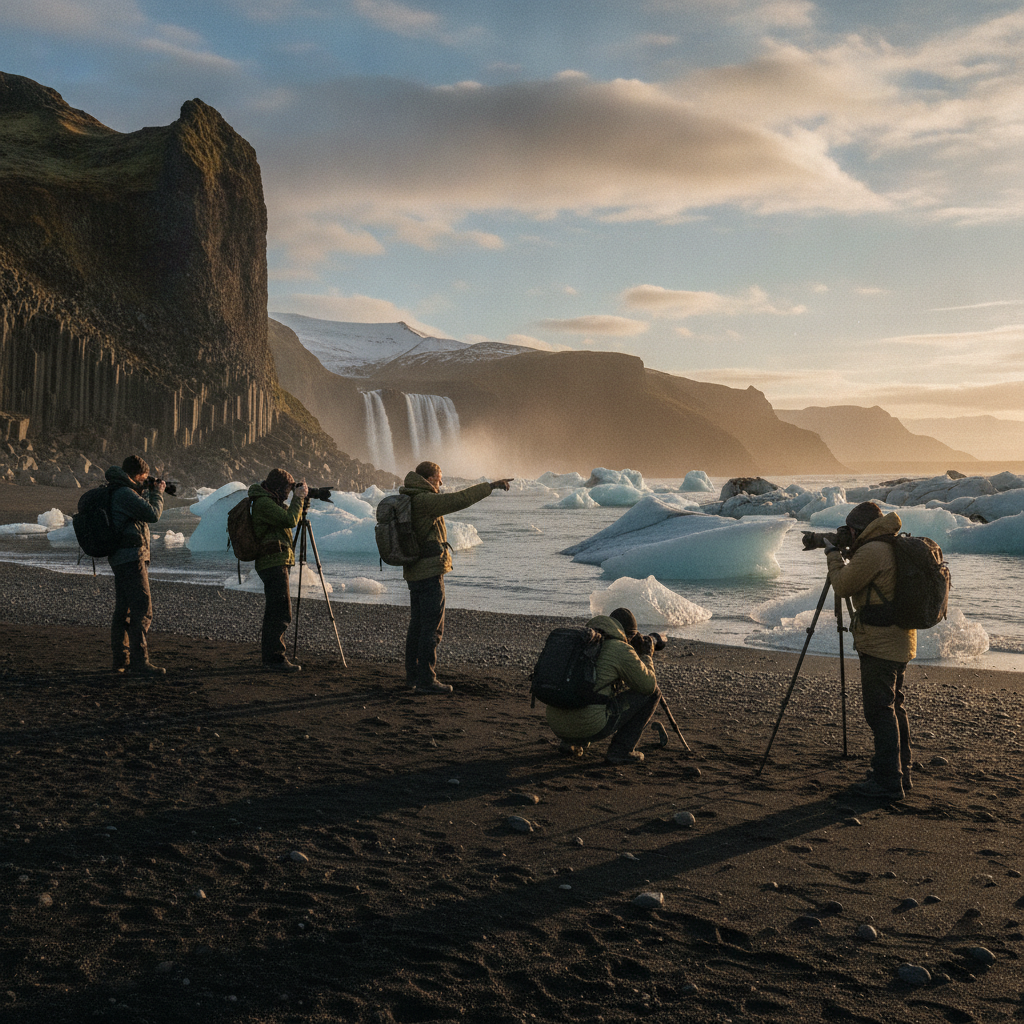
Iceland, the land of fire and ice, stands as an unparalleled muse for photographers worldwide. Its dramatic and diverse landscapes — from colossal glaciers and active volcanoes to thundering waterfalls, ethereal black sand beaches, and the mesmerizing dance of the Northern Lights — offer a photographic playground unlike any other. Every season unveils a new palette of light and texture, promising unique and breathtaking captures. While independent exploration offers its own charm, joining dedicated Iceland photography workshops or tours can transform your trip from a mere vacation into an intensive, skill-building, and highly rewarding photographic adventure.
For 2026, the options for guided photography trips Iceland offers are more diverse and specialized than ever.
Understanding Iceland Photography Workshops vs. Tours
Before diving into the specifics of planning your trip, it's crucial to understand the fundamental differences between Iceland photography workshops and tours, as well as the emerging hybrid models. Your choice will significantly impact your learning experience and the focus of your journey.
Photography Workshops: Learning & Skill Development
Iceland photography workshops are primarily educational experiences. They are structured with a strong emphasis on hands-on instruction, skill development, and often include critique sessions. Participants typically spend significant time learning specific techniques, such as long exposure photography, aurora capture, landscape composition, or advanced post-processing. The itinerary is designed not just to visit beautiful locations, but to optimize time there for learning and applying new skills. Instructors are often renowned photographers eager to share their knowledge, offering personalized guidance in the field and sometimes in classroom settings.
- Pros: Deep dive into specific photographic skills, personalized feedback, structured learning environment, often smaller group sizes, opportunity for significant skill improvement.
- Cons: May visit fewer locations due to extended shooting/learning time, less emphasis on general sightseeing, potentially higher cost due to specialized instruction.
Photography Tours: Exploration & Experience-Driven
In contrast, photography tours, often marketed as the "best Iceland photo tours," tend to be more focused on guided exploration and visiting prime photographic locations. While instructors or guides are present, the emphasis is less on formal instruction and more on ensuring participants are at the right place at the right time to capture iconic shots. There might be informal tips and advice offered, but structured lessons or critique sessions are less common. These tours are ideal for photographers who are already comfortable with their gear and techniques but want expert guidance on logistics, timing, and access to the best spots.
- Pros: Maximize the number of iconic locations visited, expert local guidance on timing and conditions, less pressure for formal learning, often a more relaxed pace.
- Cons: Less personalized instruction, may not significantly improve specific photographic skills, larger group sizes are possible.
Hybrid Options: The Best of Both Worlds?
Increasingly, providers are offering hybrid options that combine elements of both. These guided photography trips Iceland offers might include daily informal instruction, dedicated shooting sessions with guidance, and perhaps one or two formal critique sessions, alongside a comprehensive itinerary that covers many key locations. This format aims to balance skill development with extensive exploration, offering a more rounded experience for those who want both learning and sightseeing.
When choosing your Iceland photography tour or workshop, consider your primary goal: do you want to significantly improve your skills, or do you want to be guided to the most stunning locations with minimal fuss? Your answer will steer you towards the most suitable format.
Factors to Consider When Choosing Your Iceland Photography Adventure
Selecting the right Iceland photography adventure requires careful consideration of several key factors to ensure it aligns with your expectations, skill level, and interests.
Skill Level: Matching Your Expertise
Workshops and tours cater to a spectrum of photographers, from absolute beginners to seasoned professionals.
- Beginner: Look for workshops that cover fundamental camera settings, composition basics, and general landscape photography techniques. These are often labeled "introductory" or "all levels welcome."
- Intermediate: If you're comfortable with manual mode and basic composition, seek workshops that delve into advanced techniques like focus stacking, panoramic stitching, or specific aurora photography strategies.
- Advanced: For experienced photographers, look for masterclasses focusing on conceptual photography, advanced post-processing workflows, or niche areas like astrophotography or drone videography.
It's crucial to check the workshop's prerequisites. Misaligning your skill level with the program can lead to frustration or boredom.
Photographic Interests: What Do You Want to Capture?
Iceland offers an incredible variety of subjects. Pinpointing your interests will help narrow down your options:
- Landscape Photography: Most workshops focus on this, encompassing waterfalls, glaciers, mountains, and coastlines.
- Wildlife Photography: Dedicated tours might focus on puffins (in summer), seals, or Icelandic horses. The Westfjords, for instance, are renowned for bird photography, especially at Latrabjarg Cliffs.
- Aurora & Astrophotography: These require specific timing (typically September to April) and expertise in low-light conditions.
- Cultural Photography: Some tours incorporate visits to local villages, historic sites like the Eiriksstadir Viking Longhouse, or local events, offering a different narrative.
- Drone Photography: With specific regulations in Iceland, some workshops might include guidance on ethical and legal drone operation for aerial perspectives.
Group Size: Impact on Experience
Smaller groups (4-8 participants) generally offer more personalized attention from instructors, greater flexibility in the itinerary, and a more intimate experience. Larger groups (10-15+) can be more cost-effective but may offer less one-on-one time and less flexibility for spontaneous stops. Consider your learning style and desired level of interaction.
Duration and Itinerary: Pace of Travel
Iceland photography workshops vary from short 2-3 day excursions to multi-week expeditions.
- Short Trips: Ideal for focusing on a specific region (e.g., South Coast) or a single phenomenon (e.g., Northern Lights).
- Multi-Day Expeditions: Offer a more comprehensive exploration of the island, allowing for deeper immersion and less rushed shooting.
Assess the pace: Is it fast-paced, covering many locations daily, or slower, allowing for extended shooting at fewer spots? A slower pace is often beneficial for photography, allowing for different light conditions.
Accommodation and Transport: Comfort and Accessibility
What's included in terms of accommodation (hotels, guesthouses, cabins) and transport (minibus, Super Jeep, private vehicle)? Super Jeeps are essential for accessing remote Highland areas, especially outside of summer. Ensure the comfort level matches your expectations and that transport is suitable for the terrain and weather conditions.
Budget Considerations: What's Covered?
Prices for Iceland photography workshops can range significantly, from a few hundred dollars for a single-day excursion to several thousand for a multi-day, all-inclusive luxury experience. Understand what's typically covered: often includes accommodation, transport, guiding fees, and some meals. Typically, flights, personal gear, travel insurance, and alcoholic beverages are excluded. Thoroughly review the fine print.
Physical Requirements and Accessibility
Iceland's rugged terrain can be demanding. Some locations require moderate hiking over uneven ground, while others are easily accessible. Be realistic about your physical fitness. Check if the workshop involves long walks, steep climbs, or requires carrying heavy gear over distances. Reputable providers will outline the physical demands.
Top Regions and Iconic Locations for Iceland Photography Workshops
Iceland's diverse geography means different regions offer distinct photographic opportunities. Many of the best Iceland photo tours are structured around these iconic areas.
The South Coast: Waterfalls, Black Sand, and Glaciers
The South Coast is arguably Iceland's most popular photographic region, and for good reason. It's home to dramatic waterfalls like Seljalandsfoss (where you can walk behind the cascade) and Skógafoss. The infamous black sand beaches of Reynisfjara, with its basalt columns and powerful waves, offer stark compositions. Further east, the glacial lagoons of Jökulsárlón and the adjacent Diamond Beach provide surreal scenes of icebergs shimmering on black sand. Nearby, the Dyrhólaey arch and cliffs present incredible coastal views, especially at sunrise or sunset. This region is a staple for any comprehensive Iceland photography workshop.
Snæfellsnes Peninsula: Iceland in Miniature
Often called "Iceland in Miniature," the Snæfellsnes Peninsula packs an incredible variety of landscapes into a smaller area. Dominating the scene is the iconic Kirkjufell mountain, often photographed with its accompanying waterfall, Kirkjufellsfoss. The Budir Black Church, set against a dramatic backdrop, offers striking architectural photography. The peninsula's rugged coastline, lava fields, and charming fishing villages provide endless opportunities for captivating images.
Northern Iceland: Geothermal Wonders and Powerful Waterfalls
Venturing to Northern Iceland opens up a world of geothermal activity and immense waterfalls. The Lake Mývatn area is a hotspot for unique landscapes, including pseudo-craters, lava formations, and bubbling mud pools. The mighty Dettifoss, often cited as Europe's most powerful waterfall, and the beautiful Goðafoss ("Waterfall of the Gods") are must-sees. For more information on Dettifoss, visit Visit Iceland. The town of Húsavík is a prime location for whale watching tours, offering opportunities for wildlife photography, particularly in summer. Consider an Iceland photography retreat focused purely on the north for a less crowded experience.
The Highlands: Remote and Rugged Beauty
For the adventurous photographer, the Icelandic Highlands offer an untamed wilderness of unparalleled beauty. Accessible primarily in the summer months (June to September) via 4x4 vehicles, this region features the rainbow-colored rhyolite mountains of Landmannalaugar and the lush, volcanic valley of Thórsmörk. This is where you'll find truly unique, otherworldly landscapes, perfect for those seeking remote and dramatic compositions. Guided photography trips Iceland offers into the Highlands are often specialized and require a higher level of fitness and preparedness.
Westfjords: Dramatic Cliffs and Remote Villages
The remote and sparsely populated Westfjords are a hidden gem, characterized by dramatic fjords, towering cliffs, and quaint fishing villages. The Látrabjarg bird cliffs are a haven for seabirds, including puffins, making it an excellent spot for bird photography. Dynjandi waterfall, a series of seven cascades resembling a bridal veil, is another highlight. This region is ideal for photographers looking to escape the crowds and capture raw, untouched Icelandic nature.
What to Look for in a Reputable Iceland Photography Workshop Provider
Choosing the right provider is as crucial as selecting the right region. A reputable operator ensures safety, maximizes your photographic opportunities, and contributes to a positive experience.
Instructor's Experience, Portfolio, and Teaching Style
Research the lead instructor's background. Do they have an extensive portfolio showcasing the kind of photography you aspire to? More importantly, do they have a proven track record as an educator? Look for testimonials that specifically mention their teaching style, patience, and ability to convey complex concepts clearly. A great photographer isn't often a great teacher.
Testimonials and Reviews from Past Participants
Scour independent review sites, social media, and the provider's website for feedback. Look for consistent positive comments regarding the itinerary, instruction quality, logistics, and overall experience. Be wary of providers with no reviews or only generic, unspecific praise.
Safety Protocols, Emergency Preparedness, and Local Knowledge
Iceland's weather can be unpredictable, and its terrain challenging. A reputable provider will have clear safety protocols, guides trained in first aid, and contingency plans for adverse weather. They should possess deep local knowledge of the area, including weather patterns, safe shooting locations, and emergency contacts. The Icelandic Met Office (en.vedur.is) is a crucial resource for real-time weather and aurora forecasts, which good guides will constantly monitor.
Ethical Photography Practices and Environmental Responsibility
Iceland's natural beauty is fragile. A responsible provider will adhere to and promote ethical photography practices, such as staying on marked paths, not disturbing wildlife, and leaving no trace. They should advocate for sustainable tourism and respect local communities and regulations. Ask about their environmental policy.
Permits and Adherence to Local Regulations
Certain protected areas or activities in Iceland require permits. Ensure your chosen provider operates legally and has all necessary permits for the locations they visit. This includes specific drone regulations; Iceland has strict rules regarding drone flight in national parks and near certain natural attractions. For official information on drone operation in Iceland, consult the Icelandic Transport Authority.
Inclusions and Exclusions: Clarity is Key
A transparent breakdown of what's included (accommodation, meals, transport, guide fees, park fees) and what's not (flights, alcohol, personal insurance, tips) is vital. Avoid providers with vague descriptions, as hidden costs can quickly inflate your budget.
Insurance Requirements and Recommendations
Reputable workshops will often require participants to have comprehensive travel insurance, including coverage for medical emergencies and trip cancellation. They may also recommend specific gear insurance. This is a non-negotiable aspect of responsible travel planning for Iceland.
Essential Gear and Preparation for Your Iceland Photography Trip
Iceland's diverse conditions demand specific gear and careful preparation to ensure you can capture its beauty effectively and comfortably.
Camera Body and Lenses
- Full-frame or APS-C DSLR/Mirrorless Camera: A reliable body capable of good low-light performance.
- Wide-Angle Lens (14-24mm or similar): Absolutely essential for capturing vast landscapes, glaciers, and the Northern Lights.
- Mid-Range Zoom Lens (24-70mm or similar): Versatile for general use and more intimate landscapes.
- Telephoto Lens (70-200mm or similar): Useful for compressing landscapes, capturing distant details, and wildlife (e.g., puffins, seals, horses).
- Fast Prime Lens (e.g., 24mm f/1.4 or 35mm f/1.8): Excellent for astrophotography and the Northern Lights due to their wide aperture.
Tripod: Sturdy and Reliable
A robust tripod is non-negotiable for long exposures of waterfalls, low-light aurora photography, and sharp landscape shots in windy conditions. Carbon fiber tripods offer a good balance of stability and weight for travel.
Filters: Managing Light and Reflections
- Neutral Density (ND) Filters: For long exposures during daylight, especially for waterfalls and stormy seas.
- Graduated Neutral Density (GND) Filters: To balance bright skies with darker foregrounds.
- Circular Polarizer (CPL) Filter: Reduces glare on water and ice, deepens blue skies, and enhances saturation.
Batteries and Memory Cards: Ample Supply
Cold weather drains batteries quickly. Bring at least 3-4 fully charged batteries per camera body. Pack multiple high-capacity memory cards to avoid running out of space. Consider a portable power bank for charging smaller devices.
Weather-Appropriate Clothing: Layers are Key
Icelandic weather is famously fickle. Layers are paramount.
- Base Layers: Moisture-wicking (merino wool or synthetic).
- Mid-Layers: Fleece or down for insulation.
- Outer Shell: Waterproof and windproof jacket and pants are essential. Even in summer, rain and wind are common.
- Insulated Footwear: Waterproof hiking boots with good ankle support. Consider thermal socks.
- Accessories: Warm hat, gloves (fingerless options for camera operation), neck gaiter.
For more detailed insights on preparing for Icelandic conditions, Visit Iceland's official site (visiticeland.com) offers excellent general travel advice.
Accessories: Headlamp, Remote Release, Cleaning Kit
A headlamp is crucial for early mornings, late nights, and aurora chasing. A remote shutter release minimizes camera shake for long exposures. A lens cleaning kit (blower, microfibre cloths, lens pen) is vital for dealing with spray from waterfalls and dust.
Drone Considerations: Regulations and Best Practices
Iceland has specific rules for drone operation. Familiarize yourself with them before you go. Generally, you cannot fly within national parks, near airports, or over crowds. It's essential to maintain line of sight and respect privacy. Some workshops may include specific guidance on this.
Maximizing Your Experience: Tips for Getting the Most Out of Your Iceland Photography Workshop
Once you've chosen your Iceland photography retreat or tour, a proactive approach will ensure you get the maximum value from your investment.
Engage Actively with Instructors and Ask Questions
Don't be shy! Your instructors are there to help you learn. Prepare questions in advance, and don't hesitate to ask for clarification or personalized advice in the field. The more you engage, the more you'll learn.
Practice New Techniques and Step Out of Your Comfort Zone
Workshops are the perfect environment to experiment. Try the new composition rule, push your camera's settings, or attempt a technique you've often wanted to master. Embrace challenges; growth happens when you step beyond what's familiar.
Network with Fellow Photographers and Share Experiences
Your fellow participants are a valuable resource. Share tips, discuss techniques, and build connections. You might find a new photography buddy or gain fresh perspectives on your work. The camaraderie often becomes a highlight of the trip.
Embrace Challenging Weather Conditions as Unique Opportunities
Iceland's weather can be dramatic, but don't let it dampen your spirits. Rain, mist, and strong winds can create incredibly moody and unique photographic opportunities. A good instructor will guide you on how to protect your gear and make the most of less-than-ideal conditions. Some of the most memorable shots come from embracing the elements.
Plan for Post-Processing: Understand the Workflow and Tools
Photography doesn't end when you click the shutter. Many workshops include post-processing sessions. Pay close attention to these, as they are crucial for bringing your images to life. Understand the workflow, from culling to editing, and familiarize yourself with software like Lightroom or Photoshop. This is a critical skill for any serious photographer.
Review and Critique Your Work Regularly
Whether formally in a group critique or informally with your instructor, regularly reviewing your images is essential for improvement. Be open to constructive feedback and use it to refine your vision and technique.
Beyond the Workshop: Continuing Your Iceland Photography Journey
The skills and experiences gained from an Iceland photography workshop are just the beginning. Your journey to master Icelandic photography can continue long after the tour concludes.
Applying Learned Skills to Independent Exploration
Use the techniques you've mastered to plan your own future photography trips. With a deeper understanding of light, composition, and location scouting, you'll feel more confident exploring new areas independently, or even revisiting familiar ones with a fresh perspective.
Utilizing Resources like Iceland Photo Map for Location Scouting and Planning
As you plan your next adventure, or simply wish to explore more of Iceland's wonders, resources like Iceland Photo Map are invaluable. Our extensive collection of locations and maps can help you scout new spots, understand the best times to visit, and discover hidden gems across the island. Explore our locations database or browse our specialized photography maps to enhance your planning.
Joining Online Photography Communities for Ongoing Learning and Inspiration
Stay connected with the photography world. Online forums, social media groups, and dedicated photography websites offer continuous learning opportunities, inspiration, and a platform to share your work and receive feedback from a wider community.
Planning Future Trips to Explore Different Regions or Seasons
Iceland is a land of endless photographic possibilities. Consider planning future trips to explore regions you didn't cover, or revisit the island in a different season to capture its dramatically altered appearance. For instance, winter offers the Northern Lights and snow-covered landscapes, while summer boasts the Midnight Sun and vibrant green hues. Our "How To" guides on Iceland Photo Map can assist with planning your next adventure.
Conclusion: Capture Your Unforgettable Iceland Story
Choosing the right Iceland photography workshop or tour for 2026 is an investment not just in incredible photographs, but in your growth as a photographer. Whether you seek intensive skill-building or expert guidance to the island's most spectacular vistas, a well-chosen adventure can be transformative. From the dramatic South Coast to the remote Highlands, Iceland offers a canvas like no other. By carefully considering your goals, research, and preparation, you can ensure your journey is safe, inspiring, and rich with photographic opportunities. Go forth, embrace the elements, and capture your own unforgettable Iceland story.
Frequently Asked Questions
What's the best time of year for Iceland photography workshops, especially for Northern Lights?
The "best" time depends on your photographic interests. For the Northern Lights, the period from September to April offers the darkest skies. However, winter (November-March) brings snow-covered landscapes and dramatic light, while autumn (September-October) provides vibrant fall colors and fewer crowds. Summer (June-August) is ideal for the Midnight Sun, puffin photography, and access to the Highlands. If Northern Lights are your priority, target workshops between September and March. Always check the Icelandic Met Office (en.vedur.is) for aurora forecasts closer to your travel date.
Do I need to be an experienced photographer to join an Iceland photography tour or workshop?
Not at all! Many Iceland photography workshops cater to all skill levels, from absolute beginners to advanced enthusiasts. It's crucial to check the specific workshop's target audience and prerequisites. Beginner-friendly tours often focus on fundamental camera settings, composition, and basic post-processing, while advanced workshops delve into more complex techniques. often communicate your skill level to the organizer to ensure the best fit.
What kind of photography gear is absolutely essential for an Iceland photography workshop?
Essential gear includes a camera body (DSLR or mirrorless) capable of manual control, a sturdy tripod for long exposures, and a wide-angle lens (e.g., 14-24mm) for landscapes and aurora. Spare batteries are crucial due to cold weather, as are ample memory cards. Additionally, a waterproof and windproof outer shell, warm layers, and insulated, waterproof hiking boots are non-negotiable for personal comfort and safety.
How much do Iceland photography workshops typically cost, and what's included?
This price usually includes accommodation, ground transportation, guide/instructor fees, and some meals. Exclusions almost often cover international flights, travel insurance, personal gear, alcoholic beverages, and sometimes specific park entry fees. often thoroughly review the "inclusions" and "exclusions" section of any workshop you consider.
Are there specific ethical guidelines photographers should follow when shooting in Iceland?
Yes, ethical photography is paramount in Iceland. often adhere to "Leave No Trace" principles: stay on marked paths, do not disturb natural formations (like moss), and pack out everything you pack in. Respect private property, be mindful of local residents, and avoid flying drones in restricted areas or near wildlife. rarely endanger yourself or others for a shot. A reputable photography workshop provider will often emphasize and enforce these guidelines.
Ready to plan your Icelandic photography adventure? Explore Iceland Photo Map's extensive collection of locations and maps to complement your workshop experience and discover hidden gems.