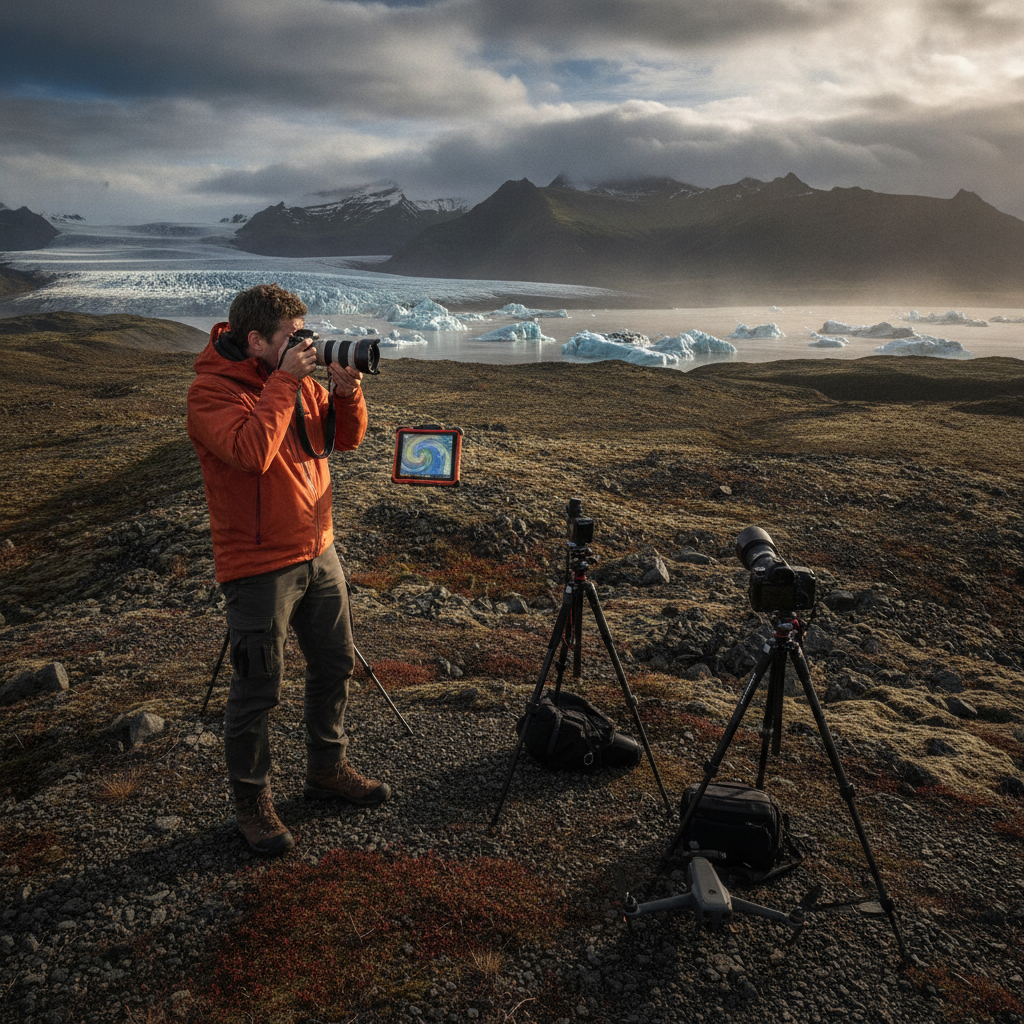
Understanding Iceland's Unique Climate: A Photographer's Perspective
Iceland's climate is a masterclass in unpredictability, often described as experiencing "four seasons in a day." This isn't just a quaint saying; it's a lived reality that profoundly impacts photographic opportunities and challenges. One moment, you might be basking in glorious sunshine, only for a torrential downpour, dense fog, or even a sudden snow flurry to sweep in within minutes. This dynamic interplay of elements constantly reshapes the landscape, affecting light, visibility, and atmospheric mood, creating both immense frustration and unparalleled opportunities for unique shots.
Key weather elements photographers must contend with include:
* **Extreme Winds:** Perhaps the most notorious element, Iceland's winds are legendary. They can be incredibly strong, often reaching gale force, especially along the coast and in open areas. For photographers, these winds pose significant challenges:
* **Tripod Stability:** Even heavy-duty tripods can struggle against sustained gusts, leading to blurred shots or even equipment damage.
* **Drone Safety:** Operating drones in high winds is extremely risky and often impossible, making **wind photography Iceland** a critical consideration for aerial enthusiasts.
* **Personal Safety:** Strong winds can make standing near cliffs or exposed viewpoints dangerous, potentially knocking you off balance.
* **Compositional Impact:** On the flip side, wind can create incredible drama, whipping up waves, shaping clouds, and causing waterfalls to flow upwards (known as "reverse waterfalls").
* **Persistent Rain and Precipitation:** While Iceland isn't always rainy, prolonged periods of drizzle or heavy downpours are common, particularly in the south. This affects visibility, lens cleanliness, and the comfort of both photographer and gear. Snow is prevalent in winter, transforming landscapes into pristine white canvases, but also bringing reduced visibility and challenging driving conditions. Hail can also occur, posing a minor but sharp impact risk to equipment.
* **Temperature Fluctuations:** Even within a single day, temperatures can swing dramatically. What starts as a mild morning can quickly turn frigid with the arrival of a cold front or strong winds, exacerbating the chill factor. Proper layering is paramount for comfort and safety.
* **Cloud Cover and Light:** The ever-present clouds are a defining feature of Icelandic skies. They can diffuse harsh sunlight, creating soft, even light perfect for waterfalls and intricate landscapes. Conversely, dense, low clouds can flatten the scene, obscure mountain peaks, or completely block the golden hour glow. However, breaks in the clouds can lead to dramatic light rays, spotlighting specific elements, or creating breathtaking sunrises and sunsets.
Seasonally, Iceland offers distinct photographic experiences:
* **Summer (June-August):** Characterized by the midnight sun, offering endless golden hour light for long shooting sessions. Temperatures are milder, and most roads, including those to the Highlands, are accessible. Rain and wind are still common, but extreme cold is rare.
* **Autumn (September-October):** Witness the landscape transform with vibrant reds, oranges, and yellows. The days shorten, bringing back true night skies for potential aurora viewing. Weather becomes more unsettled, with increasing chances of storms.
* **Winter (November-March):** Short daylight hours, often only 4-5 hours in December, mean limited shooting windows but incredibly soft, low-angle light. Snow and ice dominate the landscape, creating stunning contrasts. This is prime aurora season, but also the period for the most severe weather, including blizzards and road closures.
* **Spring (April-May):** A transition period where snow slowly melts, revealing green landscapes. Days lengthen rapidly, and migratory birds return. Weather is still highly variable, but generally less extreme than winter.
Understanding these patterns and elements is the first step in mastering **planning photography around Iceland weather**. It prepares you for the conditions you're likely to encounter and helps you appreciate the photographic opportunities each unique weather scenario presents.
To effectively plan your photography expeditions in Iceland, you need reliable, detailed, and localized weather information. Fortunately, several excellent tools are available, and using them in conjunction provides the most comprehensive picture. For any photographer seeking an accurate **Iceland weather forecast for photographers**, these resources are indispensable.
Vedur.is: The Primary Source
The undisputed champion for Icelandic weather information is
Vedur.is, the website for the Icelandic Met Office (Veðurstofa Íslands). This is the official and most accurate source, providing hyper-local forecasts that are crucial given Iceland's microclimates.
**Key Features for Photographers:**
* **Detailed Location-Specific Forecasts:** You can search for forecasts by specific towns, regions, or even certain natural landmarks. This is vital because conditions can vary wildly over just a few kilometers.
* **Wind Maps:** Vedur.is offers highly visual and detailed wind maps, showing speed (m/s or km/h), direction, and gusts across the entire country. For **wind photography Iceland**, this is invaluable. High winds are a significant concern for tripod stability, drone operation, and personal safety, so knowing when and where they'll strike is paramount. Look for areas with lower wind speeds if you plan to fly a drone or use long exposures.
* **Precipitation Maps:** These maps illustrate where and when rain or snow is expected, along with intensity. This helps you plan for gear protection and decide if a location will be shrouded in mist or clear.
* **Temperature Forecasts:** Beyond just the temperature, Vedur.is often provides "feels like" temperatures, which account for wind chill – a critical factor for comfort and safety in Iceland.
* **Aurora Forecast (Northern Lights):** Vedur.is integrates an aurora forecast, showing cloud cover (which blocks the aurora) and geomagnetic activity (Kp-index). While not a guarantee, it's an excellent indicator for planning night shoots. A clear sky is just as important as a high Kp-index.
* **Hourly Forecasts:** For short-term planning, the hourly breakdown is incredibly useful for pinpointing brief windows of favorable light or calmer conditions.
**How to Use Vedur.is:** Start your day here. Check the overall national map, then zoom into your specific region and planned shooting locations. Pay close attention to wind gusts, not just average wind speed.
Complementary Apps for a Multi-Layered Forecast
While Vedur.is is the foundation, combining it with other apps provides a richer, more visual, and sometimes more regionally nuanced forecast. These are some of the **best weather apps Iceland** photographers rely on:
* **YR.no (Norwegian Met Office):** YR.no is another highly respected meteorological service, offering surprisingly accurate forecasts for Iceland. Its interface is often considered more user-friendly than Vedur.is for some, providing detailed hourly breakdowns, probability of precipitation, and temperature graphs. It can sometimes offer slightly different local interpretations, which can be useful for cross-referencing, especially for regional detail in the Westfjords or North where Norwegian influence on weather patterns can be discernible.
* **Windy.com:** This app is a visual powerhouse, perfect for photographers who need to visualize weather patterns. Windy.com uses various forecast models (ECMWF, GFS, ICON) and displays wind, cloud cover, precipitation, swell, and even aurora forecasts with stunning animations.
* **Wind Visualization:** Its animated wind overlay is unparalleled for understanding wind direction and strength across vast areas, making it essential for drone pilots and those planning **wind photography Iceland**.
* **Cloud Cover:** The cloud layer helps predict where gaps in the clouds might occur for sunrises/sunsets or aurora viewing.
* **Swell:** For coastal photography, understanding ocean swell can be critical for safety and predicting wave action.
* **Model Comparison:** The ability to switch between different forecast models allows you to see where they agree or disagree, indicating the certainty of the forecast.
* **Road.is (Icelandic Road and Coastal Administration):** While not a weather app per se,
Road.is is absolutely critical for safety and logistical planning, especially outside of summer. It provides real-time information on road conditions, closures, and weather warnings specifically impacting travel.
* **Road Closures:** In winter, blizzards can close major routes, trapping travelers. Road.is is the definitive source for current closures.
* **Driving Conditions:** It reports on ice, snow, gravel, and high winds affecting specific road sections, helping you decide if a route is safe or even passable.
* **Webcams:** Many roads have live webcams, allowing you to visually inspect current conditions before setting out. This is invaluable when the forecast is uncertain.
How to Use These Tools in Conjunction
The most effective strategy is a multi-layered approach:
1. **Morning Check (Vedur.is & YR.no):** Start your day by checking Vedur.is for the overall national picture and detailed local forecasts for your planned destinations. Cross-reference with YR.no for additional detail or different perspectives.
2. **Visual Confirmation (Windy.com):** Open Windy.com to visually understand wind patterns, cloud movement, and precipitation across your route. This helps you identify potential clearings or areas of calmer wind.
3. **Road Safety (Road.is):** Before driving anywhere, especially in winter or to remote areas, consult Road.is. This is non-negotiable for safety. Check your specific route for closures, warnings, and live webcam feeds.
4. **Continuous Monitoring:** Iceland's weather changes fast. Re-check forecasts frequently throughout the day, especially if you're traveling long distances or heading into mountainous terrain.
By integrating these tools, you gain a robust understanding of the current and predicted conditions, enabling you to make informed decisions for your photography, ensuring both stunning results and your personal safety.
Interpreting Forecasts: Beyond the Numbers for Better Shots
Simply reading the numbers on a weather app isn isn't enough in Iceland. To truly leverage the **Iceland weather forecast for photographers**, you need to understand what those numbers imply for light, landscape, and photographic opportunity. Interpretation requires experience, flexibility, and a keen eye for nuance.
Understanding Probability vs. Certainty
Forecasts, especially long-range ones, are based on probability, not certainty. In Iceland's rapidly changing microclimates, a 60% chance of rain can mean anything from a brief drizzle to a sustained downpour, or even nothing at all in your specific location.
* **Microclimates:** Valleys, coastal areas, and mountain ranges can have drastically different weather simultaneously. A forecast for a general region might not apply to a specific cove or mountain pass. Always assume localized variations.
* **Short-term vs. Long-term:** The closer to the present moment, the more accurate the forecast. Hourly forecasts are generally more reliable than 5-day outlooks. Use longer-range forecasts for general planning, but rely on short-term updates for daily execution.
* **Cloud Cover:** Pay attention to cloud height. High clouds can still allow for beautiful light, while low-lying fog can obscure entire landscapes.
Reading Wind Forecasts: Speed, Direction, and Gusts
Wind is arguably the most critical factor for photographers in Iceland. It dictates safety, gear stability, and even compositional choices.
* **Speed:** Measured in meters per second (m/s) or kilometers per hour (km/h).
* **0-5 m/s (0-18 km/h):** Generally calm, ideal for drones, long exposures, and comfortable shooting.
* **5-10 m/s (18-36 km/h):** Moderate wind. Tripods need to be stable, drones might be flyable with caution, but expect some shake on longer exposures.
* **10-15 m/s (36-54 km/h):** Strong wind. Tripods will struggle, drone flight is risky and often not recommended. Expect significant wind chill.
* **15+ m/s (54+ km/h):** Very strong to gale-force winds. Dangerous conditions. Drone flight is highly discouraged or impossible. Risk of being blown off balance, especially near cliffs.
* **Direction:** Knowing the wind direction helps you:
* **Position Yourself:** Stand with the wind at your back to protect your lens from spray or rain, or face into it for dramatic hair/clothing movement.
* **Anticipate Spray:** At waterfalls like Seljalandsfoss or Skógafoss, the wind direction will determine which side of the falls offers less spray.
* **Drone Launch/Landing:** Always launch and land a drone into the wind.
* **Gusts:** Pay particular attention to gust speeds, which can be significantly higher than the average wind speed. A forecast of 10 m/s with gusts up to 20 m/s means you must prepare for the 20 m/s. Gusts are what will cause tripod shake, drone instability, and make standing difficult.
* **Wind Photography Iceland:** Don't always view wind as a hindrance. Strong winds can create incredible drama:
* **Dynamic Skies:** Fast-moving clouds offer fantastic opportunities for long-exposure skies.
* **Turbulent Water:** Wind-whipped waves on black sand beaches or lakes can add texture and motion.
* **Reverse Waterfalls:** Capture the unique phenomenon of waterfalls being blown upwards.
* **Silhouettes:** Use strong winds to create dynamic silhouettes of subjects with flowing hair or clothing.
Decoding Precipitation: Differentiating Effects
Precipitation isn't just "rain." The type and intensity significantly impact your shooting conditions.
* **Light Drizzle/Mist:** Often creates moody, atmospheric shots, enhancing greens and blues. Requires constant lens wiping but can be managed with rain covers.
* **Heavy Rain:** Challenging. Reduces visibility, makes gear protection harder, and can be uncomfortable. Best for finding sheltered locations or embracing the drama from inside a car.
* **Snow:** Transforms landscapes into winter wonderlands. Light snow can add texture; heavy snow reduces visibility but offers pristine, minimalist scenes. Requires extra care for gear and batteries.
* **Hail:** Less common but can be painful and potentially damaging to exposed gear. Seek shelter immediately.
Cloud Cover and Light: Predicting Drama and Flatness
Light is a photographer's most important tool, and clouds are its primary modifier in Iceland.
* **Golden Hour/Blue Hour:** Use forecasts to predict cloud cover during these crucial times. Clear skies promise vibrant colors; scattered clouds can create breathtaking light rays or dramatic backdrops. Dense cloud cover, however, will mute the colors, offering soft, even light suitable for waterfalls or detailed landscapes rather than dramatic skies.
* **Dramatic Skies vs. Flat Light:** Overcast conditions can diffuse light beautifully for waterfalls and intimate landscapes, eliminating harsh shadows. However, if the clouds are too thick and low, they can create flat, dull light, especially for grand vistas. Look for breaks in the clouds, even small ones, as these can lead to incredible localized light.
* **Fog and Mist:** While often associated with "bad" weather, fog and mist are a photographer's dream. They simplify compositions, add depth, and create ethereal, mysterious atmospheres. Embrace them!
By moving beyond simply seeing "rain" or "wind" and understanding the nuances of these forecast elements, you can make more informed decisions, adapt your plans, and ultimately capture more compelling and diverse imagery in Iceland.
Strategic Planning for Iceland Weather Photography
Mastering the **Iceland weather forecast for photographers** is only half the battle; the other half is knowing how to integrate that knowledge into a robust, flexible photography strategy. Iceland demands adaptability, and the photographers who succeed are those who embrace its capriciousness. This is where **planning photography around Iceland weather** truly comes into its own.
Embracing Flexibility: Always Having Backup Locations and Alternative Plans
The most crucial strategy for Iceland is to never have a rigid itinerary. What looks perfect on paper might be entirely unshootable due to a sudden storm or impenetrable fog.
* **"Plan A, B, and C":** For each day, have a primary location (Plan A), a secondary nearby location that might be better suited for different weather (Plan B), and perhaps a tertiary indoor or sheltered option (Plan C). For example, if your Plan A is a dramatic coastal cliff, Plan B might be a nearby waterfall that looks great in moody weather, and Plan C could be a local museum or a cozy cafe for editing.
* **Categorize Locations by Weather:** Mentally (or physically, using a tool like Iceland Photo Map) categorize locations by the conditions they excel in. Some look best in golden hour, others in moody mist, some are sheltered from wind, and others are exposed.
* **Example:** If the forecast predicts high winds on the South Coast, a location like Dyrhólaey might be dangerous and difficult to shoot. Instead, you could pivot to a more sheltered waterfall like Seljalandsfoss, which can even offer unique perspectives behind the falls in rainy conditions, or explore an ice cave tour (seasonal). Our
Landscape photography maps on Iceland Photo Map are perfect for identifying diverse locations that offer different photographic opportunities under varying conditions.
Leveraging 'Bad' Weather: Techniques for Capturing Moody Landscapes
Don't let "bad" weather deter you; often, it creates the most evocative and unique photographs.
* **Embrace the Mood:** Overcast skies and mist create soft, diffused light, perfect for waterfalls, intimate forest scenes, and showcasing textures in the landscape. The lack of harsh shadows can be a blessing.
* **Long Exposures:** In windy or rainy conditions, long exposures can smooth out choppy water, blur fast-moving clouds into painterly streaks, and create a sense of motion and drama.
* **Focus on Details:** When grand vistas are obscured by fog or rain, shift your focus to macro shots, textures (moss, volcanic rock, ice), or abstract compositions.
* **Seek Shelter for Contrast:** Photographing from a sheltered spot (e.g., under a cliff, in a cave, or even from inside a car) can provide a unique perspective, capturing the drama of the storm outside while keeping your gear dry.
* **Silhouettes and Drama:** Stormy skies, with their dramatic clouds and occasional breaks of light, offer incredible opportunities for powerful silhouettes and moody landscapes.
Gear Protection Strategies: Essential Rain Covers, Dry Bags, and Camera Care
Protecting your equipment is non-negotiable in Iceland's volatile climate.
* **Rain Covers:** Invest in good quality rain covers for your camera and lenses. They are relatively inexpensive compared to repair costs. Keep them accessible at all times.
* **Dry Bags:** Use dry bags for spare batteries, memory cards, and any non-waterproof items. A larger dry bag can serve as an emergency cover for your camera bag.
* **Microfiber Cloths:** Carry several high-quality microfiber cloths. Water spots on your lens or filter can ruin a shot.
* **Lens Hoods:** Always use a lens hood. It helps shield the front element from rain, spray, and direct light.
* **Humidity Control:** After shooting in wet conditions, allow your gear to dry thoroughly. Use silica gel packets in your camera bag to absorb moisture and prevent condensation, especially when moving from cold outdoor temperatures to warmer indoor environments.
* **Tripod Maintenance:** Mud, sand, and saltwater can seize tripod legs. Clean and dry your tripod regularly, especially after coastal shoots.
Timing Your Shoots: Using Forecasts to Pinpoint Optimal Windows
The detailed forecasts from Vedur.is and Windy.com are your best friends for timing.
* **Aurora Photography:** Check the aurora forecast for Kp-index and, crucially, cloud cover. A high Kp-index with 100% cloud cover is useless. Look for clear skies during night hours.
* **Golden/Blue Hour:** Identify brief windows of clear or partly cloudy skies during sunrise and sunset for dramatic light.
* **Calm Pockets:** If you plan drone photography or long exposures requiring absolute stillness, look for predicted lulls in wind speed.
* **Waterfall Photography:** Overcast days are often ideal for waterfalls as they provide soft, even light, reducing harsh shadows and blown-out highlights.
* **Snowfall:** Time your shoots during or immediately after fresh snowfall for pristine, untouched scenes.
Utilizing Iceland Photo Map to Find Sheltered Spots or Locations that Shine in Specific Weather
Our Iceland Photo Map is designed to complement your weather forecasting efforts. By browsing specific locations, you can often infer how they might fare in different conditions.
* **Location Details:** Many locations on
Iceland Photo Map's location pages feature details or user comments that hint at their suitability for certain weather. For example, a waterfall nestled in a canyon might be more sheltered from high winds than one on an open plain.
* **Categorization:** Explore our categories like
waterfalls or
landscapes to identify groups of locations. Waterfalls often thrive under overcast skies, while dramatic coastlines might shine during powerful storms (from a safe distance!).
* **Regional Exploration:** Use our regional maps to identify clusters of locations within an area. If one spot is completely weathered out, a nearby alternative might offer better conditions or a different photographic opportunity. For instance, if you're in the
South Coast and the weather is closing in on the shore, you might find more sheltered spots slightly inland.
By integrating these strategic planning techniques with your weather forecasting tools, you'll be well-equipped to maximize your photographic success and safety, regardless of what Iceland's skies decide to throw your way.
Regional Weather Variations and Microclimates Across Iceland
Iceland is not a monolithic weather entity. Its diverse topography—from vast volcanic plains to jagged fjords, towering glaciers, and sprawling highlands—creates distinct regional weather patterns and countless microclimates. What's happening on the South Coast can be entirely different from the conditions in the Westfjords or the Highlands. Understanding these variations is key to effective **planning photography around Iceland weather**.
Distinct Weather Patterns Across Regions
* **South Coast:** Generally wetter and often windier due to its direct exposure to Atlantic storms. Expect dramatic weather fronts, but also some of Iceland's most iconic landscapes, often enhanced by moody skies. Precipitation is frequent, but rarely prolonged, allowing for quick changes from rain to sun.
* **Reykjavík Area & Reykjanes Peninsula:** While still windy, the capital region often experiences slightly milder temperatures than more exposed areas. It's a good base for day trips, but its coastal position means it's still susceptible to rapid weather changes.
* **Westfjords:** Remote and rugged, the Westfjords are highly exposed. They can experience some of Iceland's most severe weather, particularly heavy snowfall and strong winds in winter, leading to frequent road closures. However, the dramatic cliffs and isolated fjords are spectacular in moody light.
* **North Iceland:** Often drier and colder in winter, with more stable snow cover. Summer can bring pleasant, warmer days, but also strong winds, especially around Lake Mývatn. The aurora borealis often appears crisper here due to less light pollution and potentially clearer skies than the south.
* **East Iceland:** Characterized by its long fjords and dramatic mountains. Weather can be variable, often influenced by systems moving in from the east. It can be a good escape from heavy rain on the South Coast, though wind remains a constant factor.
* **Highlands (Interior):** Accessible only in summer (typically June-September) via F-roads, the Highlands are a wilderness of raw, untamed beauty. Weather here is extremely unpredictable, prone to rapid changes, localized fog, sudden snow showers (even in summer), and fierce winds. Temperatures can drop significantly, even on a sunny day. **Always check specific Highland forecasts and road conditions before venturing in.**
Coastal vs. Inland Differences
* **Coastal Areas:** Tend to be milder in winter and cooler in summer due to the moderating influence of the ocean. However, they are also significantly windier and more prone to sea spray, fog, and heavy precipitation. The interaction of sea and land often creates dramatic cloud formations.
* **Inland Areas:** Experience greater temperature extremes – colder winters and warmer summers. They are generally less windy than coastal areas, but mountainous inland regions can create their own localized wind tunnels. Inland areas, particularly the Highlands, are also more susceptible to sudden, localized weather phenomena due to complex topography.
Mountainous Areas: Rapid Changes and Unpredictable Conditions
Wherever you find mountains in Iceland, expect localized and rapidly changing weather.
* **Orographic Lift:** As moist air is forced up over mountains, it cools, condenses, and forms clouds and precipitation. This means one side of a mountain range might be clear, while the other is shrouded in fog or rain.
* **Wind Tunnels:** Valleys and passes can act as natural wind tunnels, channeling and intensifying winds to extreme levels.
* **Localized Fog:** Mountains are prime locations for localized fog, which can roll in and dissipate with astonishing speed, completely obscuring views one moment and revealing them the next.
Tips for Checking Regional-Specific Forecasts and Understanding Local Anomalies
1. **Use Vedur.is's Location Search:** Always input the specific town or landmark you plan to visit, rather than relying on a general regional forecast.
2. **Consult Local Information:** If staying at a guesthouse or hotel, ask locals about the immediate microclimate. They often have invaluable insights into local anomalies ("it always rains here in the afternoon," or "that mountain always has clear weather").
3. **Observe the Sky:** Learn to read the sky. Incoming weather fronts often have characteristic cloud formations. Watch how clouds move and develop over mountains.
4. **Road.is Webcams:** For specific mountain passes or remote routes, the live webcams on Road.is can give you a real-time visual of current conditions, which is often more accurate than a forecast in highly localized areas.
By recognizing and accounting for Iceland's diverse regional weather and microclimates, you can make smarter decisions about where and when to shoot, significantly enhancing your chances of capturing the perfect image and staying safe.
Safety First: Navigating Iceland's Weather Hazards
While the allure of dramatic weather for photography is undeniable, safety must always be your paramount concern. Iceland's weather isn't just inconvenient; it can be genuinely dangerous. Responsible photographers prioritize their well-being and that of their travel companions above all else. The **Iceland weather forecast for photographers** is as much a safety tool as it is a planning guide.
High Winds: Dangers for Vehicles, Drones, and Personal Stability
As discussed, Iceland's winds are formidable.
* **Vehicles:** Strong crosswinds, especially when driving over open plains or bridges, can push vehicles off the road. This is particularly true for campervans, SUVs, and cars with roof racks. Always slow down significantly in high winds. Check Road.is for wind warnings specific to road sections.
* **Drones:** Flying drones in winds exceeding 5-8 m/s (18-29 km/h) is risky. Gusts can be much higher, leading to loss of control, battery drain, and potential crashes. Always check the wind forecast and respect your drone's maximum wind resistance.
* **Personal Stability:** Near cliffs, glaciers, or open coastal areas, strong winds can literally blow you off your feet. Maintain a low center of gravity, stay well away from edges, and consider postponing shoots in extremely windy conditions. Never turn your back to the ocean, especially on black sand beaches, where rogue waves combined with strong winds can be deadly.
Flash Floods and River Crossings: Especially Relevant for Highland Photography
* **Highland Rivers:** Many F-roads in the Highlands require river crossings. Glacial rivers, fed by melting ice, can swell rapidly due to warmer temperatures or heavy rain, even far upstream. A crossing that was manageable in the morning could become impassable and dangerous by afternoon.
* **Flash Floods:** While less common, localized heavy rainfall can lead to flash floods, especially in canyons or narrow valleys.
* **Checking Conditions:** Always consult Road.is and SafeTravel.is for current river conditions and warnings. Never attempt a river crossing if you are unsure of the depth, current, or your vehicle's capability. When in doubt, turn back.
Blizzards and Road Closures: Importance of Checking Road.is and Respecting Warnings
In winter, blizzards can strike with little warning, reducing visibility to zero and quickly making roads impassable.
* **Road Closures:** The Icelandic Road and Coastal Administration (Road.is) will close roads for safety during severe weather. These closures are not suggestions; they are mandatory. Attempting to bypass them puts your life and the lives of search and rescue teams at risk.
* **Whiteouts:** Blizzards often bring whiteout conditions where snow, wind, and low light combine to eliminate any visual horizon. Disorientation is instant and severe.
* **Travel Advice:** Always check Road.is before and during winter travel. Heed all warnings. If a storm is forecast, reconsider your travel plans and stay put.
Hypothermia Risks: Proper Layering and Understanding Wind Chill
Even in summer, cold temperatures combined with wind and moisture can quickly lead to hypothermia.
* **Layering:** Dress in multiple layers of wool or synthetic materials (avoid cotton, which loses insulating properties when wet). Include a waterproof and windproof outer shell.
* **Head, Hands, Feet:** These extremities lose heat quickly. Always wear a warm hat, gloves (consider waterproof ones), and insulated, waterproof hiking boots.
* **Wind Chill:** Understand that the "feels like" temperature can be significantly lower than the actual temperature due to wind chill. Vedur.is often provides this crucial detail.
* **Symptoms:** Be aware of hypothermia symptoms (shivering, confusion, clumsiness, slurred speech). If you or a companion experience these, seek warmth and shelter immediately.
Communicating Your Plans and Carrying Emergency Essentials
* **Leave a Travel Plan:** Before venturing into remote areas, especially the Highlands or during winter, leave your travel plans with SafeTravel.is (
SafeTravel.is) or with your accommodation provider. This allows authorities to know where to look if you don't check in.
* **Emergency Essentials:** Always carry:
* Extra warm, waterproof clothing.
* Food and water (more than you think you'll need).
* Fully charged phone and a power bank.
* First-aid kit.
* Headlamp.
* Map and compass/GPS (don't rely solely on phone GPS).
* Shovel and tow rope (winter).
* **Emergency Number:** The emergency number in Iceland is 112.
By taking these safety precautions seriously and using the weather forecast as a vital part of your risk assessment, you can enjoy Iceland's incredible photographic opportunities while ensuring a safe and memorable trip.
Conclusion: Embrace the Elements, Capture the Magic
Iceland's weather is not merely a backdrop; it is an active, defining character in the narrative of its landscapes. For photographers, this means moving beyond a simplistic desire for "good" weather and instead embracing the full spectrum of conditions. The very unpredictability that can be challenging also provides unparalleled opportunities for unique, moody, and dramatic imagery that sets Icelandic photography apart.
Throughout this guide, we've emphasized that a deep understanding and proactive use of the **Iceland weather forecast for photographers** is your most powerful tool. From diligently checking Vedur.is and complementary apps like Windy.com and YR.no, to interpreting the nuances of wind, precipitation, and cloud cover, your ability to read the skies will directly translate into photographic success. We've explored how strategic planning, including having backup locations, leveraging "bad" weather for artistic effect, and meticulous gear protection, transforms potential setbacks into creative opportunities. And, crucially, we’ve underscored the absolute importance of prioritizing safety in an environment where weather can quickly turn hazardous.
Ultimately, every cloud, every gust of wind, every shower of rain or snow offers a distinct chance to capture the raw, untamed spirit of Iceland. With proper preparation, flexibility, and a healthy respect for the elements, you won't just endure Iceland's weather; you'll harness its power to create truly magical photographs.
Ready to plan your Iceland photography adventure with confidence? Explore our comprehensive photography maps to discover the best locations, perfectly timed with your weather insights. From dramatic waterfalls to breathtaking landscapes, our maps at
Iceland Photo Map will guide you to your next stunning shot.
Frequently Asked Questions
What is the most reliable weather app for Iceland?
The most reliable and official weather source for Iceland is
Vedur.is, the website of the Icelandic Met Office. It provides the most accurate and localized forecasts for wind, precipitation, temperature, and even aurora predictions. Complementary apps like YR.no and Windy.com are also highly recommended for their user-friendly interfaces and visual representations of weather patterns.
How does wind affect photography in Iceland, and how can I prepare?
Wind in Iceland can be extreme, impacting photography in several ways: it can destabilize tripods leading to blurry shots, make drone flight dangerous or impossible, cause lens spray, and even pose a risk to personal safety near cliffs. To prepare, use a sturdy tripod (and weigh it down), always use a lens hood, carry multiple microfiber cloths, and reconsider drone flights in winds over 5-8 m/s. Plan your shots with the wind direction in mind to protect your gear or capture dynamic movement.
Can I still get good photos in 'bad' weather in Iceland?
Absolutely! "Bad" weather in Iceland often leads to the most dramatic and unique photographs. Overcast skies create soft, diffused light perfect for waterfalls and intricate landscapes. Fog and mist add an ethereal, mysterious mood. Rain can enhance colors and textures, while strong winds can create dynamic skies with long exposures or dramatic waves. Embrace these conditions by focusing on moody compositions, details, and ensuring your gear is well-protected.
What are the best times of year to visit Iceland for stable weather for photography?
Iceland's weather is inherently unpredictable year-round. However, late spring (May) and early autumn (September) often offer a balance. May sees longer daylight hours, melting snow, and fewer extreme storms than winter, while September provides autumn colors, true night skies for aurora, and generally less severe weather than peak winter. Summer (June-August) has the longest daylight and mildest temperatures but is still prone to strong winds and rain. Winter (November-March) is the most challenging but offers unique snowscapes and aurora opportunities.
How far in advance should I check the Iceland weather forecast for my photography trip?
For general planning and packing, you can start checking long-range forecasts a few weeks out, but understand these are highly unreliable for specific conditions. For daily itinerary planning, check Vedur.is and other apps 24-48 hours in advance. For real-time decisions, always re-check the forecast and Road.is immediately before heading out, as conditions can change rapidly within hours, especially in localized microclimates.