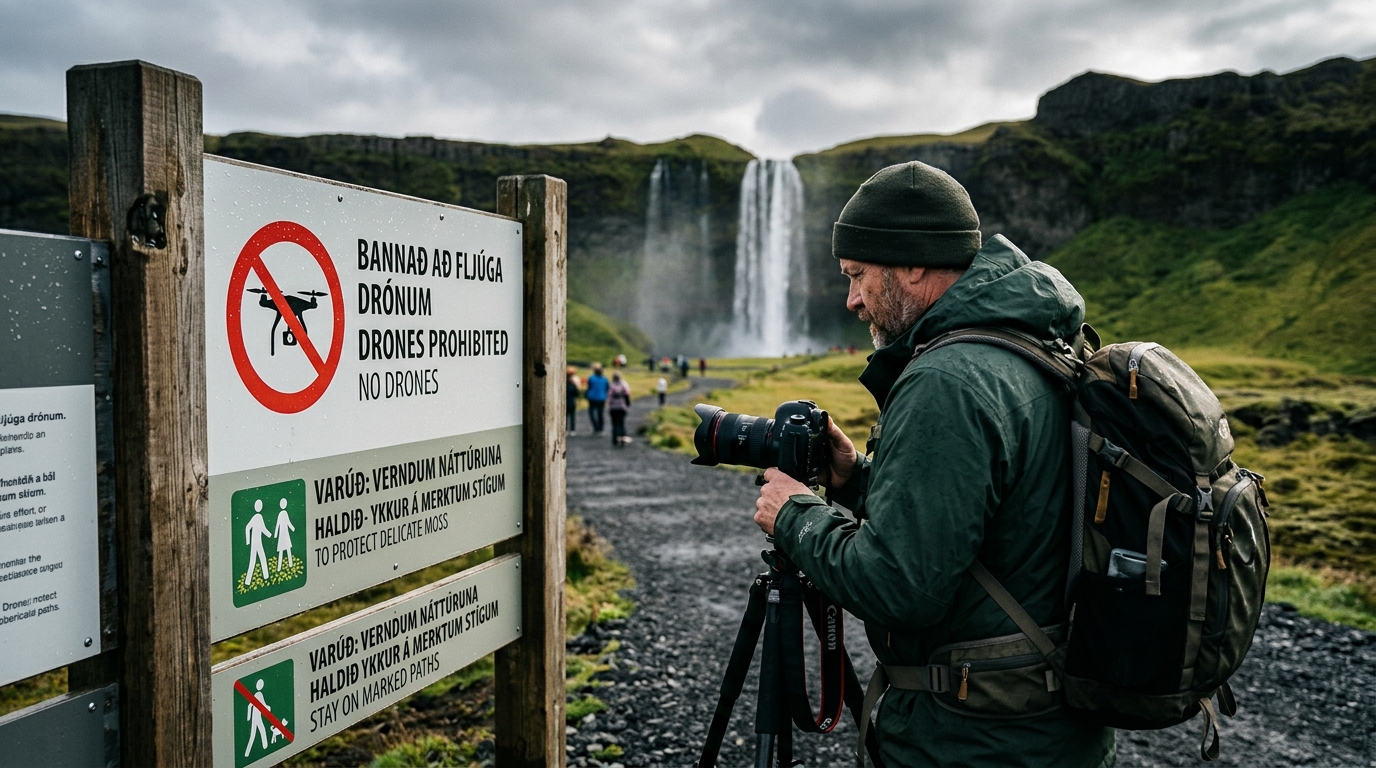
Introduction: Why Understanding Iceland's Photography Regulations Matters
Iceland, a land forged by fire and ice, offers a photographer's paradise unlike any other on Earth. From cascading waterfalls and black sand beaches to shimmering glaciers and the ethereal Northern Lights, its dramatic landscapes draw countless artists and adventurers. However, this breathtaking beauty is also incredibly fragile and susceptible to human impact. As visitors, especially those wielding cameras, we carry a significant responsibility to protect these unique environments and respect the local culture. Understanding Iceland's photography regulations isn't just about avoiding fines; it's about being a conscientious traveler and ensuring these natural wonders remain pristine for generations to come.
In recent years, the surge in tourism has put immense pressure on Iceland's delicate ecosystems. Uncontrolled foot traffic can erode fragile moss and vegetation, off-road driving leaves scars that take decades to heal, and improper drone use can disturb wildlife and infringe on privacy. The Icelandic government and local communities have implemented clear guidelines and laws to mitigate these impacts, making it crucial for every photographer, whether an amateur tourist or a seasoned professional, to be well-versed in these rules.
This comprehensive guide aims to equip you with the essential knowledge you need to navigate the often complex landscape of Iceland photography regulations in 2026. We'll delve into everything from general etiquette and protected area restrictions to specific laws governing commercial shoots and drone operation. By the end of this post, you'll have a clear understanding of how to capture Iceland's magic respectfully, legally, and without leaving a trace.
General Photography Etiquette and Laws in Iceland
Beyond specific permits and designated zones, a foundational understanding of general photography etiquette and overarching laws is crucial for any photographer in Iceland. These principles are rooted in respect for nature, private property, and fellow travelers, forming the bedrock of responsible tourism.
- Stay on Marked Paths and Trails: This is perhaps the most critical rule for protecting Iceland's fragile ecosystems. The delicate mosses, lichens, and volcanic soil can take hundreds of years to recover from damage caused by off-path walking. Designated trails are established to guide visitors safely and minimize environmental impact. Venturing off these paths, even for what seems like a quick shot, can lead to irreparable damage and is often illegal in protected areas. often observe signage; if a path is roped off or a sign indicates a closed area, respect it.
- Do Not Disturb Wildlife or Vegetation: Iceland is home to unique flora and fauna, from puffins nesting on cliffs to Arctic foxes roaming remote highlands. Maintain a respectful distance from all wildlife. rarely chase, feed, or attempt to touch animals. Similarly, avoid stepping on, picking, or otherwise disturbing vegetation. This includes the iconic Icelandic moss, which is extremely slow-growing and vital to the ecosystem. Your photograph should capture the scene as it is, without causing distress or damage.
- Respect Private Property Signs and Local Land Ownership: Much of Iceland's stunning landscape is privately owned. While many landowners are welcoming to visitors, it is imperative to respect "No Trespassing" signs or any indications of private land. If you are unsure, err on the side of caution or seek explicit permission from the landowner. Unauthorized entry onto private property for photography, even if seemingly harmless, can lead to legal issues and tarnish the reputation of photographers in general. Many popular sites, such as Búðarkirkja, are on private land and require visitors to stay on designated paths.
- Adhere to 'Leave No Trace' Principles: This globally recognized set of ethics is fundamental to responsible outdoor photography. It means planning ahead, traveling and camping on durable surfaces, disposing of waste properly (pack it in, pack it out, including organic matter like fruit peels), leaving what you find, minimizing campfire impacts (where permitted, which is rare in Iceland), respecting wildlife, and being considerate of other visitors. Your goal should be to leave a location exactly as you found it, or even better. For more comprehensive guidance on responsible travel in Iceland, consult resources like SafeTravel.is.
- Basic Rules for Photography in Public Spaces Versus Private Land: In general, photography in public spaces is allowed. This includes streets, parks, and publicly accessible natural areas. However, this freedom does not extend to private property without permission. often be mindful of your surroundings. If you are near a home, farm, or business, consider if your photography could be perceived as intrusive. When in doubt, it's often best to ask.
By internalizing these general principles, you lay the groundwork for a positive and compliant photography experience throughout your Icelandic journey.
Navigating Photography Regulations in Iceland's Protected Areas and Nature Reserves
Iceland's most iconic and ecologically sensitive locations are often designated as protected areas, each with specific Iceland photography regulations designed to preserve their unique character. These regulations are more stringent than general etiquette and often involve specific permit requirements for certain activities.
Definition and Types of Protected Areas
Iceland's protected areas fall into several categories, each with varying levels of protection and rules:
- National Parks: These are large, nationally significant areas managed for conservation, recreation, and scientific research. Iceland has three National Parks: Vatnajökull National Park (the second largest in Europe by area, after Yugyd Va National Park in Russia), Snæfellsjökull National Park, and Þingvellir National Park. These areas have comprehensive management plans and strict rules.
- Nature Reserves: Smaller than National Parks, these areas are established to protect specific natural features, ecosystems, or species. Examples include Hornstrandir Nature Reserve in the Westfjords or Friðland að Fjallabaki (Landmannalaugar and surrounding areas).
- Natural Monuments: These protect individual natural features of outstanding value, such as specific waterfalls, geological formations, or unique rock structures.
- Other Protected Areas: This can include bird sanctuaries, wetlands of international importance (Ramsar sites), and specific conservation areas.
The Environment Agency of Iceland (Umhverfisstofnun) is the primary authority overseeing these areas and their regulations. You can find detailed information on their official website: ust.is/english/.
Specific Restrictions within Protected Zones
Across all protected areas, common restrictions apply:
- No Off-Roading: This is a strict and heavily enforced law throughout Iceland, but especially critical in protected areas. Driving off marked roads or tracks is strictly forbidden and can result in significant fines and environmental damage that lasts for decades. Even seemingly minor deviations can cause irreversible harm to delicate ecosystems.
- No Camping Outside Designated Areas: Wild camping is generally restricted in Iceland, and almost entirely prohibited within protected areas. You must use designated campsites, which often require booking in advance, especially during peak season. This helps manage waste, human impact, and ensures safety.
- No Disturbing Geological Formations or Vegetation: Taking samples, carving names, or otherwise altering natural features is illegal. This includes not walking on fragile lava formations or touching geothermal features. Respect the natural state of everything you encounter.
- Strict Waste Management: Absolutely no littering. All waste, including food scraps, must be packed out.
- Fire Restrictions: Open fires are generally prohibited or severely restricted due to the risk of wildfires and damage to sensitive ground.
Permit Requirements for Certain Activities or Locations
While personal photography by tourists generally doesn't require a permit in most protected areas (as long as you adhere to general rules), specific activities or locations do. For instance, commercial photography and filming almost often require permits (discussed in the next section). For comprehensive details on commercial filming permits across Iceland, including those for protected areas, the Icelandic Film Centre and the Environment Agency of Iceland are key resources. Additionally:
- Vatnajökull National Park: Due to its vastness and diverse zones (including the Highlands and Skaftafell), certain activities or access to specific remote areas may require special permits, especially for organized tours or research. often check the park's specific guidelines well in advance of your trip.
- Research and Scientific Photography: Any photography conducted for research purposes often requires permits from the Environment Agency of Iceland or relevant institutions.
- Large Group Photography: If you are leading a large photography workshop or tour, even if for personal use by participants, you might need to notify authorities or obtain specific permits, especially if your group size could impact the site or other visitors.
It's always recommended to consult the official website of the specific national park or nature reserve you plan to visit for the most up-to-date information on photography permits Iceland.
Understanding Signage and Local Guidelines at Popular Spots
Popular tourist sites like Reynisfjara black sand beach, Jökulsárlón glacier lagoon, or the Golden Circle attractions often have specific local guidelines and prominent signage. These signs are there for your safety and to protect the environment. Pay close attention to warnings about dangerous waves at Reynisfjara, restrictions on walking on glaciers without a guide, or designated viewing platforms at waterfalls like Dettifoss.
Ignoring these signs can not only lead to fines but also put you in dangerous situations. For example, rogue waves at Reynisfjara have claimed lives, and unstable ice at Jökulsárlón is a constant hazard. Local guides and park rangers are excellent sources of information; don't hesitate to ask them if you have questions about specific rules.
By respecting these protected areas and understanding their unique Iceland photography regulations, you contribute directly to the preservation of Iceland's most precious natural treasures.
Commercial Photography and Filming Laws in Iceland: What You Need to Know
For professional photographers and filmmakers, the legal landscape in Iceland is significantly more complex than for a tourist snapping photos. Understanding the distinction between personal and commercial use, and navigating the permit system, is paramount to avoid legal complications and ensure a smooth production.
Distinction Between Personal and Commercial Use
The key differentiator lies in the intent and eventual use of the images or footage. Generally:
- Personal Use: Photos and videos taken for private enjoyment, sharing with friends and family, or non-monetized social media posts (where the primary purpose isn't direct income generation or advertising a product/service) are typically considered personal.
- Commercial Use: This encompasses any photography or filming intended for profit, advertising, promotional material, sale, broadcast, or any use by a business or organization. This includes, but is not limited to, fashion shoots, advertising campaigns, documentary filmmaking, stock photography intended for sale, and even monetized YouTube channels if the content is primarily for business promotion. If you are being paid for the shoot or the resulting images/footage will generate income, it's commercial.
When in doubt, it's safer to assume your project might fall under commercial use and inquire about permits.
Overview of Filming Permits and Application Processes
Any commercial photography or filming project in Iceland, especially those involving crews, equipment, or specific locations, will almost certainly require permits. The primary entity to contact for large-scale filming is the Icelandic Film Centre (Kvikmyndamiðstöð Íslands). While their focus is often on film and TV productions, they can advise on broader commercial filming laws Iceland.
For location-specific permits, especially within protected areas, you will need to apply to the relevant authorities:
- Environment Agency of Iceland (Umhverfisstofnun): For projects within National Parks, Nature Reserves, and other protected areas. Applications typically require detailed plans, risk assessments, and proof of insurance.
- Local Authorities (Municipalities): For filming in towns, cities, or on local roads. This might involve permits for road closures, use of public spaces, or coordination with local police.
- Road Administration (Vegagerðin): For filming on national roads or highways, especially if it impacts traffic.
- Private Landowners: If any part of your shoot is on private land, you must secure explicit written permission from the landowner.
The application process can be lengthy, often requiring several weeks or even months for complex projects. It involves submitting detailed production plans, location lists, equipment lists, crew numbers, and environmental impact assessments.
Fees, Insurance Requirements, and Contractual Obligations
Commercial projects often incur various fees:
- Permit Application Fees: These vary depending on the scope and location of the project.
- Location Fees: Some popular or sensitive locations may charge daily or hourly fees for commercial access.
- Environmental Impact Fees: Larger productions may be required to pay a fee to cover potential environmental monitoring or restoration.
Insurance: Comprehensive liability insurance is almost often a mandatory requirement for commercial projects. This protects against damage to property, injury to third parties, and environmental harm. The required coverage amounts can be substantial.
Contractual Obligations: Be prepared for detailed contracts outlining the terms of your permit, including limitations on access, specific environmental protection measures, waste disposal plans, and reporting requirements. Non-compliance can lead to immediate permit revocation, fines, and legal action.
Specific Considerations for Large Crews, Heavy Equipment, and Potential Impact
The larger and more impactful your commercial photography project, the more scrutiny it will receive. Considerations include:
- Crew Size: Larger crews can have a greater environmental footprint and require more logistical planning.
- Heavy Equipment: Cranes, large lighting setups, vehicles, and generators can cause significant disturbance and may require special access routes or protective measures for the ground.
- Set Construction: Any temporary structures or alterations to the landscape will require explicit permission and a plan for complete removal and restoration.
- Noise and Light Pollution: Be mindful of how your production might affect local communities, wildlife, or other visitors, especially during night shoots (e.g., for Northern Lights photography).
Working with an experienced local fixer or production company in Iceland can significantly streamline the permit process and ensure compliance with all commercial photography Iceland laws. They understand the nuances of local regulations and can help navigate the bureaucracy.
Intellectual Property and Usage Rights Considerations for Published Works
While permits grant you the right to shoot in a location, they generally do not automatically transfer intellectual property rights or imply endorsements. Be clear on who owns the rights to the footage/images and how they can be used. If photographing specific landmarks or cultural sites, ensure your usage aligns with any public domain or specific usage guidelines. When working with local talent or private property, clear contracts regarding image rights are essential. For those looking to explore a wide range of locations for commercial projects, Iceland Photo Map provides detailed location guides that can help in early planning stages.
Drone Photography Regulations: Flying Legally and Responsibly in Iceland
Drone photography offers unparalleled perspectives of Iceland's landscapes, but it's also one of the most heavily regulated aspects of modern photography due to safety, privacy, and environmental concerns. Ignorance of the law is no excuse, and penalties for illegal drone operation can be severe.
General Drone Laws: Registration Requirements, Maximum Flight Altitude, Distance from Airports/Populated Areas
As of 2026, drone regulations in Iceland are primarily governed by the Icelandic Transport Authority (Samgöngustofa), aligning with European Union Aviation Safety Agency (EASA) rules. You can find detailed information on their website: samgongustofa.is/english/aviation/drones/. Key general rules include:
- Operator Registration: All drone operators (owners) must register with the Icelandic Transport Authority if their drone has a camera or weighs over 250 grams. This is a mandatory step for both residents and foreign visitors operating drones.
- Pilot Competency: Depending on the drone's weight and intended use (Open, Specific, or Certified category), pilots may need to complete online training and pass an exam to obtain a certificate of competency. Most tourist drone use falls under the "Open" category, requiring basic knowledge.
- Maximum Flight Altitude: Drones are generally restricted to a maximum altitude of 120 meters (approximately 394 feet) above ground level.
- Visual Line of Sight (VLOS): The drone must often remain within the operator's direct visual line of sight.
- Distance from Airports and Populated Areas: Drone flight is generally restricted near airports, populated areas, and sensitive infrastructure. Operators must consult official aeronautical information and local NOTAMs (Notice to Airmen) for specific no-fly zones and distance requirements, which can vary.
- Night Flying: Generally restricted without special permission and specific lighting on the drone.
Designated No-Fly Zones: National Parks, Nature Reserves, Private Property, Specific Tourist Sites
Beyond the general restrictions, many specific locations in Iceland are designated no-fly zones for drones. These include:
- All National Parks: In Vatnajökull National Park, recreational drone flying is generally allowed with regional and time restrictions, though no special permits are issued for recreational use; commercial or research purposes require permits. In Snæfellsjökull National Park, drone flying is restricted seasonally (e.g., April 15 to September 15), and recreational permits are now extremely restricted, primarily issued for commercial or research purposes. In Þingvellir National Park, recreational drone flying is permitted during specific early morning and late afternoon hours in designated areas.
- Many Nature Reserves and Protected Areas: A vast number of nature reserves, natural monuments, and bird sanctuaries explicitly forbid drone operation to protect wildlife and the delicate environment. This includes popular spots like Dyrhólaey, Reynisfjara (due to bird nesting and safety), Jökulsárlón/Diamond Beach, and Landmannalaugar.
- Private Property: Flying over private property, particularly near buildings, without explicit permission from the landowner is generally prohibited and can lead to legal issues.
- Specific Tourist Sites: Even outside formally protected areas, many popular tourist attractions have local bylaws prohibiting drones due to congestion, safety concerns, or to preserve the visitor experience. often look for "No Drone" signs.
- Areas with Wildlife: Even if not explicitly a no-fly zone, flying near any wildlife (especially nesting birds, seals, or reindeer) is highly discouraged and can be considered harassment, leading to fines.
It is the operator's responsibility to know and respect these no-fly zones. Resources like the Iceland Photo Map can help identify sensitive areas, though specific drone maps should often be cross-referenced with official authority information.
Rules Regarding Flying Near People, Wildlife, and Sensitive Natural Features
- Near People: Drones should not be flown over crowds of people or within 50 meters (164 feet) horizontally of uninvolved persons unless the drone is very light (under 250g) and flying in a specific subcategory. often prioritize the safety and privacy of others.
- Near Wildlife: Avoid flying anywhere near birds, especially nesting colonies on cliffs, seals on beaches, or other animals. The noise and presence of a drone can cause significant stress and disturbance, potentially leading to abandonment of nests or habitats.
- Sensitive Natural Features: Do not fly directly into or above geological formations (like canyons), geothermal areas (steam can damage drones), or fragile vegetation. The downwash from a drone can disturb delicate mosses or even dislodge small rocks.
Penalties for Illegal Drone Operation and Potential Equipment Confiscation
Violating drone regulations in Iceland can lead to serious consequences:
- Fines: Significant monetary fines are common, ranging from hundreds to thousands of Euros, depending on the severity of the infraction.
- Equipment Confiscation: Your drone and associated equipment can be confiscated by authorities.
- Legal Action: In severe cases, especially those involving environmental damage or reckless endangerment, legal prosecution is possible.
These penalties are actively enforced by park rangers, police, and other authorities.
Tips for Safe, Ethical, and Respectful Drone Use to Avoid Disturbances
- Check Before You Fly: often research the specific location's drone rules before arriving. Use official sources like the Icelandic Transport Authority and the Environment Agency of Iceland.
- Get Registered and Certified: Ensure you are registered as an operator and have any required pilot certifications.
- Plan Your Flight: Understand your drone's capabilities and limitations. Check weather conditions; Iceland's winds can be brutal and unpredictable.
- Respect Privacy: Avoid flying over private homes or filming individuals without their explicit consent.
- Be Mindful of Others: The sound of a drone can be intrusive. If a location is crowded, consider if your drone will detract from other visitors' experience.
- Prioritize Safety: often keep your drone in sight, inspect it before each flight, and be prepared for emergencies.
By following these guidelines, you can responsibly capture the stunning aerial vistas Iceland offers without causing harm or breaking the law. For specific locations, consider exploring Iceland Photo Map's comprehensive maps to identify potential drone-friendly spots, always cross-referencing with current regulations.
Respecting Privacy and Cultural Sensitivity in Your Iceland Photography
Beyond environmental and safety regulations, ethical photography in Iceland requires a deep respect for privacy and cultural sensitivity. Your lens captures more than just landscapes; it often captures moments of people's lives and aspects of a vibrant culture.
Laws Regarding Photographing Individuals in Public Versus Private Settings
Icelandic law, similar to many European countries, generally allows photography of individuals in public spaces where there is no reasonable expectation of privacy. This means you can typically photograph people in streets, parks, and public events without explicit permission, as long as the photography is not harassing, intrusive, or used commercially without consent.
However, this becomes much more restrictive in private settings. Photographing individuals on private property (e.g., inside homes, private businesses, or even private gardens) without permission is a clear violation of privacy. Even in public spaces, if an individual expresses discomfort or asks you to stop, you should immediately comply.
The key is to use common sense and empathy. Just because something is legally permissible doesn't often make it ethically right.
Importance of Asking for Explicit Permission When Photographing People, Especially Children
While legally you might not often *need* permission in public, ethically, it is often best practice to ask. This is especially true if an individual is the primary subject of your photograph, rather than just being part of a broader scene.
- Adults: A simple gesture or a polite "May I take your picture?" goes a long way. Most Icelanders are friendly and will likely agree, but respecting a "no" is crucial.
- Children: rarely photograph children without the explicit consent of their parents or legal guardians. This is a strict ethical guideline and often a legal requirement. Parents are naturally protective, and unauthorized photos of children can be deeply unsettling.
Asking for permission builds trust and shows respect. It can also lead to more authentic and compelling photographs, as the subject is a willing participant.
Sensitivity Around Religious Sites, Cemeteries, Private Homes, and Local Communities
- Religious Sites (e.g., Churches like Búðarkirkja or Víðimýrarkirkja): Many churches and religious sites welcome visitors and photographers, but always be respectful. Silence your camera, avoid flash during services, and do not disrupt worshippers. Some sites may have specific rules about photography indoors.
- Cemeteries: Cemeteries are places of mourning and remembrance. Photography should be discreet, respectful, and rarely intrusive. Avoid photographing gravesites directly, especially those with personal details, unless you have a specific, respectful purpose and permission.
- Private Homes: Do not point your camera directly into private homes or gardens. Respect the sanctity of private living spaces.
- Local Communities: When photographing in small towns or villages, be mindful of local residents. Avoid making people feel like subjects in a zoo. Be discreet, humble, and consider how your presence and photography might impact their daily lives. Engage with people, buy local products, and be a positive visitor.
Avoiding Stereotypes or Misrepresentation in Imagery of Icelandic Culture
As a photographer, you have the power to shape perceptions. Be conscious of how you portray Icelandic culture and people. Avoid perpetuating stereotypes or creating images that misrepresent their way of life. Aim for authenticity and nuance. For example, while traditional clothing might be picturesque, it's not everyday attire for most Icelanders. Focus on capturing the real, contemporary Iceland alongside its historical and natural beauty.
Ethical Considerations for Documenting Local Life and Traditions
If you are interested in documenting local life, festivals, or traditions, approach it with journalistic integrity and profound respect. Seek to understand the context of what you are photographing. Collaborate with local people, explain your intentions, and offer to share your work. This ethical approach not only ensures compliance but also enhances your photography and provides a more meaningful experience for everyone involved.
Consequences of Non-Compliance: Penalties and Staying Up-to-Date on Iceland Photography Regulations
Understanding the rules is one thing; understanding the consequences of breaking them is another. Iceland takes its environmental protection and public safety seriously, and violations of Iceland photography regulations can lead to significant penalties, impacting your trip and potentially future travel.
Overview of Fines for Environmental Damage, Trespassing, or Illegal Drone Use
The financial penalties for non-compliance can be substantial:
- Environmental Damage: Fines for off-roading, stepping off marked paths in protected areas, or disturbing vegetation can range from hundreds to thousands of Euros, depending on the severity and extent of the damage. These fines are often determined by the Environment Agency of Iceland and local authorities. For example, driving off-road in sensitive areas can lead to fines upwards of ISK 300,000 (approx. €2,000-€2,500, subject to exchange rates).
- Trespassing: Entering private property without permission can result in fines and, in some cases, legal charges. Landowners have the right to press charges, and local police will enforce these laws.
- Illegal Drone Use: As discussed, flying drones in no-fly zones, without registration, or in a reckless manner can lead to fines ranging from several hundred to several thousand Euros. The Icelandic Transport Authority is the primary enforcement body for drone regulations.
- Commercial Filming Without Permits: Conducting commercial photography or filming without the necessary permits can result in hefty fines, cessation of the project, and potential blacklisting for future permits.
These fines are not merely theoretical; they are actively enforced by park rangers, police, and other authorities across the country. Payments are often required on the spot or within a short timeframe.
Potential for Equipment Confiscation, Legal Action, or Travel Restrictions
Beyond monetary fines, other serious consequences can arise:
- Equipment Confiscation: For serious violations, particularly involving drones or commercial activities without permits, authorities have the right to confiscate your equipment. This can mean losing valuable cameras, lenses, drones, and storage devices.
- Legal Action: In cases of severe environmental damage, repeated offenses, or actions that endanger public safety, legal charges can be filed. This could lead to court appearances, a criminal record, and potentially imprisonment, although this is rare for typical photography infractions.
- Travel Restrictions: While not common for minor offenses, severe violations could potentially impact your ability to re-enter Iceland or other Schengen Area countries in the future, especially if a criminal record is involved.
Importance of Checking Official Sources Before and During Your Trip
Regulations can and do change. What was permissible last year might not be this year. Therefore, it is critically important to consult official sources both before you travel and periodically during your trip:
- Environment Agency of Iceland (Umhverfisstofnun): Essential for protected areas, general nature conservation, and visitor rules (ust.is/english/).
- Icelandic Transport Authority (Samgöngustofa): Crucial for all drone-related regulations (samgongustofa.is/english/aviation/drones/).
- Local Tourism Boards and Park Authorities: For specific guidance on local sites and protected areas.
- Icelandic Film Centre: For commercial filming inquiries.
- SafeTravel.is: For general safety and responsible travel guidelines (safetravel.is).
Make it a habit to check for updates, especially for sensitive areas or if you plan any activities that might fall into a gray area. Ignorance of the law is not considered a valid defense.
How Regulations Can Change and Why Continuous Awareness Is Key for Photographers
Iceland is experiencing rapid changes due to climate change and increasing tourism. As a result, regulations are frequently reviewed and updated to address new challenges. New protected areas might be designated, existing rules might be tightened (e.g., new drone no-fly zones), or access to certain areas might be temporarily restricted due to environmental sensitivity or safety concerns.
For photographers, this means continuous awareness is key. Relying on outdated information from old blog posts or social media can lead to unintentional violations. often seek out the most current official guidance. By staying informed, you not only avoid penalties but also contribute to the sustainable future of Iceland's natural wonders.
Reporting Violations and Contributing to Responsible Tourism
If you witness serious violations of environmental or photography regulations, you can report them to the relevant authorities (e.g., Environment Agency of Iceland, local police). While it might feel uncomfortable, reporting helps enforce the rules and protects Iceland for everyone. Responsible tourism is a collective effort, and photographers, with their deep appreciation for natural beauty, can be powerful advocates for ethical practices.
Frequently Asked Questions
Do I need a permit for personal photography in Iceland?
For most personal photography by tourists, a general permit is not required in Iceland, provided you adhere to common etiquette and general laws. This means staying on marked paths, respecting private property, and not disturbing wildlife. However, if your personal photography involves activities like flying a drone (which requires operator registration and adherence to no-fly zones) or if you plan to access very remote or sensitive areas, specific permissions might be necessary. Commercial photography often requires permits.
Are there any areas where drone photography is completely forbidden in Iceland?
Yes, absolutely. Drone photography is completely forbidden in all three of Iceland's National Parks (Vatnajökull, Snæfellsjökull, and Þingvellir) without special commercial or research permits, which are rarely granted to recreational users. Additionally, many nature reserves, bird sanctuaries (like Dyrhólaey), and popular tourist attractions (such as Jökulsárlón, Reynisfjara, and Skógafoss) have explicit local bans on drone operation. Drone flight is also generally restricted near airports and populated areas. Always look for "No Drone" signs and consult official sources like the Icelandic Transport Authority (samgongustofa.is/english/aviation/drones/) and the Environment Agency of Iceland (ust.is/english/) before flying.
What are the rules for photographing people in Iceland?
In public spaces, you can generally photograph people without explicit permission if they are part of a broader scene and have no reasonable expectation of privacy. However, if an individual is the primary subject of your photograph, it is often best practice and highly recommended to ask for their explicit permission. This is especially crucial when photographing children, where parental consent is mandatory. Avoid photographing people on private property without permission, and often respect requests to stop or delete images. Prioritize respect and privacy.
How can I check if a specific location is a protected area with special photography rules?
The most reliable way to check if a specific location is a protected area and understand its rules is to consult the official website of the Environment Agency of Iceland (ust.is/english/). They provide detailed information on National Parks, Nature Reserves, and other protected sites, including specific regulations for visitors and photographers. Local tourism information centers and park ranger stations on-site are also excellent resources for up-to-date information and specific local guidelines.
What are the penalties for breaking photography regulations in Iceland?
Penalties for breaking Iceland photography regulations can be significant. They include substantial monetary fines ranging from hundreds to thousands of Euros for environmental damage (e.g., off-roading, stepping off paths), trespassing, or illegal drone operation. In more severe cases, authorities may confiscate your photography equipment (e.g., drones, cameras). Repeated offenses or actions that cause significant harm could lead to legal action, including potential prosecution and even travel restrictions. It's essential to take these regulations seriously to avoid severe consequences.
Conclusion: Photographing Iceland Responsibly and Legally
Iceland is a land of unparalleled photographic opportunities, a place where every turn reveals a landscape more dramatic than the last. But with this privilege comes a profound responsibility. This guide has illuminated the essential Iceland photography regulations, from the general tenets of 'Leave No Trace' and respecting private property to the specific nuances of protected areas, commercial filming, and drone operation.
The beauty of Iceland is inextricably linked to its fragility. Its unique ecosystems, whether ancient moss fields, nesting bird cliffs, or pristine glaciers, are incredibly vulnerable to human impact. By adhering to these regulations, you're not just avoiding fines; you're actively participating in the preservation of this magnificent country for future generations of photographers and travelers.
We encourage you to use resources like Iceland Photo Map to plan your compliant photography adventure. Iceland Photo Map's detailed location guides and comprehensive maps are designed to help you discover stunning, legally accessible spots, ensuring your journey is both impactful and respectful. Be a steward of Iceland's natural heritage, capture its magic responsibly, and leave nothing but footprints – and breathtaking, legally obtained, photographs.
Ready to plan your compliant photography adventure? Explore Iceland Photo Map's detailed location guides and maps to discover stunning, legally accessible spots for your next shot.