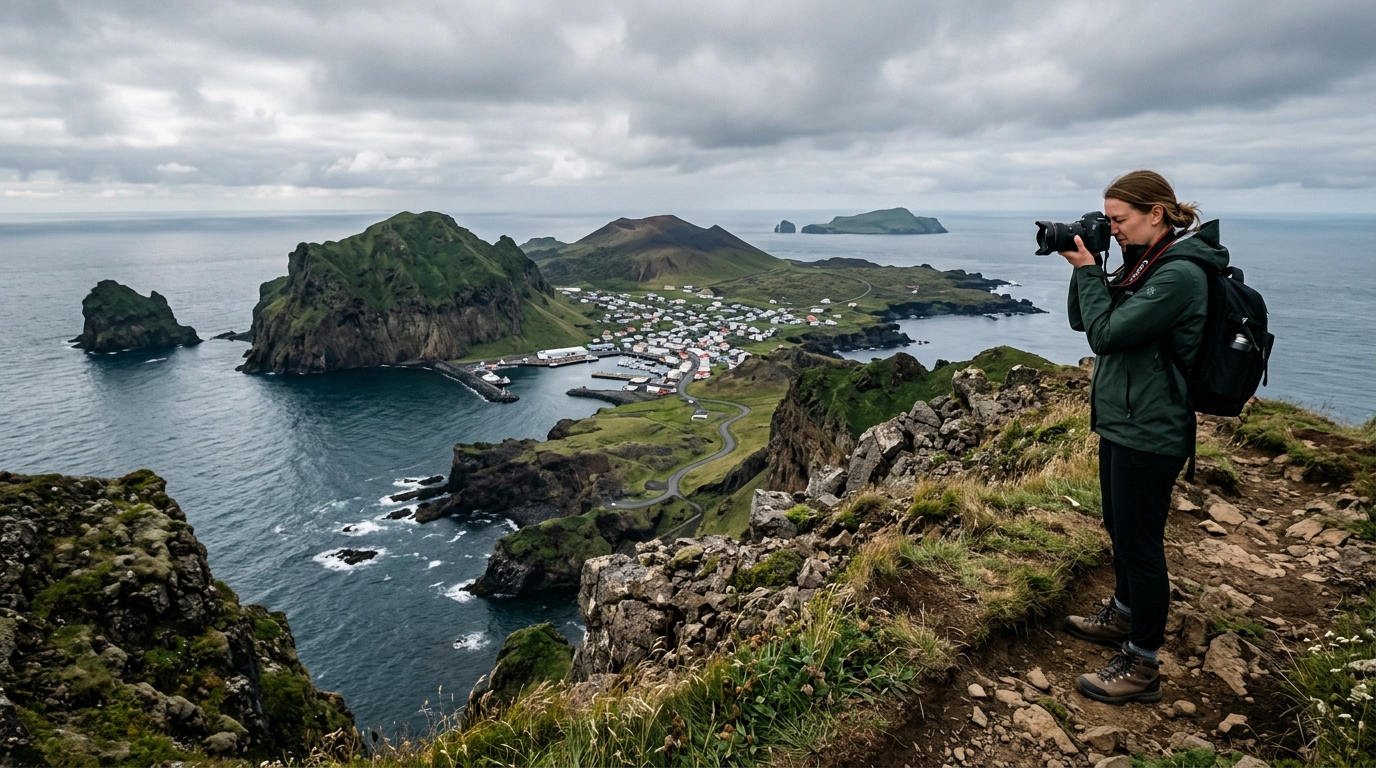
Introduction: Why Vestmannaeyjar is a Photographer's Dream Destination
Nestled off Iceland's south coast, the Vestmannaeyjar archipelago, commonly known as the Westman Islands, presents an unparalleled canvas for photographers. This remote cluster of islands, dominated by the sole inhabited island of Heimaey, is a testament to nature's raw power and enduring beauty. With its dramatic volcanic landscapes, abundant and accessible wildlife, rugged coastlines carved by the relentless Atlantic, and a rich history punctuated by a cataclysmic eruption, Vestmannaeyjar offers a unique blend of photographic opportunities found nowhere else on Earth. For landscape and wildlife photographers, the Westman Islands are a true marvel. Imagine capturing the stark contrast of jet-black lava fields against vibrant green moss, the towering cliffs teeming with millions of seabirds, or the ethereal glow of sunrise over a town rebuilt from volcanic ash. The islands' geological youth means a dynamic, ever-changing environment, while their isolation has fostered a unique ecosystem. This comprehensive Vestmannaeyjar Photography Guide is designed to equip you with all the knowledge and practical tips you need to immortalize its extraordinary beauty, ensuring your expedition yields a truly stunning portfolio. Prepare to discover the Westman Islands' best photo spots and uncover the secrets to capturing their magic.Planning Your Vestmannaeyjar Photography Expedition: Logistics and Preparation
A successful photography trip to Vestmannaeyjar hinges on meticulous planning. The islands' remote nature requires careful consideration of travel, accommodation, and seasonal timing.Getting to Heimaey: Ferry schedules and flight options
The primary gateway to Vestmannaeyjar is Heimaey, the largest island. The most common and scenic way to reach it is by ferry from Landeyjahöfn on the mainland. The Herjólfur ferry operates multiple times a day, though schedules can be subject to change due to weather and tidal conditions. It's crucial to book your ferry tickets well in advance, especially during peak season (June-August), and to check the latest schedule and departure status via the official Herjólfur website before your journey. The journey itself offers fantastic photographic opportunities as you approach the dramatic cliffs of Heimaey. For those seeking a quicker, albeit more expensive, option, domestic flights are available from Reykjavík to Vestmannaeyjar Airport (VEY). This can be particularly useful if you have limited time or prefer to avoid potential ferry cancellations.Accommodation and transportation on the island
Heimaey offers a range of accommodation options, from cozy guesthouses and hotels to campsites. Booking ahead is highly recommended, especially during the summer months when the island is bustling with tourists and photographers. Once on Heimaey, the island is surprisingly walkable, particularly the main town area. Many of the key photo spots are accessible on foot, but to explore further afield, a rental car provides maximum flexibility. Several local companies offer car rentals, or you can bring your own vehicle on the ferry. Alternatively, local tour operators provide guided excursions that can take you to prime locations, often with valuable local insights. Cycling is another popular option for navigating the island's relatively gentle terrain.Best seasons for photography
The choice of season significantly impacts your photographic experience in Vestmannaeyjar: * **Summer (June-August):** This is peak season for a reason. Long daylight hours (the "midnight sun" effect) provide endless opportunities for golden hour and blue hour photography. Crucially, this is the best time for puffin photography, as millions of these charismatic birds nest on the cliffs. Expect vibrant green landscapes, warmer temperatures, and a lively atmosphere, but also more crowds and higher prices. * **Spring (April-May) and Autumn (September-October):** These shoulder seasons offer a compelling balance. You'll find fewer crowds, potentially lower prices, and still good chances for wildlife (especially in early spring/late autumn for migrating birds). The light takes on a more dramatic quality, and autumn brings beautiful hues to the vegetation. However, puffins will start to depart by mid-August. * **Winter (November-March):** For the intrepid photographer, winter offers a stark, ethereal beauty. Dramatic light, snow-dusted landscapes, and virtually no crowds create a truly unique atmosphere. While puffins are absent, you might capture stunning seascapes, stormy skies, and if conditions align, the Northern Lights. Be prepared for harsh weather conditions, shorter daylight hours, and potentially limited services.Essential gear checklist
Your gear choices will be critical for tackling Vestmannaeyjar's diverse photographic challenges: * **Camera Body:** A reliable DSLR or mirrorless camera with good dynamic range and low-light performance. * **Lenses:** * **Wide-angle (14-24mm or similar):** Essential for grand landscapes, volcanic vistas, and capturing the scale of the island. * **Mid-range zoom (24-70mm or 24-105mm):** Versatile for general use, street photography, and environmental portraits. * **Telephoto (70-200mm or 100-400mm+):** Absolutely crucial for wildlife photography, especially puffins and other seabirds. A longer prime lens (e.g., 300mm or 400mm) with a fast aperture can also be excellent for birds. * **Tripod:** Non-negotiable for long exposures, low-light shots (like Northern Lights in winter), and ensuring sharpness in challenging conditions. Look for a sturdy, weather-resistant model. * **Filters:** * **Polarizer:** Reduces glare on water and enhances sky colors. * **Neutral Density (ND) filters:** For long exposures, especially for smoothing water or capturing motion blur in clouds. Graduated ND filters can help balance bright skies with darker foregrounds. * **Batteries and Memory Cards:** Bring plenty of spares. Cold weather drains batteries faster, and you'll be shooting a lot! * **Weather Protection:** This is Iceland. Waterproof camera covers, a sturdy camera bag, and lens cloths are essential. Expect wind, rain, and sea spray. * **Drone Considerations:** Vestmannaeyjar's dramatic topography is perfect for aerial photography. However, regulations in Iceland are strict. Always check the latest guidelines from the Icelandic Transport Authority (ICETRA) regarding restricted areas, altitude limits, and operating procedures before flying. Respect wildlife and privacy. * **Cleaning Supplies:** Dust blower, lens pen, microfiber cloths for lenses and filters. * **Personal Gear:** Waterproof and windproof outer layers, warm base layers (even in summer), sturdy hiking boots, gloves, hat, and snacks. The weather can change rapidly.Iconic Vestmannaeyjar Photography Spots: Landscapes and Landmarks
The Westman Islands are dotted with incredible photo opportunities, each telling a piece of the island's unique story. From volcanic peaks to dramatic sea stacks, these are the must-visit Vestmannaeyjar photo spots.Eldfell Volcano: Capturing the lava fields, craters, and panoramic views from the summit
Eldfell, meaning "Fire Mountain," is the youngest volcano in the Vestmannaeyjar archipelago, born from a sudden eruption in 1973. This event reshaped Heimaey, adding significant new landmass and burying parts of the town under ash and lava. For photographers, Eldfell offers a truly unique subject. Climbing to the summit of Eldfell, a relatively easy hike, rewards you with breathtaking panoramic views of Heimaey, the surrounding islands, and the vast Atlantic. From here, you can capture the sprawling, dark lava fields that still bear the scars of the eruption, a stark reminder of nature's power. The reddish-brown hues of the cinder cone itself provide a striking contrast against the often-green island. Focus on wide-angle shots to convey the immense scale of the landscape, and use a telephoto lens to pick out details like the exposed rooftops of buried houses or the distant harbor. Sunrise and sunset are particularly magical here, casting long shadows and painting the sky in dramatic colors over the volcanic terrain.Stórhöfði Peninsula: The 'windiest place in Europe' and a prime location for puffin photography and coastal vistas
Located on the southernmost tip of Heimaey, Stórhöfði is famed for two things: being often cited as one of the windiest places in Europe and being a phenomenal spot for puffin photography. The peninsula offers dramatic cliff faces that plummet into the ocean, providing nesting grounds for countless seabirds, most notably the Atlantic puffin. From late April to early August, Stórhöfði becomes a bustling hub of puffin activity. Position yourself carefully (and respectfully, maintaining distance) to capture these endearing birds in flight, waddling on the grassy slopes, or returning to their burrows with mouths full of fish. A telephoto lens (400mm or more, if possible) is essential here, along with a fast shutter speed to freeze their rapid wingbeats. Beyond the puffins, Stórhöfði offers sweeping coastal vistas, with the waves crashing against black sand beaches and the distant outlines of other Westman Islands. The lighthouse perched atop the cliff adds a classic element to seascape compositions. Be prepared for strong winds – a sturdy tripod and a firm stance are crucial.Elephant Rock (Klettshellir): Unique rock formation, best angles and tidal considerations
Elephant Rock is one of Vestmannaeyjar's most iconic natural wonders, a basalt rock formation that strikingly resembles a giant elephant dipping its trunk into the sea. Located on the northwest side of Heimaey, this geological marvel is a testament to the island's volcanic origins and the erosive power of the ocean. To capture Elephant Rock at its best, consider its unique textures and the "face" it presents. Often, shots from a boat tour offer the most direct and impressive view, allowing you to frame the entire formation against the ocean backdrop. If shooting from land, seek elevated viewpoints on the nearby cliffs to capture it in context with the surrounding seascape. The interplay of light and shadow on the rock's textured surface can be incredibly dramatic. Pay attention to tidal conditions; while it's almost always visible, the water level around its "trunk" can change, affecting the reflection and overall composition. Early morning or late afternoon light tends to highlight its features beautifully.Herjólfsdalur Valley: Historic site with turf houses, ideal for cultural and landscape shots
Nestled in a picturesque valley on the west side of Heimaey, Herjólfsdalur is a site steeped in history. It's believed to be the location of the first Norse settlement in Vestmannaeyjar, dating back to the 9th century. Today, it features reconstructed turf houses, offering a glimpse into Iceland's past. This tranquil valley provides a fantastic contrast to the island's raw volcanic landscapes. The turf houses, with their grass roofs blending seamlessly into the hillside, offer unique cultural photography opportunities. Frame them against the backdrop of the valley's green slopes and dramatic cliffs. The area is also known for its annual Þjóðhátíð festival, which, if you visit during that time, transforms the valley into a vibrant hub of celebration, offering incredible opportunities for capturing local culture and festivities. Even outside of festival times, the peaceful setting and historical context make it a rewarding spot for landscape photography with a cultural twist.Heimaey's Harbour: Fishing boats, colorful houses, and the bustling port atmosphere
Heimaey's harbor is the beating heart of the island, a vibrant hub of activity that offers endless street and documentary photography opportunities. It's here that the island's strong fishing culture comes alive. Capture the colorful fishing boats bobbing in the water, their reflections dancing on the surface. The bright, often multi-hued houses lining the harbor provide a charming backdrop, especially under the soft light of morning or late afternoon. Look for candid moments of fishermen at work, the unloading of the day's catch, or the general bustle of port life. The harbor is also where the Herjólfur ferry arrives and departs, offering dynamic scenes of people coming and going. Use leading lines from the docks or boat masts to draw the viewer's eye into your composition. The interplay of man-made structures with the dramatic natural surroundings (like the cliffs flanking the harbor entrance) makes for compelling visual narratives.Capturing Eldfell's Legacy: Photographing the Volcanic Landscape of Heimaey
The 1973 Eldfell eruption is arguably the most defining event in Vestmannaeyjar's recent history, leaving an indelible mark on Heimaey's landscape and the psyche of its inhabitants. Photographing this volcanic legacy requires an approach that conveys both its destructive power and its mesmerizing beauty.Techniques for conveying the scale and impact of the 1973 eruption
When photographing the Eldfell lava fields, the goal is often to illustrate the sheer scale and impact of the eruption. * **Wide-angle lenses:** These are indispensable for capturing the vastness of the lava flow, allowing you to include elements like the town in the foreground or the ocean in the background to provide context. * **Including human elements:** A lone figure walking through the lava field, or the partially buried houses visible at the edge of the flow, can dramatically emphasize the scale of the destruction and the human resilience in its wake. * **Elevated perspectives:** Climbing Eldfell itself provides the best vantage point to see the full extent of the new land created and the path of the lava. Use leading lines formed by the cooled lava ropes to guide the viewer's eye deep into the scene. * **Panoramic stitching:** For truly expansive views, consider shooting a series of overlapping photos and stitching them together in post-processing to create a high-resolution panorama. The "Pompeii of the North" excavation site, where houses buried by ash are slowly being uncovered, offers a poignant glimpse into the eruption's immediate aftermath. Here, focus on details: the texture of the ash, the way it preserved everyday objects, or the exposed walls of a home. These intimate shots can tell a powerful story without needing a wide-angle perspective.Best light for photographing the lava fields and the 'Pompeii of the North' excavation site
The quality of light profoundly affects how the volcanic landscape is perceived. * **Golden Hour (sunrise/sunset):** This is arguably the best time. The low angle of the sun casts long, raking shadows that accentuate the rugged textures and contours of the lava fields. The warm, soft light also brings out the subtle reds, oranges, and purples in the volcanic rock, making the landscape appear more dynamic and vibrant. * **Overcast days:** While less dramatic, an overcast sky provides soft, diffused light that minimizes harsh shadows and can be excellent for capturing the subtle color variations in the lava and moss. It's also ideal for the 'Pompeii of the North' site, as it reduces glare and allows for more even lighting on the excavated structures. * **Blue Hour:** Just before sunrise or after sunset, the blue hour can lend a mysterious, almost otherworldly feel to the volcanic landscape, especially when combined with artificial lights from the town or the distant glow of the harbor.Using leading lines and textures in the volcanic rock
The lava fields are a treasure trove of natural compositional elements. * **Leading lines:** The flow patterns of the cooled lava often create natural leading lines that can guide the viewer's eye through the frame, adding depth and direction. Look for fissures, cracks, or ridges that naturally draw the eye towards a focal point, such as Eldfell's summit or the ocean. * **Textures:** The basaltic lava exhibits an incredible variety of textures, from smooth, rope-like pahoehoe to jagged, blocky a'a. Get close to capture these intricate details. The contrast between the rough lava and the delicate green moss or hardy wildflowers that colonize it can create compelling close-up shots. * **Patterns and repetition:** Look for repeating patterns in the rock formations or the way moss grows in clusters. These can be used to create visually engaging abstract compositions.Safety considerations when exploring volcanic areas
While much of Heimaey's volcanic landscape is stable, it's crucial to prioritize safety: * **Stay on marked paths:** The ground can be uneven, and there may be hidden crevices or unstable areas, especially off-trail. * **Beware of heat:** Even decades after the eruption, some parts of the lava field can still be warm, particularly deeper down. Stick to well-trodden areas. * **Footwear:** Wear sturdy hiking boots with good ankle support. * **Weather:** Icelandic weather is notoriously unpredictable. Strong winds, rain, or fog can make navigation challenging. Check the forecast from the Icelandic Met Office before heading out. * **Inform someone:** If you plan to hike into more remote areas, let someone know your route and expected return time.Wildlife Photography in Vestmannaeyjar: Focus on Puffins and Seabirds
Vestmannaeyjar is a paradise for birdwatchers and wildlife photographers, primarily famous for its immense puffin colonies. The islands host what is widely considered the largest Atlantic Puffin colony in the world, making it an unparalleled destination for capturing these charming seabirds.Prime locations for puffin photography
The most accessible and popular spot for puffin photography on Heimaey is **Stórhöfði Peninsula**. Here, viewing platforms allow photographers to get relatively close to the nesting sites while minimizing disturbance. Other excellent locations include the cliffs around the island, particularly those on the western and southern coasts. Boat tours around the islands can also offer unique perspectives, allowing you to photograph puffins in the water or flying close to the boat.Best time of day and year to photograph puffins
* **Time of Year:** The puffin season in Vestmannaeyjar runs from **late April/early May to early August**. By mid-August, most puffins have left their nesting grounds to spend the rest of the year at sea. For peak numbers and activity, aim for June and July. * **Time of Day:** Puffins are generally active throughout the day. However, early morning and late afternoon (golden hour) often provide the best light, casting a warm glow on their colorful beaks and plumage. During these times, the light is softer, reducing harsh shadows and creating more pleasing images. They are also very active bringing fish back to their chicks in the burrows during these periods.Tips for ethical wildlife photography
Ethical considerations are paramount when photographing wildlife, especially vulnerable nesting birds. * **Maintain Distance:** Always use a telephoto lens to get close-up shots. Do not approach nesting birds or their burrows too closely. If the birds show any signs of disturbance (e.g., stopping their activity, looking agitated), you are too close. * **Minimize Disturbance:** Avoid sudden movements or loud noises. Speak softly. Do not use flash photography, as it can disorient and stress the birds. * **Stay on Paths:** Stick to designated viewing areas and paths to avoid trampling burrows or fragile vegetation. * **Never Feed Wildlife:** Feeding wild animals can alter their natural behavior and diet. * **Respect Their Habitat:** Leave no trace behind. Take all your rubbish with you.Gear recommendations for bird photography
* **Telephoto Lens:** This is the most critical piece of gear. A lens with a focal length of at least 300mm, preferably 400mm or more (either native or with a teleconverter), is essential for filling the frame with puffins from a respectful distance. * **Fast Shutter Speeds:** To freeze the rapid wingbeats of a puffin in flight (which can be up to 400 beats per minute!), you'll need shutter speeds of 1/1000s or faster. For static puffins, 1/250s to 1/500s is usually sufficient. * **Fast Autofocus:** Birds in flight require a camera body with a robust and fast autofocus system, ideally with subject tracking capabilities. * **High ISO Performance:** You may need to bump up your ISO in lower light conditions to achieve fast shutter speeds. A camera that handles higher ISOs well will be an advantage. * **Monopod or Tripod:** For long lenses, a monopod can help stabilize your camera, reducing fatigue and improving sharpness, especially during prolonged shooting sessions. A sturdy tripod is also useful if you're waiting for birds to appear or if shooting in low light. * **Plenty of Batteries and Memory Cards:** You'll be shooting in bursts, so ensure you have ample storage and power.Other seabirds: gannets, kittiwakes, and their nesting sites
While puffins are the stars, Vestmannaeyjar is home to a diverse array of other seabirds, offering additional photographic subjects. * **Gannets:** These magnificent birds, with their striking white plumage and yellow heads, can be seen diving dramatically for fish. They often nest on the sheer cliffs, particularly around the outer islands. * **Kittiwakes:** These elegant gulls nest in large colonies on cliff ledges. Their distinctive call and graceful flight make them interesting subjects. * **Fulmars, Guillemots, and Razorbills:** These are also common residents, often found alongside puffins. Each species has unique characteristics and behaviors that make for compelling photographs. Exploring the various cliffs and sea stacks, either from land or by boat, will reveal these different species and their nesting patterns, adding depth and variety to your Westman Islands photo spots portfolio. Always be patient and observe the birds' natural behavior for the most authentic shots.Heimaey's Charm: Street Photography and Cultural Insights
Beyond its dramatic landscapes and abundant wildlife, Heimaey, the main island of Vestmannaeyjar, offers a vibrant cultural scene and charming townscapes ripe for street and cultural photography. Capturing the essence of daily life here provides a human element to your photographic journey.Exploring the colorful town of Heimaey: capturing local life, architecture, and fishing culture
The town of Heimaey is a delightful place to explore on foot. Its streets are lined with brightly painted houses, often adorned with traditional Icelandic details. This creates a cheerful and welcoming atmosphere, perfect for street photography. * **Architecture:** Focus on the vibrant colors, the unique shapes of the houses (many rebuilt after the 1973 eruption), and how they sit against the backdrop of the volcanic mountains and the sea. Look for interesting juxtapositions, like a modern house next to a historic one, or a fishing net draped over a fence. * **Local Life:** Observe the rhythm of the town. Fishermen heading to or from the harbor, children playing, locals going about their daily routines. Candid shots often tell the most compelling stories. The harbor area, as mentioned, is particularly lively, offering scenes of industry and community. * **Fishing Culture:** This is deeply ingrained in Heimaey. Look for fishing boats, nets, buoys, and other maritime paraphernalia. The fish processing plants and the local aquarium (Sæheimar) can also offer insights into this vital aspect of island life. Capture details that convey the hard work and pride associated with the sea.The Heimaey Stave Church: unique photographic angles and historical context
The Heimaey Stave Church (Stafkirkjan) is a beautiful and historically significant structure located near the harbor. It's a replica of the Haltdalen stave church from Norway, gifted by Norway in 2000 to commemorate the 1000th anniversary of Christianity in Iceland. * **Architectural Details:** The church's distinctive wooden architecture, with its intricate carvings and traditional Norse design, offers numerous photographic opportunities. Get close to capture the textures of the wood and the details of the ornamentation. * **Contextual Shots:** Frame the church against the dramatic backdrop of Eldfell or the harbor. Its relatively small size against the vast landscape creates an interesting sense of scale. Early morning or late afternoon light can enhance its wooden facade and create beautiful shadows. * **Interior:** If permitted, the interior is equally captivating, with its simple yet elegant design. Use a wide-angle lens to capture the overall space, and pay attention to the interplay of light through its windows.Local festivals and events (e.g., Þjóðhátíð) for vibrant cultural photography
If your visit coincides with a local festival, you're in for a treat. The most famous is **Þjóðhátíð**, the National Festival, held annually on the first weekend of August. It's Iceland's largest outdoor festival, drawing thousands of visitors to Heimaey. * **Vibrant Scenes:** Þjóðhátíð transforms Herjólfsdalur Valley into a bustling campsite and concert venue. Expect colorful tents, live music, bonfires, fireworks, and a joyous atmosphere. This is an unparalleled opportunity for vibrant cultural photography, capturing crowds, performances, and the unique spirit of Icelandic celebration. * **People and Emotions:** Focus on capturing the expressions and interactions of people. The joy, excitement, and community spirit are palpable. * **Storytelling:** Use your photography to tell the story of the festival, from its preparations to its peak celebrations. Even outside of major festivals, keep an eye out for smaller local events, markets, or community gatherings that can offer authentic glimpses into Heimaey's cultural fabric.Using natural light to enhance street scenes and portraits
Natural light is your best friend in street and cultural photography. * **Golden Hour:** As with landscapes, the golden hour provides soft, warm light that is incredibly flattering for portraits and enhances the colors of buildings. * **Overcast Days:** Often prevalent in Iceland, overcast conditions provide a large, diffused light source, ideal for evenly lit street scenes without harsh shadows. This is great for capturing details and colors accurately. * **Shadows and Highlights:** Look for interesting patterns created by shadows and highlights on buildings or people. These can add depth and drama to your compositions. * **Window Light:** For indoor shots (if permitted) or portraits near windows, natural window light can be soft and beautiful. Remember to be respectful when photographing people. Always ask for permission if you are taking close-up portraits, and be mindful of privacy. Capturing the authentic charm and spirit of Heimaey's town and its people will add a rich and personal dimension to your Vestmannaeyjar photography guide experience.Advanced Techniques for Westman Islands Photography
To truly elevate your photography in the Westman Islands, consider incorporating advanced techniques that leverage the unique environment and challenging conditions. These methods can transform good shots into extraordinary ones.Long exposure photography for dramatic seascapes and waterfalls (if applicable)
Long exposure photography is particularly effective in Vestmannaeyjar for conveying motion, smoothing turbulent water, and creating ethereal seascapes. While there aren't many large waterfalls directly on Heimaey, the crashing waves against the dramatic cliffs offer similar opportunities. * **Gear:** A sturdy tripod is non-negotiable. You'll also need Neutral Density (ND) filters to reduce the amount of light entering your lens, allowing for longer shutter speeds even in daylight. A remote shutter release or self-timer is crucial to avoid camera shake. * **Technique for Seascapes:** * **Smooth Water:** Use a 6-stop or 10-stop ND filter to turn choppy waves into a silky, misty surface, highlighting the static elements like sea stacks or cliffs. * **Motion in Clouds:** On windy days, longer exposures can blur moving clouds, creating streaks that add dynamism to your sky. * **Timing:** Experiment with different shutter speeds (from a few seconds to several minutes) to achieve your desired effect. The sweet spot often depends on the speed of the water and light conditions. * **Composition:** Focus on strong foreground elements like interesting rocks or tidal pools, leading the eye towards the dramatic coastline or distant islands.Drone photography regulations and best practices for aerial views of the islands
The panoramic vistas of Vestmannaeyjar, especially the volcanic landscapes and the intricate coastlines, are ideally suited for drone photography. However, strict regulations are in place to ensure safety and protect wildlife. * **Regulations:** As of 2026, drone operators in Iceland must adhere to guidelines set by the Icelandic Transport Authority (ICETRA). Key points include: * **Registration:** Drones over a certain weight may require registration. * **No-Fly Zones:** Respect restricted areas, especially around airports (Vestmannaeyjar Airport), national parks, and military installations. Many bird nesting cliffs are also designated no-fly zones, particularly during breeding season. Always check local signage. * **Altitude Limits:** Generally, drones must be flown below 120 meters (400 feet) above ground level. * **Visual Line of Sight:** Always maintain visual line of sight with your drone. * **Privacy:** Respect the privacy of individuals and properties. * **Wildlife:** Never fly near birds or other wildlife. Drones can stress and disturb animals, especially nesting colonies. * **Best Practices:** * **Pre-Flight Checks:** Always check weather conditions (especially wind!), battery levels, and GPS signal before launching. * **Composition:** Look for patterns, leading lines, and dramatic contrasts from above. The lava fields, the town's layout, and the shape of Elephant Rock are fantastic subjects. * **Safety:** Be mindful of your surroundings, especially other tourists and local residents. * **Permissions:** If flying over private land or specific attractions, seek permission.Composition tips for vast landscapes and intimate details
Mastering composition is key to creating compelling images, whether you're capturing sweeping vistas or tiny details. * **Rule of Thirds:** Place key elements along the grid lines or at their intersections for a balanced and dynamic composition. * **Leading Lines:** Use natural features like paths, lava flows, or coastlines to draw the viewer's eye into the frame. * **Framing:** Use natural elements like rock arches or cliff edges to frame your subject, adding depth and context. * **Foreground Interest:** For vast landscapes, include an interesting foreground element to give the viewer a sense of scale and depth. * **Negative Space:** Don't be afraid to use empty space (sky, ocean) to emphasize your subject and create a sense of grandeur or isolation. * **Intimate Details:** When focusing on details (e.g., moss on lava, a puffin's feather), fill the frame, simplify the background, and pay attention to texture, light, and color.Dealing with challenging weather conditions: wind, rain, and fog
Icelandic weather is notoriously unpredictable, and Vestmannaeyjar, being an exposed island, experiences its full force. * **Wind:** This is perhaps the biggest challenge. A sturdy tripod is essential. Use a heavy backpack to weigh it down. Keep your shutter speeds fast, especially for handheld shots, to minimize blur. Protect your gear from flying debris. * **Rain:** Waterproof camera covers, a good camera bag, and lens hoods are critical. Carry plenty of microfiber cloths to wipe lenses. Embrace the mood that rain can bring – dramatic skies, reflections, and saturated colors. * **Fog:** While it can obscure views, fog also creates incredibly atmospheric and ethereal scenes. Focus on silhouettes, muted colors, and the sense of mystery it imparts. Long exposure can work wonders in foggy conditions. * **Embrace the Conditions:** Don't let bad weather deter you. Often, the most dramatic and unique photos are taken in challenging conditions. Be patient, protect your gear, and look for the beauty in the storm. Check the Icelandic Met Office for forecasts.Post-processing considerations for Icelandic light and colors
Icelandic light and landscapes often require specific post-processing approaches to bring out their full potential. * **White Balance:** The light can be very cool. Adjust white balance to accurately reflect the scene or to create a specific mood. * **Dynamic Range:** Iceland's landscapes often have high contrast. Use techniques like HDR (High Dynamic Range) or exposure blending to capture detail in both highlights and shadows. Recovering shadows and highlights in RAW files is essential. * **Color Grading:** Enhance the vibrant greens of the moss, the deep blues of the ocean, the reds of volcanic rock, and the dramatic hues of sunrise/sunset. Be careful not to over-saturate. * **Sharpness and Clarity:** Enhance sharpness and clarity to bring out the textures in the lava fields and the details in wildlife. * **Noise Reduction:** If you've shot at high ISOs (common in low light or for fast shutter speeds), apply noise reduction carefully to maintain detail. * **Cropping and Straightening:** Always ensure horizons are straight and crop for stronger compositions. By mastering these advanced techniques, you'll be well-equipped to capture the unparalleled beauty and drama of Vestmannaeyjar, creating images that truly stand out and showcase your expert eye. To further enhance your planning, consider exploring our Iceland Landscape Photo Maps for insights into composition and lighting in similar terrains.Conclusion: Your Unforgettable Vestmannaeyjar Photography Adventure Awaits
Vestmannaeyjar is more than just a destination; it's an experience that deeply imprints itself on the soul of any photographer. From the raw, untamed power of its volcanic landscapes forged by Eldfell, to the delicate charm of millions of puffins nesting on its dramatic cliffs, and the vibrant life within Heimaey's colorful harbor, the Westman Islands offer an almost endless array of photographic opportunities. This Vestmannaeyjar Photography Guide has aimed to provide you with the essential knowledge and practical tips to navigate this unique environment, ensuring you capture its magic effectively and ethically. We've explored the logistical preparations, highlighted the iconic Westman Islands photo spots, delved into the specifics of Eldfell photography, offered advice for photographing puffins Vestmannaeyjar, and even touched upon the cultural nuances of Heimaey photography. Remember that while planning is crucial, some of the most memorable shots come from unexpected moments and a willingness to adapt to Iceland's mercurial weather. As you embark on your adventure, we encourage you to look beyond the well-known spots. Wander off the main paths (safely and respectfully), observe the subtle shifts in light, and connect with the island's unique spirit. Treat the environment with the utmost respect, particularly its fragile wildlife and geological formations, and honor the local culture. Your unforgettable Vestmannaeyjar photography adventure awaits, promising a collection of images that will not only be stunning but also tell a profound story of this extraordinary place.Frequently Asked Questions
What is the best time of year to photograph puffins in Vestmannaeyjar?
The best time of year to photograph puffins in Vestmannaeyjar is from **late April/early May to early August**. During this period, millions of Atlantic puffins return to the cliffs of Heimaey to nest and raise their young.
Do I need a special permit to fly a drone in Vestmannaeyjar?
While a general permit for recreational drone use is not always required in Iceland for smaller drones, you must adhere to strict regulations from the Icelandic Transport Authority (ICETRA). This includes respecting no-fly zones (especially around the airport and bird nesting cliffs), maintaining visual line of sight, and not flying above 120 meters. Always check local signage and the latest guidelines, and prioritize wildlife and privacy.
How do I get to Vestmannaeyjar (Westman Islands) for photography?
The journey takes about 35-40 minutes. It's advisable to book ferry tickets well in advance, especially during peak season. Alternatively, you can take a domestic flight from Reykjavík to Vestmannaeyjar Airport (VEY).
What are the must-visit photography spots on Heimaey?
The must-visit photography spots on Heimaey include the summit of **Eldfell Volcano** for panoramic views and lava fields, **Stórhöfði Peninsula** for puffin photography and coastal vistas, **Elephant Rock (Klettshellir)** for its unique rock formation, **Herjólfsdalur Valley** for historical turf houses, and **Heimaey's Harbour** for capturing local life and fishing culture.
What kind of weather should I expect when photographing in Vestmannaeyjar?
Vestmannaeyjar's weather is highly unpredictable and can change rapidly, even within a single day. Expect strong winds, rain, and fog to be common, even in summer. Temperatures are generally cool. Always check the latest forecast from the Icelandic Met Office and come prepared with waterproof and windproof clothing, sturdy footwear, and protection for your camera gear.
Ready to plan your Vestmannaeyjar photography adventure? Explore our Iceland Photo Maps to discover more hidden gems and plan your perfect route!