Jökulsárlón Iceberg Lagoon
Iceland in miniature — a glacier calving into the sea, across the road from a black beach full of diamonds. Jökulsárlón is the stop where most photographers stay longer than planned. Chunks of the Breiðamerkurjökull glacier break off into the lagoon, drift toward the mouth, and wash out through a short channel onto the black sand of Diamond Beach.
What you'll shoot
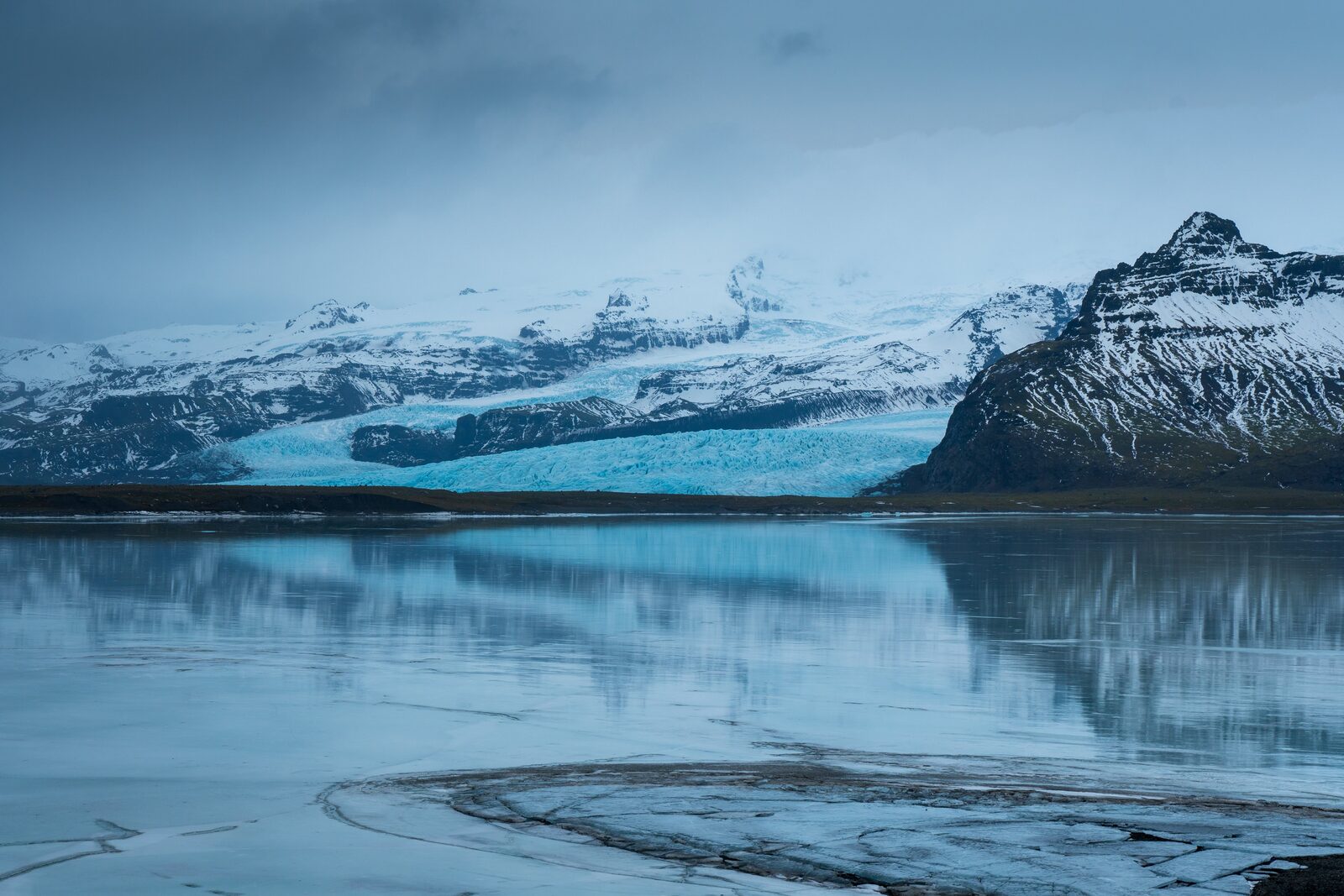
Pre-dawn calm at the lagoon — the glacier face reflects across mirror water on the short window before wind picks up.
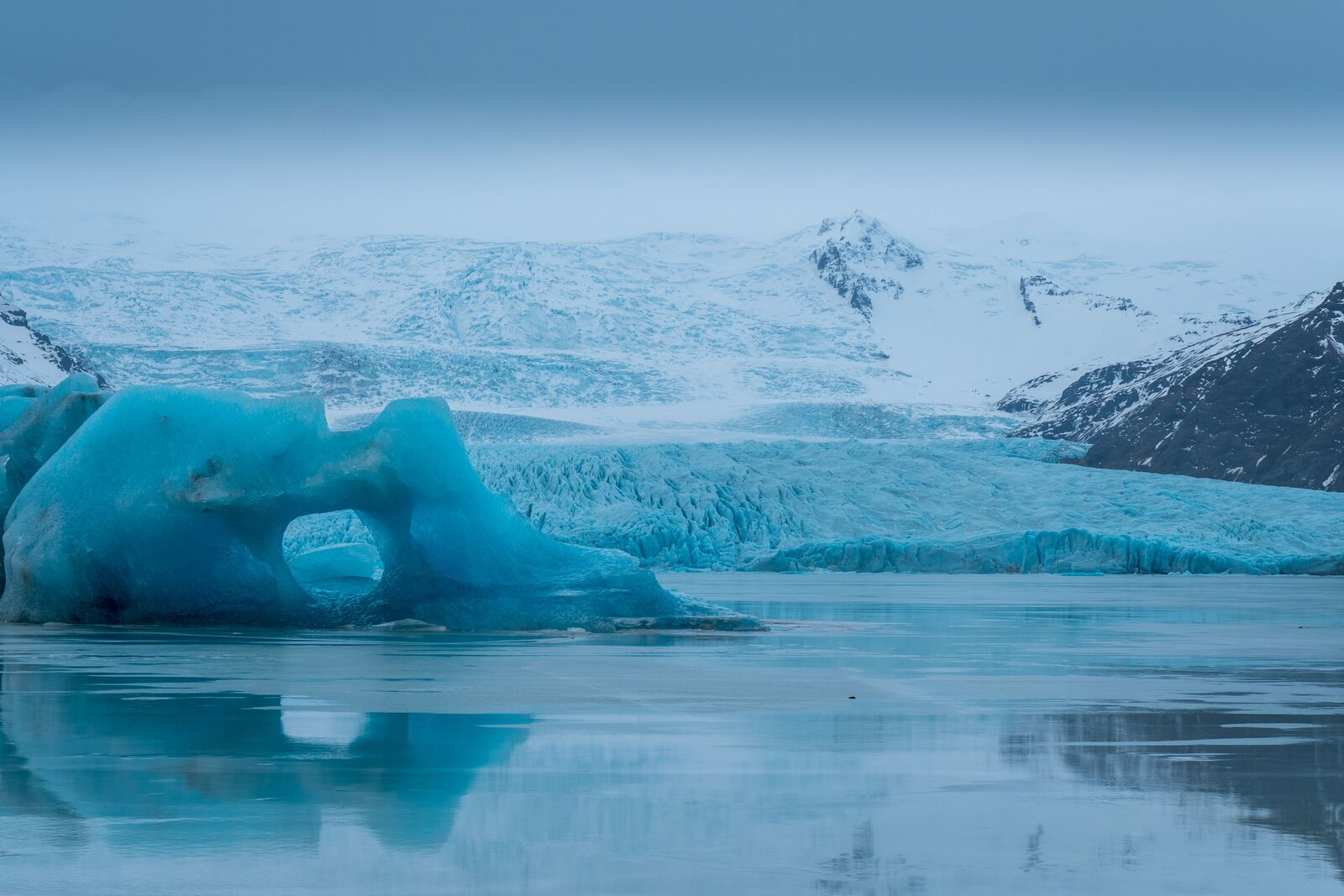
Fjallsárlón — Jökulsárlón's quieter sister, 10 km west. When the main lagoon is busy, drive here.
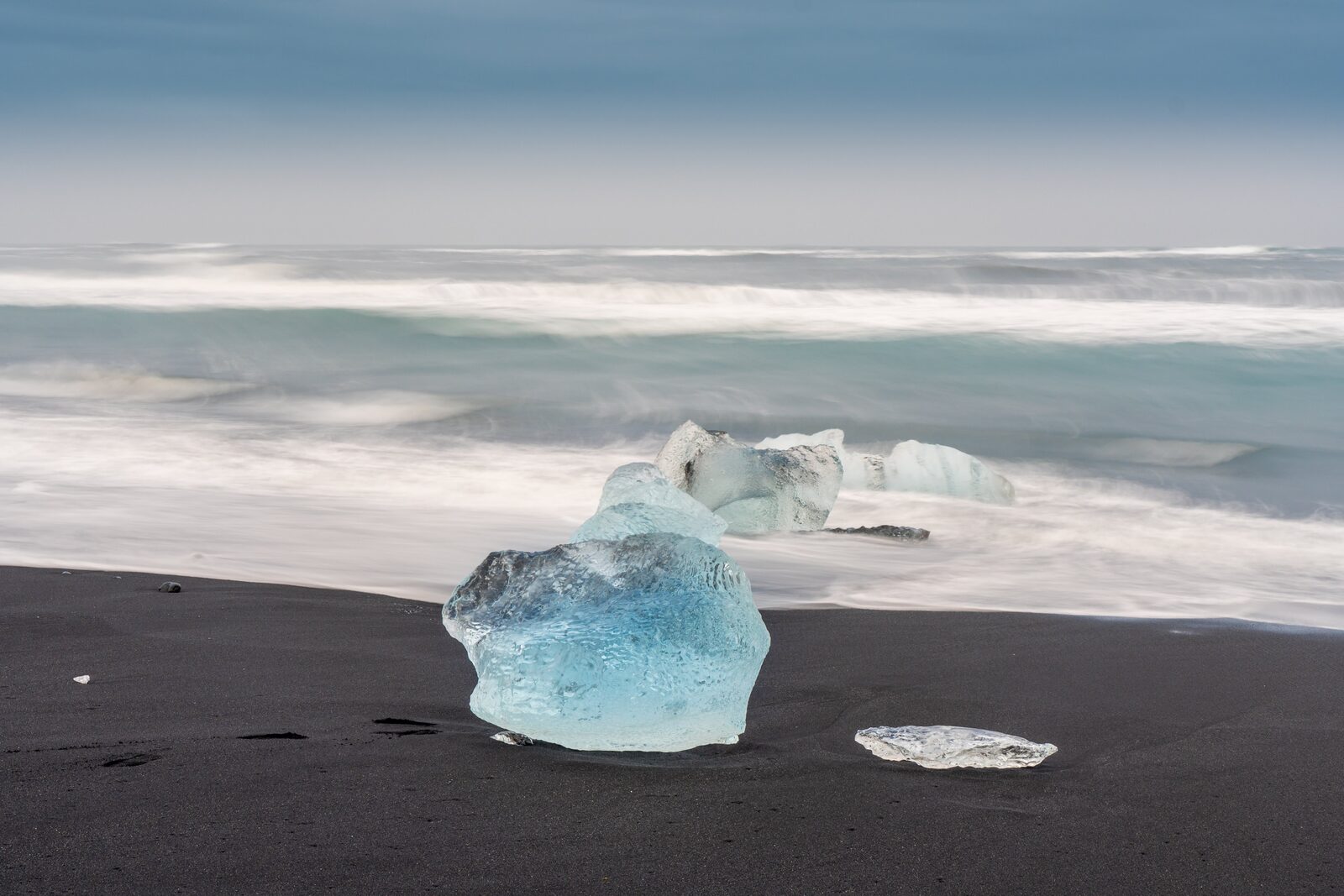
Diamond Beach — iceberg fragments stranded between tides, black volcanic sand for contrast.
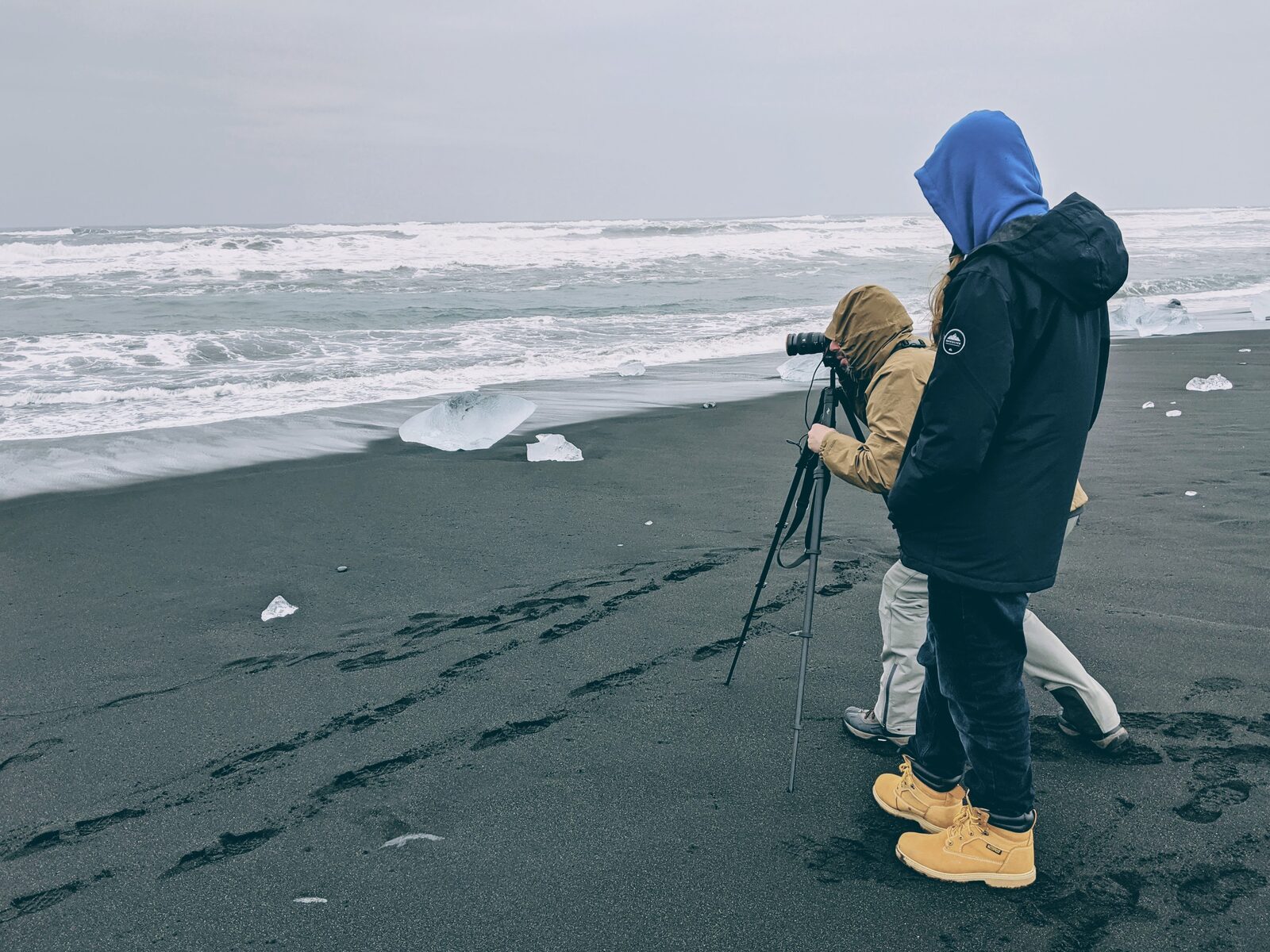
Working the beach tide — a tripod planted low, a lens pointed down the receding wave.
Overview
In southeastern Iceland, you'll find a glacier lagoon filled with icebergs. This ice lagoon has become one of Iceland's most popular attractions due to its stunning beauty. The lagoon is called Jökulsárlón, or 'Glacier's-River-Lagoon'.
Jökulsárlón Iceberg Lagoon is one waypoint of many — you can load all 62 landscape viewpoints before you leave signal.
Iceland in miniature — a glacier calving into the sea, across the road from a black beach full of diamonds.
Jökulsárlón is the stop where most photographers stay longer than planned. Chunks of the Breiðamerkurjökull glacier break off into the lagoon, drift toward the mouth, and wash out through a short channel onto the black sand of Diamond Beach. You can shoot both in one morning — lagoon at sunrise, beach in the hour after — and walk away with two completely different frames.
The lagoon side rewards patience and a long lens: the icebergs rotate as they melt, so the same block can give you three different compositions in an hour. The beach side wants a wide angle and a tripod low to the sand, caught between waves.
Best time to shoot
Blue hour before sunrise and sunrise itself — 45 minutes of the best light, with soft crowd density. Aurora season (September–April) is a second peak.
- Pre-dawn: the lagoon surface goes glassy and the glacier face picks up pink tones. Be in position 30 min before sunrise.
- Midday in summer is harsh — the ice reads as white rather than blue. Skip to afternoon or early evening.
- Storm days are secretly the best: low cloud softens the glacier face and the wind pushes larger icebergs around.
- Winter nights + clear sky = aurora reflecting off lagoon water — one of the highest-reward shots in Iceland.
Light & aurora at this spot
Calculated from this location’s coordinates (64.073, -16.241). Iceland stays on UTC year-round, so these are local times.
- Summer
- June: sun up 02:36–23:35 (21 h). Evening golden hour 21:41–23:35, light coming from the NNW.
- Winter
- December: only 4.3 h of daylight (10:52–15:08), but the sun never climbs above 2.6° — the entire day is golden hour. Sunrise bears SSE, sunset SSW.
- Aurora
- Aurora-grade darkness Sep–Mar, peaking at 12.9 h a night in December. Not possible Apr, May, Jun, Jul, Aug — the sky never gets dark enough.
Bar height is daylight hours. Months marked • have enough astronomical darkness for aurora; the rest do not.
Gear
- Lens
- 70–200 mm for iceberg portraits on the lagoon; 16–35 mm for Diamond Beach foregrounds
- Tripod
- Required on the beach (long exposures on waves); optional on the lagoon shore
- Filter
- Strong ND (6–10 stop) for silky wave shots; polarizer to cut surface reflection on the lagoon
- Protection
- Waterproof boots for Diamond Beach — you WILL get a wave over your ankles
Difficulty
Easy — flat terrain, short walks, paved paths
One of the most accessible "big" locations in Iceland. The lagoon shoreline is stroller-friendly; Diamond Beach is sand but firm.
Parking & access
Two large lots either side of Route 1 — lagoon north, Diamond Beach south. 2-minute walks from each.
- Lagoon lot has a café and boat-tour booth. Arrive before 08:30 in summer to avoid the tour-bus window.
- Cross Route 1 with care — cars come fast on a blind crest. A pedestrian tunnel is planned but not yet built.
Face AWAY from the lagoon on Diamond Beach and shoot east along the tide line. The iconic iceberg-on-sand frame is everywhere on Instagram; the receding wave-and-ice geometry going the other direction is rarer and more dynamic.
Questions & answers
Yes, and plan to stay overnight. The drive back the same day leaves you photographing in flat midday light. Book a room in Höfn or Vík and shoot both sunset and sunrise at the lagoon.
Fjallsárlón is the smaller, quieter lagoon 10 km west. The glacier face is closer to shore and the water is often more mirror-like. If Jökulsárlón is crowded, drive to Fjallsárlón — you'll often have it to yourself.
Yes — either from the lagoon shore with a long lens, or by booking a zodiac or amphibious boat tour (the zodiacs get closer). Boats run June–October, pre-book.
Essentially yes. The lagoon cycles through new ice weekly as the glacier calves, and tides move things overnight. Shoot the same place twice and you'll get different pictures.