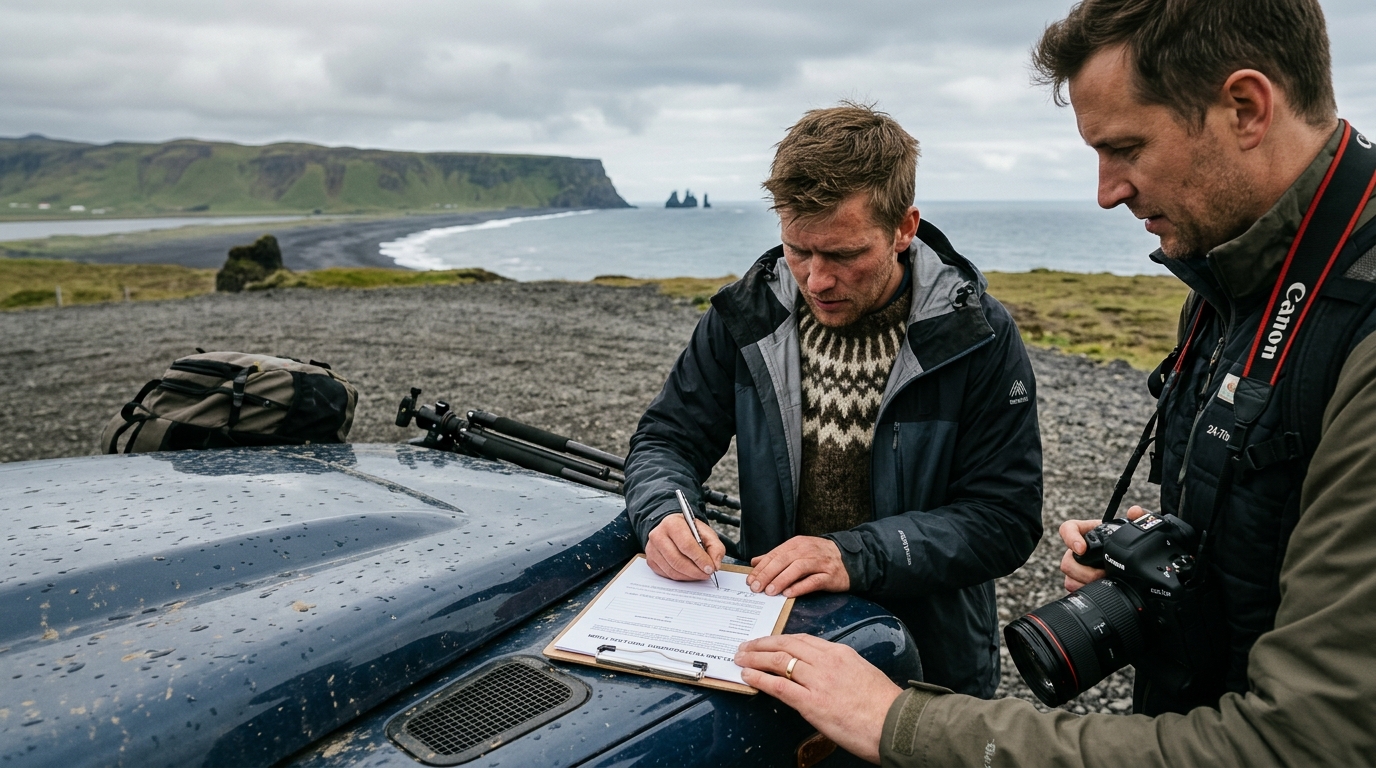
Understanding the Iceland Photography Copyright Release Form
In the Icelandic legal context, a copyright release form is a document where a copyright holder grants another party specific permissions to use their work. It is essential to distinguish between the copyright itself—which, under the Icelandic Copyright Act No. 73/1972, remains with the creator upon the moment of capture—and the usage rights you license out. Many photographers mistakenly believe that selling an image implies a total transfer of rights. However, professional workflows usually involve licensing specific rights (such as "web use for 12 months" or "print advertising in Europe") rather than a full assignment of copyright. Standardizing your documentation is critical for any serious photographer building an Iceland portfolio. When you use a consistent, well-drafted release, you reduce the risk of ambiguity regarding where and how your imagery can be displayed, which is vital when you are selling prints or digital licenses to international clients.Navigating Photography Model Release Iceland Requirements
Capturing the human element in Icelandic landscapes adds depth to your work, but it also introduces legal complexities. In Iceland, while you are generally permitted to photograph in public spaces, the right to personality and privacy becomes a factor when an individual is the primary focus of your frame. If you intend to use an image commercially—meaning for advertising, product packaging, or corporate marketing—you must obtain a signed model release. This document proves that the subject has provided informed consent for their likeness to be used for commercial purposes. For artistic, editorial, or news-related photography, the requirements are often more flexible, but best practices dictate that you always carry a release form if there is even a remote possibility the image could be sold to a commercial stock agency later. When approaching subjects, keep the process professional and transparent. Explain clearly what the image will be used for and ensure the subject receives a copy of the signed document. Digital signature platforms are now widely accepted and preferred, as they provide a time-stamped, secure record of the agreement, which is far easier to manage than physical paperwork while traveling through remote regions.Commercial Photography Permits Iceland: What You Must Know
A common misconception is that a copyright release covers all legal requirements for a shoot. In reality, you must distinguish between your intellectual property rights and the physical right to occupy space for commercial gain. Commercial photography permits in Iceland are often required when you are filming or shooting for commercial purposes in protected areas, such as national parks or specific nature reserves. This is distinct from your copyright release; the permit is a license from the landowner or governing body—such as the Environment Agency of Iceland (Umhverfisstofnun)—to conduct a commercial operation on their land. Before your trip, verify your location status using resources like the Iceland Photo Map itinerary planner. If you are planning a high-production shoot, contact the relevant local authorities well in advance. For drone operations, the Icelandic Transport Authority provides the definitive regulatory framework. As of 2026, drone pilots must ensure they are compliant with all local safety and airspace restrictions, which often require separate permits for commercial aerial photography. Always consult the official drone regulation portal to confirm current flight zones and altitude limitations before takeoff.Drafting Your Iceland Photography Copyright Release Form
When drafting your release, international validity is the priority. Your form should explicitly state that the agreement is governed by the relevant jurisdiction, typically the photographer's home country or Iceland, depending on the contract type. Key clauses to include:- Grant of Rights: Clearly define the media, territory, and duration of the usage.
- Indemnification: A statement protecting the photographer from claims arising from the use of the images.
- Consideration: Even if the payment is symbolic, the document must state that the subject has received something of value in exchange for the release.
- Language: While English is standard for international business, ensure your terminology is precise to avoid misinterpretation by non-native speakers.
Protecting Your Intellectual Property at Iconic Locations
Establishing authorship is the first step in defending your work. From the moment you trigger the shutter, ensure your camera’s metadata—specifically the EXIF data—includes your copyright information and contact details. This metadata acts as the "first line of defense" in establishing your claim to the work. If you discover your images being used without permission, your documentation becomes your most powerful tool. A robust legal workflow includes a "paper trail" for every major shoot: the location permit (if applicable), the model release (if applicable), and your original RAW files. By linking these to your photography map database, you create a verifiable history of your creative process. Should a dispute occur, this organized evidence is invaluable for demonstrating that you were the authorized photographer at that specific time and place.Common Pitfalls in Icelandic Photography Compliance
The most frequent error photographers make is misinterpreting "freedom of panorama." While you are generally free to photograph public buildings and scenery, this does not grant you the right to use those images for commercial profit without considering the underlying rights of the subject matter or the specific restrictions of the location. Another major pitfall is ignoring local signage. Many sites, particularly fragile geothermal areas or private farms, have explicit "No Commercial Photography" or "Drone Prohibited" signs. These are not merely suggestions; they are often based on safety, environmental preservation, or the privacy of landowners. Disregarding these can lead to fines and the immediate confiscation of gear. Always check the specific site rules before setting up your tripod, as the rules for a waterfall location may differ significantly from those in a town center.Building a Legal Workflow for Your Iceland Trip
Integrating your legal preparation into your itinerary planning is the hallmark of a professional. Don't leave your paperwork until you are on the ground in Iceland. Pre-Shoot Checklist:- Review the official site listings for your planned locations to identify restricted areas.
- Draft and print (or digitize) your Iceland photography copyright release form and model releases.
- Research the specific permit requirements for your drone gear via the Icelandic Transport Authority.
- Set up a dedicated folder structure on your laptop or mobile device for "Legal & Permits" organized by date and location.
- Install a reliable e-signature application that works offline, ensuring you can capture signatures even in remote areas like the Westfjords.
Frequently Asked Questions
Do I need a model release for photos taken in public in Iceland?
If you are taking photos for personal artistic use or editorial purposes, a model release is generally not required. However, if you intend to sell the image for commercial purposes—such as in an advertisement, on a product, or for corporate promotion—a signed model release is essential to protect yourself from potential privacy claims.
For inbox-safety context, FTC phishing guidance recommends treating unexpected messages and requests for personal information with caution.
Is a copyright release form the same as a commercial permit?
No, they are distinct. A copyright release is a contract between you and a subject (or property owner) regarding the usage of their image or likeness. A commercial photography permit is an authorization from a landowner or government agency allowing you to conduct a commercial business activity on their property. You often need both.
How do I handle copyright if I am shooting at a protected site like Dettifoss?
Your copyright remains yours regardless of the location. However, at protected sites, you must ensure you have the necessary commercial permits to operate. often check the site’s official guidelines provided by the Environment Agency of Iceland to ensure your presence and activity comply with their specific environmental regulations.
Are there specific Icelandic laws regarding the commercial use of drone photography?
Yes, the Icelandic Transport Authority enforces strict regulations on drone use. Commercial drone operations often require specific permits, especially in national parks or near infrastructure. You should consult the official Icelandic Transport Authority website for the latest flight restrictions and permit requirements before your flight to avoid potential fines.
What should I do if my work is used without permission?
If you find your work being used without authorization, gather your original RAW files, your signed model releases, and any relevant permits. Having a clear digital trail of your work, including metadata and dated files, is essential for proving ownership and pursuing a claim. Consult with a legal professional specializing in intellectual property if you need to issue a formal takedown notice.
Protecting your images is a continuous process that begins long before you arrive in the field. By maintaining a rigorous legal workflow, you ensure that your work is not only protected but also ready for the commercial market. Download our comprehensive Iceland Photography Legal Checklist to ensure your next shoot is fully compliant and protected.