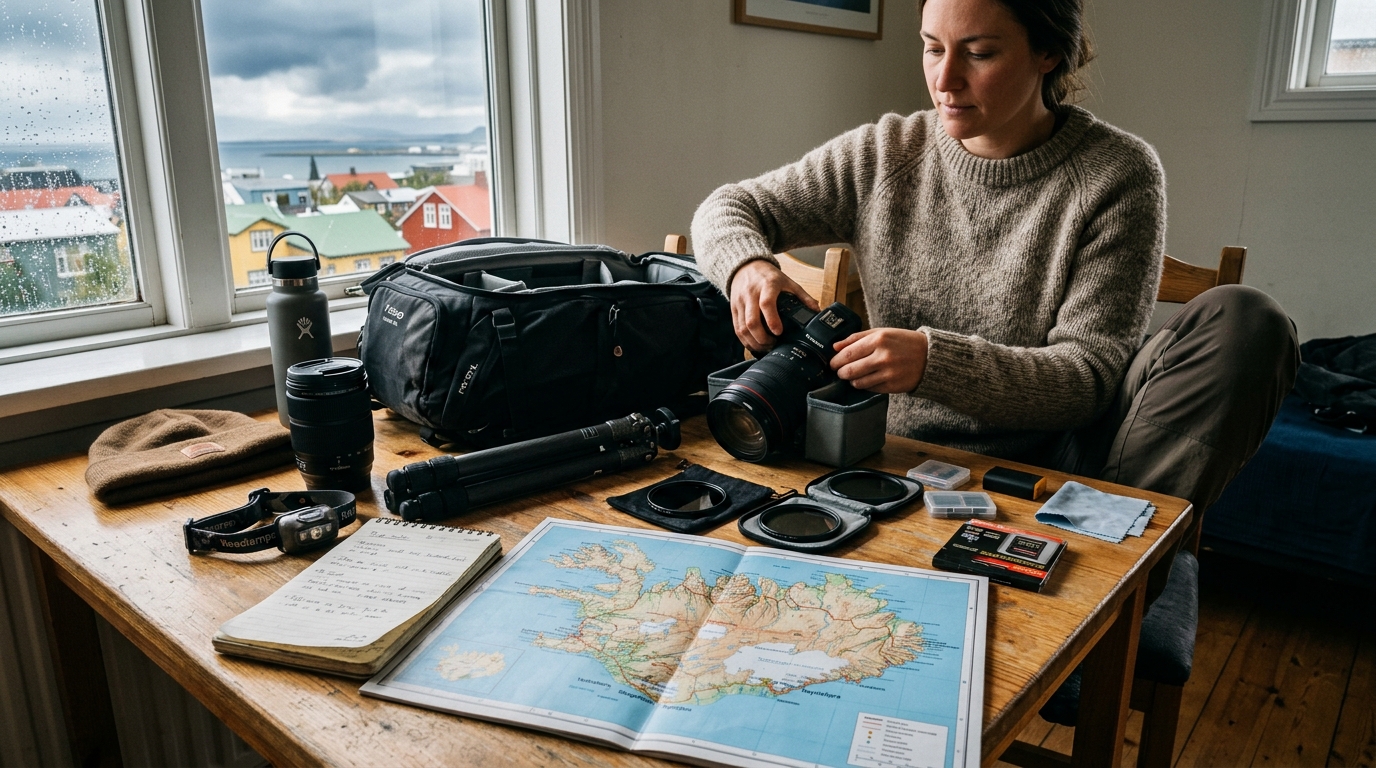
Iceland. A land of fire and ice, where dramatic landscapes unfold at every turn, beckoning photographers with their raw, untamed beauty. From cascading waterfalls and shimmering glaciers to black sand beaches and the ethereal dance of the Northern Lights, Iceland offers an unparalleled visual feast. However, capturing its magic requires more than just a keen eye; it demands meticulous Iceland photography trip preparation. As experts in navigating this incredible country, we at Iceland Photo Map understand the unique challenges and immense rewards of photographing Iceland.
This comprehensive guide for 2026 is designed to be a valuable Iceland pre-departure checklist, helping you prepare to face its unpredictable weather, diverse terrain, and ever-changing light. We'll delve into everything from the essential gear you need to pack, to mastering logistics, understanding seasonal nuances, and crafting an itinerary that maximizes your photographic opportunities. By the end, you'll be confident, prepared, and ready to embark on an unforgettable journey, transforming fleeting moments into timeless images.
Embarking on Your Iceland Photography Adventure: Why Preparation is Key
Iceland is a photographer's dream, yet it's also a land of stark contrasts and formidable conditions. Its dramatic beauty is matched only by its challenging environment. From sudden, fierce winds that can destabilize a tripod to relentless rain and spray that can test the limits of your gear's weather sealing, understanding these unique challenges is the first step in successful Iceland photography trip preparation.
The rewards of thorough pre-trip planning are immense. It means the difference between a frustrating trip battling the elements and a seamless adventure where you can focus entirely on your craft. Imagine missing that once-in-a-lifetime shot of the Aurora Borealis because your batteries died in the cold, or being unable to access a stunning location because your rental car wasn't suitable for the roads. This guide aims to prevent such scenarios, covering every detail from essential gear and clothing to intricate logistics and safety protocols. We'll equip you with the knowledge to not just survive, but thrive, photographically speaking, in Iceland’s incredible wilderness.
Your Essential Photography Gear Checklist for Iceland
When it comes to Iceland photography trip preparation, your gear is your lifeline. The harsh conditions demand robust, reliable equipment. Here’s a detailed breakdown of what to pack:
- Camera Bodies: Redundancy and Weather Sealing
Bring at least two camera bodies if possible. Iceland’s weather can be brutal on electronics, and a backup body ensures you don't miss shots due to a malfunction. Prioritize cameras with excellent weather sealing to protect against rain, snow, and volcanic dust. Full-frame sensors generally offer better low-light performance, crucial for Northern Lights photography. - Lenses: Wide-angle, Telephoto, and Versatile Primes
- Wide-angle (14-24mm or similar): Absolutely essential for capturing the grandeur of Iceland's vast landscapes, glaciers, and waterfalls. A fast aperture (f/2.8 or wider) is a bonus for astrophotography.
- Telephoto (70-200mm or 100-400mm): Ideal for compressing distant landscapes, isolating details, and crucial for wildlife photography (puffins, seals, Icelandic horses).
- Versatile Primes (e.g., 35mm, 50mm, 85mm): Offer superior sharpness and often wider apertures for creative shots, portraits, and low-light scenarios. Consider a fast prime (e.g., 24mm f/1.4 or 50mm f/1.8) for Northern Lights.
- Tripods: Sturdy, Lightweight Options for Harsh Winds
A robust tripod is non-negotiable for long exposures (waterfalls, seascapes) and Northern Lights photography. Look for carbon fiber models for a good balance of stability and weight. Ensure it has a strong ball head that can securely hold your heaviest lens setup even in high winds. Consider adding a weight hook to hang your camera bag for extra stability. - Filters: ND, Graduated ND, and CPL for Managing Light and Reflections
- Neutral Density (ND) filters: Essential for blurring water motion in bright daylight, allowing for those silky smooth waterfall shots. A 6-stop and 10-stop ND are highly recommended.
- Graduated Neutral Density (GND) filters: Help balance bright skies with darker foregrounds, especially useful during sunrise/sunset. Soft-edge and hard-edge versions are useful.
- Circular Polarizer (CPL) filter: Reduces glare and reflections from water and wet rocks, deepens blue skies, and enhances color saturation.
- Batteries and Memory Cards: Ample Supply for Cold Weather and Extended Shooting
Cold weather drains batteries much faster. Bring at least 4-6 fully charged camera batteries, and keep spares warm in an inside pocket. For memory cards, bring several high-capacity, fast-speed cards (e.g., 128GB or 256GB). It's better to have multiple smaller cards than one very large one, to mitigate data loss risk. - Cleaning Kits: Protecting Your Gear from Dust, Spray, and Moisture
Iceland is messy. Volcanic dust, sea spray, rain, and snow are constant threats. Your kit should include:- Microfiber cloths (many!)
- Lens pen or brush
- Blower (rocket blower type)
- Sensor cleaning kit (if you're comfortable using one)
- Rain covers for your camera and lens
- Specialized Accessories: Drone Considerations, Remote Shutters, Headlamps
- Drone: Offers unique perspectives, but be aware of strict Icelandic drone regulations and no-fly zones, especially near national parks and popular tourist sites. Register your drone if required and check local rules for each location.
- Remote Shutter Release: Crucial for long exposures and Northern Lights photography to avoid camera shake. Both wired and wireless options work.
- Headlamp: Indispensable for early morning/late night shoots, Northern Lights, and navigating in low light. A red light option is great for preserving night vision.
- Power Bank: For charging phones, headlamps, and other USB-powered devices.
Dressing for Success: Clothing and Personal Gear for Iceland's Elements
Iceland's weather is notoriously fickle, often experiencing all four seasons in a single day. The right clothing isn't just about comfort; it's about safety and ensuring you can stay out long enough to get the shot. This is a critical part of any photographer travel tips Iceland guide.
- The Importance of a Multi-Layering System: Base, Mid, and Outer Layers Layering is key. Based on our experience in Iceland's conditions, we strongly recommend starting with a moisture-wicking base layer (merino wool or synthetic, rarely cotton) to effectively regulate body temperature. Add a warm mid-layer (fleece or down vest) for insulation. The outer layer provides protection from wind and water.
- Waterproof and Windproof Outerwear: Jackets and Pants for Unpredictable Weather
Invest in high-quality, fully waterproof (Gore-Tex or similar) and windproof jacket and pants. These are your primary defense against Iceland's elements. Ensure they are breathable to prevent overheating during hikes. - Insulated Footwear: Warm, Waterproof Hiking Boots and Extra Socks
Sturdy, waterproof hiking boots with good ankle support are essential. You'll be walking on uneven terrain, wet surfaces, and sometimes snow. Pair them with several pairs of wool or synthetic hiking socks. Bring extra pairs; wet feet are miserable feet. - Headwear and Hand Protection: Hats, Gloves, and Mittens for Extreme Cold
A warm, windproof hat is crucial to prevent heat loss. For hands, a layering system works best: thin liner gloves for dexterity (operating camera controls) underneath warmer, waterproof outer gloves or mittens. Consider fingerless gloves or gloves with magnetic tips for easy camera access. - Personal Essentials: First-aid Kit, Medications, Toiletries, and Sun Protection
Pack a compact first-aid kit with basics like pain relievers, blister treatment, and any personal medications. Don't forget high SPF sunscreen (even in winter, UV reflection off snow/ice can be intense) and lip balm. - Backpack Considerations: Weatherproof and Comfortable for Carrying Gear
Your camera backpack should be comfortable for long carries and, ideally, weatherproof or come with a rain cover. Look for good padding, adjustable straps, and easy access to your gear. A capacity of 30-50 liters is often suitable for a day's worth of photography equipment and personal items.
Mastering the Logistics for Your Iceland Photography Trip
Effective logistics are the backbone of a stress-free and productive Iceland photography trip preparation. From getting there to getting around, careful planning is paramount.
- Booking Flights and Accommodation: Early Planning for Peak Seasons
Iceland has become incredibly popular. Flights and accommodations, especially outside of Reykjavik, book up quickly, particularly for summer (June-August) and Northern Lights season (September-March). Book at least 6-12 months in advance for the best selection and prices in 2026. Consider staying in guesthouses or self-catering apartments for more flexibility and often better value. - Car Rental: Why a 4x4 is Often Essential, Especially for F-roads and Winter Travel For serious photographers, a rental car is almost often necessary for flexibility. Based on our extensive experience, we highly recommend a 4x4 vehicle. It's often essential if you plan to venture onto F-roads (mountain roads, typically only open in summer), which grant access to some of Iceland's most remote and spectacular photographic locations. Even in winter, a 4x4 with studded tires provides superior safety and capability on icy or snowy main roads. often check the rental agreement for F-road access clauses.
- Understanding Icelandic Driving Conditions and Road Safety Rules
Icelandic driving conditions can be challenging:- Wind: Strong gusts can literally blow car doors off their hinges or push vehicles off the road. Hold your door when opening!
- Gravel Roads: Many roads, even outside F-roads, are gravel. Drive slowly, especially on curves, to avoid skidding and rock damage.
- Single-Lane Bridges/Tunnels: Common throughout the country. Yield to oncoming traffic as indicated by signs.
- Sheep: They roam freely; be prepared for them to dart into the road.
- Speed Limits: Generally 90 km/h on paved roads, 80 km/h on gravel, 50 km/h in urban areas. Fines for speeding are steep.
- Fueling Up: Availability and Planning for Remote Areas Gas stations are plentiful along the Ring Road but become scarce in more remote regions. often fill up when you see a station, especially before heading into less populated areas or F-roads. Many stations are self-service and require a credit card with a PIN.
- Connectivity: SIM Cards, Wi-Fi, and Staying in Touch
Wi-Fi is generally available at accommodations and many cafes. For reliable connectivity on the go, consider purchasing a local SIM card upon arrival (e.g., from Siminn, Vodafone, Nova). This allows for GPS navigation, checking weather, and staying in touch. A portable Wi-Fi hotspot can also be a good option for groups or multiple devices. - Currency and Payments: Credit Card Acceptance and Local Cash Needs
Iceland is largely cashless. Credit and debit cards (Visa, Mastercard) are accepted almost everywhere, even for small purchases. It's wise to carry a small amount of Icelandic Krona (ISK) for emergencies or very small, remote vendors, but it's rarely essential.
Seasonal Considerations: Optimizing Your Iceland Photography Trip Preparation
The time of year you visit profoundly impacts your essential Iceland trip planning and photographic opportunities. Each season offers a distinct character.
- Summer (June-August): Midnight Sun, Accessibility, Crowds, and Wildlife Opportunities
- Midnight Sun: Experience nearly 24 hours of daylight, offering extended "golden hour" light for photography. This means less sleep but endless shooting opportunities.
- Accessibility: Most roads, including F-roads, are open, allowing access to the Highlands.
- Crowds: This is peak tourist season, so expect larger crowds at popular spots. Early morning or late evening shoots help avoid them.
- Wildlife: Best time for puffin photography (late May to mid-August).
- Challenges: High demand for accommodations and rentals, higher prices.
- Winter (November-March): Northern Lights, Snowscapes, Limited Daylight, and Challenging Conditions
- Northern Lights: Best chance to witness and photograph the Aurora Borealis due to long hours of darkness.
- Snowscapes: Iconic landscapes transformed by snow and ice, creating dramatic scenes. Ice caves are also accessible during this period.
- Limited Daylight: Very short days (as little as 4-5 hours around winter solstice) mean less shooting time, but the light is often soft and ethereal.
- Challenges: Severe weather (blizzards, high winds), icy roads, limited road access (many F-roads closed), some attractions may be inaccessible. Requires robust Iceland photography trip preparation.
- Spring and Autumn (April-May, September-October): Transition Periods, Fewer Crowds, and Unique Light
- Spring: Melting snow, returning migratory birds, budding greenery. Fewer crowds than summer.
- Autumn: Vibrant fall colors (especially birch and willow), often stunning light, and the start of Northern Lights season in September. Fewer crowds than summer, but more than winter.
- Challenges: Weather can be highly unpredictable, a mix of summer and winter conditions. Road accessibility is a transition; some F-roads might still be closed in spring or starting to close in late autumn.
- Monitoring Weather Forecasts: Using Reliable Icelandic Sources for Real-Time Updates
Always check the weather and road conditions daily, sometimes hourly. Use reliable Icelandic sources like Veðurstofa Íslands (Icelandic Met Office) for weather and road.is for road conditions. These are essential for safety and planning your daily shoots. - Daylight Hours: Planning Your Shooting Schedule Around Sunrise and Sunset
Familiarize yourself with sunrise, sunset, and twilight times for your specific dates. Use apps like PhotoPills or The Photographer's Ephemeris to plan golden hour and blue hour shoots, especially crucial during the short winter days or endless summer light.
Crafting Your Itinerary: Iconic Photo Locations and Permit Requirements
A well-researched itinerary is crucial for maximizing your photographic yield. It's not just about ticking off famous spots, but understanding how to best capture them.
- Researching Popular and Lesser-Known Photography Spots Across Iceland
Of course, you'll want to see classics like Seljalandsfoss, Skogafoss, Jökulsárlón, and Vestrahorn. But also seek out lesser-known gems that offer unique perspectives and fewer crowds. Consider areas like the Snaefellsnes Peninsula, the Westfjords, or the remote Eastfjords. Our Iceland Photo Maps are specifically designed to help you discover both iconic and hidden photography locations, complete with optimal shooting times and angles. - Balancing Travel Time with Dedicated Shooting Time at Each Location
Don't overschedule. Iceland's beauty demands time. Factor in travel time between locations, but also allocate ample time for scouting, setting up, waiting for light, and unexpected delays (weather, road closures). Rushing often leads to missed opportunities. - Understanding Access Rules and Respecting Private Property Many popular sites are on private land or within national parks. often stick to marked paths, do not climb on fragile moss or rock formations, and respect any signage regarding access. Leave gates as you find them.
- Drone Regulations and No-Fly Zones: Essential Knowledge for Aerial Photography As mentioned, drone use in Iceland is regulated. Generally, you cannot fly within 2 km of airports, within 50 meters of people (without consent), or over private property without permission. Many national parks and popular tourist sites (e.g., Jökulsárlón, Thingvellir) have strict no-fly zones. often check local signage and the Icelandic Transport Authority's website for the most current regulations.
- Permit Requirements for Specific Protected Areas or Commercial Shoots For commercial photography or filming, you will almost certainly need permits, especially in national parks or protected areas. For personal, non-commercial photography, permits are rarely required unless you're entering a highly restricted area or conducting a large-scale shoot. often verify if you're unsure.
- Flexibility in Your Itinerary: Adapting to Weather and Unexpected Opportunities
This is perhaps the most crucial tip for logistics for Iceland photography. Iceland's weather can change dramatically and quickly. Be prepared to adapt your plans – swap locations, delay a shoot, or even change your route entirely. Sometimes, unexpected weather creates the most unique photographic opportunities.
Safety Protocols: Essential Preparations for Iceland's Unique Environment
Iceland's raw beauty comes with inherent risks. Prioritizing safety is paramount for a successful and memorable trip.
- Emergency Services: Knowing 112 and How to Use It
The emergency number in Iceland for all services (police, fire, ambulance, rescue) is 112. It's vital to save this number in your phone. If you're traveling in remote areas, consider renting a satellite phone or carrying a personal locator beacon (PLB) for situations where cell service is unavailable. - Road Safety: Heeding Warnings, Understanding F-roads, and River Crossings rarely ignore road closure signs or weather warnings. F-roads require a 4x4 and experience, especially with river crossings, which can be dangerous and are typically not covered by standard insurance. often assess water depth and current before attempting a crossing, or better yet, avoid them if you're not experienced. The Icelandic Road Administration website (road.is) is your best friend for real-time updates.
- Weather Warnings: rarely Underestimate Iceland's Rapidly Changing Conditions A sunny morning can turn into a blizzard or gale-force winds within hours. often check the forecast before heading out and be prepared for sudden changes. Dress in layers, carry extra warm/waterproof clothing, and know when to turn back if conditions deteriorate.
- Respecting Nature: Adhering to Leave No Trace Principles and Staying on Marked Paths Iceland's fragile ecosystem is easily damaged. often stay on marked trails, do not walk on moss (which takes decades to recover), and rarely litter. Pack out everything you pack in. Respect wildlife and maintain a safe distance.
- Solo Travel Considerations: Informing Others of Your Plans and Carrying Emergency Gear If traveling solo, often inform someone of your itinerary, including your planned routes and expected return times. Carry essential emergency gear: extra food and water, a fully charged phone, a power bank, a first-aid kit, a whistle, and a headlamp.
- Wildlife Encounters: Maintaining a Safe Distance and Respecting Habitats While Iceland isn't home to large predators, respecting wildlife (birds, seals, reindeer, Icelandic horses) means observing from a distance. rarely approach or feed wild animals. During puffin season, be mindful of nesting areas and avoid disturbing the birds.
Protecting Your Shots: Digital Workflow and Backup Strategies
After all the effort in capturing stunning images, protecting them is paramount. A robust digital workflow and backup strategy are essential components of your essential Iceland trip planning.
- On-Location Backup Solutions: Portable Hard Drives or Dedicated Backup Devices
Don't wait until you get home to back up your precious photos. Every evening, transfer your day's shoots from your memory cards to at least one, preferably two, portable hard drives. Rugged, shockproof drives are ideal. Devices like the Gnarbox or Western Digital My Passport Wireless Pro offer convenient, battery-powered backup solutions in the field. Keep your backups in separate bags to minimize risk in case one is lost or damaged. - Cloud Storage Options: Uploading Critical Shots When Wi-Fi is Available
Whenever you have access to reliable, fast Wi-Fi (at your accommodation, for instance), consider uploading your most critical or favorite shots to a cloud storage service (e.g., Dropbox, Google Drive, OneDrive). This provides an off-site backup, offering an extra layer of security against unforeseen events. Be mindful of data caps if you're using a mobile hotspot. - Photo Editing Software Considerations: Preparing Your Workflow for Post-Processing
Before you leave, ensure your laptop has your preferred photo editing software (e.g., Adobe Lightroom, Capture One) installed and updated. Consider creating a basic folder structure for your Iceland trip photos in advance. This streamlines the import and organization process upon arrival or during downtime. If you plan to edit on the go, ensure your laptop is powerful enough and has sufficient storage. - Culling and Organizing: Strategies for Managing a Large Volume of Images
You'll likely take thousands of photos. Develop a system for culling (removing unwanted shots) and organizing your images. This can be done daily during downtime or during longer travel days. Consistent naming conventions and keyword tagging will save you immense time later. - Protecting Gear from Cold and Condensation: Acclimatization Tips Moving your camera from extreme cold outdoors to a warm indoor environment can cause condensation, which is highly damaging. To prevent this: Before going indoors, place your camera (without lens, if possible) in a sealed plastic bag or a padded camera bag while still outside. Allow the gear to slowly warm up to room temperature inside the bag before opening it. This allows condensation to form on the outside of the bag, not on your camera's sensitive electronics or lens elements. often carry silica gel packets in your camera bag to absorb excess moisture.
Ready for an Unforgettable Iceland Photography Journey
Embarking on a photography trip to Iceland is an adventure of a lifetime, a chance to capture some of the planet's most breathtaking and diverse landscapes. By diligently following this Iceland photography trip preparation guide, you're not just packing a bag; you're building the foundation for a successful and deeply rewarding experience.
Remember, the magic of Iceland lies not only in its iconic vistas but also in its unpredictable nature. A blend of meticulous planning and flexible adaptability will be your greatest assets. Be prepared for anything, respect the environment, prioritize safety, and most importantly, allow yourself to be fully immersed in the unparalleled beauty that surrounds you. With the right preparation, you'll return home not just with incredible photographs, but with a trove of unforgettable memories from the land of fire and ice.
Frequently Asked Questions
What is the best time of year for a photography trip to Iceland?
The "best" time depends entirely on what you want to photograph. For the Midnight Sun, lush green landscapes, and puffins, summer (June-August) is ideal. For the Northern Lights, snow-covered vistas, and ice caves, winter (November-March) is unmatched. Spring (April-May) and autumn (September-October) offer fewer crowds and unique transitional light, with autumn being a strong contender for vibrant colors and early Aurora opportunities.
Do I need a 4x4 vehicle for photography in Iceland?
While not strictly necessary for the main Ring Road in summer, a 4x4 vehicle is highly recommended for serious photographers. It provides crucial access to F-roads (mountain roads) which lead to many remote and stunning photo locations, especially in the Highlands. In winter, a 4x4 with studded tires offers significantly enhanced safety and capability on icy and snowy roads, making it almost essential for reliable travel.
What are the most crucial items to pack for an Iceland photography trip?
Beyond your camera gear, the most crucial items are layers of warm, waterproof, and windproof clothing (jacket, pants, insulated hiking boots, hat, gloves). For your camera, a sturdy tripod, a good wide-angle lens, extra batteries (many!), and a robust cleaning kit are non-negotiable. Don't forget a first-aid kit and a headlamp.
Are drones allowed everywhere in Iceland for photography?
No, drone use in Iceland is regulated. There are strict no-fly zones, particularly within 2 km of airports, over private property without permission, and in many national parks and popular tourist sites (e.g., Jökulsárlón, Thingvellir). often check local signage and the Icelandic Transport Authority's website for the most current regulations. It's essential to fly responsibly and respect privacy and nature.
How can I protect my camera gear from Iceland's harsh weather?
Protecting your gear involves several strategies: use weather-sealed camera bodies and lenses; carry rain covers for your camera and backpack; use a robust cleaning kit frequently to wipe away spray, dust, and moisture; and most importantly, manage condensation. When moving from cold to warm, place your camera in a sealed bag and let it acclimatize slowly before opening to prevent internal moisture damage. Silica gel packets in your bag can also help absorb humidity.
Explore our comprehensive Iceland Photo Maps to discover the best photography locations and plan your routes with precision.