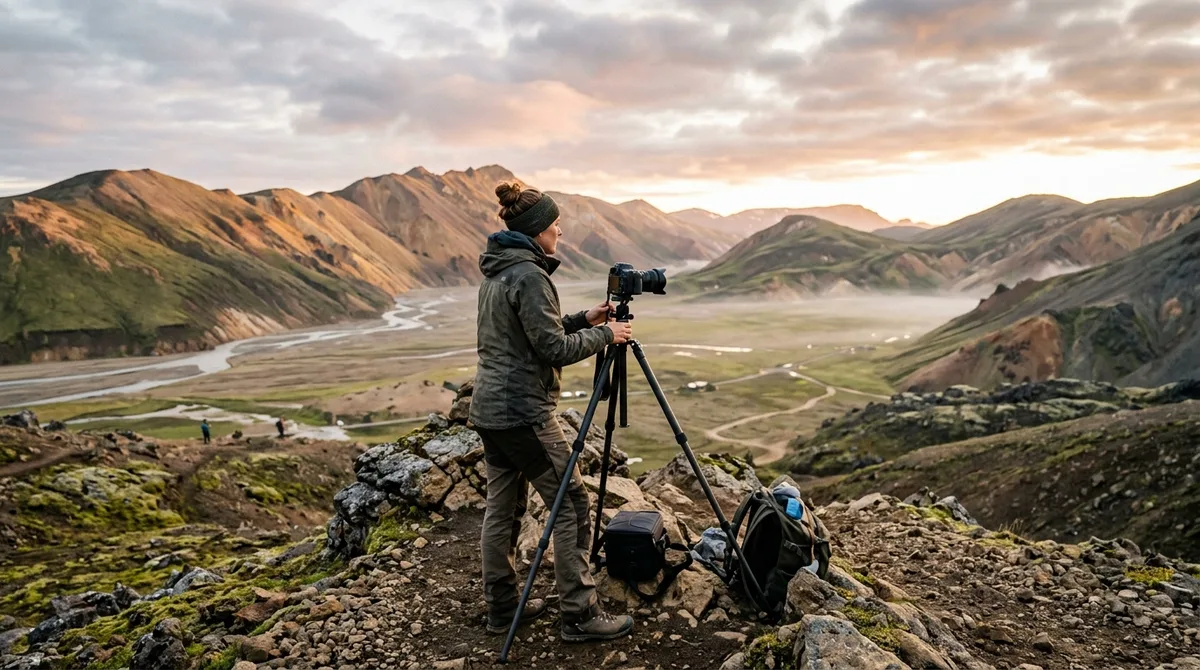
The best time to photograph Iceland depends entirely on your subject matter: choose mid-June to late July for 24-hour midnight sun light and accessible interior volcanic highlands, or visit between October and March for the aurora borealis, crystal ice caves, and low-angled winter sun. Deciding when to visit Iceland for photography requires balancing solar geometry, seasonal road access, and volatile sub-Arctic weather patterns rather than simply looking at ambient temperatures.
Understanding Iceland Photo Seasons: Light, Weather, and Accessibility
Standard travel advice often misleads landscape photographers because typical tourist metrics—such as warm weather and midday sunshine—frequently run counter to optimal shooting conditions. In Iceland, situated just below the Arctic Circle between roughly 63° and 66° North latitude, solar elevation angles and twilight durations govern photographic quality far more than ambient thermometer readings.
The swing in daylight across Iceland photo seasons is dramatic:
- Summer Solstice (late June): Over 21 hours of daylight, with civil twilight lasting all night. The sun dips barely below the horizon, creating a continuous golden hour that seamlessly blends into blue hour and back into dawn.
- Winter Solstice (late December): Under 4 hours of daylight. The sun rarely rises higher than roughly 3 to 4 degrees above the horizon, delivering low, golden side-lighting for its entire brief arc.
- Equinoxes (March and September): Balanced 12-hour photoperiods with standard sunrise and sunset transitions, paired with genuine astronomical darkness at night.
This solar cycle introduces a fundamental trade-off. If your goal is capturing the Aurora Borealis against dark skies, you require the astronomical darkness found between late August and mid-April. However, winter conditions close Iceland's interior volcanic plateau (the Highlands), where the unpaved F-roads remain impassable due to snow, mud, and unbridged glacial river surges. Conversely, midsummer opens complete access to the central desert and rhyolite ridges, but eliminates any possibility of seeing the northern lights due to the midnight sun.
These daylight shifts fundamentally reshape daily shooting logistics. In midsummer, photographers frequently sleep from noon until 7:00 PM, operating in the field between 9:00 PM and 4:00 AM to exploit soft directional light on iconic peaks without tourist crowds. In midwinter, you can capture dawn, low-noon landscape compositions, and sunset in a comfortable four-hour window, resting or scouting between dark night shoots.
The Best Time to Photograph Iceland for Northern Lights and Ice Caves (November to February)
For photographers targeting frozen glacial caverns and the aurora borealis, midwinter represents the best time to photograph Iceland. The sun hovers just above the horizon even at solar noon, casting soft, warm raking light across frost-covered volcanic fields and snow-dusted sea stacks.
Winter Lighting and Perpetual Golden Hours
Between November and February, high-contrast midday glare does not exist. The low sun angle accentuates micro-textures in volcanic black sand, highlighting frosted basalt columns at South Coast locations like Reynisfjara and Reynisdrangar. Winter light meters exceptionally well for high-dynamic-range scenes, reducing the need for heavy neutral density grad filters during the short daytime window.
Aurora Photography Dynamics
Capturing the aurora borealis requires three core variables: dark skies, clear line of sight through cloud layers, and heightened solar wind activity. The Iceland aurora forecast guide highlights that local weather dynamics dictate success more than raw geomagnetic indices. Iceland's maritime climate creates fast-moving coastal cloud banks, meaning a localized overcast sky on the Reykjanes Peninsula might clear entirely just two hours away along the southern coast.
For scientific monitoring of space weather and geomagnetic disturbances, photographers should monitor the NOAA Space Weather Prediction Center alongside local cloud cover forecasts. Wide-angle fast primes (14mm to 24mm at f/1.4 to f/2.8) and cameras capable of clean ISO 1600–6400 performance are essential for freezing fast-moving auroral curtains without motion blur.
Glacial Ice Caves in Peak Cold
Natural sub-glacial meltwater tunnels beneath the Vatnajökull ice cap become structurally sound and drain completely during sustained winter freezes. Between November and early March, reduced surface melt allows guided access into deep blue sapphire chambers. The ice achieves deep optical clarity during cold snaps because immense pressure has forced air bubbles out of the ancient glacial matrix over centuries.
Winter Driving and Route Cautions
Midwinter travel brings intense North Atlantic low-pressure systems, gale-force winds, black ice, and blowing snow. The files carry season and access notes, not live conditions. Check vedur.is and road.is for current weather and road status before setting out each morning. A high-clearance 4x4 vehicle equipped with studded winter tires is non-negotiable for safe winter navigation along Route 1.
Shoulder Season Realities: Iceland Photography Month by Month in Spring (March to May)
Evaluating Iceland photography month by month during the spring transition reveals rapid changes across terrain, daylight, and road conditions.
March: The Winter-Spring Threshold
March bridges the best of both worlds. You gain 11 to 13 hours of daylight—giving ample time to shoot expansive coastal seascapes and frozen waterfalls—while retaining dark night skies for aurora captures. Ice caves generally remain stable through mid-to-late March, though rising temperatures begin to flood low-lying cavern floors toward month's end.
April: Thawing Landscapes and Dynamic Weather
By April, daylight expands to 14–16 hours. Snow begins to melt at lower elevations, exposing stark black sands and rugged volcanic lava fields, though mountain passes remain snowbound. Waterfalls like Skógafoss and Seljalandsfoss shed their thick winter ice shells, swelling with early meltwater. Tourist volume remains lower than in summer, allowing cleaner compositions at primary scenic pull-offs.
May: Avian Migration and Awakening Green Valleys
May brings the arrival of millions of migratory seabirds, most notably Atlantic puffins nesting along coastal cliffs at Dyrhólaey and the Westfjords. Southern valleys begin to display their vivid green mosses, creating striking visual contrast against basalt cliffs. Daylight stretches to nearly 19 hours by late May, effectively ending the aurora viewing window as true astronomical darkness disappears.
Gear Protection for Spring Transitions
Spring conditions present harsh challenges for optical gear. Melting snowfields and coastal squalls create heavy atmospheric moisture. Pack fitted silicone weather covers, dedicated rain sleeves, and an ample supply of microfiber cloths. Meltwater runoffs generate high spray around waterfalls; carrying a front screw-on UV filter prevents mineral-rich spray from etching front lens elements during high-wind shoots.
Midnight Sun and Highland Rhyolite: Photographing Summer (June to August)
Summer offers around-the-clock shooting windows and full accessibility to remote interior landscapes that remain completely barricaded by snow for the rest of the year.
The Phenomenon of the Midnight Sun
From late May through July, the sun skims the northern horizon without fully setting. This produces extended golden and blue hours lasting four to six hours every night. Between 11:00 PM and 3:00 AM, low-angle raking light paints volcanic peaks in rich warm hues, while midday light can be harsh and overhead. Adjusting your sleep schedule to shoot through the night yields empty compositions at popular natural landmarks.
Opening the Highlands (F-Roads)
The interior volcanic plateau—home to the surreal rhyolite peaks of Landmannalaugar, the steaming geothermal ravines of Kerlingarfjöll, and massive volcanic craters like Askja—relies on unpaved mountain tracks (F-roads). The Icelandic Road Administration (Vegagerðin) typically opens these routes between mid-June and early July once snow melts and the underlying tracks dry out from spring thaw mud. Interior tracks generally remain open until early-to-mid September.
Wildflower Blooms and Coastal Wildlife
Late June through early July brings blooming Nootka lupine across coastal plains and valleys. These purple fields offer vibrant foregrounds for historic turf churches and cascading waterfalls found across our curated landscape locations map. Meanwhile, Atlantic puffin colonies reach peak nesting activity on sheer sea cliffs from early June until mid-August, when the fledglings take to the open ocean.
Autumn Colors and First Snows: Why September and October Excel for Landscape Shooters
For many seasoned landscape photographers, autumn provides an optimal balance between manageable operating hours, rich ground textures, and diverse shooting conditions.
September: Tundra Foliage and Returning Auroras
September sees Arctic dwarf birch, willow, and moss turn vibrant shades of crimson, orange, and gold across the tundra. Night skies regain true darkness, marking the return of the northern lights while highland roads often remain open through the first half of the month. Photographers can capture autumn color in deep canyons, dramatic highland rhyolite, and reflection auroras over calm glacial lagoons on a single trip.
October: High Contrast and Dusting Snows
October brings dramatic transitional weather. Early snowstorms coat upper mountain peaks while valley floors retain deep golden tones, producing striking high-contrast scenes. Glacial rivers running through dark volcanic valleys flow with intense turquoise and grey sediment lines. Daylight settles into a convenient 9-to-11-hour window, making it easy to shoot dawn, daytime scenes, and night skies without sleep deprivation.
Autumn Field Navigation
Navigating remote photography locations in autumn requires solid offline preparation. The KML, GPX and GeoJSON files live on your device, so the waypoints work with no signal. Downloading offline map tiles is a separate step inside your mapping app, ensuring seamless track scouting even when driving through cellular dead zones in the Eastfjords or northern peninsulas.
Choosing the Best Time to Photograph Iceland by Subject Matter
To pinpoint the ideal window for your specific portfolio goals, evaluate how Iceland's changing seasons affect individual landscape features.
| Photographic Subject | Optimal Months | Primary Advantages | Key Tradeoffs / Limitations |
|---|---|---|---|
| Aurora Borealis | October – March | Long astronomical darkness; dynamic snow-covered foregrounds. | Highland roads closed; volatile winter storms and cloud cover. |
| Glacial Ice Caves | December – February | Maximum structural stability; deep sapphire optical clarity. | Short daylight windows (4–5 hours); restricted to guided safety access. |
| Volcanic Highlands (F-Roads) | July – August | All mountain tracks open; multi-colored rhyolite mountains accessible. | No northern lights; higher tourist volumes in central campsites. |
| Atlantic Puffins | June – July | Dense colonies on accessible coastal cliffs; high daytime activity. | Harsh midday light requires shooting during late-evening hours. |
| Tundra Colors & Waterfalls | September | Vibrant autumn foliage; returning dark skies for auroras; open ring roads. | Unpredictable autumn gales; highland roads close by mid-to-late month. |
Glaciers and Ice Formations
Glacial lagoons like Jökulsárlón and diamond beaches offer distinct aesthetics across seasons. Winter brings crystal-clear ice chunks that wash ashore on black volcanic sands under soft pink midday skies. Summer provides warm late-night light reflections off calving blue bergs, though grounded shore ice melts faster in milder surf temperatures.
Iconic Waterfalls and Basalt Formations
Waterfalls showcase distinct character throughout the year. In midwinter, powerful cascades like Aldeyjarfoss in North Iceland feature massive frozen amphitheaters of symmetrical basalt columns flanked by delicate rime ice. In summer, those same locations are framed by deep volcanic rock and lush riverbank vegetation.
Essential Photography Logistics Across All Icelandic Seasons
Executing a successful photography expedition in Iceland demands rigorous technical and logistical preparation across all twelve months.
- Power and Battery Management: Sub-zero winter temperatures degrade lithium-ion battery capacity rapidly. Keep spare batteries in an insulated interior jacket pocket close to body heat. In summer, continuous long-exposure shooting during extended 6-hour twilight sessions demands high-capacity USB-C power banks for in-camera charging between stops.
- Vehicle Selection: A standard two-wheel-drive camper is suitable for navigating the paved Ring Road during benign summer weather. However, venturing onto interior F-roads requires a high-clearance 4x4 approved for river crossings. In winter, studded tires and comprehensive gravel/ash insurance protections are critical safeguards. Follow safety guidelines from SafeTravel Iceland when planning remote routes.
- Mapping and Route Setup: The files are waypoints. Your own mapping app — Gaia GPS, OsmAnd, Organic Maps, a Garmin — does the routing. Organizing your target coordinates by light angle and road category before departing ensures you can pivot quickly when local weather shifts.
- Dataset Transparency: The coordinates are published as an open CC-BY dataset. What is sold is the curation, the formats and the season and access notes — not secrecy. Utilizing structured spatial coordinates helps you identify precise pull-offs, parking zones, and trailheads efficiently.
Frequently Asked Questions
What is the single best month for landscape photography in Iceland?
September is widely considered the best all-around month for landscape photographers. It offers a balanced 12-hour daylight schedule, rich autumn tundra colors, open highland tracks early in the month, and dark night skies suitable for aurora borealis photography without severe midwinter sub-zero driving hazards.
When is the best time to photograph puffins in Iceland?
The best window to photograph Atlantic puffins is from mid-June to late July. Puffins arrive on coastal cliffs like Látrabjarg, Dyrhólaey, and Borgarfjörður Eystri in late April and depart for the open ocean by mid-August. Early summer provides active nesting behaviors and extended evening light.
Can you photograph both the midnight sun and the northern lights on the same trip?
No. The midnight sun requires constant daylight and civil twilight (late May through July), which completely illuminates the upper atmosphere. The aurora borealis requires dark skies to be visible to the human eye and camera sensors, conditions that occur only from late August through mid-April.
When do the Icelandic Highlands open for landscape photography?
The interior Highlands and unpaved F-roads typically open between mid-June and early July, depending on winter snowpack depth and spring thaw road conditions. Roads close again with the arrival of early autumn snowstorms in mid-to-late September.
Download curated GPS waypoints with season-by-season accessibility notes to coordinate your shoot around peak light and open roads.