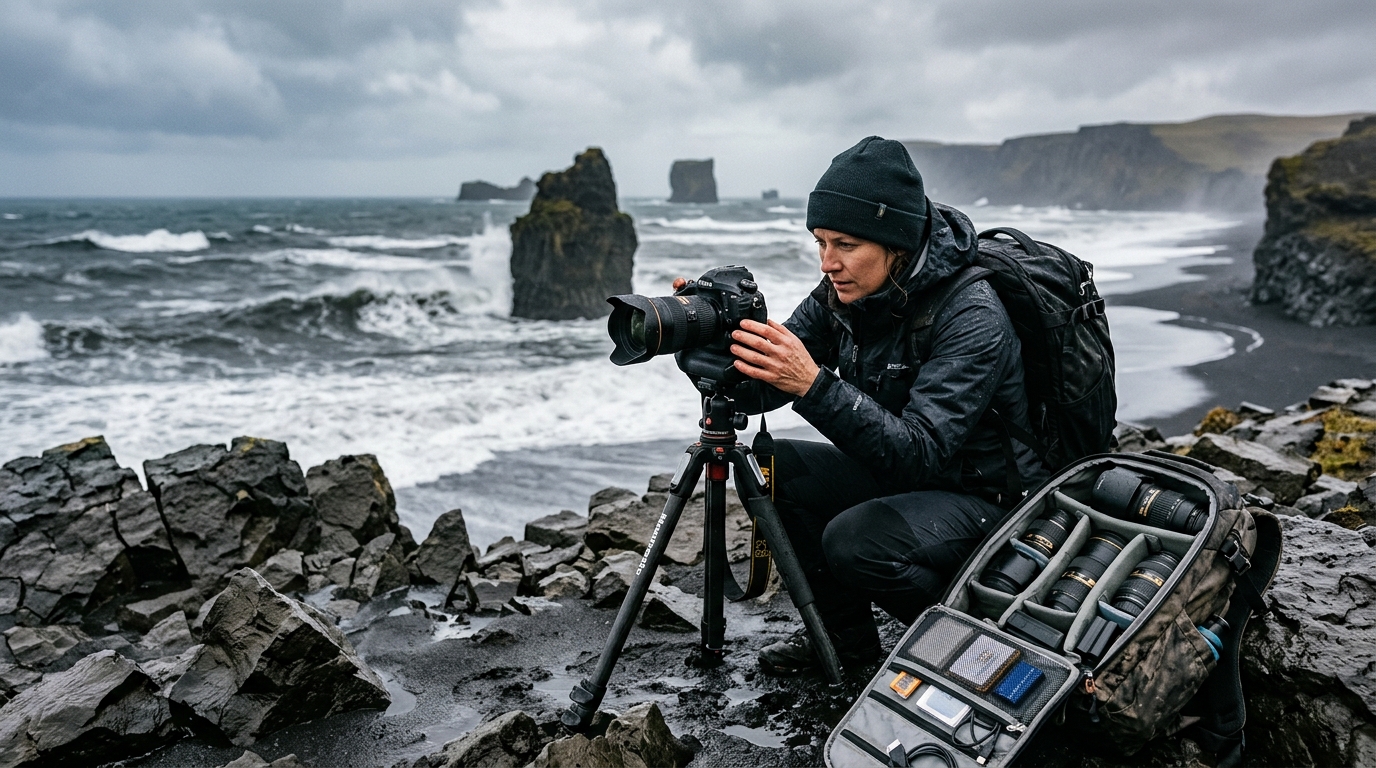
The Unique Risks of Icelandic Landscapes
Iceland is a photographer’s paradise, but it is also a demanding environment for high-end optical glass and precision electronics. According to SafeTravel Iceland, the island’s weather is volatile, characterized by rapid shifts in temperature, strong winds, and sudden precipitation. These conditions create specific, compounded risks for your gear:- Salt Spray and Corrosive Air: If you are shooting along the South Coast or near the iconic Dyrhólaey cliffs, salt spray is a constant threat. Fine salt mist can penetrate weather-sealed gaskets and settle on internal components, potentially leading to long-term corrosion.
- Glacial Silt and Fine Volcanic Sand: The landscape is filled with abrasive particulates. When wind kicks up volcanic sand, it can act as an abrasive on lens elements and may work its way into zoom rings and sensor assemblies.
- Extreme Wind Gusts: High winds are common in Iceland. Tripods can be unstable in these conditions, increasing the risk of impact damage that standard travel insurance may not cover as "accidental damage."
- Remote Vulnerability: When you are exploring remote areas like the Westfjords, professional assistance is not always immediately available. If your gear is stolen or lost during a hike, the logistics of filing reports and seeking replacements are significantly more complex than in a major metropolitan area.
Evaluating Your Need for Specialized Iceland Photography Insurance
To determine if you need dedicated coverage, you must distinguish between the three primary tiers of protection. Assuming your credit card’s "purchase protection" or a standard homeowner’s policy will cover a professional camera kit in a foreign country is a common mistake that can lead to denied claims.Comparison of Insurance Coverage Types
When assessing your needs, calculate the "total replacement value" of your kit—what it would cost to buy the current equivalent today. If that number exceeds your deductible plus your risk appetite, a specialized policy is recommended. Furthermore, ensure your policy includes a "worldwide" clause that explicitly covers professional equipment in high-risk environments. Some policies void coverage if the equipment is left in an unattended vehicle, even if locked, which is a frequent scenario for road-tripping photographers.
Assessing Policy Limits and Deductibles
Many photographers overlook the "per-item" limit in their insurance policies. Even if your total coverage limit is a measurable budget your insurer might cap individual item payouts at a measurable budget. For a professional-grade lens or a high-resolution mirrorless body, this cap is often insufficient. often review the policy schedule to ensure your most expensive pieces of glass are fully covered. Additionally, consider the deductible; a lower premium often comes with a higher deductible, which may not be cost-effective if you are prone to minor, frequent repairs rather than total loss events.
Travel Insurance for Photographers: What to Look For
When shopping for travel insurance, look for a policy that functions as an extension of your professional gear insurance, rather than just a travel health plan. According to industry guidance from the Insurance Information Institute, specialized inland marine policies are often required for high-value portable equipment that is not covered under standard homeowners' policies. Key features to prioritize:- Accidental Damage Coverage: This is a critical component. It should cover drops, impacts, and exposure to water or sand. Ensure the policy doesn't classify "sand damage" as "wear and tear," which is a common exclusion used to deny claims.
- New-for-Old Replacement: Avoid "actual cash value" policies. You want a policy that pays out the cost to replace your damaged item with a brand-new model of similar quality.
- Professional Use Clauses: If you are selling prints, leading workshops, or shooting commercially while in Iceland, ensure your policy does not exclude "commercial or professional activity."
- Theft and Mysterious Disappearance: Check if the policy requires proof of "forced entry." If your bag is stolen from a vehicle, you need to be covered even if the thief didn't smash a window.
Camera Gear Insurance for International Travel: Best Practices
Even with the best insurance, the burden of proof lies with you. Maintain a comprehensive digital inventory stored in the cloud. Follow these steps to ensure your claims are processed smoothly:- Serial Number Registry: Create a spreadsheet containing the make, model, and serial number of every body, lens, and high-end accessory. Take clear, high-resolution photos of these numbers.
- The Police Report Requirement: If your gear is stolen, you must file a police report in Iceland immediately. Insurance companies typically require an official local report to process a theft claim.
- Damage Documentation: If your gear is damaged by a fall or environmental hazard, take photos of the scene and the damage before you attempt any repairs. If you must get a repair done while in Iceland, keep every single receipt and request a written estimate from the repair technician.
Mitigating Risk Before You Even Leave Home
Insurance is your safety net, but physical mitigation is your primary defense. Proactive measures include:- Weather Sealing and Protection: Use high-quality, dedicated rain covers for your camera bodies. Avoid changing lenses in the open; do it inside your vehicle or a wind-shielded bag to minimize exposure to dust and moisture.
- Terrain Awareness: Familiarize yourself with the difficulty ratings of your planned locations. Our site provides insight into the physical demands of various sites, which can help you decide whether to carry your full kit or a lighter, more agile setup.
- Data Integrity: Your gear is replaceable, but your images are not. Use a robust backup strategy: shoot to dual cards and back up your data to a ruggedized, portable SSD every single night.
Navigating Claims in a Foreign Country
Should the worst happen, knowing how to navigate the claims process in Iceland is essential. Notify your insurance provider immediately. Most major insurers have a 24/7 global emergency line. If you are in the Reykjavik area, you have better access to repair services, but if you are in the remote highlands, focus on securing the damaged gear to prevent further degradation from humidity or salt. Always save all receipts—including those for emergency equipment rentals if your policy covers "loss of use"—and ensure you have the contact information for your insurance agent saved offline.Frequently Asked Questions
Does my homeowner's insurance cover my camera gear while traveling in Iceland?
Generally, no. While some homeowner policies offer "off-premises" coverage, they often have low limits, high deductibles, and strict exclusions for professional gear. You must check your specific policy for "personal property away from home" clauses and confirm if they apply to international travel.
What is the difference between travel insurance and equipment insurance?
Travel insurance is designed to cover trip interruptions, medical emergencies, and travel-related losses. Equipment insurance is specifically designed to cover the specialized, high-value nature of camera gear, including accidental breakage and theft, often with higher payout limits and fewer geographic restrictions.
Are there specific insurance requirements for professional photographers in Iceland?
If you are shooting for a client, you may be required to carry commercial general liability insurance. According to the Environment Agency of Iceland, permits are often required for commercial filming or photography in protected areas, and these permits may stipulate insurance requirements.
What should I do if my camera gear is damaged by salt spray or sand?
Do not attempt to force any moving parts, as this can grind particulates into internal gears. Clean the exterior with a dry, soft cloth, remove the battery and memory card to prevent shorts, and store the gear in a sealed bag with silica gel packets to absorb moisture. Contact your insurance provider immediately to open a claim before attempting any internal cleaning or repair.
Is it worth insuring older camera gear?
Insuring older gear depends on the "replacement cost" versus the "actual cash value." If your gear is older, ensure your policy covers "replacement cost" rather than "depreciated value." If the cost of the premium exceeds the potential payout for a used item, you may choose to self-insure, but ensure you have a contingency fund for emergency replacements while on the road.