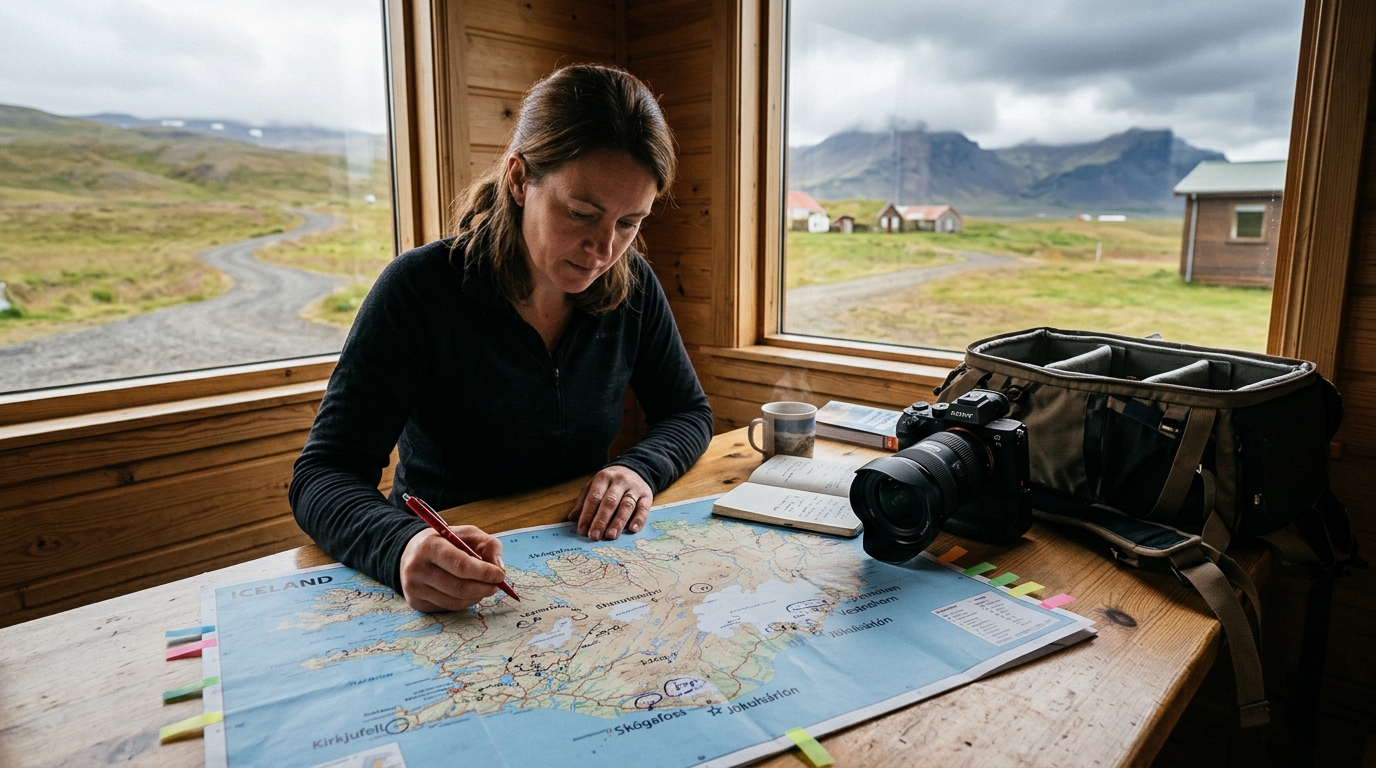
Why Your Choice of Stay Defines Your Portfolio
The difference between a mediocre travel snapshot and a world-class landscape portfolio in Iceland often comes down to a single variable: proximity to your subject during the golden hour. By utilizing a specialized Iceland photography accommodation map, you can position yourself within minutes of iconic vistas, effectively eliminating the long, pre-dawn commutes that drain your creative energy. When you choose to stay near your primary shooting locations, you gain the ability to react to sudden shifts in weather, wait for the perfect light, and capture the elusive "blue hour" without the pressure of a long drive back to a hotel.
Minimizing daily driving distances is a strategic decision to reduce physical fatigue. Navigating Icelandic roads—especially in variable weather conditions—requires intense concentration. When you spend significant time behind the wheel, your capacity for scouting, composition, and patience diminishes. An interactive Iceland photography map helps you prioritize locations over convenience, ensuring that your base camp is an extension of your creative process. By focusing your search on proximity, you transform your trip from a series of rushed stops into a series of deeply immersive photography sessions.
Criteria for Selecting the Best Hotels for Photographers in Iceland
When curating your itinerary, evaluating potential stays requires more than checking star ratings or breakfast options. For the landscape photographer, the best accommodations are those that prioritize the specific needs of the lens-wielding traveler. Start by evaluating dark-sky access. If your goal is to capture the Aurora Borealis, you need an accommodation that is sufficiently removed from light pollution, with clear, unobstructed views of the horizon. Many rural lodges, particularly in the South Coast or Westfjords, offer aurora alerts, a helpful service for those who cannot stay awake all night.
Morning light orientation is another often-overlooked factor. If you are shooting east-facing waterfalls or coastal cliffs, ensure your lodging choice allows for a quick exit. Check satellite imagery to see if your room faces the primary landscape feature; waking up and immediately checking the light conditions from your window can dictate whether you head out for a sunrise shoot or sleep in for a recovery morning. Finally, prioritize flexible check-in/out policies. Night shooters returning from a long session in the field need the ability to sleep through the traditional checkout window. When booking, inquire if a property caters to photographers by asking about their policy on gear storage and early-morning departures.
Mapping Your Route: Using an Iceland Photography Accommodation Map Effectively
Integrating your accommodation choices with your primary shooting list is the most effective way to optimize your 2026 itinerary. The Iceland Photo Map digital atlas is designed to bridge the gap between logistical planning and artistic execution. Instead of booking a hotel first and finding locations later, start by identifying the landmarks you are most committed to photographing, such as Dettifoss or the church at Búðakirkja, and then use these tools to find lodges within a reasonable radius.
Balancing remote wilderness stays with essential amenities is a constant trade-off. While a remote cabin offers the best chance at solitude, it may lack the high-speed internet needed to back up your RAW files or the secure environment required for expensive gear. When using the Iceland Photo Map platform, filter your results by proximity to landmarks while keeping an eye on essential services. For example, if you are planning to spend several days in the West Iceland region, choosing a central hub allows you to store your heavy equipment securely while venturing out to nearby locations like Barnafossar.
Top Regions for Photo-Friendly Lodges and Stays
Iceland’s regions offer vastly different opportunities for the photographer. The South Coast, for instance, is the most accessible region, but its popularity means you should book well in advance. Here, you want to stay in proximity to the major waterfalls and black sand beaches to beat the tour buses. Conversely, the Westfjords offer a more rugged experience. Lodges here are often family-run guesthouses that provide unique insights into the local landscape. In North Iceland, you will find proximity to geothermal areas and dramatic coastal cliffs that require careful planning to reach during the best light.
- South Coast: High density of iconic waterfalls; book early due to high tourist traffic.
- Westfjords: Remote, uncrowded landscapes; requires longer driving times.
- North Iceland: Dramatic, rugged terrain; check seasonal road access via Road.is.
- Reykjavik Area: Logistical hub; easy supplies, but requires travel to reach nature.
Logistics for Photographers: Beyond the Room
Your accommodation is more than a place to sleep; it is your base of operations. Photographers carry significant gear, and space is at a premium. When selecting your stay, verify that the room provides ample floor space for tripod setups, charging stations for multiple batteries, and a clean, stable surface for cleaning lenses. Sustainable tourism is also a critical consideration; according to Visit Iceland, travelers should adhere to strict guidelines when operating in sensitive natural areas, which includes choosing accommodations that respect local environmental regulations and minimize their carbon footprint. Additionally, per guidance from SafeTravel Iceland, always monitor local weather and road conditions daily, as conditions can change rapidly regardless of the season.
Beyond the physical space, consider the electrical infrastructure of your stay. Iceland operates on standard European plugs, but older rural guesthouses may have limited outlets. Carrying a high-capacity power strip or a multi-port USB-C charger is a standard practice for professional photographers to ensure all camera bodies, drones, and backup drives are ready for the next day. Furthermore, verify if the property offers laundry facilities, which can be essential during extended multi-week expeditions where weather-resistant clothing needs regular maintenance.
Seasonal Considerations for Your Stay
The time of year you visit will dictate your accommodation strategy. In the summer, you will deal with the midnight sun. This provides nearly endless light for photography, but it can disrupt your sleep cycle. Invest in an accommodation with high-quality blackout curtains, or bring a portable sleep mask. Because the light remains soft for hours, you can shift your shooting schedule to the late night to avoid the crowds, meaning your hotel needs to be flexible regarding late arrivals or early departures.
In winter, the priority shifts entirely to road accessibility. You need to stay in locations that have reliable snow-clearing services. The "shoulder season" (early spring and late autumn) offers a balance for many photographers. During these times, popular lodges are often less crowded, and you have a better chance of capturing the dramatic transition between seasons. Monitor regional weather trends and road status before booking, as remote locations can become difficult to access during severe weather events.
Building Your Custom Itinerary with Specialized Mapping Tools
Creating a professional-grade itinerary is a methodical process. Start by using a dedicated waterfall map to identify the cascades you want to photograph. Once you have a list, use a South Coast regional guide to find the closest accommodation. Overlay these two datasets to see if your chosen hotel is within a reasonable driving distance of your target sunrise and sunset locations. This helps ensure you do not miss the peak light due to unexpected traffic or road conditions.
Don't forget to identify "hidden gems" near your hotel. Often, the best shots are not the famous landmarks, but the small, unnamed landscapes you pass on your way to the main attraction. By staying in a strategic location, you give yourself the time to explore these secondary spots, which will add depth and originality to your final portfolio. By treating your accommodation as a tactical asset rather than a passive expense, you elevate the entire quality of your photographic output.
Frequently Asked Questions
How far in advance should I book photography-friendly accommodation in Iceland?
For the most popular areas along the South Coast and near major landmarks, we recommend booking well in advance for 2026 travel. If you are targeting the Westfjords or more remote regions, booking early is often recommended to secure the best rooms, as availability in these areas can be limited.
Are there specific hotels that cater to photographers with gear storage?
Many guesthouses and boutique hotels in Iceland are accustomed to the needs of photographers. When booking, look for properties that mention "secure storage" or "workshop facilities." If in doubt, reach out to the property directly and ask if they have space for cleaning gear or if they are comfortable with early morning check-outs.
Does an Iceland photography accommodation map account for road closures?
Mapping tools provide links to real-time road condition data, but they do not predict future closures. Always cross-reference your planned route with the latest information from the Icelandic Road and Coastal Administration on the morning of your departure, especially during the winter months.
Should I stay in one central location or move hotels every night?
For photography, we recommend a "hub-and-spoke" model. Instead of moving every night, choose three or four strategic hubs for a 10-day trip. This reduces the time spent packing and unpacking and allows you to build a relationship with a specific area, increasing your chances of capturing the perfect light.
What should I prioritize when packing for a photography-focused stay?
Beyond your camera gear, prioritize items that make your stay more efficient: a high-quality power strip, a portable sleep mask for summer travel, and a reliable headlamp for navigating to your shooting spot in the dark. Ensure your accommodation choice supports these needs by checking for accessible power outlets and quiet surroundings.
Ready to plan your perfect shoot? Explore our interactive Iceland photography accommodation map to find your ideal base camp today and ensure you are positioned for the best light on your next expedition.