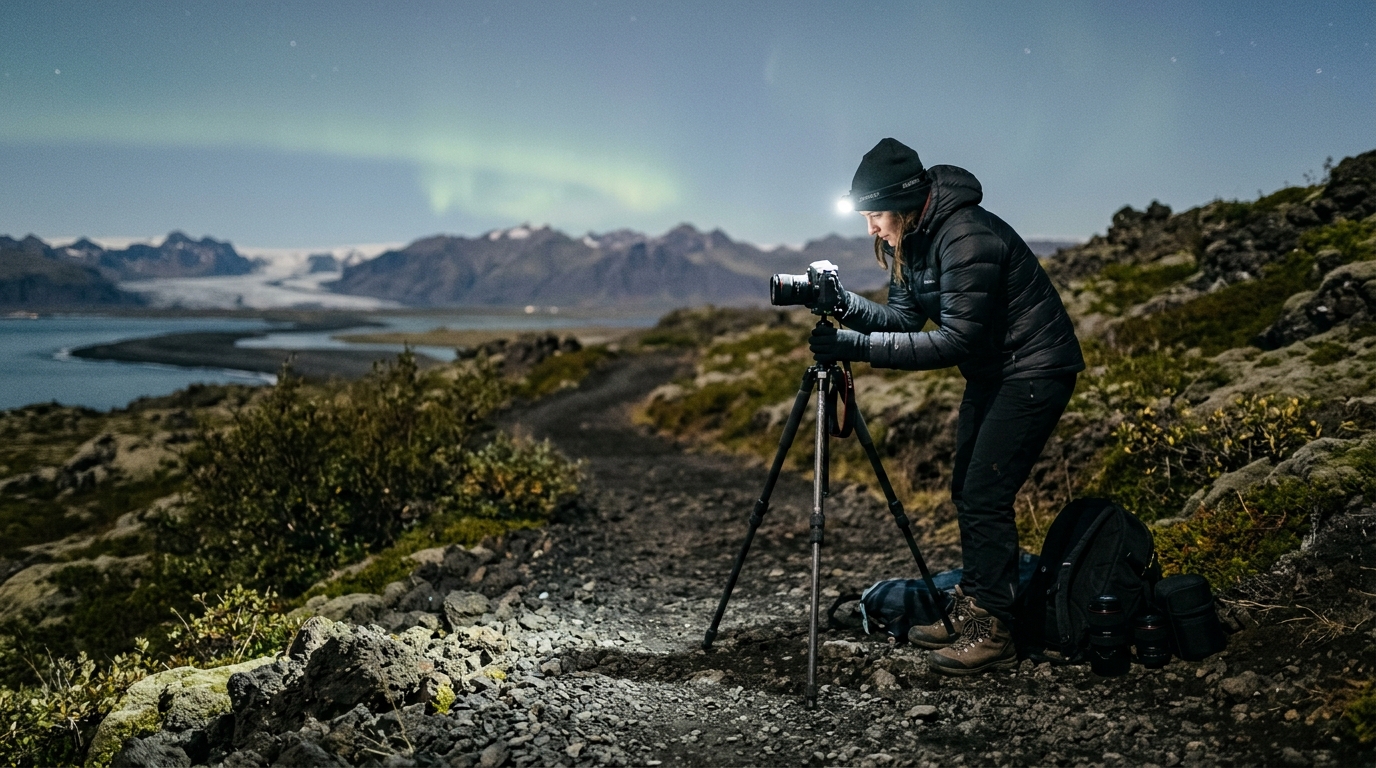
Mastering Iceland photography night photography safety is a vital prerequisite for capturing the aurora borealis or the ethereal glow of the midnight sun without compromising your well-being. By adhering to professional-grade risk management protocols and utilizing specialized tools, you can transform a potentially hazardous excursion into a productive, secure creative endeavor in 2026.
Understanding the Unique Risks of Iceland Photography Night Photography Safety
The primary challenge for photographers in Iceland is the deceptive nature of the environment. Daylight hours can create a false sense of security, leading many to believe that the terrain remains navigable after dark. However, Icelandic weather at night is volatile; a clear sky can transition into a blinding blizzard or a high-wind event within minutes. Standard daylight safety protocols often fail because they rely on visual cues that vanish once the sun dips below the horizon. In the dark, the lack of depth perception makes assessing the stability of a slope or the proximity to a cliff edge difficult. Furthermore, the isolation of many prime shooting locations means that if you encounter an issue—such as a twisted ankle, equipment failure, or a vehicle breakdown—you cannot rely on the presence of other tourists to provide assistance. Situational awareness in these remote areas requires a proactive mindset: you must know your surroundings, have an exit strategy, and constantly monitor the environmental indicators that suggest a shift in conditions. According to SafeTravel Iceland, travelers should prioritize safety by carrying appropriate emergency gear and informing others of their travel plans.Essential Gear for Nighttime Visibility and Protection
When you are working in the field at night, your gear must serve two purposes: capturing the image and keeping you visible and warm.- High-Visibility Clothing: Regardless of how remote you think you are, wear a reflective vest or high-visibility jacket if you are shooting near a roadway. Drivers in Iceland may be distracted by the landscape or tired, and they may not anticipate a pedestrian standing on the shoulder of a dark road.
- Headlamp Systems: A reliable, high-lumen headlamp with a red-light mode is essential. Red light preserves your night vision and is less disruptive to other photographers in the vicinity. Carry a secondary, backup light source and ensure both have fresh batteries or a full charge before leaving your accommodation.
- Emergency Communication: In off-grid locations, cellular service is often non-existent. A satellite-based communication device, such as a personal locator beacon or satellite messenger, is a standard piece of equipment for serious landscape photographers. It allows you to signal for help or receive weather updates even when you are miles from the nearest cell tower.
Navigating Terrain and Night Photography Hazards in Iceland
Navigating the Icelandic landscape after dark introduces specific hazards that can catch an unprepared photographer off guard. One of the most dangerous phenomena is the presence of "black ice" on walking paths. This thin, transparent layer of ice is nearly invisible under torchlight and can turn a standard trail into a slip hazard. Always scout your location during daylight hours. If you plan to shoot a specific waterfall or coastal formation, visit the site while the sun is up to identify potential pitfalls. Use topographic maps to understand the elevation changes and proximity to drop-offs. When moving through the landscape, use your headlamp to scan the ground frequently, and avoid walking near the edge of cliffs, as the loose volcanic soil and scree are prone to shifting underfoot. For those looking to photograph unique geological features safely, our landscape photography maps provide critical data on terrain accessibility. Additionally, the Icelandic Met Office provides regional weather data, which is a helpful factor in determining whether terrain remains safe for nighttime access.Weather Monitoring: The Foundation of Iceland Night Photography Safety
Effective weather monitoring is the cornerstone of Iceland photography night photography safety. The Icelandic Met Office provides regional forecasts that are essential for planning. As of 2026, you should check their alerts religiously before every outing. Recognizing the signs of an approaching wind storm is a survival skill. Rapidly falling barometric pressure, a sudden drop in temperature, or a shift in wind direction are all red flags. If the wind speed is predicted to be high, it is time to abandon the shoot. High winds in Iceland can easily knock a person over, and they are particularly dangerous when you are carrying heavy camera gear or standing on exposed ridges. Always prioritize your personal safety over the shot; no photograph is worth the risk of being stranded in a storm. For real-time updates on road closures and travel warnings, refer to the Icelandic Road and Coastal Administration, which provides current data on transit conditions.Strategic Planning: Using Maps to Minimize Risk
Strategic planning is your best defense against the unpredictable. Before you head out, use the Iceland Photo Map to identify safe parking areas that are away from active traffic lanes. Do not attempt to pull over on narrow, unlit roads just because you see a potential composition; find designated pull-offs or established parking lots. Furthermore, manage your energy levels. Driving while exhausted in the dark is a contributor to accidents. If your shoot is scheduled for the early morning hours, ensure you have had adequate rest beforehand. Finally, always share your detailed itinerary with your accommodation host or a trusted contact. In the event that you do not return at the expected time, having someone who knows your exact location is the difference between a minor delay and a search-and-rescue operation. Planning your route using detailed maps allows you to anticipate road conditions and avoid areas prone to flooding or sudden icing.Emergency Response and Self-Rescue Basics
If you find yourself stranded in the dark, the most important rule is to stay with your vehicle if possible, as it provides shelter and makes you more visible. If you are on foot and lost, stay put and wait for daylight unless you are in immediate danger. The 112 Iceland app is a recommended tool for every photographer. It allows you to send your GPS coordinates directly to the emergency services with the press of a button, which is vital when you are disoriented or unable to describe your surroundings. Additionally, your camera bag should always contain a basic survival kit:- A thermal emergency blanket.
- An extra high-calorie snack and a thermos of warm liquid.
- A multi-tool and a small roll of duct tape.
- A whistle for signaling.